Today, “music on demand” is so normal we barely think about it. Tap a screen, hear a song. Skip, repeat, build a playlist, share it instantly. But long before streaming—or even the idea of carrying music with you—people were already shaping their days around the same desire: I want this song, right now.
That’s the real genius of the jukebox. It didn’t just play music. It let everyday people choose music in public spaces—one selection at a time. It turned a bar, diner, bowling alley, or roadside café into something like a shared playlist before anyone used that phrase. And it helped teach the world a habit we still have: paying small amounts for the exact song we want, exactly when we want it.
This post is a look at music on demand before streaming—how it worked, what it felt like, and why collectors still chase the machines and the paper trail that made the experience possible.
The First “On Demand” Moment: Coin-Operated Listening
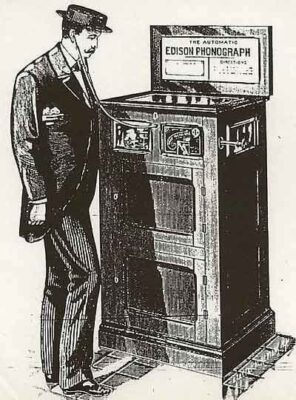
Before the glowing jukebox cabinet became a cultural icon, the core idea already existed: pay a coin to hear a recording. Early coin-operated phonographs introduced the basic transaction that streaming still echoes in a different form—access on request.
What made this new (and exciting) wasn’t just the machine. It was the shift in behavior:
- Music wasn’t only for concerts or home parlors.
- Music could be purchased in tiny slices—one nickel at a time.
- Listening became a repeatable public experience.
Collectors often focus on the later, more recognizable jukebox era, but this early stage matters because it shows that “on demand” began as a public service model, not a private playlist.
From One Song to Many: When Choice Became the Product
The biggest leap toward the modern jukebox wasn’t louder speakers or flashier cabinets—it was selection.
Once machines began offering multiple song choices, the product changed:
- You weren’t paying for a song.
- You were paying for control.
That small psychological difference is huge. It turned music into an active decision in a social space. People didn’t just listen—they negotiated:
- “Play something we can dance to.”
- “Play the one we all know.”
- “Play the one that matches the mood.”
And because the songs were physically present on records inside the machine, the jukebox also created an early kind of “catalog” experience: your options were limited, but visible—and the limitation was part of the charm.
The Jukebox as Social Media (Before Social Media)
A jukebox didn’t just play songs—it created a conversation.
In many venues, the jukebox was:
- a shared point of attention
- a flirtation tool (“this one’s for you”)
- a mood-setter
- a mild form of crowd control
That social function is one reason jukeboxes feel so nostalgic today. Music was public. The room heard what you chose. You could be the hero who picked the perfect song—or the person who cleared the dance floor in three minutes flat.
Collectors love jukebox history because it captures a version of music culture that’s harder to find now: music as a shared environment, not just a private soundtrack in earbuds.
Wallboxes: Music on Demand Without Leaving Your Seat
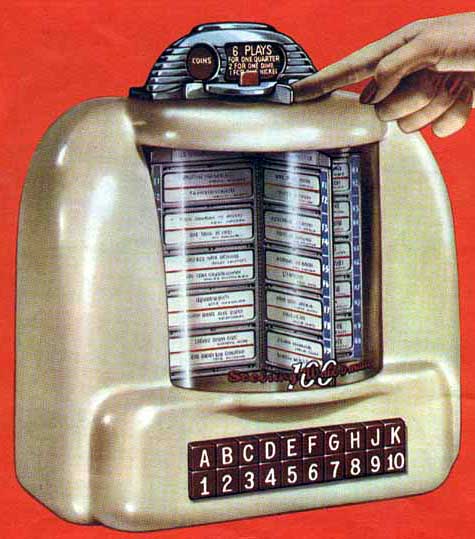
One of the most “modern” features of mid-century jukebox culture was the wallbox—remote selection units installed in booths or along walls. These let patrons browse selections and choose songs from where they sat, often with title strips displayed behind clear windows.
Wallboxes matter in the music-on-demand story because they spread the system across a venue:
- The jukebox became the engine.
- The wallboxes became the user interface.
- The whole room became an interactive music space.
For collectors, wallboxes are also one of the most display-friendly pieces of jukebox history. They look fantastic mounted or staged in a “diner corner” vignette—even if you don’t own a full machine.
The Physical Playlist: Title Strips, Selection Cards, and Record Rotation
Streaming hides the infrastructure. Jukeboxes put the infrastructure on display.
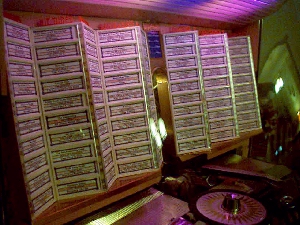
That’s why title strips are such a charming collectible category. They were the “playlist,” printed and visible, often swapped as records rotated through a machine. In active venues, operators and staff updated selections regularly to keep music current and keep coins dropping.
This created an ecosystem of objects that collectors love:
- title strips and title strip holders
- selection cards and number lists
- operator paperwork and service tags
- manuals and wiring diagrams
- route labels and venue identifiers
These pieces are so collectible because they reveal something streaming can’t: the material side of music access.
Records as Fuel: Why the 45 Was Made for On-Demand Culture
For decades, jukeboxes relied heavily on singles. The 45 rpm format (and earlier 78 rpm singles) was perfect for on-demand listening because it delivered:
- one song per side (fast choices, fast turnover)
- easy swapping and updating
- a steady pipeline of new music
This is also why jukebox culture helped shape what people considered a “hit.” The songs that worked in public—danceable, singable, mood-setting—were the songs people remembered, talked about, and wanted to hear again.
Collector tip: Building a “jukebox stack” of era-appropriate singles is one of the best ways to add depth to a jukebox collection. Even without a machine, a curated set of 45s (or 78s for earlier eras) can tell a powerful story.
Paying Per Play: The Original Microtransaction
Long before app stores, jukeboxes trained people in microtransactions:
- pay a small amount
- get a quick experience
- repeat as desired
That model shaped public entertainment beyond music, but in jukebox culture it created something especially interesting: everyone could participate. You didn’t need a fancy home music system. You didn’t need a big record collection. You needed a coin and an opinion.
That’s one reason jukeboxes became democratic cultural machines. They gave people agency in places where the soundtrack might otherwise be controlled by whoever owned the radio.
The Operator System: The Hidden Work Behind the Magic
Streaming feels effortless. Jukeboxes were effortless for the customer—but not for the people keeping them running.
Jukeboxes relied on operators who:
- placed machines in venues
- maintained and serviced them
- rotated records
- collected coins and tracked earnings
- repaired mechanisms and replaced worn parts
This operator infrastructure is part of why jukebox collectibles include so many behind-the-scenes artifacts: keys, tags, route cards, service manuals, and parts catalogs. Those pieces are the proof that “music on demand” was a whole industry, not just a machine in the corner.
Collector tip: If you find a jukebox with original operator tags or paperwork, you’re not just buying a machine—you’re buying part of its working life.
From Vinyl to Digital: The Same Desire in a New Format
By the late 20th century, jukebox technology began shifting toward more electronic control systems and eventually toward digital media. But the emotional core didn’t change:
- you want a specific song
- you want it now
- you want to choose it yourself
That’s the connective tissue between a wallbox selection and a streaming queue. The difference is that jukeboxes made music on demand public and tangible. Streaming makes it private and invisible.
Collectors often say that’s why jukeboxes feel special: they’re not only nostalgic—they’re physical proof of how modern music habits were built.
How to Collect “Music on Demand” Without Buying a Full Jukebox
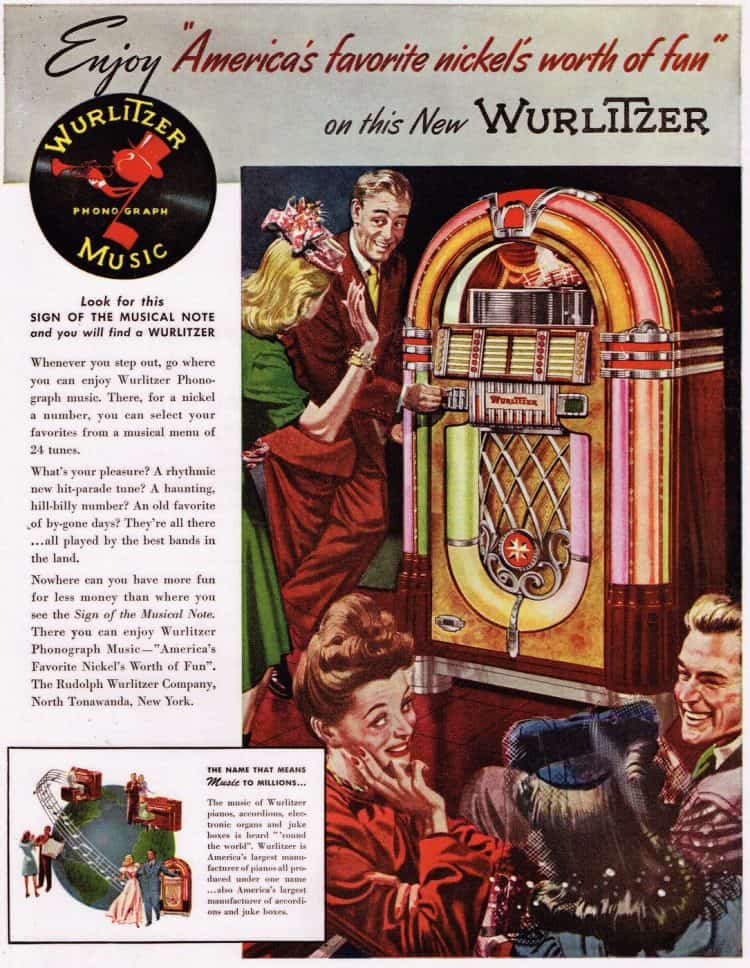
If you love the concept but don’t have the space (or restoration appetite), you can build a fantastic shelf-scale collection that tells the same story.
Consider collecting:
- a wallbox or remote selector unit
- title strips and selection cards
- a curated set of era-appropriate 45s (or 78s)
- a framed jukebox brochure or trade ad
- a service manual or parts catalog
- small operator artifacts (keys, tags, route labels) when available
A display built from these pieces can feel like a mini museum exhibit: it shows the interface, the playlist, and the physical media that made music on demand possible.
A Gentle Collector’s Checklist
Before you buy, ask:
- Does this piece help tell the “music on demand” story—interface, playlist, media, or infrastructure?
- Is it stable and displayable (paper condition, intact plastics, readable printing)?
- If it’s an operator artifact, does it have believable context (names, dates, route marks)?
- Can I pair it with something I already own to make a coherent vignette?
- Am I collecting for nostalgia alone—or for the history of how people actually used music?
Music on demand didn’t start with streaming. It started with coins, cabinets, title strips, and the thrill of picking the next song in a room full of people.
Let’s Make History—one coin at a time.