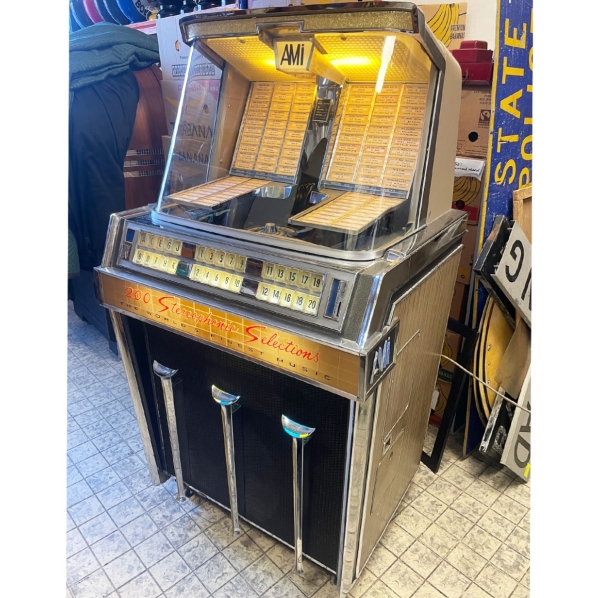
If the 1940s–50s were the jukebox’s “movie-star” years—big chrome smiles and glow-from-across-the-room presence—the 1960s through the 1980s were its working years. This is when jukeboxes adapted to new music, new venues, and new technology: rock and soul taking over the charts, louder rooms, faster turnover, bigger selection expectations, and the slow shift from purely mechanical systems to electronics that started to feel almost computer-like.
Collectors love this era because it’s where the jukebox becomes a true bridge between worlds. You still have the satisfying, tactile ritual of vinyl—dropping in a coin and hearing a 45 crackle to life—but you also start seeing digital selection, solid-state sound, remote wallboxes, and finally, the first wave of compact disc machines at the end of the 1980s. In other words: this is the era where the jukebox evolves from a classic object into a modern machine.
Let’s walk through what changed, what stayed the same, and how collectors can approach 1960s–80s jukeboxes with confidence.
The 1960s: New Music, New Rooms, New Expectations
By the 1960s, the jukebox was no longer a novelty. It was part of the furniture of public life—especially in diners, bars, bowling alleys, teen hangouts, and roadside restaurants. But the soundscape of those rooms changed dramatically. Rock ’n’ roll matured, Motown and soul dominated the airwaves, and country, pop, and early hard rock pushed louder, more energetic records into constant rotation.
For jukebox design, that meant three big shifts:
1) 45 rpm becomes the everyday standard
By this period, the 7-inch 45 rpm single was the core jukebox format for most venues. The entire “jukebox ecosystem” (operators, distributors, title-strip printing, record promotion) increasingly revolved around singles—fast to swap, easy to update, and perfect for on-demand play.
2) Cabinets become more “mid-century modern” than “classic diner”
Many 1960s machines still glow and sparkle, but styling trends moved toward sleeker lines, new plastics, and a more futuristic look. You’ll see more rectangular forms, “space age” trim, and design choices that feel like they belong alongside a formica counter and a neon beer sign rather than a 1950s soda fountain postcard.
3) The jukebox spreads out through the venue
Remote selectors (wallboxes) became an increasingly important part of the experience. Instead of one machine as the only point of interaction, venues could place selection units in booths and along walls—turning the entire room into a song-picking zone.
Collector takeaway: the 1960s are a sweet spot if you want vintage character without the sheer restoration complexity (and rarity pricing) that can come with earlier decades.
From “Watch the Mechanism” to “Hear the Song”: The Hidden-Works Era
One of the most noticeable differences as you move into the mid-1960s is how often the record mechanism becomes less visible. Earlier jukeboxes made the play action part of the entertainment—watching the record move, clamp, and spin. Over time, many manufacturers shifted toward designs where the mechanism is partially hidden or less emphasized.
Why? Practicality. Hidden works could mean:
- less opportunity for damage or tampering in busy venues
- more flexible cabinet styling
- a cleaner, more “modern furniture” look
- a quieter, more controlled mechanical environment
Collectors often have strong preferences here. Some love the show of visible mechanisms. Others prefer the sleek “working machine” vibe of later models. Neither is wrong—just decide what kind of jukebox experience you want.
The Sound Gets Cleaner: From Tubes to Solid-State
If you collect electronics, this is one of the biggest story arcs of the era. Earlier jukebox amplifiers often relied heavily on vacuum tubes. Over time, manufacturers moved toward solid-state electronics—transistors and later integrated circuits.
What that can mean for collectors today:
- Different maintenance realities: tube equipment has one set of quirks; solid-state has another.
- Different sound character: collectors sometimes describe tube-era sound as warmer, while solid-state can feel cleaner and punchier.
- Different parts availability: some components are easier to source than others, depending on model and brand.
Collector tip: when you shop this era, ask whether the machine has been serviced and how—especially around the amplifier, power supply, and wiring. “Powers on” is not the same as “plays reliably.”
The 1970s: Bigger Selections and the Rise of Digital Thinking
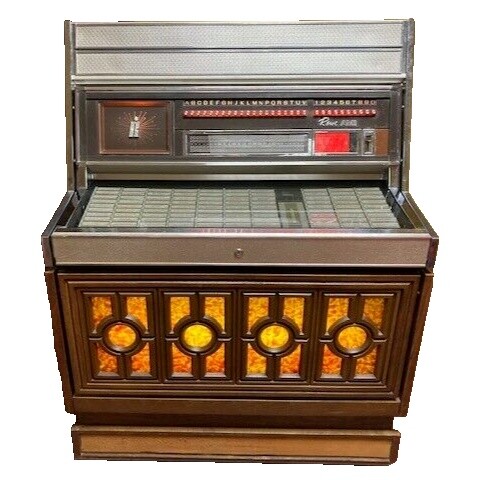
By the 1970s, jukeboxes were expected to do more than just play records. They were expected to manage money more intelligently, track selections, support remote units, and operate reliably in harsher environments (smoke, dust, constant use, vibration, and occasional enthusiastic patrons).
This is also the decade where you start to feel the shift from mechanical logic to electronic logic.
Key things collectors often notice in 1970s machines
Digital selection and control systems
Rather than purely mechanical selection banks, many machines leaned into electronic selection systems and improved credit units. You’ll see more keypad-like layouts, more “system” language in manuals, and designs that feel more modular.
More operator-friendly features
Operators needed machines that were easier to service, audit, and keep running. That means you may see:
- clearer service access
- better bookkeeping and coin handling features
- easier title-strip updates
- more standardized components within brand families
Remote experience gets stronger
Wallboxes and remote speakers remained part of the jukebox story. The more a venue could “spread the jukebox out,” the more songs got played—and the more money got dropped in.
Collector takeaway: the 1970s are often an excellent era for buyers who want a true “working jukebox” without stepping fully into the complexity and price of late-1980s/1990s digital formats.
The 1980s: Microprocessors, New Features, and the First Steps Toward Digital Media
The 1980s can feel like a split personality decade in jukebox collecting.
On one hand, vinyl jukeboxes were still very much alive. 45 rpm remained a practical, serviceable format for commercial locations, and many machines continued to be built around record play.
On the other hand, electronics accelerated:
- control systems became more advanced
- displays and diagnostics became more sophisticated
- machines increasingly felt like “appliances with computers inside”
You also begin to see experiments and expansions: machines designed to do more, attract attention in new ways, and compete in a changing entertainment market.
And then, at the end of the decade, the big transition begins…
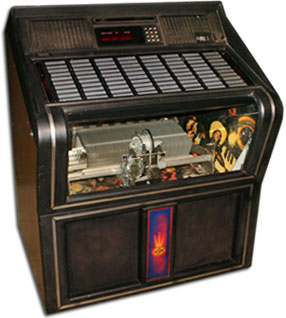
The Big Transition: From Vinyl to Digital (and Why It Wasn’t Overnight)
When people hear “vinyl to digital,” they sometimes imagine a clean handoff—like one day the jukebox played 45s and the next day it played CDs. In reality, the shift was gradual and messy, because commercial music machines have to be:
- cost-effective
- serviceable
- durable under constant use
- easy to update with new music
Vinyl had decades of infrastructure behind it. Digital offered convenience and new kinds of selection capacity, but it also required different mechanisms, different troubleshooting knowledge, and different operator investment.
What collectors should know about late-1980s digital beginnings
- Early CD jukeboxes and hybrid concepts begin appearing around the turn into the 1990s.
- Some models mix formats or represent transitional engineering, and documentation matters more than ever.
- Parts and service knowledge become model-specific quickly, so buying without manuals or support can turn into a long project.
Collector tip: if you want a “vinyl-to-digital” story machine, consider collecting a strong late-1970s or 1980s vinyl jukebox and pairing it with period paper or advertising from early CD-era machines. You’ll tell the full story without needing to own the earliest CD model.
What to Look For When Buying a 1960s–80s Jukebox
These machines sit at the intersection of furniture, mechanical engineering, and electronics. A smart buying checklist keeps you from paying “finished machine” money for a long-term project.
Cabinet and plastics
Check for:
- veneer damage and swelling (especially at the bottom edges)
- missing trim or cracked plastics
- cigarette burns, deep gouges, or heavy repainting meant to hide problems
- intact glass and stable mounts
Mechanism and play reliability
Ask:
- does it select reliably?
- does it reject and return records cleanly?
- does it repeat or mis-pick?
- does it play at stable speed with clear sound?
Amplifier and sound
Listen for:
- hum, distortion, or channel drop-outs
- intermittent sound (often a sign of contact, connector, or aging component issues)
- speaker condition (especially if original)
Electrical safety
This is non-negotiable:
- check cord condition, switches, and wiring quality
- confirm proper fusing
- avoid machines with obvious “homebrew” wiring unless you’re buying as a project
Documentation and accessories
A big value add in this era:
- service manuals and wiring diagrams
- keys, locks, and title-strip components
- wallboxes or remote selector units
- operator tags and service history
Collecting the Era Without Buying a Full Machine
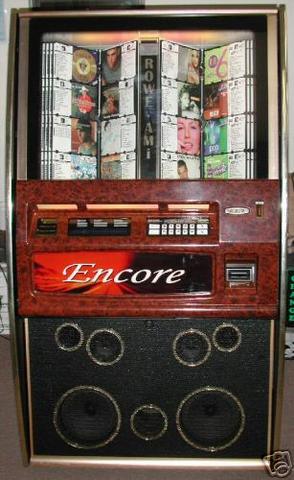
If you love the story but don’t have the space (or the restoration appetite), you can build a fantastic “1960s–80s jukebox” display with shelf-scale items.
Consider collecting:
- a tight stack of era-appropriate 45s (rock, soul, country, disco, new wave)
- title strips and selection cards
- a wallbox or remote selector as décor
- a service manual or brochure framed as ephemera
- a small part or badge plate from a machine (tastefully displayed)
This approach lets you tell the vinyl-to-digital story in a way that’s accessible—and surprisingly museum-like.
A Gentle Collector’s Checklist
Before you buy anything in this era, ask:
- Am I buying a working machine, a light restoration, or a full project?
- Does the condition match that goal (and the price)?
- Is it complete enough to service without hunting rare parts?
- Do I have documentation—or a reliable path to getting it?
- Does it fit my collecting lane: 1960s style, 1970s “workhorse,” or 1980s tech-forward?
The 1960s–1980s are where the jukebox becomes a bridge: from classic coin-op magic to the beginnings of digital convenience. Collect it well, and you’re not just collecting a machine—you’re collecting the moment music started becoming truly on-demand.
Let’s Make History—one selection at a time.