If the early jukebox was a clever invention, the 1940s and 1950s are when it became an icon. This is the era most people picture when they hear the word jukebox: glowing plastics, chrome trim, colorful motion, and a cabinet designed to be seen from across a diner or dance floor. Drop in a coin, pick a song, and suddenly the whole room has a soundtrack.
For collectors, this “Golden Age” is irresistible because it sits at a perfect crossroads: the machines are old enough to feel historic, common enough to be findable, and visually bold enough to double as furniture-level décor. Even better, this period is where the big brand names—Wurlitzer, Seeburg, and Rock-Ola—built many of the designs that still define the category today.
Let’s walk through what made the Golden Age golden, what each maker is known for, and what collectors should look for when buying one of these mid-century music machines.
What Collectors Mean by the “Golden Age”
In jukebox collecting, “Golden Age” usually points to two things happening at once:
- The jukebox becomes a centerpiece. These machines weren’t meant to blend in. They were designed to attract attention in public spaces.
- The look becomes unforgettable. Streamlined shapes, bright color panels, chrome, and dramatic lighting turned the cabinet into part of the entertainment.
This is also the period where jukeboxes became deeply tied to the social life of everyday America—especially diners, soda shops, bowling alleys, taverns, and dance halls. The machine wasn’t just playing music; it was setting the mood.
Postwar Style and Sound: Why the 1940s–50s Feel So “Jukebox”
A lot of the Golden Age magic is a mix of design and technology.
Cabinet design gets bold
After World War II, jukebox styling embraced a “celebration” look—bright, optimistic, and often futuristic. Expect:
- Curves and strong silhouettes
- Chrome trim and reflective surfaces
- Color panels and glowing accents
- Clear windows showing the record mechanism (because watching the machine work was part of the fun)
Record formats and selection expectations evolve
Golden Age jukeboxes sit in the transition zone where 78 rpm records were still common, but the industry was moving toward 45 rpm singles. For collectors today, that matters because some machines were originally built for one format and later converted or updated.
Remote selection becomes part of the experience
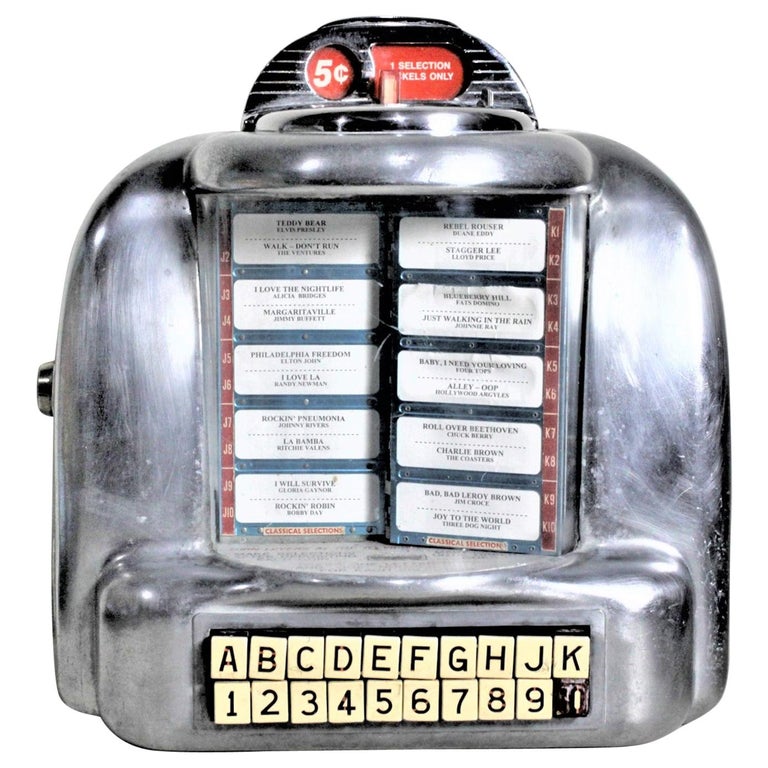
Wallboxes and remote selectors helped expand the jukebox “footprint” through a venue. You could sit in a booth, flip through title strips, and choose a song without leaving your seat—one more reason jukeboxes became a social engine rather than a background appliance.
The Big Three: What Wurlitzer, Seeburg, and Rock-Ola Are Known For
Golden Age collecting often starts with brand recognition. Each maker has its own personality.
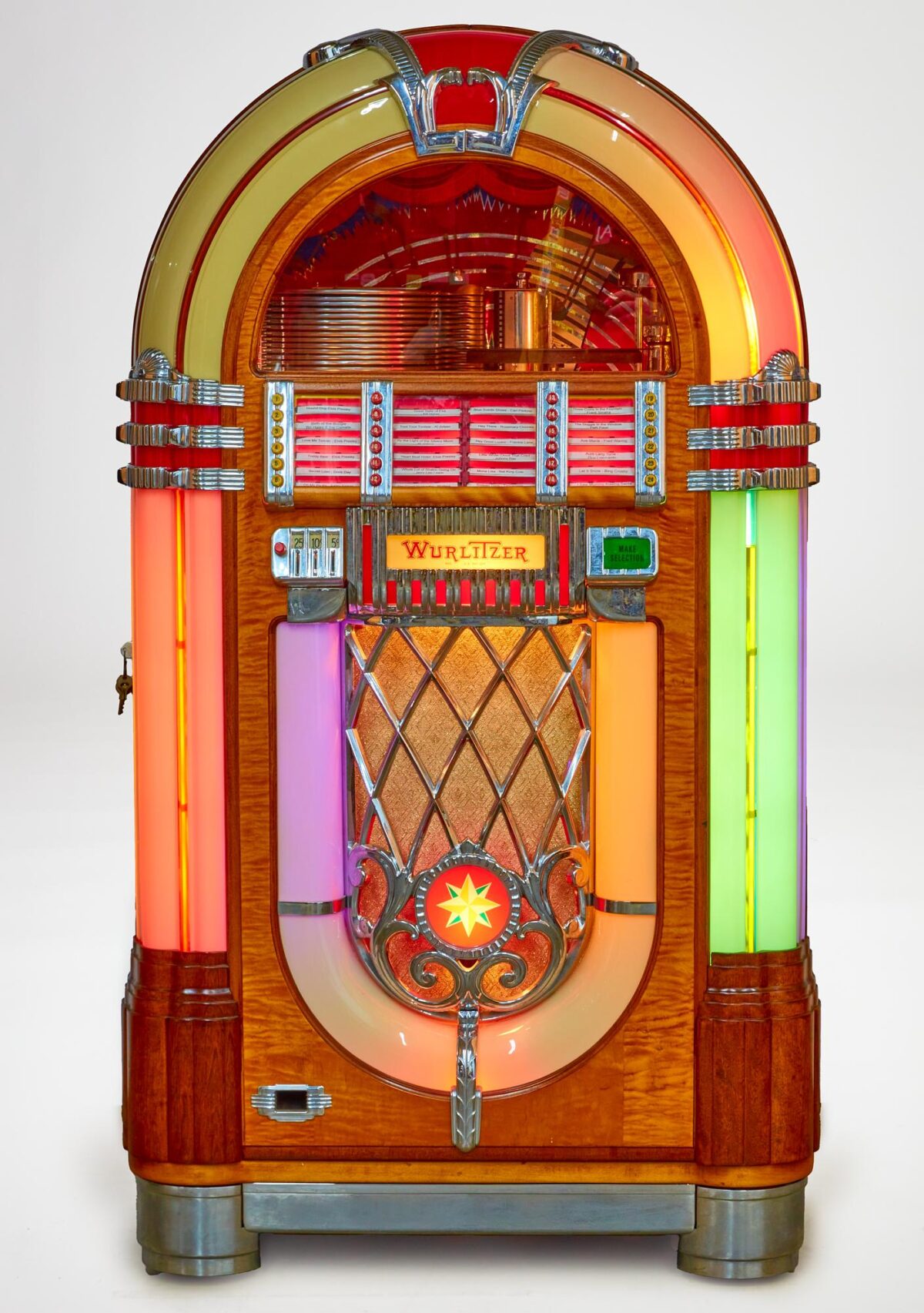
Wurlitzer: The “Bubbler” Look and the Jukebox as Showpiece
If there’s a single jukebox silhouette that lives in the public imagination, it’s usually a Wurlitzer—especially the famous Model 1015, introduced in 1946. It’s widely remembered for its dramatic styling and animated lighting effects, including the bubbling columns that helped earn it the “bubbler” nickname. It was produced in the immediate postwar period and is often cited as one of the best-selling jukebox models ever.
For collectors, Wurlitzer’s Golden Age appeal often comes down to:
- Display power: it reads like sculpture in a room
- Instant recognition: even non-collectors know the look
- Strong nostalgia factor: it’s tied to the romanticized “classic jukebox” image
Collector tip: Wurlitzer pieces are frequently restored and reproduced in “tribute” forms. When shopping, focus on clear identification and honest restoration disclosure so you know what you’re paying for.
Seeburg: Big Selection Energy and Mid-Century Innovation
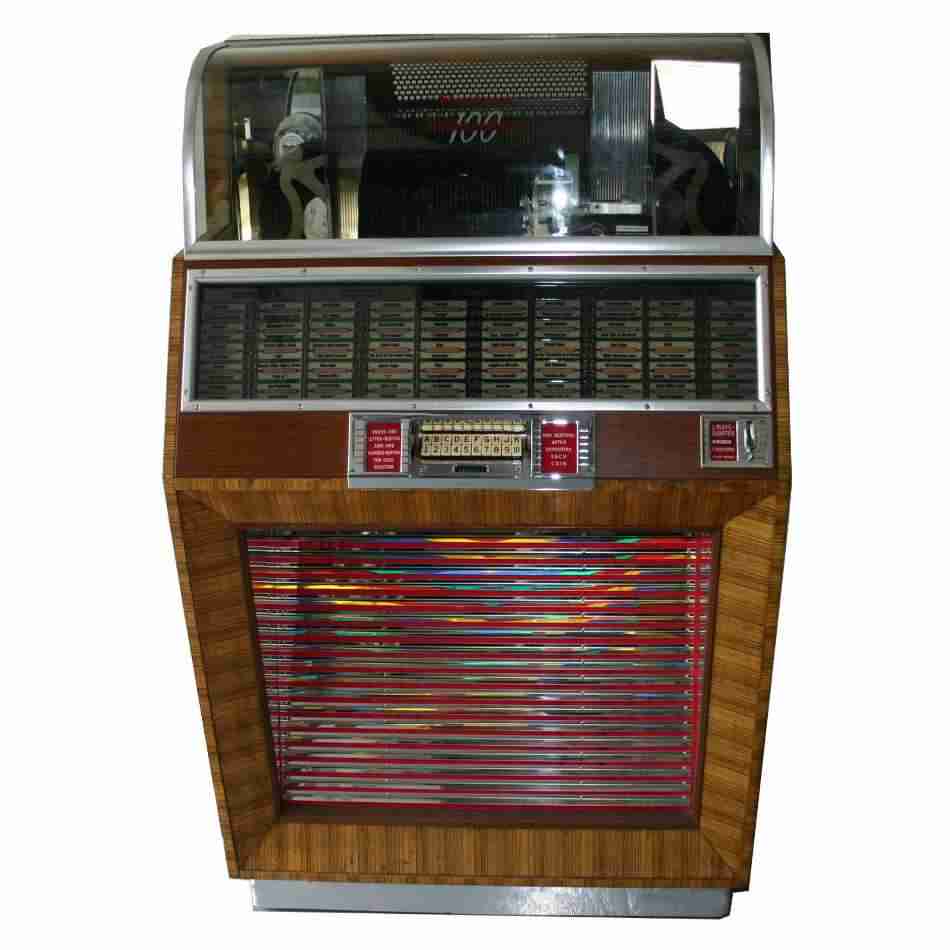
Seeburg is a favorite among collectors who love the engineering side of the hobby. Two Golden Age milestones are especially helpful to know:
- The Seeburg M100A (“Select-O-Matic 100”) is widely described as the first jukebox to offer 100 selections, originally offered in 78 rpm with many later converted to 45 rpm.
- The Seeburg V200 (mid-1950s) is strongly associated with the jump to 200 selections and features a famous rotating title display style that many collectors consider peak mid-century jukebox design.
Seeburg’s collector appeal often includes:
- Higher selection counts (great for “party machine” use)
- A strong mid-century look (chrome-and-glass presence, often more “space age” than earlier cabinets)
- A thriving restoration community because demand stays high
Collector tip: Seeburg machines are often paired with wallboxes. Finding a jukebox with original or period-correct accessories can be a huge plus for both display and story value.
Rock-Ola: Style, Glow, and the Classic Venue Machine
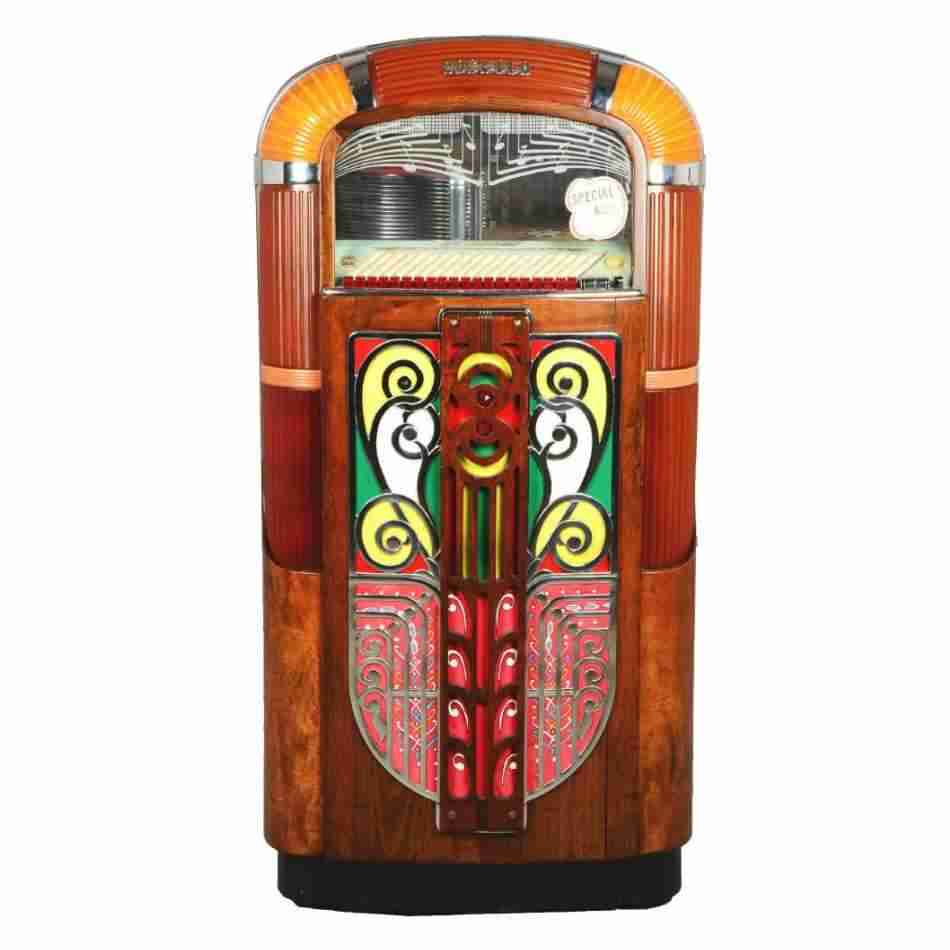
Rock-Ola is a cornerstone brand for Golden Age collectors, especially if you love the way jukeboxes looked in real venues. A notable early postwar example frequently referenced by collectors is the Rock-Ola 1422 (1946), associated with the company’s “Magic-Glo” styling era and built for 78 rpm play with a modest selection count by later standards.
Rock-Ola’s Golden Age appeal often comes down to:
- Cabinets that feel “venue authentic” (the kind you picture in a café corner)
- Aesthetic variety across models (plenty of looks to choose from)
- Strong restoration interest because Rock-Ola machines still read beautifully on display
Collector tip: Don’t underestimate how much cabinet condition matters on Rock-Ola pieces. Veneer, trim, plastics, and chrome are a big part of the visual impact.
What to Look For When Buying a 1940s–50s Jukebox
Golden Age machines are large mechanical devices. The smartest collectors evaluate them like a combination of furniture, instrument, and appliance.
1) Clear model identity
Before you fall in love with the glow, confirm what you’re looking at:
- Maker, model number, and general era
- What format it plays (78 vs. 45)
- Whether it has been converted or modified
If a seller can’t identify the model, treat it like a project until proven otherwise.
2) Cabinet health and cosmetic completeness
Cabinet condition can make or break the “wow factor,” and repairs can get expensive quickly.
Check for:
- Water damage (especially veneer lifting or swelling)
- Missing or cracked plastics
- Heavy corrosion on trim
- Broken glass or missing decorative panels
- Signs of rushed cosmetic repainting meant to hide deeper issues
3) Mechanism completeness
Missing parts are where jukebox dreams go to die. Even if repairs are possible, sourcing parts can be slow and costly depending on model.
Ask about:
- Whether it powers on
- Whether the mechanism cycles
- Whether selections register
- Whether it plays reliably (or what it does instead)
4) Electrical safety and wiring
Many vintage machines have been rewired, and that’s often necessary for safe use. What matters is quality:
- Clean, professional wiring work
- Stable switches and connectors
- Sensible power handling (especially if lights and amplifier are involved)
5) Accessories and “paper trail”
These details add tremendous collector value:
- Keys, locks, and original hardware
- Title strip holders and selection materials
- Manuals, service paperwork, route/operator tags
- Wallboxes or remote selectors (if period-correct)
Even if you don’t need the accessories to enjoy the machine, they deepen the story—and collectors love story.
How to Collect the Golden Age Without Buying a Full Machine
Not everyone has the space (or the appetite) for a full-sized jukebox restoration—and you can still build a very satisfying Golden Age collection.
Try building a “jukebox corner” using:
- A small stack of era-appropriate records (78s or early 45s, depending on your focus)
- Title strips or selection cards
- A wallbox (even as décor)
- A brochure, service manual, or trade ad framed as paper history
- One small machine part or accessory that reads visually (keys, plates, badge-style pieces)
This approach is great for collectors who love the history and aesthetics but want to stay shelf-scale.
Why This Era Remains the Heart of Jukebox Collecting
Golden Age jukeboxes are collectible because they’re more than “old machines.” They’re design objects with presence—built to sell music, yes, but also built to create a social moment. When you restore, display, or even just study one, you’re looking at the intersection of:
- popular music
- public life
- industrial design
- and the simple human desire to pick the next song
If you’re new to jukebox collecting, the 1940s–50s are often the best place to start learning—because the machines are iconic, the community knowledge is deep, and the visual reward is huge.
Let’s Make History—one glowing selection at a time.