The Victorian era (1837–1901) was a golden age for dollhouses, reflecting society’s fascination with ornamentation, social hierarchy, and the comforts of home. With the growth of the middle class and advances in industrial production, dollhouses became both luxury showpieces and cherished playthings.
Why Victorians Loved Dollhouses
Victorian society celebrated domesticity as a virtue, and miniature homes reflected that cultural pride. A dollhouse wasn’t just a toy—it was a model of the “ideal home,” often replicating real family residences or showcasing the latest architectural fashions. Mothers and governesses also used dollhouses to teach young girls about managing a proper household.
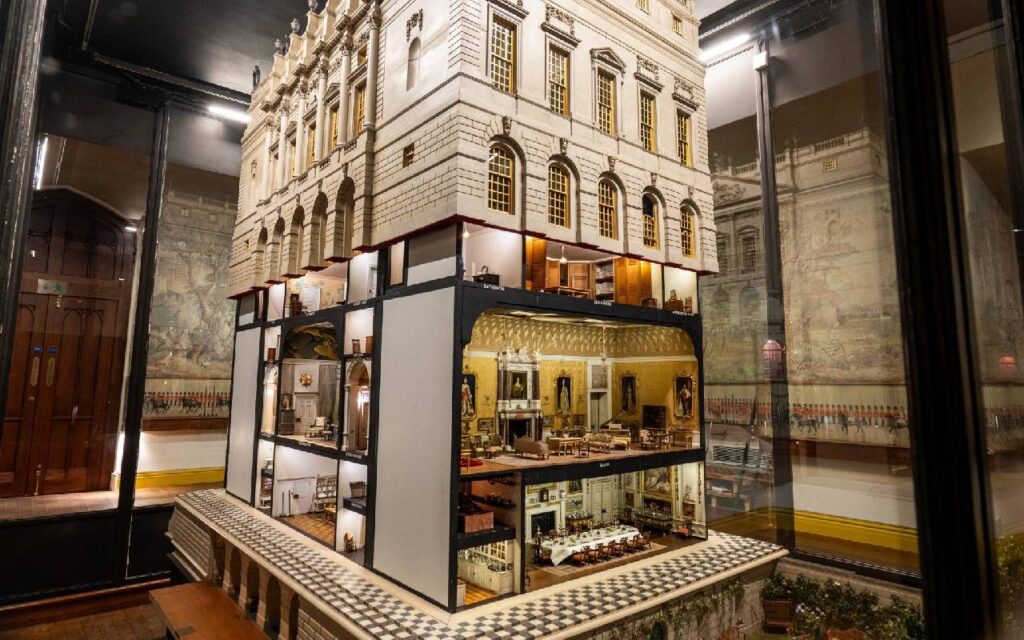
Anecdote: Designed by Sir Edwin Lutyens and installed at Windsor Castle, Queen Mary’s Dolls’ House includes working electricity, running water, lifts, and fully fitted rooms—down to miniature books and artworks by leading creators of the day. It remains one of the world’s best-documented miniature houses and a benchmark for craftsmanship.
Craftsmanship and Detail
Victorian dollhouses were renowned for their artistry. Wealthy families commissioned custom-built houses that featured:
- Hand-painted wallpapers
- Miniature chandeliers and gas lamps
- Stocked kitchens with brass or copper cookware
- Upholstered furniture in silk, velvet, or leather
- Tiny art prints and lace curtains
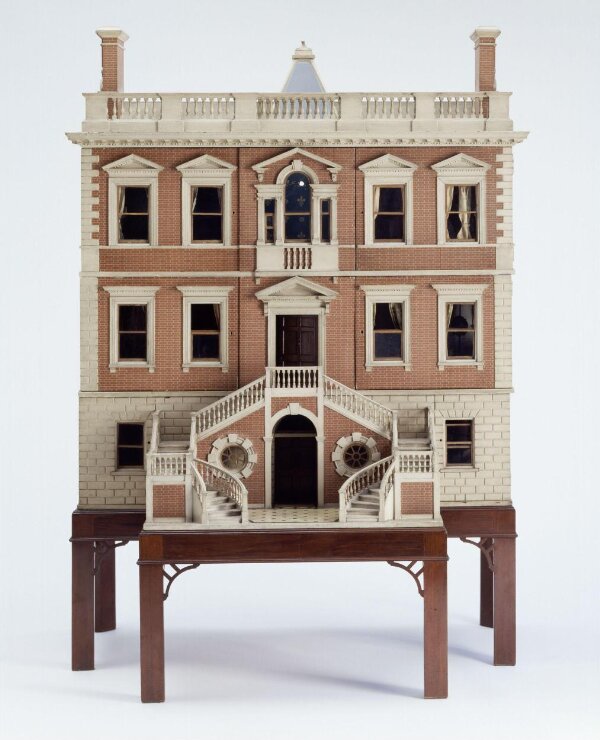
Anecdote: The Tate Baby House (c. 1760 but heavily furnished in the Victorian era) survives today at the V&A Museum of Childhood. Standing over five feet tall, it has intricate wallpapers and miniature objects from different eras, reflecting how these houses were often handed down and updated across generations.
Collector Lore: Stories circulate of wealthy German toymakers crafting dollhouses with working grandfather clocks, early electric lighting, and carved staircases for English families in the 1880s. Some claim that when rediscovered, such houses fetched high sums at auction. While these tales capture the spirit of Victorian craftsmanship, documented examples usually come from museum collections rather than private rediscoveries.
Rise of American Makers
As industrialization spread, America became a leader in producing more affordable dollhouses.
- Bliss Manufacturing Company (Rhode Island, est. 1832): Known for wooden houses with brightly colored lithographed paper walls and roofs, making dollhouses accessible to the middle class.
- Schoenhut (Philadelphia, est. 1872): Famous for their durable wooden dollhouses and furnishings, which appealed to families seeking toys that could endure years of play.
These dollhouses lacked the luxury of their European counterparts but captured the optimism of American domestic life.
Beyond Toys: Status and Education
Not every Victorian dollhouse was a child’s plaything. Collectors and socialites displayed elaborate miniatures as symbols of refinement, and educators used them as models for teaching domestic economy. They embodied the Victorian ideal of the home as both moral center and aspirational space.
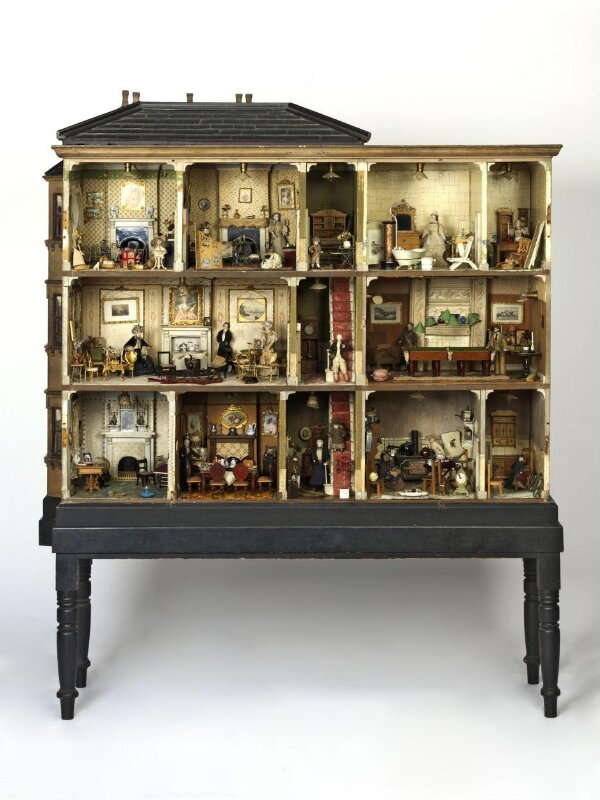
Anecdote: A late-Victorian townhouse in miniature, the Amy Miles Dolls’ House is richly furnished and frequently used by the V&A/Young V&A to illustrate how 19th-century homes—and children’s play—reflected ideals of order and taste. It has featured in the museum’s Small Stories: Dolls’ Houses exhibition and teaching materials
Collecting Victorian Dollhouses Today
Collectors prize Victorian dollhouses for their craftsmanship and intricate details. Complete houses with original furniture and paper lithographs are rare, as many were damaged or lost over decades of play. Even single surviving pieces—such as a velvet-upholstered settee, brass candlestick, or Bliss lithographed wall panel—can carry significant value.
Collector Lore: Stories of Victorian houses discovered in attics or barns, complete with period furniture, circulate widely among enthusiasts. While some turn up in private auctions, many of the most extraordinary examples now reside in institutions like the V&A Museum, the Museum of Childhood (London), or the National Museum of Toys and Miniatures (Kansas City).
Final Thought
The Victorian dollhouse was more than a miniature plaything—it was a mirror of its time. With elaborate craftsmanship, symbolic domesticity, and the rise of affordable mass production, the dollhouse became both a cherished toy and a cultural statement.
Do you have a Victorian dollhouse—or even a single miniature chair or tea set handed down in your family? Share your story with our community and let’s make history—one tiny room at a time.