
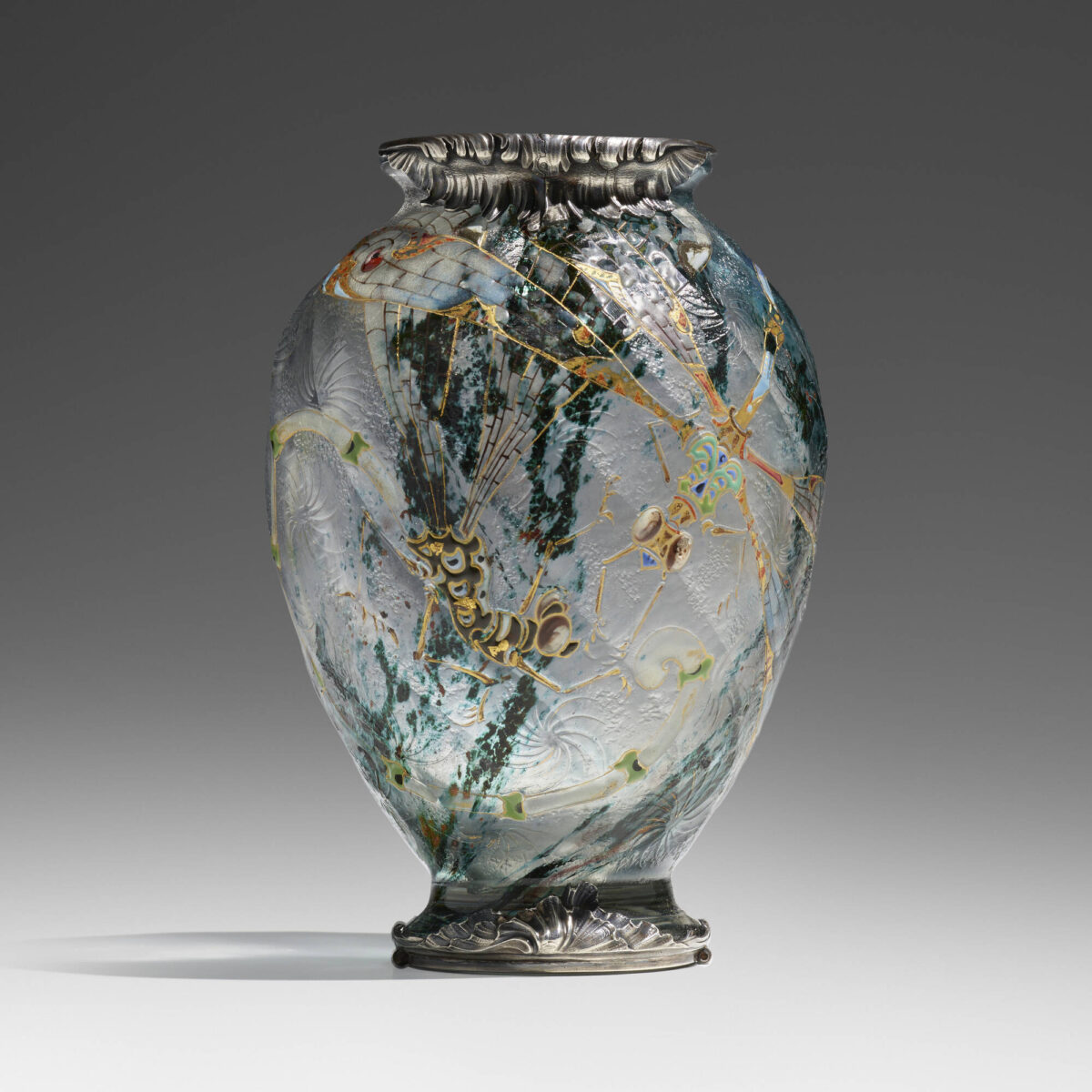
If you’ve ever stopped in your tracks at a vase that looks like it’s still growing—orchids curling up the glass, dragonflies hovering at the rim, a forest scene fading into dusk—you already understand the pull of Émile Gallé. His work doesn’t just decorate a room; it sets a mood. It’s art you can live with, and for collectors, it’s one of the most rewarding intersections of beauty, craftsmanship, and history in the decorative arts.
Gallé (1846–1904) worked in glass and furniture, and he helped define what many people picture when they hear “French Art Nouveau.” But the real story isn’t just flowing lines and nature motifs. It’s experimentation, technical ingenuity, and a very modern idea: that everyday objects—vases, lamps, tables—could carry artistic meaning.
This post is your starting point for collecting (and appreciating) Gallé: what makes the style recognizable, why it mattered, and what to look for when you’re shopping.
Who Was Émile Gallé?
Émile Gallé was born and worked in Nancy, France, and he became one of the best-known designer-makers of the late 19th and early 20th centuries. While collectors often meet him through glass, Gallé was also deeply involved in furniture design, marquetry, and decorative arts writing.
He’s widely associated with the Nancy School (École de Nancy)—an Art Nouveau movement centered in Nancy that emphasized high-quality design inspired by nature and intended for modern life. The group formalized in 1901, with Gallé as a leading figure, and it helped establish Nancy as a major Art Nouveau center.
Why Gallé Defined Art Nouveau for Collectors
Art Nouveau isn’t just “decorative.” At its best, it’s an entire way of thinking about design—organic forms, integration of art into daily life, and a belief that craft and industry could work together.
Gallé’s work embodies that in three collector-friendly ways:
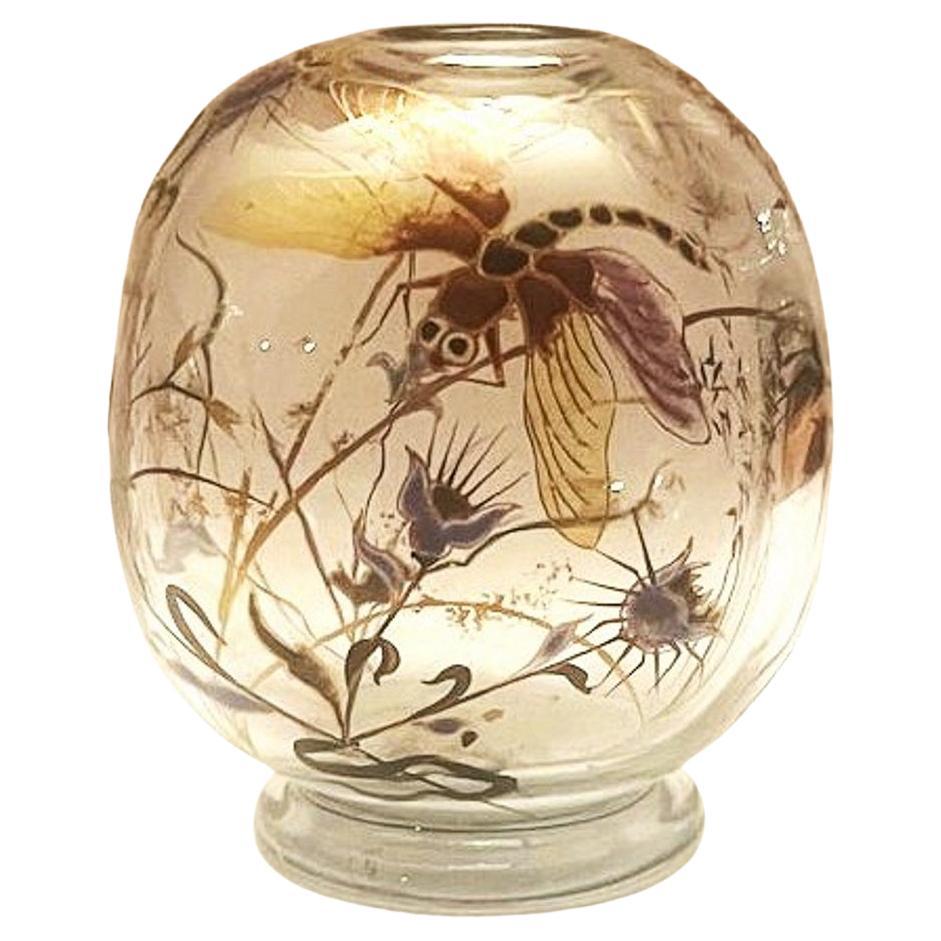
Nature as the main subject
Gallé didn’t use flowers as generic decoration. He treated plants, insects, and landscapes as the point—often rendered with a naturalist’s eye and a poet’s sensibility.
Common themes you’ll see:
- Wildflowers and garden blooms (orchids, thistles, water plants)
- Forest scenes, twilight horizons, and misty landscapes
- Insects and small creatures (dragonflies are especially iconic)
- Seasonal moods—spring brightness, autumn browns, winter silhouettes
Technique as part of the beauty
Gallé was known for pushing what glass could do—layering color, carving and etching surfaces, combining methods, and using decoration to build depth. Even when a piece is quiet in palette, the surface work can be mesmerizing up close.
Words that turn objects into statements
One of the most distinctive “Gallé” touches is the use of inscriptions—short poetic lines, mottos, or literary references that turn a vase or table into something closer to a personal manifesto. Not every piece has text, but when it does, it’s often a key part of the design.
What “Gallé Style” Looks Like at a Glance
Collectors often learn to recognize Gallé by a few recurring signals—especially in glass.
Signature silhouettes
Gallé forms often feel botanical even before you notice the decoration:
- Vases with swelling bodies and narrowed necks (like stems)
- Softly flared rims (petal-like)
- Baluster and gourd-like shapes that feel grown rather than engineered
Color that feels atmospheric
Rather than flat color blocks, Gallé glass often plays with:
- Graduated tones (dusk-to-dawn effects)
- Earthy and floral palettes (greens, ambers, violets, smoky browns)
- Contrasts between layers (especially in cameo work, which we’ll explore in the next post)
Surface decoration with depth
Look for decoration that doesn’t sit “on top,” but feels integrated:
- Layered color revealed through carving/etching
- Shading that suggests mist, distance, or shadow
- Natural forms that wrap the vessel in a continuous scene
Gallé Glass: The Big Categories Collectors Encounter
This series will go deeper into cameo glass next, but it helps to know how collectors broadly talk about Gallé glass when browsing.
Cameo and layered decoration
Cameo glass (layered colors with designs revealed by removing upper layers) is one of the most famous Gallé-associated looks. If you see a dramatic two-tone or multi-tone design with carved or etched relief, you’re likely in cameo territory.
Engraved and acid-etched decoration
Some pieces rely on etched linework and shading to build imagery—floral outlines, landscape scenes, or drifting forms that feel almost like a drawing in glass.
Enameled and mixed techniques
Depending on the piece, you may see enamel accents combined with other methods. Many collectors love examples where multiple techniques work together, creating a complex surface that changes under different light.
Gallé Furniture: Art Nouveau You Can Live With
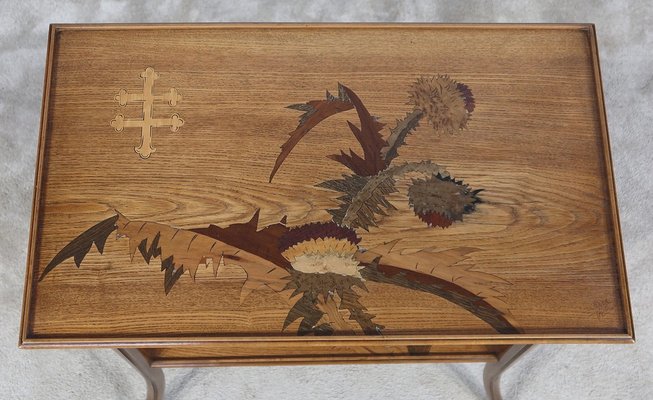
Gallé wasn’t “just” a glass name—his furniture is a major part of his legacy, and it’s a cornerstone of Nancy School design.
What makes Gallé furniture feel different from typical period furniture is the way it treats wood like a canvas:
- Marquetry (decorative inlay) that forms botanical scenes or symbolic imagery
- Carving that echoes vines, stems, and natural curves
- Inscriptions that make a desk or cabinet feel like a personal statement rather than a utility object
Gallé furniture is often collected at a different scale (and price level) than glass, but it’s important context. Even if you’re only collecting vases or lamps, knowing the furniture side helps you recognize the broader design language—those same plant forms and that same “nature as meaning” approach.
Signatures, Marks, and What They Can (and Can’t) Tell You
Most collectors want to know: “Is it signed?” And with Gallé, the signature is part of the story—but it isn’t the whole story.
Common, collector-safe guidance:
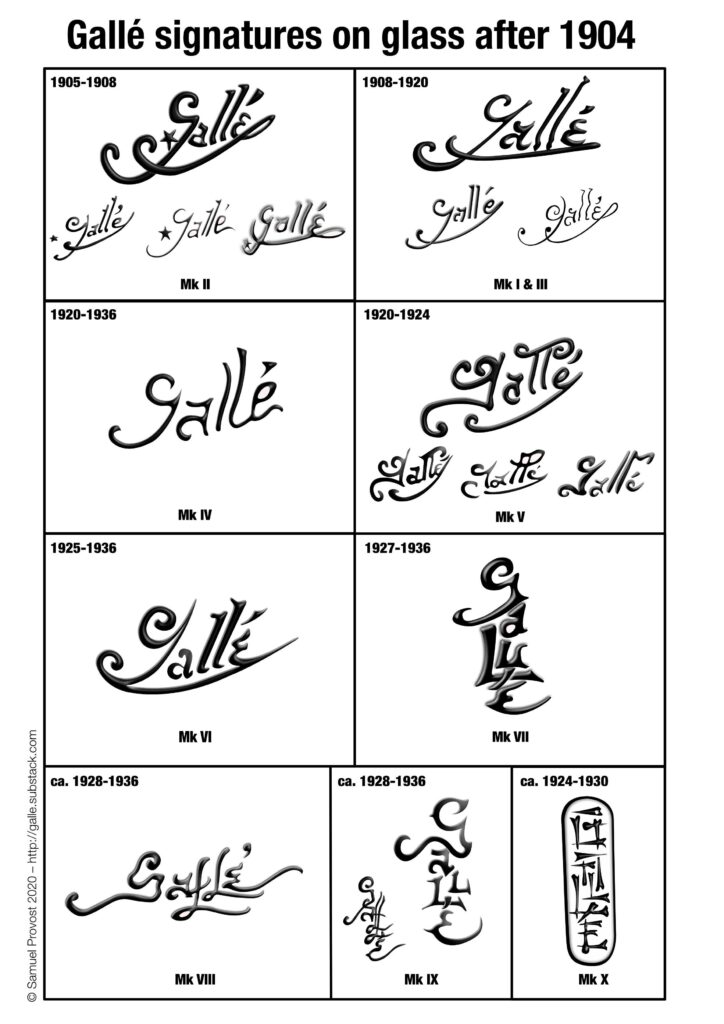
- Authentic pieces are often signed “Gallé” in the glass surface (the signature may appear etched, engraved, or otherwise integrated).
- Many guides note that some post-1904 workshop production (after Émile Gallé’s death) can be associated with a small star used alongside the signature, indicating posthumous manufacture.
- Signature style, placement, and method can vary, and they should be evaluated alongside overall quality, technique, and wear.
Because Gallé has been widely copied and widely “in the style of,” the best approach is to treat the signature as one piece of the puzzle—not the entire proof.
Reproductions, “In the Style of,” and Fakes
Gallé is popular enough that the market includes everything from respectful homage pieces to outright counterfeits. A few practical collector habits help you avoid heartbreak.
Look for quality that matches the name
Even when a piece is legitimately “after Gallé,” the better examples tend to show:
- Confident, crisp decoration (not muddy or vague)
- Thoughtful integration of design and form
- Layering or shading that looks intentional rather than stamped-on
Be cautious with “too perfect” surfaces
Artificially aged pieces can exist, but it’s also common to see:
- Uniform, new-looking finishes with no natural handling wear
- Decoration that sits flat without depth
- Signatures that look added rather than integrated into the piece
Trust your instincts on overall harmony
Gallé design usually feels cohesive: form, imagery, and color belong together. If the decoration feels random or the palette feels off for the style, slow down and compare with known examples.
If you’re investing in a higher-end piece, consider professional evaluation—especially for lamps (which introduce wiring, shade compatibility, and structural safety).
Condition Checklist: What to Inspect Before You Buy
Gallé pieces reward close looking. A quick flashlight check can save you from surprises.
Vases and decorative glass
- Rim chips (common, sometimes tiny—still matters for value)
- Base wear (expected; should look consistent with age)
- Cracks or repairs (watch for glued breaks or filled chips)
- Heavy polishing (can soften detail and alter surface character)
Lamps
- Evidence of rewiring (often necessary for safety; factor it into value)
- Stability of the base and socket area
- Compatibility and fit of shade components (avoid forced or mismatched assemblies)
- Any stress fractures around openings or mounts
Signed pieces
- Check that signature wear and surface wear make sense together
- Look for signatures placed in believable areas (often near base or lower body)
- Avoid rushing—signatures can be faked, but overall quality is harder to fake well
Display and Care: Keeping Gallé Beautiful
These pieces were made to be seen, and a few simple habits keep them safe.
Light and placement
- Display away from high-traffic edges where sleeves and bags catch rims
- Avoid direct, prolonged sunlight on richly colored glass
- Use stable surfaces and museum putty if you live with vibration or pets
Cleaning
- Hand-wash gently when needed; avoid harsh abrasives
- Skip soaking metal-mounted lamps or bases
- Use a soft cloth to prevent micro-scratches on polished surfaces
Storage
- Store upright, not stacked
- Wrap with acid-free tissue or soft cloth, especially around rims and high points
Why Collectors Keep Coming Back to Gallé
Gallé collecting has range. You can appreciate it as:
- Art Nouveau design history
- A technical story about what glass can do
- A nature-driven aesthetic that still feels fresh
- A collecting category with endless variation—forms, colors, motifs, and moods
And it’s not just about “having a Gallé.” It’s about learning to see what makes a piece sing: the way a dragonfly wing is cut into a layer, the way a landscape fades into shadow, the way a simple vase shape becomes botanical sculpture.
Next up in this series, we’ll go deep into one of the most collector-loved areas of all: cameo glass—how it’s made, why it looks the way it does, and what to look for when you’re buying.
Let’s Make History—one Art Nouveau treasure at a time.