While America was making strides with Tiffany, Steuben, and Quezal, Europe remained a powerhouse of innovation in art glass. On the Continent, master artisans pushed the boundaries of technique and design as early as the late 19th century—and their legacy continues to captivate today.
Gallé & Daum: Cemetery of Nature, Evocations in Glass
In Nancy, France, Émile Gallé (1846–1904) perfected the art of cameo glass, crafting luminous layered pieces etched with floral, insect, and aquatic motifs. His deep connection to nature is clear in works depicting dragonflies skimming the water and lily pads drifting across layered surfaces. Gallé’s work became a symbol for Art Nouveau’s celebration of organic forms and botanical beauty.
Following in his footsteps, the Daum brothers—Auguste and Antonin—expanded these techniques with breathtaking results. Their studio mastered acid etching, enameling, and the revival of pâte de verre (glass paste), resulting in richly colored pieces that seemed to capture light, mood, and landscape all at once.
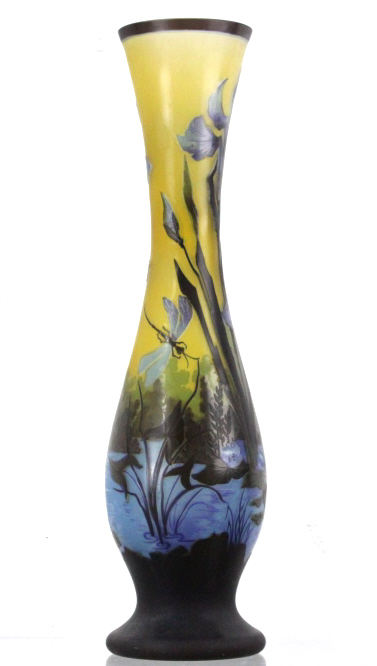
Auction Highlight: In 2017, Hill Auction Gallery offered a large Gallé cameo vase decorated with dragonflies and water lilies. Standing over 30 inches tall and signed, it carried an estimated value of $2,000–$5,000. While it did not sell within the publicly shared records, the listing reflects Gallé’s enduring appeal and the ongoing collector interest in his nature-inspired designs.
Loetz: The Austrian Iridescent Alchemy
Meanwhile, in Bohemia (now the Czech Republic), Loetz Glassworks produced iridescent masterpieces often mistaken for Tiffany creations. Their Phänomen series, in particular, featured metallic lusters and flowing Art Nouveau shapes that shimmer with color shifts depending on the angle of light.
A Loetz Phänomen vase surfaced in a 2020 PBS appraisal segment was appraised at roughly $6,000 retail. Auction records show variations in sale price depending on provenance and rarity—for instance, one sold for around $1,952 at a specialized decorative arts auction.
How to Spot & Appreciate European Art Glass
Collecting European art glass isn’t just about beauty—it’s about knowledge and discernment. Here are a few clear guidelines for enthusiasts:
1. Signatures & Marks


- Gallé often signed his pieces directly into the glass—look for his name etched near the rim or base.
- Daum may be identified with engraved or enamel signatures, sometimes accompanied by “Nancy.”
- Loetz pieces from Phänomen series can be hard to pinpoint by signature, but shapes, iridescence, and pontil marks offer clues.
2. Beware of Imitations
European glass often resembles Tiffany—but many examples on the market are reproductions or imitations. If a piece looks remarkably Tiffany-like but lacks proper signature or provenance, proceed with caution.
3. Recognize Regional Styles
- French Art Nouveau tends toward cameo, layered glass, botanical motifs, and etched textures.
- Austrian/Czech artistry often emphasizes metallic, iridescent finishes and abstract, flowing forms.
4. Condition Still Matters
Chips, scratches, or repairs detract from both the aesthetic value and collector appeal. Even minor damage can greatly reduce collectibility—so inspect carefully or request high-quality condition reports.
Making History Clear: European Art Glass Today
Europe’s glass ateliers continue to influence collectors and artists—here’s how:
- Art Museums and Exhibitions regularly feature Gallé, Daum, and Loetz works as pillars of Art Nouveau history.
- Auction houses continue to foster interest—major museums and galleries still seek to acquire fine pieces for their archives.
- Collector communities thrive online and through specialty groups, sharing insights, authentication tips, and search successes.
Share Your Story
Are you enjoying this art glass series? I’d love to hear from you. Do you treasure a piece of European art glass—or perhaps have a story of uncovering a hidden gem? Share your finds and experiences in the comments below.
Want more deep dives into antiques, collectibles, and the techniques that made them timeless? Subscribe for upcoming posts on spotting fakes, preserving your treasures, and discovering new voices from the golden age of decorative glass.
Let’s make history—one luminous piece at a time.