
Some playing cards are collected because they were used. Others are collected because they were never meant to look ordinary in the first place.
Art and novelty decks are where playing cards become miniature galleries, design experiments, conversation pieces, and sometimes outright jokes. They may still function as cards, but their real appeal often lies in the artwork: unusual court cards, transformed pips, themed jokers, scenic backs, strange shapes, clever packaging, or a concept that makes the whole deck feel like a small art object.
For collectors, this is one of the most flexible and enjoyable playing card categories. You can collect by artist, theme, era, printing style, humor, pop culture, fine art influence, fantasy imagery, animals, holidays, magic, transformation designs, or pure oddity. Some decks are beautiful, bizarre, or charmingly tacky. All of them show how much creative room exists inside a familiar 52-card format.
What Makes a Deck an “Art Deck” or a “Novelty Deck”?
The line between art deck and novelty deck can blur, but the basic distinction is useful.
An art deck usually emphasizes visual design. The deck may feature original illustrations, fine-art reproductions, special court cards, unusual color palettes, or a strong artistic concept across all cards.
A novelty deck usually emphasizes theme, humor, surprise, shape, function, or gimmick. These decks might feature animals, cartoons, tourist imagery, political satire, unusual shapes, oversized or miniature cards, glow-in-the-dark effects, special packaging, or jokes built into the card faces.
Some decks are both. A beautifully illustrated fantasy deck can be an art deck and a novelty deck. A transformation deck with clever visual pips can be playful, artistic, and collectible all at once.
Transformation Decks: When Pips Become Pictures
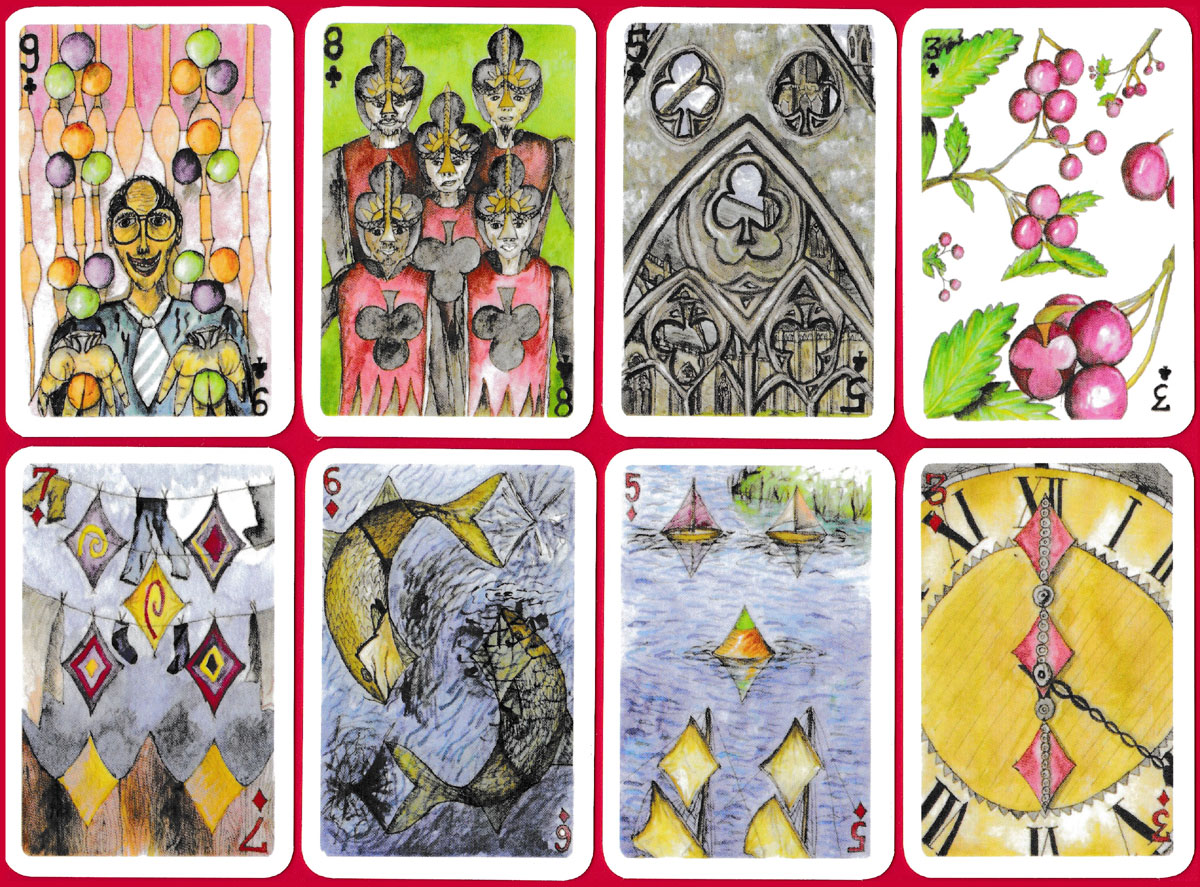
One of the most delightful branches of playing card art is the transformation deck. In these decks, the suit symbols are incorporated into illustrations instead of simply sitting on the card as standard pips.
For example, a row of hearts might become balloons, flower petals, or part of a character’s costume. Clubs might turn into foliage. Diamonds might become windows, jewels, or decorative patterns. The charm is in the visual puzzle: the card must remain readable as a playing card while also becoming a tiny picture.
Collectors love transformation decks because they reward slow looking. You do not just glance at the card—you study how the artist solved the problem. A good transformation deck turns every number card into a small act of imagination.
When buying these decks, completeness matters. Missing even one card can interrupt the artistic sequence, especially if every card has a unique illustration.
Artistic Court Cards: Kings, Queens, and Jacks With Personality
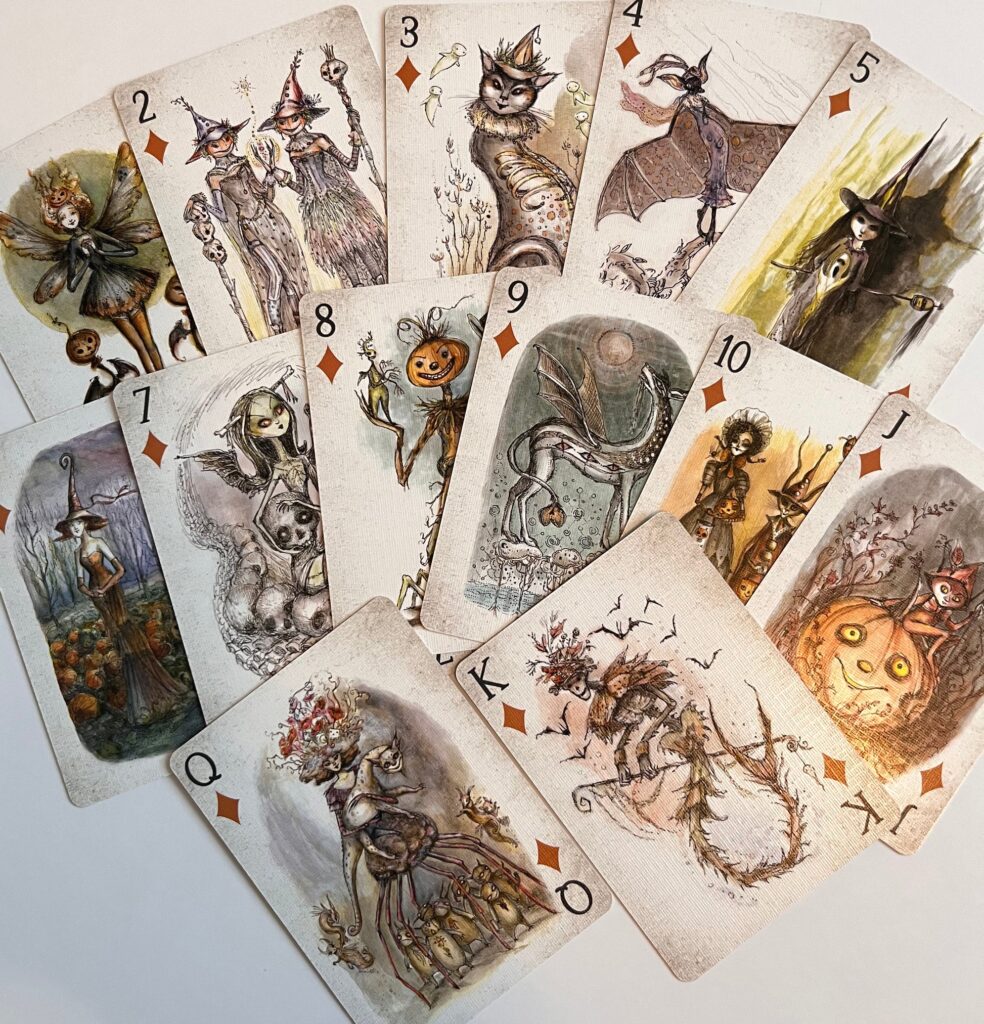
In a standard deck, court cards are familiar almost to the point of invisibility. Art and novelty decks change that. The king, queen, and jack may become historical figures, animals, fantasy characters, celebrities, occupations, literary figures, regional costumes, or entirely invented personalities.
This makes court cards one of the first things collectors check.
Look for:
- Original artwork rather than generic clip-art style graphics
- A consistent visual system across suits
- Court cards that fit the deck’s theme
- Clear printing and color registration
- Interesting jokers that complement the deck
A deck with strong court cards often displays beautifully even when shown only partially. For a framed display or rotating shelf setup, the courts and jokers are usually the “show cards.”
Novelty Shapes and Sizes
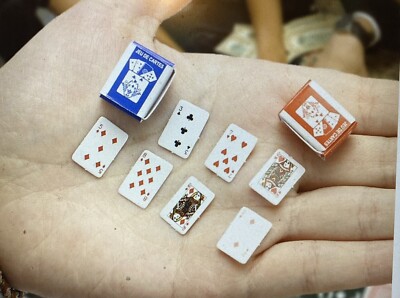
Not every deck is a standard poker or bridge size. Novelty decks can be miniature, oversized, round, long and narrow, shaped like objects, or packaged in unusual cases.
These decks are fun, but they come with a collector’s caution: unusual shapes and sizes can be harder to store safely. Odd-shaped cards may warp, corners may be more vulnerable, and custom boxes can be easily crushed.
Common novelty formats include:
- Miniature decks
- Jumbo decks
- Round or oval decks
- Shaped promotional decks
- Travel-size decks
- Double decks in decorative cases
- Special game decks using non-standard card counts
The more unusual the format, the more important the original packaging becomes. A shaped deck without its custom box can be difficult to protect and less satisfying as a collectible.
Themes Collectors Love
Art and novelty decks cover almost every subject imaginable. That is part of the fun—but also why collecting can get scattered quickly.
Popular collecting themes include:
Animals and nature
Birds, cats, dogs, horses, wildlife, flowers, insects, and botanical illustrations all make strong deck themes. These often pair well with nature books, wildlife prints, or related ephemera.
Fantasy, mythology, and folklore
Dragons, fairies, gods, legends, and magical creatures often appear in richly illustrated decks. These can overlap with fantasy art collecting and gaming culture.
Humor and novelty illustration
Comic decks, gag decks, caricature decks, and satirical cards are especially fun if you collect social history or pop culture.
Holidays and seasonal themes
Christmas, Halloween, Valentine’s Day, patriotic holidays, and vacation themes can make great small seasonal collections.
Fine art and museums
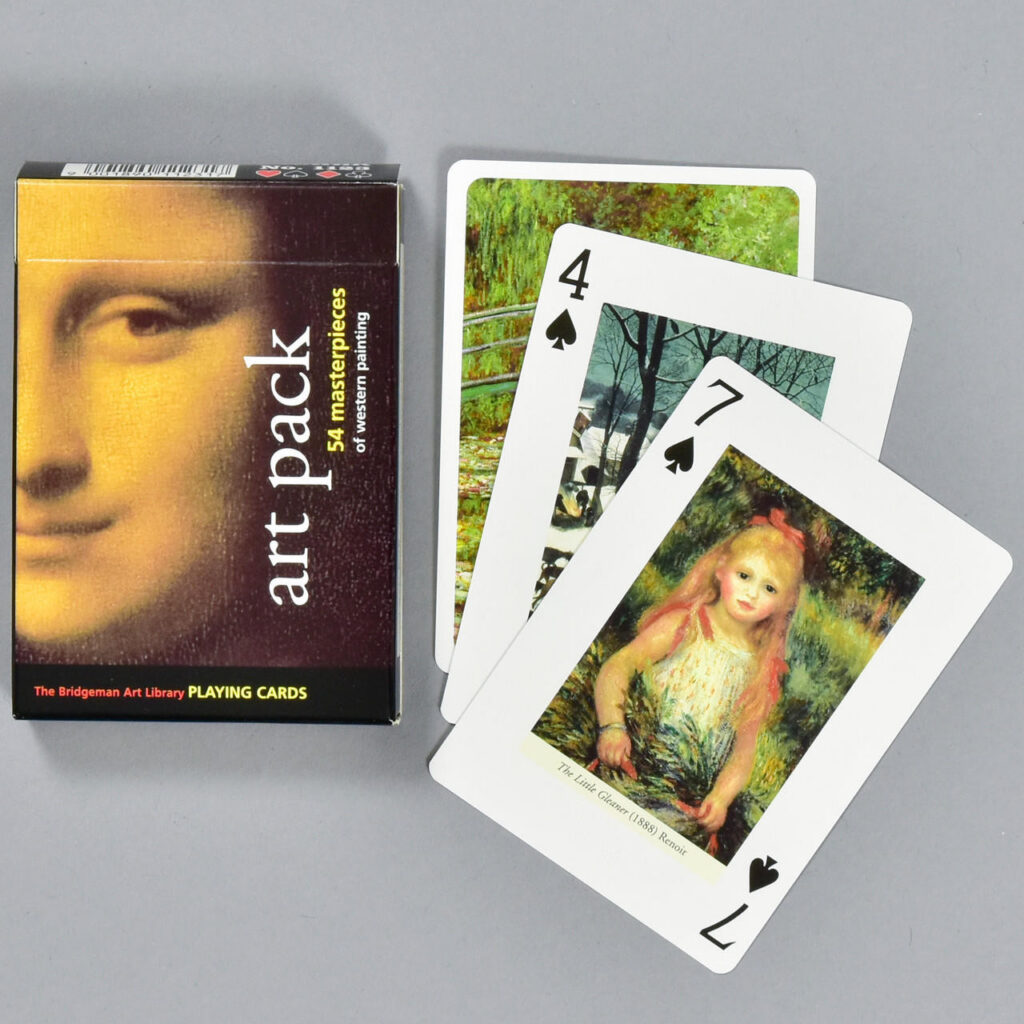
Some decks reproduce famous paintings, museum collections, or art movements. These are often excellent display decks, especially if the box and insert explain the artwork.
Pop culture and entertainment
Movie, television, music, cartoon, and celebrity decks can be highly nostalgic. Condition and licensing details matter more in this lane because modern reissues and unofficial decks are common.
Advertising, Art, or Novelty? Sometimes It’s All Three
A deck can belong to more than one category. A hotel deck may have wonderful artwork. A souvenir deck may be a novelty shape. An advertising deck may use custom court cards. A museum gift shop deck may be both educational and artistic.
Instead of forcing a deck into one rigid box, ask: What is the main reason this deck is collectible?
- Is it the artwork?
- The theme?
- The brand or advertiser?
- The location?
- The unusual format?
- The humor?
- The artist?
This helps you decide how it fits into your collection and how to describe it if you sell or catalog it later.
What Collectors Look For
Art and novelty decks are often collected for visual appeal, but condition still matters.
Completeness
Check for:
- All cards expected for that deck
- Jokers
- Extra art cards or title cards
- Instructions, if included
- Original box or case
Some art decks include special inserts explaining the artist or theme. Those extras can add context and collector interest.
Artwork quality
Good artwork does not always mean “fancy.” It means the deck has a clear visual point of view. Look for consistency, strong printing, thoughtful layout, and images that support the theme.
Box and packaging
With novelty decks, the box may be half the charm. Custom cases, double-deck boxes, magnetic closures, illustrated tuck boxes, and printed inserts all help tell the story.
Condition
Watch for:
- Bent corners
- Sticky surfaces
- Heavy edge wear
- Missing or crushed boxes
- Fading from display
- Warping from humidity
- Odors from poor storage
A little handling is expected. Severe warping, moisture damage, or missing key cards should affect the price.
Reproductions, Reissues, and Modern Artist Decks
This category includes many modern decks, and that is not a problem. Unlike some antique categories, “newer” does not automatically mean uncollectible. Many modern artist decks are made with high-quality printing, limited runs, and strong design concepts.
The key is honesty. A modern art deck should be valued as a modern art deck. A reissue of an older novelty deck should be described as a reissue. A deck inspired by antique transformation cards should not be sold as an antique deck unless it truly is one.
When buying, look for:
- Publisher or maker information
- Copyright dates
- Artist names
- Edition information
- Printing quality
- Whether the deck is sealed, opened, complete, or used
Modern limited-edition decks can be very collectible, but they are still part of a different market than antique or early vintage decks.
Display Ideas for Art and Novelty Decks
Art decks deserve to be seen, but playing cards are paper collectibles, so display needs care.
Try:
- A rotating display of one deck at a time
- A shallow tray with courts, jokers, and box shown together
- A binder with archival pages for loose or partial decks
- A shadowbox using lower-value duplicate cards
- A shelf vignette with the deck, box, and related objects
If you collect by theme, display decks with supporting items. A bird deck with a small bird figurine or field guide. A travel novelty deck with postcards. A Halloween deck with seasonal décor. A museum art deck with an exhibition postcard or book.
Just avoid long-term direct sunlight. The colors that make art decks so appealing are also vulnerable to fading.
Care and Storage Tips
Art and novelty decks need the same basic care as other paper collectibles, with extra attention to odd packaging and unusual formats.
- Store cards in their original box whenever possible.
- Do not use rubber bands.
- Keep decks away from damp spaces and hot attics.
- Store unusual shapes so they are not under pressure.
- Use archival sleeves for loose cards.
- Keep boxes upright or supported so they do not collapse.
- Avoid displaying valuable decks in direct sunlight.
- Handle glossy or coated cards with clean, dry hands.
For sealed decks, think carefully before opening. If you collect for artwork, you may want to enjoy the cards. If you collect sealed examples, opening can affect value. There is no single right answer—just be intentional.
A Gentle Collector’s Checklist
Before buying an art or novelty deck, ask:
- Is the deck complete?
- Does it include the box, jokers, inserts, or special cards?
- Is the main appeal artwork, theme, format, artist, or packaging?
- Does it fit a lane I already collect?
- Is the condition stable enough for storage or display?
- Is it antique, vintage, modern, or a reissue—and is it priced accordingly?
- Do I love it enough to keep it, even if it is not rare?
Art and novelty decks remind us that playing cards are more than tools for games. They are tiny canvases—shuffled, handled, saved, displayed, and rediscovered one card at a time.
Let’s Make History—one illustrated card at a time.