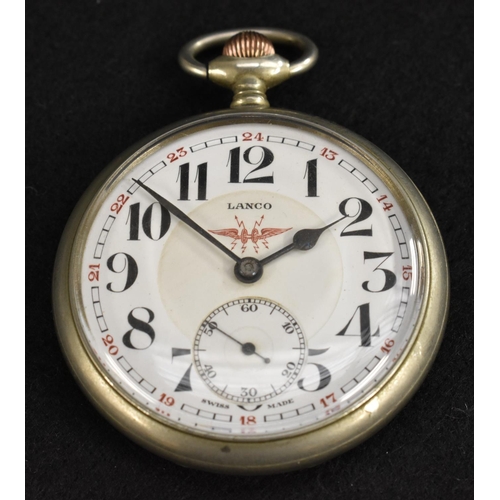
A pocket watch can feel like a personal little heirloom—something carried close, engraved with initials, passed down with a story. But on the railroad, a watch was something else entirely: safety equipment.
When trains began moving fast over long distances—often on single-track lines, guided by timetables and train orders—being “a few minutes off” wasn’t a harmless mistake. It could put two trains on the same stretch of track at the same time. That’s why railroad timekeeping became one of the most disciplined and regulated uses of personal watches in history.
This post is a collector-friendly guide to what railroad watches are, why they mattered so much, what “railroad grade” really means, and what to look for when you’re evaluating one today.
Why the Railroad Needed Precision Time
In the 1800s, many towns kept their own local time based on the sun. Noon was noon when the sun was highest there. That worked well enough when travel was slow and local.
Railroads changed the scale of everything. Trains could cross multiple regions quickly, and a timetable only works if everyone agrees on what “10:15” actually means. Standardized timekeeping became essential—not just for convenience, but for coordination across distance.
Once railroads started operating on unified time systems, the next problem became obvious: railroad workers needed personal timepieces they could trust, not just station clocks.
The Real Stakes: Timekeeping as Safety
Railroad operations relied heavily on time-based rules. Trains weren’t always separated by modern signaling systems the way we picture today. On many lines, train movement depended on a combination of schedules, dispatch instructions, and strict rules about right-of-way.
In that environment, a watch wasn’t an accessory. It was part of the operating system.
A dependable watch helped prevent:
- misread departure times
- missed meeting points between trains
- confusion over orders
- dangerous assumptions about where another train “should” be
And because mistakes were costly, railroads developed time service rules that were far more demanding than what most people needed for everyday life.
What Is a “Railroad Watch,” Exactly?
In collecting, you’ll hear a few terms that get used interchangeably, but they’re not identical.
Railroad approved
This is the most meaningful phrase historically. A watch was “railroad approved” when it met the requirements of a particular railroad and was accepted for use by employees in safety-sensitive roles (engineers, conductors, and others depending on the line’s rules).
Railroad grade
Collectors often use “railroad grade” to describe watches built to meet common railroad standards. That’s useful shorthand—but it’s important to remember that standards changed over time and could vary by railroad.
A good collecting mindset is:
- Railroad approved = accepted under specific rules
- Railroad grade = built to meet the kind of standards railroads commonly expected
The Core Standards: What Railroads Commonly Required
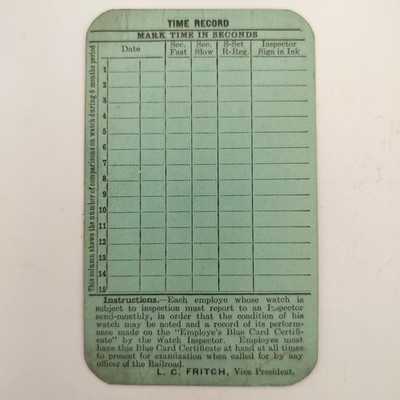
Railroad requirements evolved, but by the late 1890s and into the early 1900s, many railroads leaned toward a recognizable set of expectations. If you want to understand railroad watch collecting, these are the features to learn first.
Accuracy with regular monitoring
Railroad watches were expected to stay within tight gain/loss limits over set time periods—often tracked weekly. Precision wasn’t just advertised; it was verified.
Higher jewel counts (often 17 jewels or more)
Jewels reduce friction at key pivot points, improving durability and supporting stable performance over time. Many railroad-accepted watches were 17 jewels or higher, though specific requirements could differ depending on era and railroad.
Adjusted to positions
A watch doesn’t live in one orientation. It rides in a pocket, changes angles, and gets set down on desks. “Adjusted to positions” means the movement was tuned to keep more consistent time in multiple orientations—an important feature for a watch used daily under working conditions.
Temperature adjustment
Temperature affects metal and the balance system. Railroads commonly required watches that could maintain more stable time across real-world temperature swings.
The famous railroad feature: lever setting
One of the clearest hallmarks for many classic railroad watches is lever setting.
Instead of simply pulling out the crown to set the hands, a lever-set watch requires you to open the bezel and pull out a small lever before the hands can be moved. The reason is practical and serious: it reduces the chance of accidentally changing the time by bumping the crown in a pocket.
For railroad use, preventing accidental resets was a big deal.
Clear, readable dials
Railroad timekeeping demanded quick reading under pressure. Many watches used in service feature:
- bold Arabic numerals
- strong contrast between hands and dial
- an easy-to-read minute track
- layouts that minimize confusion at a glance
This is part of why railroad watches look so “classic” today—they were designed for clarity, not decoration.
The Inspection System: When Your Watch Gets Checked Like a Tool
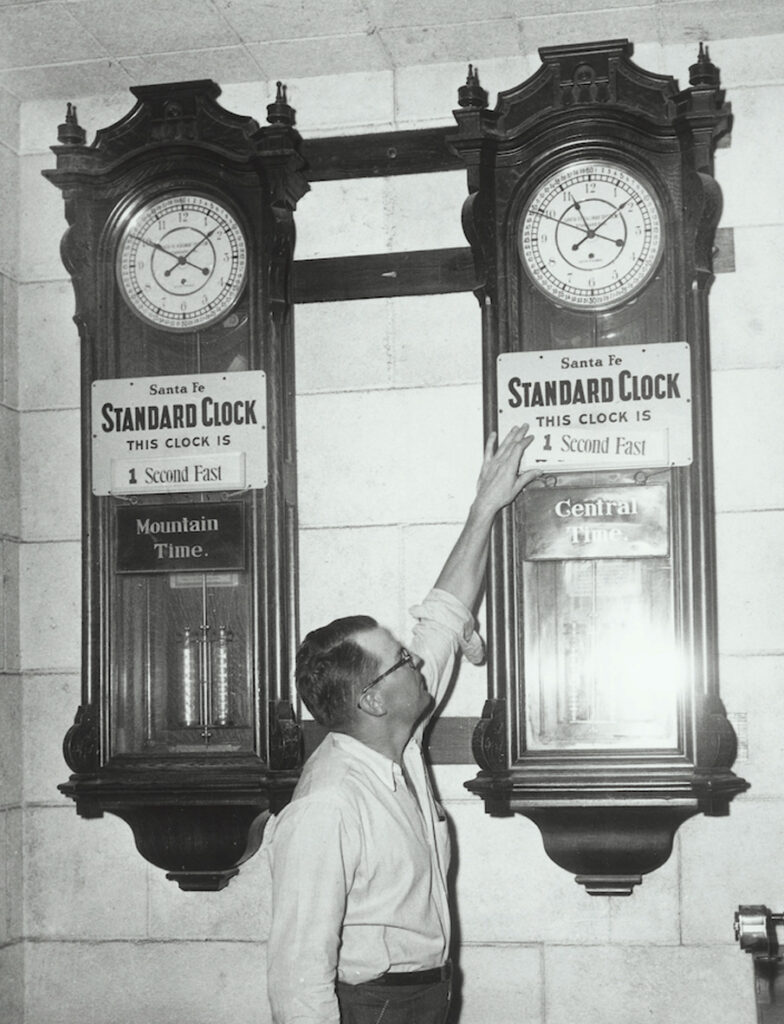
Here’s one of the most fascinating aspects of railroad watches: you didn’t just buy a good watch and call it a day. Many railroads required workers to participate in a structured inspection system.
That could include:
- a designated standard time source used for comparison
- an authorized inspector (often a local jeweler appointed for that role)
- regular checks (often weekly) with recorded results
- clear rules for what happened when a watch drifted outside tolerance
In other words, a railroad watch was not merely owned—it was managed.
This is one reason the category is so compelling to collectors: it’s a direct link between small-scale mechanical craftsmanship and big-scale public safety.
Open-Face vs. Hunter: Cases, Style, and Practicality
Most people think of pocket watches in two case styles:
Open-face
No front lid—just the dial visible immediately. Many railroad watches are open-face because it’s faster and simpler to read.
Hunter
A hinged lid covers the dial, typically opened with a button. Hunters can be beautiful, but from a railroad standpoint, extra steps can mean extra delay, and lids add moving parts that can wear.
Collectors often find railroad-style watches in open-face configurations with bold numerals and a clear minute track, simply because the function demanded it.
“Railroad Grade” Features Collectors Learn to Spot
If you want to scan a watch quickly and ask “Could this be railroad style?” look for a cluster of clues rather than one magic stamp.
Common signs include:
- lever-set mechanism
- bold Arabic dial with a strong minute track
- markings that indicate adjustments and jewel count
- overall design focused on readability and reliability
A watch doesn’t need to shout “railroad” to be a serious timepiece—but railroad-style watches tend to feel purposeful and no-nonsense.
Brands vs. Grades: What Matters Most
Many companies produced watches used in railroad service, and collectors often recognize names like Hamilton, Elgin, Waltham, Illinois, and Ball. But here’s the collector truth:
The grade and features matter more than the brand name alone.
A company might make both everyday watches and high-grade adjusted movements. Two watches from the same manufacturer can be worlds apart in intended use and collectibility. When evaluating a railroad watch, train your eye toward function and markings first—then enjoy the brand history as a bonus.
A Collector’s Checklist: Evaluating a Railroad Watch Today
Railroad watches are popular, so it helps to buy with a clear checklist.
1) Confirm the key railroad-style features
Start with what you can see (or learn quickly):
- lever set (check under the bezel)
- bold, readable dial and minute track
- markings indicating jewels and adjustments
- overall coherence of style
2) Check for “coherence” between movement, dial, and case
Over a century of repairs can create mismatched combinations:
- a movement recased later
- a replacement dial that doesn’t suit the era or grade
- hands swapped for whatever fit during a repair
That doesn’t automatically make a watch undesirable, but it can affect value. Coherent, period-plausible combinations often command stronger collector interest.
3) Evaluate dial condition carefully
Dials matter a lot visually. Look for:
- chips around the edge
- hairline cracks
- heavy staining or discoloration
- missing or altered numerals
A dial can make a watch feel crisp and “railroad correct,” or it can make it feel tired—even if the movement is excellent.
4) Case condition and wear
Cases tell their own story:
- dents and deep scratches
- worn hinges (if a hunter)
- brassing on gold-filled cases
- missing crown or worn stem parts
Some wear is expected and can be charming. The question is whether the case still protects and presents the watch well.
5) “Runs” vs. “healthy”
A watch can run and still need service. If you plan to use it regularly, assume professional servicing may be needed unless you have solid documentation of recent maintenance. If you’re collecting primarily for display, a non-running watch can still be a worthwhile historic piece—especially if complete and visually strong.
6) Provenance and paper
Railroad watches are story-rich. Extras can be rare, but they’re meaningful:
- inspection papers or service records
- original box or period advertisement
- engravings tied to a person or job
- a family story with names and dates
Even a simple engraved case can elevate a watch from “nice collectible” to “human artifact.”
Caring for Railroad Watches
These were built for work, but they’re still precision instruments.
Collector-friendly care habits:
- store dry, with stable temperature and humidity
- avoid aggressive polishing (especially on gold-filled cases)
- wind gently and stop when resistance increases
- don’t force the setting mechanism
- if running regularly, service periodically to reduce wear
For display, railroad watches look fantastic with:
- a watch chain and fob
- a period timetable, ticket stub, or railroad ephemera
- a small shadow box setup that highlights the watch’s role as a tool
Why Railroad Watches Still Captivate Collectors
Railroad watches are collectible because they’re the perfect mix of:
- mechanical ingenuity
- practical design you can read instantly
- cultural and industrial history
- personal story (often literally engraved into the case)
They’re also a reminder of something modern life makes easy to forget: timekeeping used to be hard-won. Keeping time accurately took skill, discipline, and constant attention. On the railroad, it took standards and inspections—and a watch you could trust.
Let’s Make History—one minute mark at a time.