Bicycles have a way of slipping into the background of everyday life—until you stop and realize how much they’ve changed the world.
They’ve changed how people move through towns and cities. How young people claim independence. How communities think about roads and public space. How women claimed mobility in public life. How we imagine “fitness,” recreation, and even what it means to explore. And they’ve done all of it with a simple promise: two wheels, human power, and the freedom to go.
This post is a wrap-up of our Bicycles series, and it’s less about one specific model than the bigger story: why bicycles matter, why they keep reappearing in new forms, and why collectors can’t help but chase them—whether it’s a towering high-wheeler, a balloon-tire cruiser, a scuffed-up BMX, or a beloved mountain bike that still looks ready to climb.
The Bicycle’s Quiet Superpower: Personal Mobility on Your Own Terms
Before bicycles became common, everyday travel options were limited by distance, money, or access to animals and vehicles. The bicycle introduced something different: personal transportation that didn’t require fuel, a schedule, or a horse.
That’s the core reason bicycles have been “wheels of change” from the beginning. They shrink the map.
A bicycle can turn:
- a long walk into a quick ride
- a neighborhood into a wider world
- a local errand into independence
- a day’s outing into an adventure
And once that capability exists, societies adapt around it—sometimes quickly, sometimes slowly, but always noticeably.
From Running Machines to Real Bikes: The First Big Leap
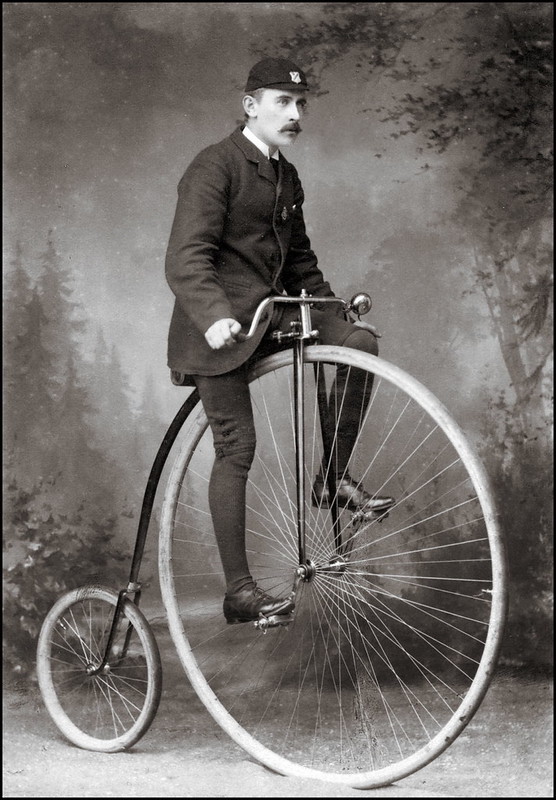
Early bicycle history can feel almost unbelievable because the earliest “bicycles” weren’t pedaled at all. In 1817, Karl von Drais demonstrated a two-wheeled “running machine” (a draisine) propelled by pushing off with your feet—no chain, no pedals, just balance and momentum. That idea—two wheels in a line, steered and balanced—became the seed for everything that followed.
Once pedals entered the story later in the century, the bicycle stopped being a novelty and became a genuine transportation tool. But the earliest fast designs came with tradeoffs.
High-Wheels and the Price of Speed
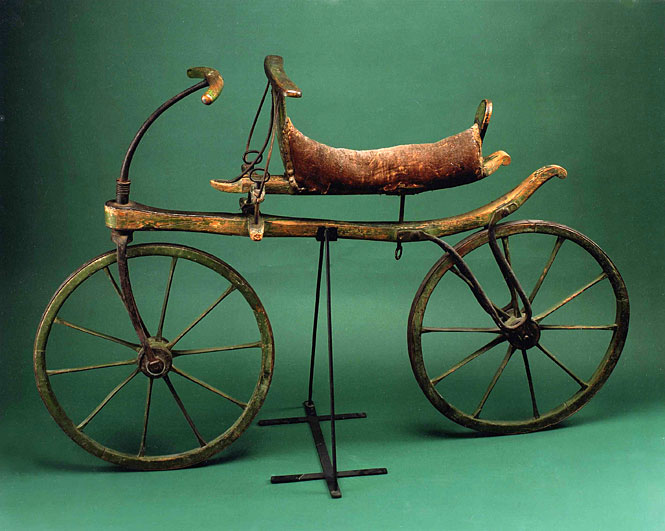
The penny-farthing era (high-wheel “ordinary” bicycles) proved the bicycle could be fast and thrilling—yet also risky and exclusive. High-wheel designs favored athletic, confident riders and were often expensive enough to signal status. In a way, they were bicycles as performance: speed, skill, and bravado on display.
Collectors love high-wheel bikes today because they’re visually dramatic and mechanically honest—direct drive, big wheel logic, and the unmistakable silhouette of a daring era. They represent a moment when cycling was still proving itself.
But the biggest social changes came when the bicycle stopped being a high-wire act.
The Safety Bicycle: When Cycling Became for (Almost) Everyone
The bicycle’s most important “change moment” might be the one that looks the most normal to us now.
In 1885, J. K. Starley’s Rover safety bicycle helped establish the template that most modern bicycles still echo: two wheels of similar size, a lower center of gravity, and a chain drive to the rear wheel. That shift did more than improve engineering. It changed who could ride and how bicycles fit into daily life.
Add inflatable tires—popularized in the late 1880s—and the bicycle became smoother, more comfortable, and more practical on real roads. The result wasn’t just more riders. It was a full cultural wave.
The 1890s Boom: Clubs, Roads, and a Whole New Kind of Freedom
The 1890s didn’t just “have bicycles.” They had bicycle culture.
Cycling clubs multiplied. Touring became a pastime. Racing grew. Accessories and advertising exploded. And cyclists began pushing for better roads—helping spark advocacy that shaped how communities discussed infrastructure and public space.
This is also where bicycles begin to show up as everyday objects in photographs and family stories—used for commuting, errands, social visits, and recreation. For collectors, the boom era is a goldmine because it created not only bikes but also ephemera: badges, catalogs, posters, tools, lamps, and all the objects that surrounded cycling as a lifestyle.
A Wheel of Social Change: Women, Mobility, and Public Life
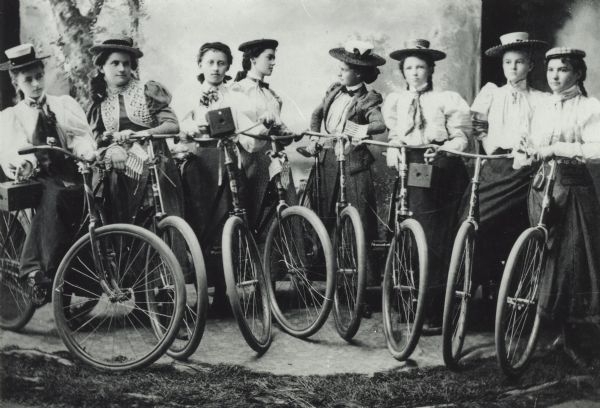
It’s hard to overstate how socially significant the safety bicycle became—especially for women.
When riding became more practical and less dangerous, bicycles opened new possibilities for independent movement. That independence wasn’t just physical; it was social. A bicycle meant a woman could travel farther, faster, and more often without relying on someone else’s schedule or permission.
That shift connected to broader conversations about clothing practicality, public space, and modern life. It’s one reason bicycle history appears again and again in discussions of social change: not because a bicycle “solved everything,” but because it visibly expanded what people could do on their own.
Collectors feel that history, too. A late 19th-century bicycle isn’t only metal and rubber—it’s a snapshot of changing norms.
The Middle Years: When Bikes Became Childhood, Neighborhoods, and Style
As the 20th century moved on, bicycles kept evolving, but their cultural role also widened. For many families, the bicycle became a symbol of growing up—training wheels, first solo rides, the first taste of “I can go by myself.”
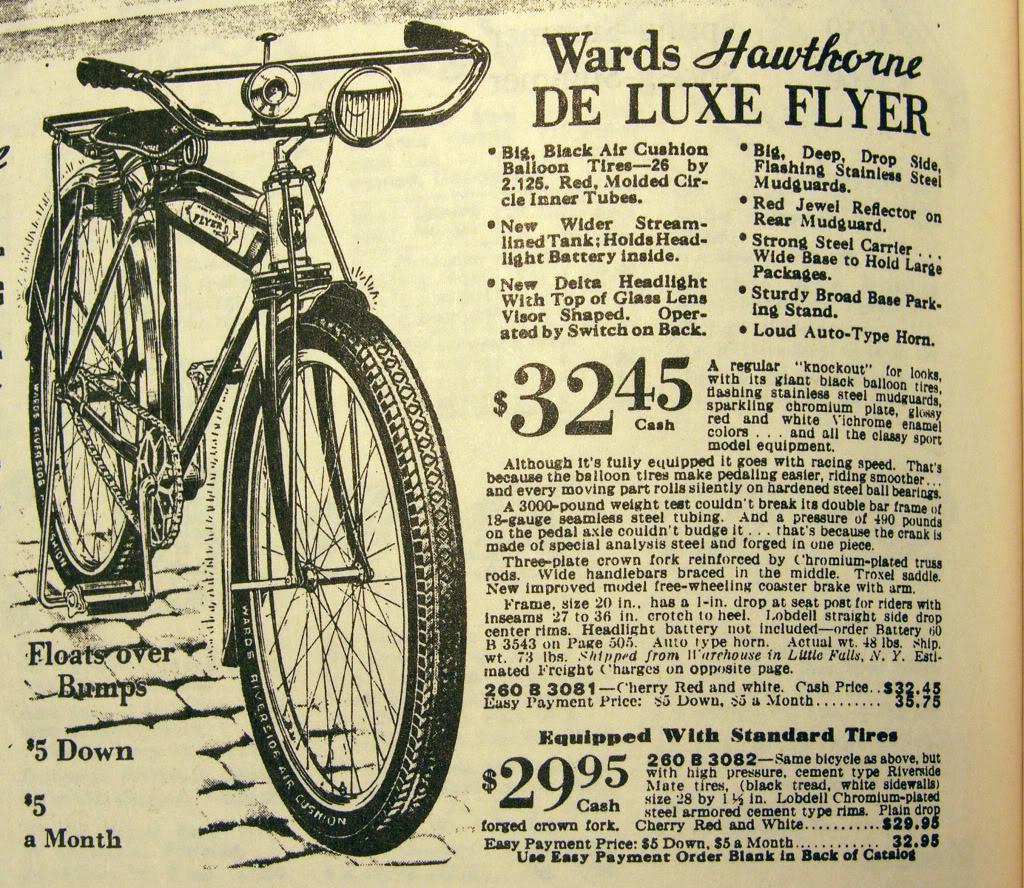
And in the 1930s–50s, balloon-tire cruisers made that feeling iconic: wide tires for rougher streets, sturdy frames, full fenders, and accessories that made bikes feel personal. These weren’t just machines. They were prized possessions—often a kid’s first big “vehicle.”
That’s why cruiser-era bikes hit collectors right in the heart. They’re the bicycles of paper routes, corner stores, summer evenings, and the kind of independence you can’t quite replicate later in life.
BMX, Mountain Bikes, and the Modern Explosion of Identity
By the late 20th century, bicycles didn’t just represent transportation. They represented subcultures.
BMX rose from youth creativity and competition—racing, freestyle, neighborhood tracks, and the idea that a bicycle could be a sport you built with your friends. Mountain bikes reshaped outdoor recreation by turning trails and dirt roads into a playground—adventure on two wheels.
This is where “modern classics” become especially collectible, because the bikes are often still close enough to our own memories to feel personal. A modern classic isn’t only about age—it’s about impact:
- a bike that defined a decade’s look
- a bike tied to a local scene (tracks, trails, shops)
- a bike people begged for, customized, and rode hard
- a bike with a silhouette you recognize instantly
And because many BMX and early mountain bikes were used intensely, survivors with original paint, decals, and correct-era parts can feel like rare time capsules even if the model wasn’t rare when new.
Why Bicycle Collecting Works: It’s History You Can Live With
Bicycles are one of the most satisfying categories to collect because they hit multiple collecting “sweet spots” at once:
Design you can see across a room
From high-wheels to cruisers to BMX silhouettes, bicycles have sculptural presence.
A story built into every scratch
Bikes wear their history honestly: paint rubs, chips, sun fade, and the kind of patina that looks earned.
Objects that bring their own supporting cast
Bikes pair beautifully with ephemera: signs, tools, catalogs, badges, helmets, lights, bells, pumps, and photographs.
A collectible that can still function
Even when kept as display pieces, bicycles carry the energy of motion. And for many collectors, careful restoration keeps a piece of history rideable.
A Collector’s Wrap-Up Checklist: What Matters Across Eras
No matter which bicycle era you love most, a few evaluation basics help you buy smarter and enjoy your collection longer.
- Structural integrity first: cracks, bends, bad repairs, severe rust-through
- Originality matters: paint, decals, head badges, and era-correct parts
- Completeness adds value: matching fenders/guards on cruisers, correct components on BMX/MTB, period accessories
- Patina can be a feature: honest wear often feels more authentic than over-restoration
- Story elevates everything: photos, provenance, local shop tags, race plates, or family history
If you’re collecting to display, focus on presence and authenticity. If you’re collecting to ride, balance preservation with safety—especially for rubber parts, brakes, bearings, and structural checks.
The Bicycle’s Ongoing Change Story
The most remarkable thing about bicycle history is that it never really ends. Bikes keep returning in new forms because the underlying idea remains powerful: simple, efficient, personal mobility.
Every era reshapes the bicycle to match what people want and need—speed, safety, comfort, style, performance, identity, adventure. And every era leaves behind objects that collectors can hold, restore, and display as proof of how life once moved.
That’s why bicycles belong in the collectibles conversation. They’re not just machines. They’re wheels of change—and they keep turning.
Let’s Make History—one revolution at a time.