
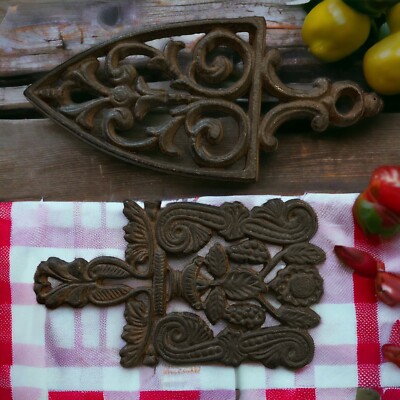
If you collect trivets long enough, you’ll notice something funny: they’re “small” until they aren’t. One turns into a stack. A stack turns into a drawer. A drawer turns into a whole shelf—cast iron next to tile next to brass next to something whimsically shaped like a pineapple that you swear you didn’t need, but somehow couldn’t leave behind.
Trivets are one of the most satisfying kitchen collectibles because they sit right at the crossroads of useful and decorative. They were made to protect tables, sideboards, counters, and linens from heat—yet many were designed with real style: openwork patterns, floral motifs, patriotic themes, animals, advertising, even clever mechanical stands that fold flat.
This post is about building a coherent trivet collection “from stove to table”—not just buying random pieces, but collecting with intention. We’ll cover how to choose a focus, how to pair trivets with related kitchen items, how to store and care for mixed materials, and how to collect on a budget. We’ll finish with a gentle collector’s checklist you can keep in your pocket for your next thrift run.
Why Trivets Make Such a Great “Coherent Collection”
Trivets are perfect for focused collecting because they naturally come with built-in organizing themes:
- Materials (cast iron, brass, aluminum, ceramic tile, enamel, wood)
- Function (flat hot pads, pot stands, folding or hinged stands, warming stands)
- Design language (Victorian-style ornament, Arts & Crafts geometry, mid-century modern simplicity, folk motifs)
- Motifs (florals, fruits, animals, patriotic, kitchen sayings)
- Context (home kitchens, restaurants, advertising giveaways, souvenir pieces)
That means you can set simple “rules” for your collection and still have endless variety.
Start with Focus: Choose Your Anchor
The fastest way to make your trivet collection look curated is to pick an anchor and let it guide your purchases. You can always expand later—but starting with one clear anchor keeps you from building a “miscellaneous heat-protection pile.”
Here are the four easiest ways to focus a trivet collection.
1) Collect by material
This is the most collector-friendly approach because materials behave differently (and display beautifully together).
Popular material lanes include:
- Cast iron: heavy, durable, often ornate openwork
- Brass/copper: warmer tone, often more decorative, sometimes with patina collectors love
- Aluminum: lighter weight, frequently mid-century, sometimes bright and graphic
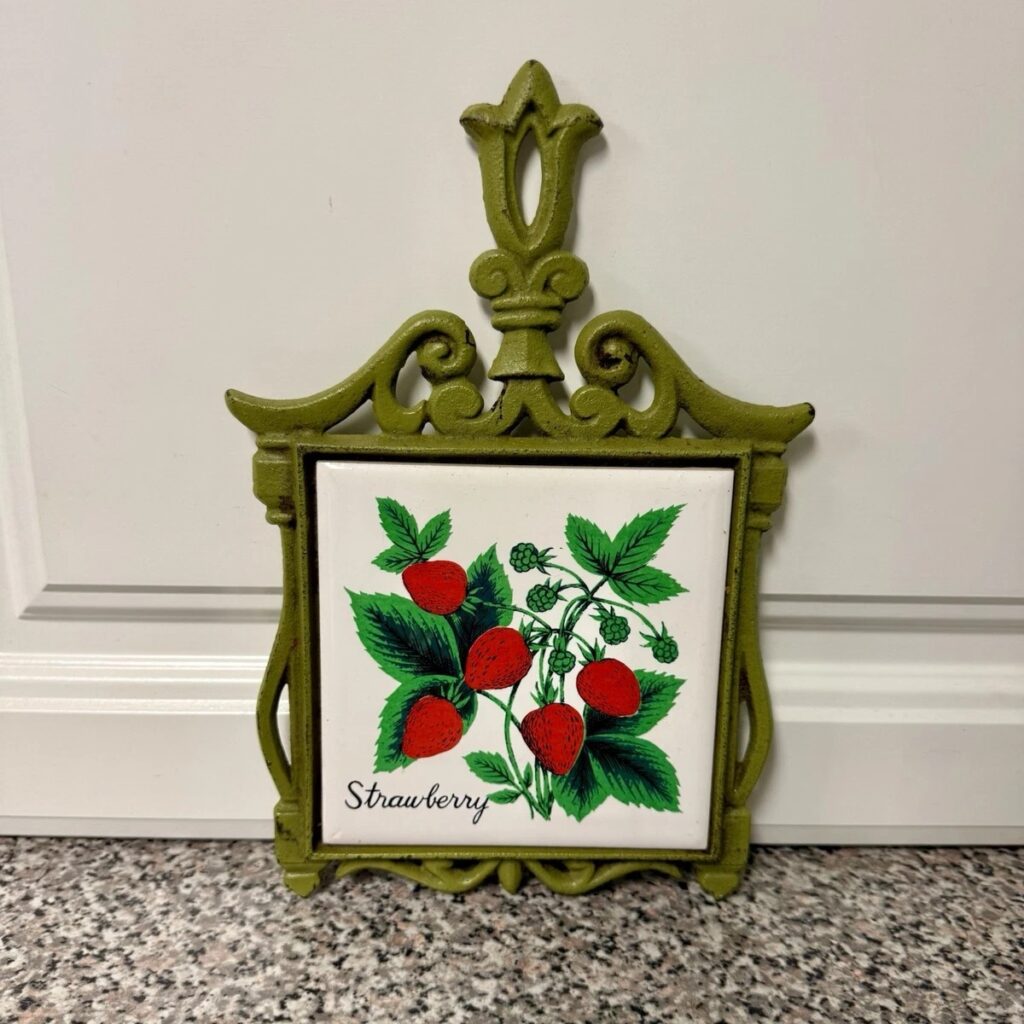
- Ceramic tile on metal frame: great for color and pattern; often very “tabletop”
- Enamelware or painted metal: charming color stories, but requires gentler care
- Wood or mixed media: a rustic lane that pairs well with farmhouse displays
If you’re drawn to the “heft” and look of iron, build an iron-focused set. If you love color, tile trivets are a natural anchor.
2) Collect by era or style
You don’t need tight date ranges for this to work—just a consistent look.
Examples:
- Ornate and scrollwork-heavy (a classic antique vibe)
- Arts & Crafts / mission-inspired geometry (clean, architectural feel)
- Mid-century simplicity (sleek shapes, minimal ornament)
- Cottage/farmhouse style (tiles, fruit motifs, warm “homey” design)
Pick one style lane and your displays will instantly feel more intentional.
3) Collect by motif
Motif collecting is fun because it turns trivets into a visual “gallery wall,” even when they’re stored in a drawer.
Motif lanes that work well:
- Fruits and vegetables
- Florals
- Roosters and farm animals
- Fish and hunting/outdoor themes
- Patriotic symbols
- Cats/dogs (yes—there are collectors for everything, and it’s delightful)
4) Collect by geography or “place”
This lane is subtle but powerful:
- Local makers or regional craft traditions
- Souvenir trivets tied to travel
- Pieces with local advertising or community ties
If you’re already a “place-based” collector, trivets are a great way to build a story without needing giant display space.
Build the Collection “From Stove to Table”: Use Function as Your Structure
Here’s a simple way to give your trivet collection an internal logic: collect across the whole path of cooking and serving.
Stove-side: hot pot and kettle duty
This category is about sturdiness and heat-handling. You’ll often find:
- Heavier cast iron stands
- Openwork designs that let air circulate
- Pieces designed to sit near a stove or hearth area
Serving-side: casserole, roast, and family table
This category leans more decorative:
- Tile trivets and framed ceramics
- Brass or aluminum pieces with finer patterning
- Matched sets that look great on a table or buffet
“In-between” pieces: multipurpose workhorses
Some trivets are simply versatile:
- Flat trivet pads that can go anywhere
- Folding or hinged stands (great for storage and display)
- Pieces that double as décor when hung
When you collect with these functional zones in mind, your collection feels like a complete toolkit—not just a random assortment.
Pair Trivets with Related Items (Without Losing Focus)
Want your trivet finds to feel instantly “collected” instead of accidental? Pair them with supporting pieces that share the same era, motif, or kitchen story.
Easy pairing ideas:
- Trivet + matching casserole dish (even if they weren’t originally sold together, they can look perfect as a display pair)
- Trivet + recipe cards or a small recipe box (especially if your trivet motif matches baking or holiday cooking)
- Trivet + kitchen tins (coffee, tea, spice tins—great for visual texture)
- Trivet + advertising ephemera (a small kitchen ad, grocery card, or product graphic that matches the vibe)
- Trivet + linens (one tea towel, runner, or set of napkins can tie a whole display together)
- Trivet + utensil tools (wooden spoons, butter molds/paddles, rolling pins—useful for rustic lanes)
The trick: let the trivet remain the “lead actor.” Supporting items should reinforce the theme, not compete for attention.
Collecting Trivets by Type: A Few Subcategories Worth Knowing
Without getting overly technical, it helps to recognize the broad “families” you’ll run into.
Flat trivets and hot pads
These are the most common and easiest to store. They often:
- Stack well with separators
- Display well on a wall or shelf ledge
- Come in the widest range of designs
Openwork cast iron or metal stands
These are often the “statement” pieces—visual and sculptural. They:
- Look great hung or propped
- Can be harder to ship and store (because of weight and shape)
- Often show honest wear that collectors enjoy
Tile / ceramic-in-frame trivets
These bring color and pattern into a collection. Keep an eye on:
- Cracks, chips, and crazing
- Loose tiles in the frame
- Worn corners or bent metal edges
Folding or hinged pieces
Collectors love these for practicality and clever design. Check:
- Hinge tightness
- Alignment when open
- Stress cracks near joints (especially if cast)
Storage and Care: Mixed Materials Need Different Habits
Trivets are small, but they can be surprisingly easy to damage—especially tile pieces, painted surfaces, and anything that gets stacked without protection.
Don’t stack fragile surfaces directly
For tile, ceramic, or painted pieces:
- Use felt, foam, or acid-free paper separators
- Keep stacks short so weight doesn’t press into edges
- Store “best condition” pieces separately or on top
Watch for scratching and metal-to-metal rub
Openwork metal pieces can scuff each other quickly. Consider:
- Separators between cast iron or brass pieces
- Drawer dividers or upright file-style storage for flat trivets
Manage rust and patina gently
For cast iron:
- Keep it dry and stable (humidity swings can encourage rust)
- Avoid harsh scrubbing that removes original surface character
For brass/copper:
- Many collectors prefer natural patina
- If you polish, do it carefully and consistently (and know you’re changing the surface look)
Painted and enamel surfaces
These can chip if knocked together. Treat them like ceramics:
- Cushion contact points
- Avoid abrasive cleaners
Cleaning: less is more
Dusting and gentle wiping usually beats soaking or aggressive cleaning—especially when you’re not sure what coatings, finishes, or older residue may be present.
Budget Strategy: Thrift + Estate Sales + Small Auctions (The Sweet Spot)
Trivets are one of the best “value” categories because they’re easy to overlook and often sold in groups.
Where to hunt
- Thrift stores: great for single pieces and starter buys
- Estate sales: excellent for grouped kitchen lots—sometimes you’ll find multiple trivets together
- Small auctions: look for box lots or mixed kitchen lots where trivets are not the headline
- Flea markets: best for negotiating and bundling (“Would you do these three for…?”)
How to buy smarter (and build coherence faster)
- Buy in small sets when you can (2–3 pieces in your anchor lane)
- Spend your “big money” on anchor pieces (a standout cast iron trivet, a perfect tile piece, a rare motif you truly collect)
- Let “almost-right” pieces go unless they fit your focus—trivets are common enough that better ones will come
A simple budget guideline:
- Pay more for condition + fit (the piece supports your lane and displays well)
- Pay less for random temptation (cute but unrelated to your anchor)
Display Ideas: Make Trivets Look Like Art (Because They Are)
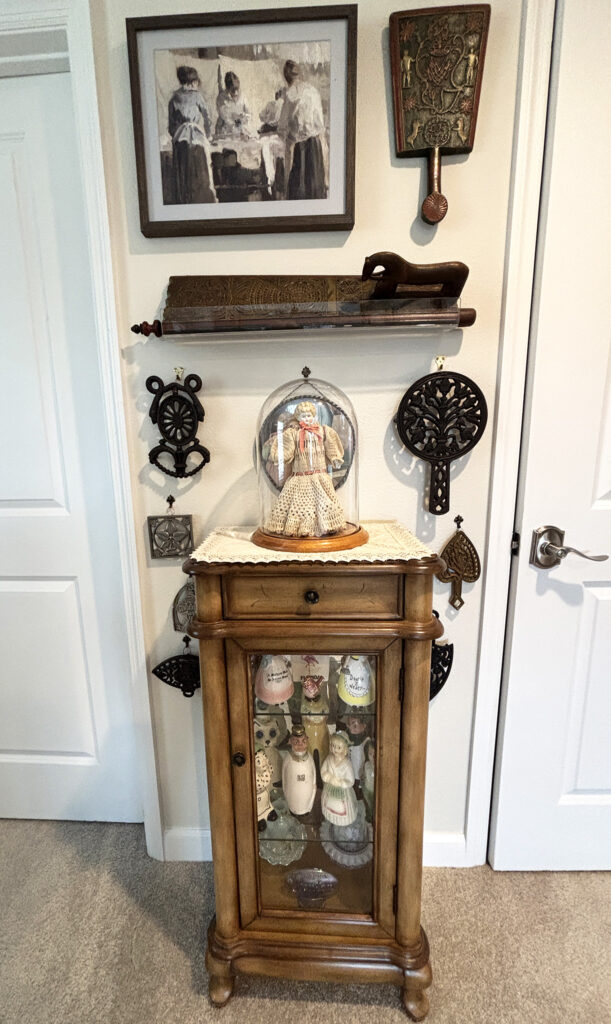
Trivets are display-friendly if you treat them like a curated set rather than kitchen clutter.
Wall display (gallery-style)
This works especially well for:
- Openwork cast iron designs
- Motif collections (fruit, florals, animals)
- Mixed metals with a consistent palette
Use sturdy hooks and make sure the hanging method supports the weight.
Shelf ledge or plate-stand display
Perfect for tile trivets and framed ceramics:
- Stand them upright like art tiles
- Layer sizes for depth
- Add one small supporting item (recipe card box, tin, linen) to keep it “kitchen-story” cohesive
“Working display” in the kitchen
If you like using your collection, choose the most durable pieces to rotate into real use and keep the fragile or pristine ones in safer display zones.
A Gentle Collector’s Checklist for Trivet Hunting

Before you buy, ask yourself:
- Does this fit my anchor (material, era/style, geography, motif)?
- Is the condition stable (no wobbly frames, loose tiles, severe cracks, active rust)?
- Will it store safely in my current setup (or will it be a “break later” piece)?
- Can I pair it with something I already own to make it feel intentional?
- If I pass today, will I regret it because it’s rare to my lane—or because it’s just cute?
The goal isn’t strict rules. The goal is a collection that feels coherent, satisfying, and unmistakably yours.
Let’s Make History—one table at a time.