
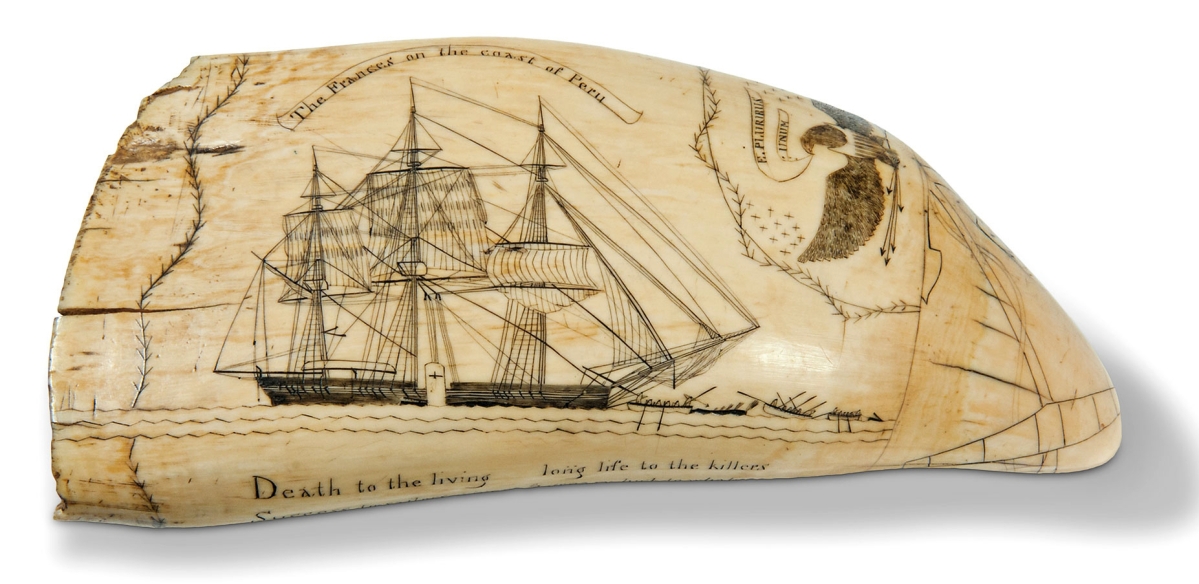
One of the most captivating things about scrimshaw is that it’s rarely “just decoration.” These pieces were made by people who lived at sea for months—or years—at a time, and the images they chose often reveal what they missed, what they feared, what they admired, and what they wanted to remember.
Collectors sometimes fall in love with scrimshaw for the craftsmanship first: the fine lines, the patient shading, the way pigment settles into a cut so clean it still reads centuries later. But the real hook is the imagery. Scrimshaw is storytelling—sometimes documentary, sometimes romantic, sometimes symbolic, and sometimes surprisingly whimsical.
This post explores the most common themes you’ll see in traditional scrimshaw, what those images may have meant to the sailors who carved them, and how collectors can “read” a piece with more confidence.
Continue reading “Scrimshaw Themes and Imagery”