
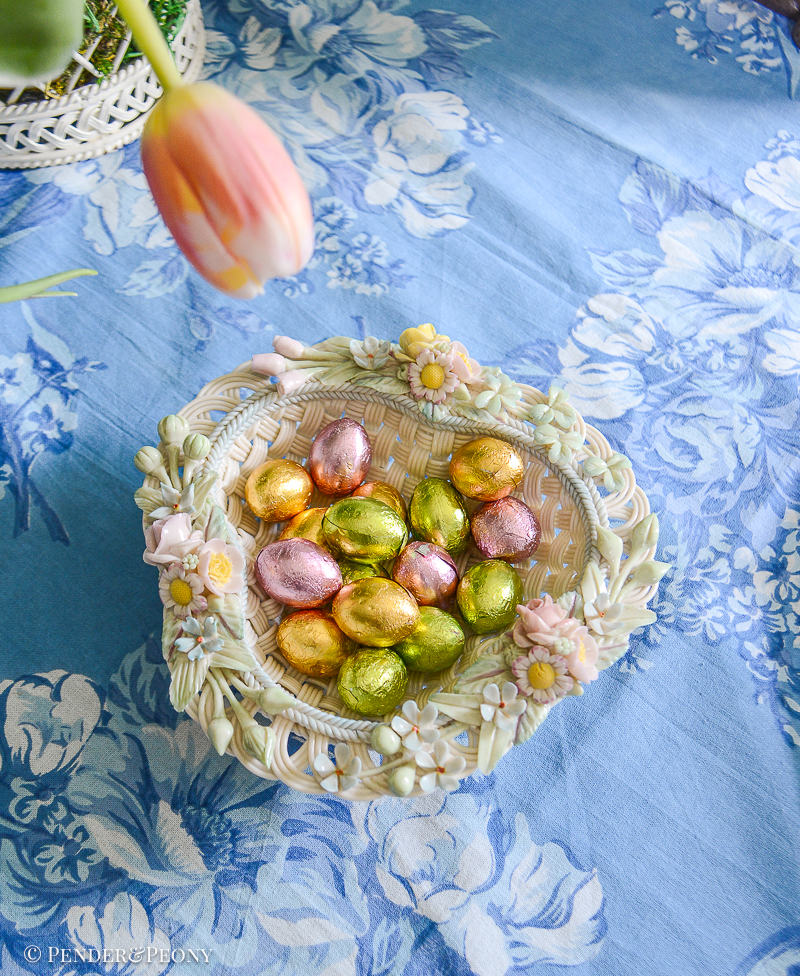
Belleek has a way of making ordinary moments feel a little more graceful. A cup that looks almost weightless in your hand. A basket rim so finely pierced you can see daylight through it. A soft, luminous white that doesn’t shout for attention—yet somehow becomes the first thing you notice.
Collectors talk about Belleek as “delicate,” but the deeper truth is that the best Belleek feels perfected: the porcelain body, the crispness of detail, the balance of form, and the finishing touches all working together. This post is about that idea of porcelain perfection—what it looks like in real pieces, how to evaluate it quickly, and how to care for it so it stays beautiful for the next generation of collectors.
What “Perfection” Means in Belleek Collecting
In Belleek, perfection isn’t about “brand new.” It’s about how convincingly a piece delivers the Belleek promise—lightness, refinement, and craftsmanship that holds up under close inspection.
Most collectors judge Belleek “perfection” through five practical lenses:
- Body: thinness, translucency, and that signature luminous feel
- Form: proportion, silhouette, and how the shape supports the design
- Detail: crisp relief, clean piercing, and convincing basket/flower work
- Finish: luster, tint, and gilding applied with restraint and intention
- Condition: intact edges and honest wear that doesn’t interrupt the design
If you train your eye on those five things, you’ll start spotting standout pieces fast—even before you flip for the mark.
The Porcelain Itself: Why Belleek Looks Like It Glows
Belleek is strongly associated with Parian (bisque/biscuit) porcelain—a refined, often unglazed porcelain tradition prized for its smooth, marble-like appearance and soft surface sheen. That matters because Parian behaves differently than fully glazed dinnerware: it doesn’t rely on shine for beauty. Instead, it relies on light.
The “light test” collectors use
When you can (and when it’s safe), hold a piece near a light source and look at the thinnest areas—rim edges, petals, basket strands, shell flutes. High-quality Belleek often shows a gentle translucency that makes the porcelain feel alive rather than chalky.
What you’re looking for:
- Thin areas that transmit light softly (not harshly)
- A surface that looks refined, not gritty
- A consistent body tone (some pieces read creamy rather than stark white)
Perfection here is subtle. It’s that moment when the piece seems to “hold” light instead of merely reflecting it.
Form and Proportion: When the Shape Does Half the Work
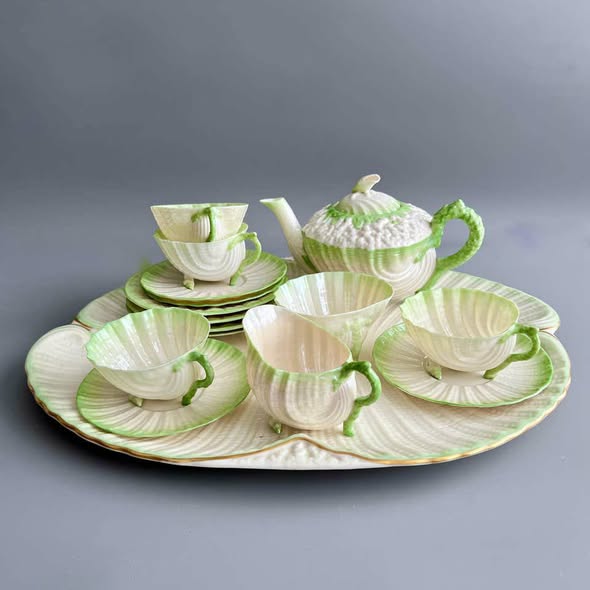
Some Belleek pieces are all about decoration—but even then, the underlying form matters. A perfect piece usually feels balanced in silhouette:
- A basket that doesn’t look top-heavy
- A vase that carries its motif without looking crowded
- A cup whose handle feels naturally placed, not strained
Why this matters for collectors
When you see a Belleek form that feels awkward—too thick, too bulky, strangely proportioned—it often signals one of three things:
- A different maker or “Belleek-style” piece
- A later reproduction aesthetic
- A form designed for sturdier mass-market use rather than fine finishing
You don’t have to be strict about era to care about proportion. Proportion is simply one of the fastest “quality tells” in porcelain.
Detail That Makes You Lean In: Texture, Piercing, and Basket Work
This is where Belleek earns its reputation. True collector-grade pieces often look impressive from ten feet away—and then look even better up close.
Shell ribs and shoreline texture
Shell and sea-inspired patterns (the ones with ridges, flutes, and scalloped edges) show their quality in the high points. On a strong piece, the shell ridging reads cleanly and evenly, and the edges feel refined rather than blunt.
Pierced rims and lace-like edges
Piercing is one of Belleek’s most beautiful features—and one of its most fragile. Perfection here looks like:
- Clean openings (not ragged or chipped)
- Even spacing that feels planned
- Edges that remain crisp without looking sharp
Basket weave and applied flowers
Baskets are where Belleek becomes “how is that even possible?” porcelain. The best basket pieces show:
- Weave that reads like weave (patterned, intentional, believable)
- Strands that don’t look clunky or overly thick
- Flowers with sculpted petal shape, not just blobs of porcelain
Collector reality: baskets and florals are also where repairs hide. Perfection doesn’t mean “no history,” but it does mean the artistry hasn’t been interrupted by obvious breaks or heavy restoration.
Finishes That Elevate: Luster, Tint, and Gilding
Belleek can be all-white and still feel rich. But finishing touches can take a piece from lovely to exceptional—when they’re done well.
Pearly luster
Many Belleek pieces include a soft, pearly luster effect—often inside cups or bowls, sometimes as an overall sheen. Collector-grade luster tends to look:
- Even and intentional
- Not overly bright or metallic
- In harmony with the piece’s texture and form
Tinted rims and subtle color
A delicate tint on a rim or relief edge can emphasize the design without turning it into “decorated china.” When it’s done well, it feels like a whisper of color that guides the eye.
Gilding
Gold details can be beautiful on Belleek, especially when they highlight shell ridges or frame a rim. Perfection with gilding usually looks like:
- Clean lines (no messy overpaint)
- Thoughtful placement (accenting the form rather than overpowering it)
- Wear that looks natural, not scrubbed
If you’re buying for “perfect finish,” always check the high-touch points: rims, handle tops, spouts, and edges where gold wears first.
The Base Check: The Quick Reality Test
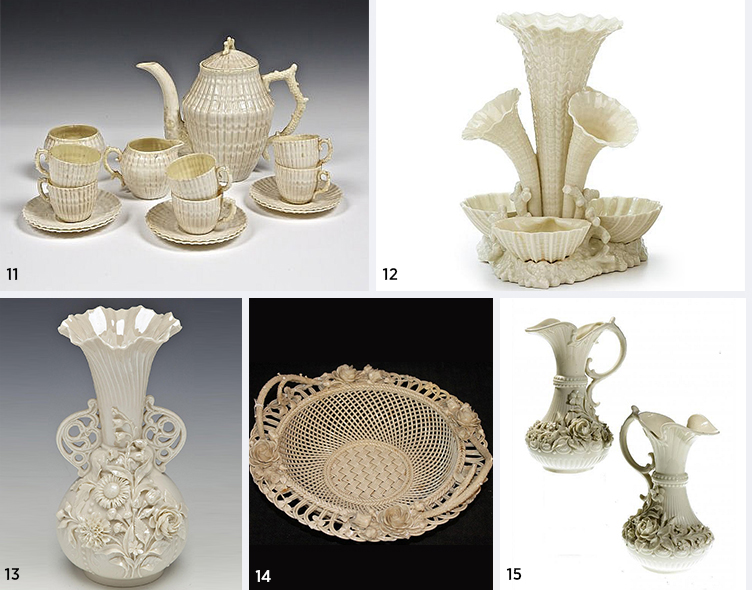
Once a piece wins you over visually, flip it. The base won’t tell you everything—but it will often tell you whether the story makes sense.
Look for:
- A clear mark when present
- Wear on the foot ring consistent with the piece’s age and use
- No suspicious smoothing or grinding that looks like it’s hiding damage
- Overall consistency: the base shouldn’t look brand-new if the rim looks timeworn (and vice versa)
Perfection isn’t just what you see on the front. It’s the coherence of the whole object.
Condition: The Line Between “Beautiful” and “Best”
Because Belleek is light in color and often finely detailed, flaws show quickly. The difference between a lovely piece and a truly top-tier piece is often condition.
Where damage hides first
- Rim edges (especially on vases and open bowls)
- Basket rims and pierced openings
- Flower petals and leaf tips
- Handle joins
- Thin shell flutes and raised ridges
What perfection-minded buyers avoid
- Hairline cracks (especially on thin rims and handles)
- Obvious repairs (glue shine, filled chips, mismatched touch-ups)
- Significant chips on focal areas (basket rims, petals, rim peaks)
What can be acceptable (price should reflect it)
- Minor base wear
- Tiny fleabites on foot rings or undersides
- Light gild wear on heavily used edges
If you’re building a “porcelain perfection” shelf, your rule can be simple: buy fewer pieces, but buy cleaner examples. Belleek rewards that approach.
Care That Preserves the Glow
A perfect piece can be dulled quickly by the wrong cleaning habits. Belleek doesn’t need complicated care—just gentle consistency.
- Hand wash when possible, especially for luster and gilding
- Use mild soap and a soft cloth; avoid abrasives
- Don’t soak pieces with complex piercing or applied flowers for long periods
- Avoid harsh oxidizers (bleach-type cleaners) around luster finishes
- Dry carefully—water can collect in textured areas and leave marks
For display:
- Keep delicate pieces away from high-traffic edges
- Avoid prolonged direct sunlight (it can alter how surfaces and finishes read over time)
- Store pieces so rims and petals don’t touch other porcelain
Perfection is often just “no accidents, no harsh cleaning, and no crowded storage.”
Building a “Porcelain Perfection” Belleek Collection
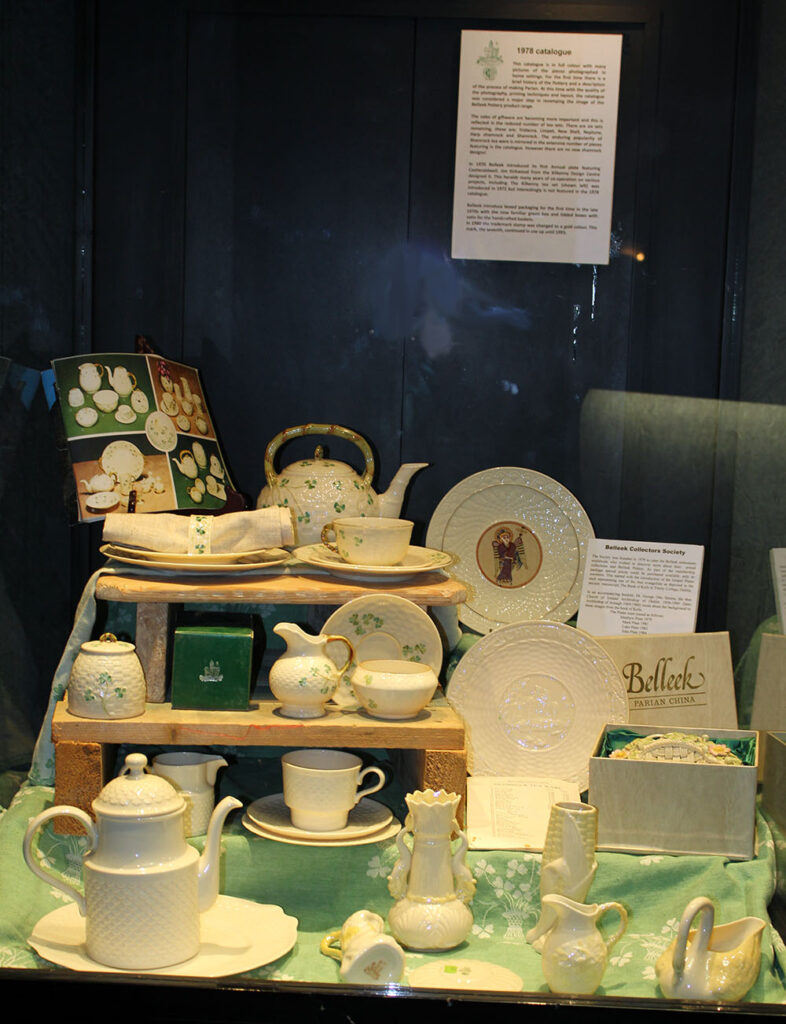
If you want your collection to feel curated—like a small museum shelf rather than a pile—choose a strategy that matches your taste.
Strategy 1: One theme, multiple forms
Pick a theme (shamrock, shells, baskets/florals) and collect it across different forms: cup, plate, vase, basket, small serving piece. It creates cohesion without repetition.
Strategy 2: One finish family
Build either:
- A clean all-white, luminous shelf, or
- A coordinated finish palette (pearly luster + subtle tint, for example)
Strategy 3: Upgrade over time
Start with solid pieces, then replace them with cleaner examples as you learn. Belleek is perfect for upgrading because the category is collectible but still widely found.
Strategy 4: Choose one “showpiece” per season
A pierced basket in spring, shell forms in summer, shamrock pieces around St. Patrick’s season, a luminous vase for winter display. This keeps the collection feeling fresh and intentional.
The Collector’s Takeaway
Belleek porcelain perfection isn’t about chasing an impossible standard—it’s about learning what quality looks like in body, form, detail, finish, and condition. When all five align, you get that unmistakable Belleek moment: porcelain so refined it feels like it’s holding light, crafted with details that still look sharp decades later.
Collect what you love, but let “perfection” be your compass. It will make every future find—whether it’s a humble shamrock dish or a breathtaking basket—feel like a piece you chose on purpose.
Let’s Make History—one perfect porcelain moment at a time.