
Timekeeping is one of those everyday miracles we stop noticing. We glance at a phone, check a wall clock, tap a watch face—then keep moving. But for most of human history, “What time is it?” wasn’t a quick question with a precise answer. It was a conversation with the sky, the seasons, the length of a shadow, or the rhythm of a community.
For collectors, that’s part of the appeal. Watches (and the objects that led to them) are not just tools—they’re compressed history. They show what people valued, what technology could do, and how society slowly shifted from “about this time” to exact minutes.
This post is a big-picture tour from early timekeeping all the way to the pocket watch era—what changed, why it changed, and what modern collectors love about these portable pieces of time.
Before “Time” Was a Number: Measuring Days, Not Minutes
For most early societies, timekeeping was practical and broad. You didn’t need a second hand to plant crops or start a market day. You needed reliable patterns: sunrise, sunset, seasons, lunar cycles, and recurring community rhythms.
Early timekeeping tools focused on direction and duration—not precision.
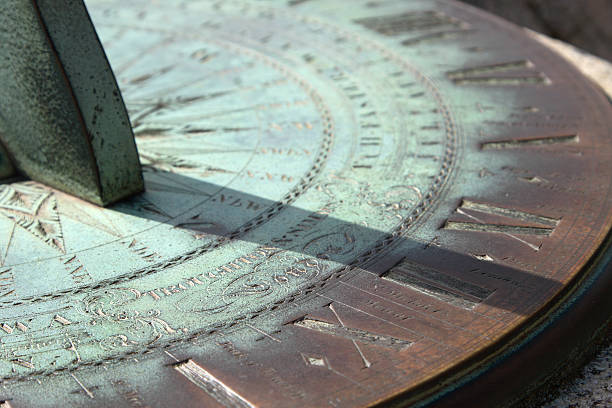
Sundials: Time written in light
Sundials are among the most iconic early timekeepers because they’re so elegantly simple: a raised piece (the gnomon) casts a shadow, and the shadow moves predictably as the sun travels. A sundial doesn’t “tick.” It shifts.
Collectors love sundials because they’re often decorative, symbolic, and tied to place—gardens, courtyards, churches, universities, and public squares. They also hint at a truth we sometimes forget: time is a relationship between Earth and sky, not just a number on a screen.
Water clocks, candles, and “measured burning”
When the sun isn’t visible, you need other methods. Across different cultures and centuries, people used devices that measured time by steady, observable change—like water flowing at a controlled rate or candles marked to show passing intervals.
These early tools were useful, but they weren’t “universal.” They depended on materials, temperature, craftsmanship, and local expectations. Still, they laid the groundwork: time could be measured, not only observed.
Mechanical Clocks: When Time Became a Machine
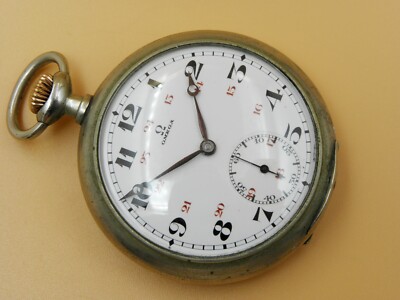
The biggest shift in timekeeping history is the moment time stops being “read” from nature and starts being generated by a mechanism. Mechanical clocks made time portable in concept long before it became portable in your pocket.
Early mechanical clocks were large and often installed in towers, churches, and civic spaces. Their job wasn’t to give everyone a personal schedule. Their job was to coordinate communities—bells for prayer, work, markets, and public life.
Over time, mechanical technology improved. Makers pursued reliability, smaller size, and more consistent motion. Eventually, timekeeping moved indoors, then onto furniture, then toward truly portable forms.
The Secret Ingredient of Portability: Springs and Miniaturization
A clock that lives in a tower can be big, heavy, and driven by weights. A clock you can carry has different needs:
- It must be compact
- It must keep running while you move
- It must be powered without relying on a hanging weight
This is where spring-driven mechanisms change everything. Springs made portable clocks possible by storing energy in a smaller form. As spring-driven clockmaking advanced, timekeepers moved from room-sized installations to objects that could sit on a table…then fit in your hand.
That evolution—miniaturization plus reliability—sets the stage for the pocket watch.
Enter the Pocket Watch: Time Goes Personal
Pocket watches were a technological achievement, but they were also a cultural one. They helped turn time into a personal responsibility. You didn’t just follow the town bell or the factory whistle. You carried your own clock.
Pocket watches gained popularity over centuries, but the most collector-relevant “pocket watch world” often centers on the 18th and 19th centuries into the early 20th—when design, manufacturing, and everyday use converged.
Why pocket watches mattered
Pocket watches made time:
- portable (your time traveled with you)
- private (you could check it without looking for a public clock)
- social (a visible sign of punctuality, professionalism, or status)
They also became deeply personal items—given as gifts, engraved with initials, carried daily, passed down through families, and used to mark milestones.
What Makes a Pocket Watch a Pocket Watch?
Collectors often fall in love with pocket watches because the mechanical “language” is both intricate and understandable once you learn a few basics.
Here are the features that define the category in a collector-friendly way:
Case styles
- Open-face: no metal cover over the dial (the face is immediately visible)
- Hunter case: a protective metal lid covers the dial; often opened with a button
- Half-hunter: a lid with a small window so the time can be read without fully opening
Key-wind vs. stem-wind
Earlier pocket watches were often key-wound and sometimes key-set, requiring a separate key to wind the movement. Later watches commonly used stem winding, which is the familiar crown-wind mechanism most people recognize.
Collectors pay attention to this because it’s one of the easiest “first clues” about era and style.
Movements, dials, and hands
Even if you never open a case, you can learn a lot just by looking at the dial:
- Roman vs. Arabic numerals
- Subseconds dial placement
- Decorative enamel work
- Hand style (spade, leaf, baton, etc.)
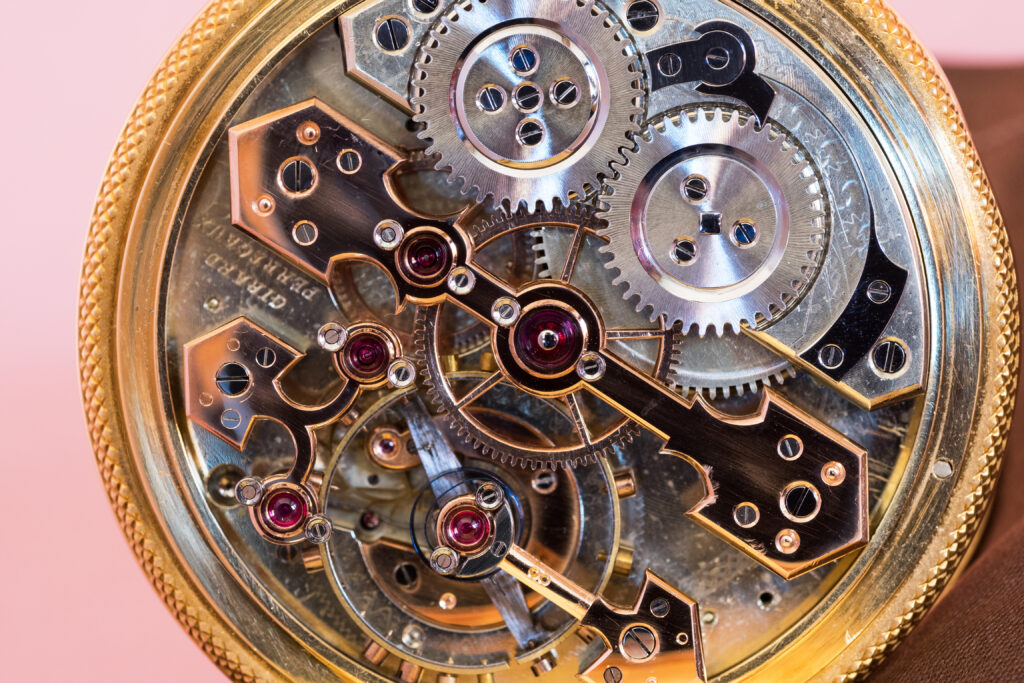
Inside, movements can range from straightforward and rugged to highly jeweled and finely finished. Many collectors enjoy the artistry of movement decoration almost as much as the face.
Materials and decoration
Pocket watch cases can be plain, engraved, monogrammed, or elaborately decorated. Some feature floral work, geometric patterns, engine turning, or scenic motifs. Chains, fobs, and watch keys (for key-wind watches) become collectibles in their own right.
Timekeeping Meets the Modern World: Punctuality, Work, and Daily Life
A pocket watch isn’t just a pretty object. It’s a clue to how life was changing.
As industries and transportation systems grew more complex, schedules became more important. Work shifts, factory routines, postal systems, and travel networks leaned harder on coordinated time. Pocket watches fit that moment perfectly: they were personal tools for a world that increasingly demanded punctuality.
This shift also changes collecting. When you hold a pocket watch, you’re holding an object that helped shape modern expectations of “on time.”
Why Collectors Love Pocket Watches Today
Pocket watch collecting is satisfying because it sits at the intersection of:
- mechanical ingenuity (a small machine that does something complex)
- design (dials, cases, typography, ornament)
- social history (how people lived, worked, traveled, and marked milestones)
- personal story (engraving, provenance, inherited pieces)
And unlike some antiques that require specialized display conditions, pocket watches can be collected at many price levels and displayed in many ways—cases, shadow boxes, small stands, or alongside related ephemera.
A Beginner-Friendly Collector Checklist
If you’re starting out—or you want a quick refresher—here are the practical factors collectors tend to weigh.
1) Condition and integrity
- Dial condition (chips, hairlines, heavy discoloration)
- Case wear (dents, deep scratches, missing hinges on hunters)
- Hand condition (bent, mismatched, missing)
- Crystal condition (scratched, cracked, missing)
2) Function and servicing
A running watch is appealing, but “runs” does not always mean “healthy.” Many antique watches need professional servicing if they’ve been sitting for years.
If you’re buying as a display piece, function may matter less than completeness and visual appeal. If you want it to keep time, plan for the possibility of maintenance.
3) Originality and matching components
Collectors often look for coherence: movement, dial, and case that make sense together. Over the years, parts can be swapped during repairs. That doesn’t automatically make a watch undesirable, but it can affect collectibility.
4) Markings, serials, and identification
Many pocket watches and cases have markings that help identify maker, material, or movement details. Learning to read basic hallmarks and maker marks is one of the most empowering skills in this category.
5) The “why you love it” factor
Some collectors chase technical specifications. Others chase aesthetics. Others collect family-linked pieces. Pocket watches are flexible like that—there’s room for many collecting styles.
Care and Display Tips for Pocket Watch Collectors
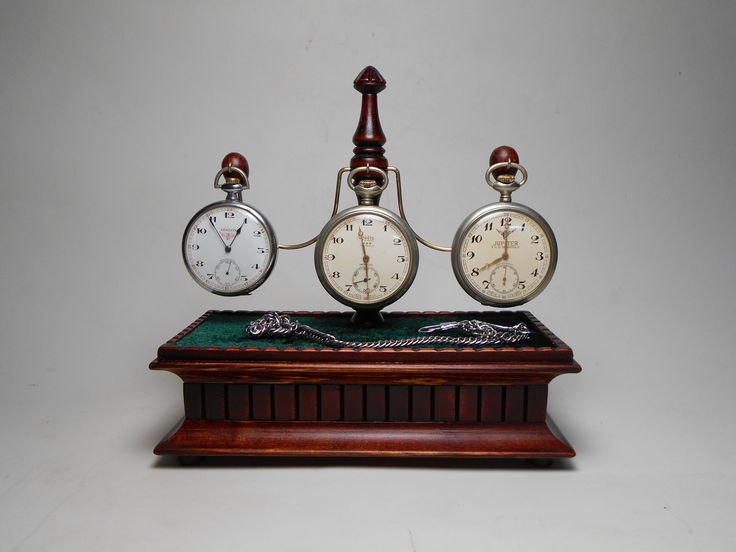
Pocket watches are durable for what they are, but gentle handling goes a long way.
- Store in a dry environment with stable temperatures
- Avoid long-term exposure to humidity (cases and movements both suffer)
- Don’t polish aggressively—light cleaning is usually safer than trying to make an antique look new
- If displaying open, support the watch so it isn’t resting on the crown or hinge
- If you wind a watch, do it gently and stop when it resists (forcing can cause damage)
For display, pocket watches look especially good with supporting pieces:
- a watch chain and fob
- a watch key (for key-wind examples)
- a small period photo or calling card
- a watchmaker’s tool or advertisement
- a period trinket box or desk accessory
The Big Takeaway: Timekeeping Is a Story of Human Priorities
From sundials to pocket watches, timekeeping shows a steady march toward precision—but it also shows how our priorities changed along the way.
We wanted to coordinate communities, then households, then individuals. We wanted reliability. Portability. Convenience. Status. Punctuality. And eventually, we wanted time to be so available that we hardly notice it anymore.
That’s why collecting watches is so rewarding: every piece reminds us that “time” is not just something we measure. It’s something we built—and kept rebuilding—until it fit in the palm of a hand.
Let’s Make History—one tick at a time.