Few traditions capture the idea of continuity quite like a royal jubilee. Marking the milestones of a monarch’s reign — Silver (25 years), Golden (50), Diamond (60), and, most recently, Platinum (70) — these celebrations have united generations in admiration and national pride. They’ve also inspired some of the most charming and meaningful collectibles in British history: china, medals, tins, badges, and keepsakes that reflect not just a moment in time but the evolving spirit of a nation.
Queen Victoria and the Birth of the Modern Jubilee
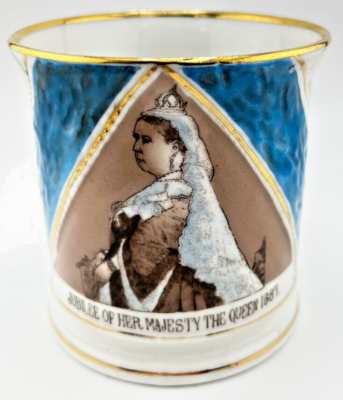
Royal anniversaries existed before Victoria, but her Golden Jubilee in 1887 transformed them into grand national spectacles. By the 1880s, Victoria had become an emblem of empire and endurance, and the celebrations marking her fifty years on the throne were planned on a monumental scale. Across Britain and the Empire, processions, pageants, and civic festivities filled the calendar.
Advances in mass production and transfer-printing made souvenir manufacturing more accessible than ever. Pottery firms, medallion makers, and printers turned out mugs, plates, medals, handkerchiefs, and ribbons that ordinary people could afford.
A decade later, Victoria’s Diamond Jubilee in 1897 inspired an even greater wave of commemoratives—many framed with imperial motifs, gilt details, and ornate presentation boxes. These Jubilee pieces—ceramics, tokens, and medals—are now among the most sought-after Victorian royal souvenirs.
Style Through the Ages
Each monarch’s jubilee reflects the design language of its era. Edwardian tastes following Victoria’s reign favored softer lines and the organic flourishes of late-Victorian and Art Nouveau style.
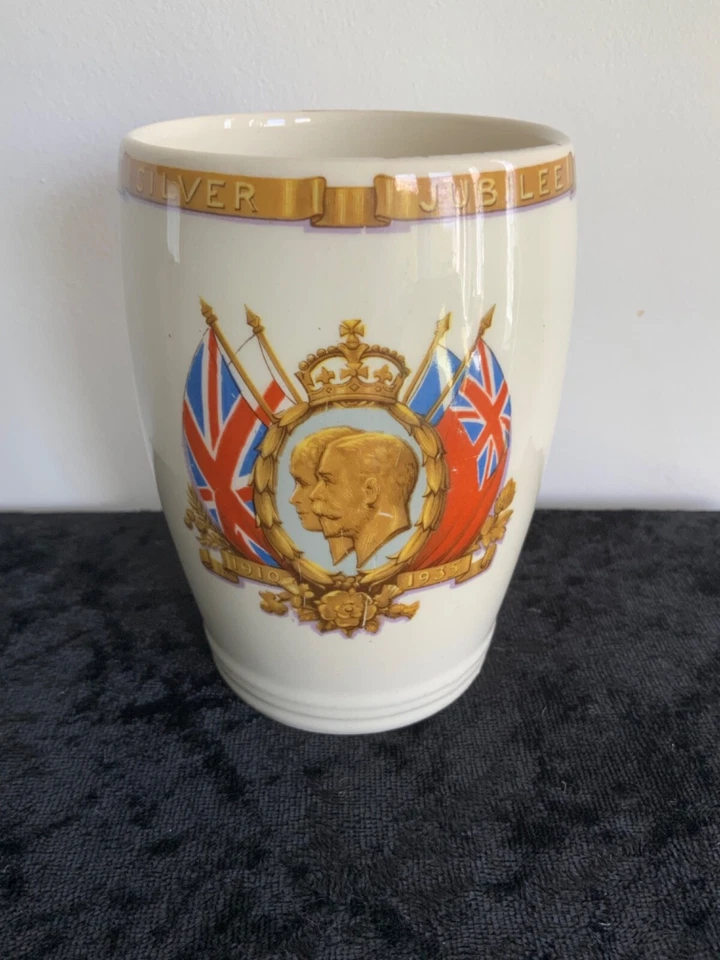
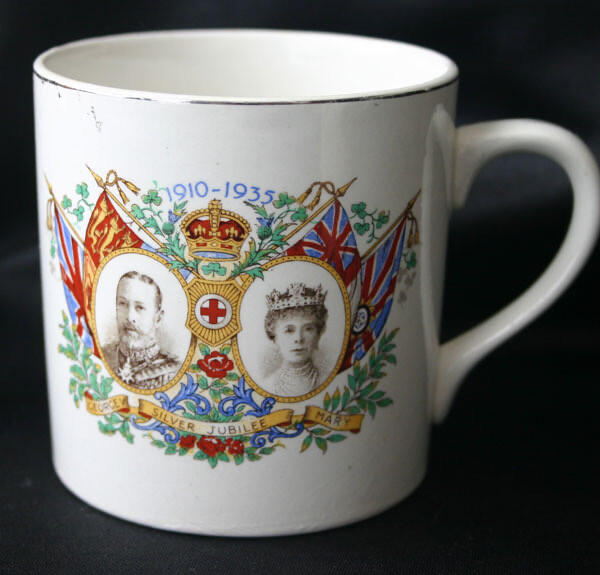
By George V’s Silver Jubilee in 1935, the mood had shifted. Britain, caught between two world wars, favored dignity and restraint. Souvenirs from this period feature cleaner lines, simpler lettering, and balanced imagery that spoke to a nation seeking stability. Manufacturers across Stoke-on-Trent and smaller English potteries produced cups, beakers, and plates intended not just for collectors, but for everyday households.
The materials themselves tell a story of evolution. Early commemoratives were primarily ceramic or metallic; by the 20th century, pressed glass and biscuit tins became popular, and in more recent decades, bone china, printed textiles, and limited-edition silver or enamel pieces have taken center stage.
The Mid-Century Mood: Renewal and Reach
Queen Elizabeth II’s early jubilees mirrored a post-war Britain in transformation. Her Silver Jubilee in 1977 — twenty-five years into her reign — produced a remarkable range of souvenirs, from fine bone-china editions crafted by renowned potteries to cheerful, inexpensive mugs sold in local shops.
It was a democratic moment in design. Commemoratives appeared in official collector ranges and as small mementos for children waving flags at neighborhood street parties. The 1977 pieces blended patriotic imagery with bold 1970s graphics, creating a distinctly modern visual record unlike any from earlier eras.
The Modern Jubilee Era: Craft, Nostalgia, and Sustainability
Elizabeth II’s later jubilees — Golden (2002), Diamond (2012), and Platinum (2022) — showcase how commemorative design has continued to evolve. Traditional manufacturers produced official ranges, joined by contemporary designers and independent artisans.
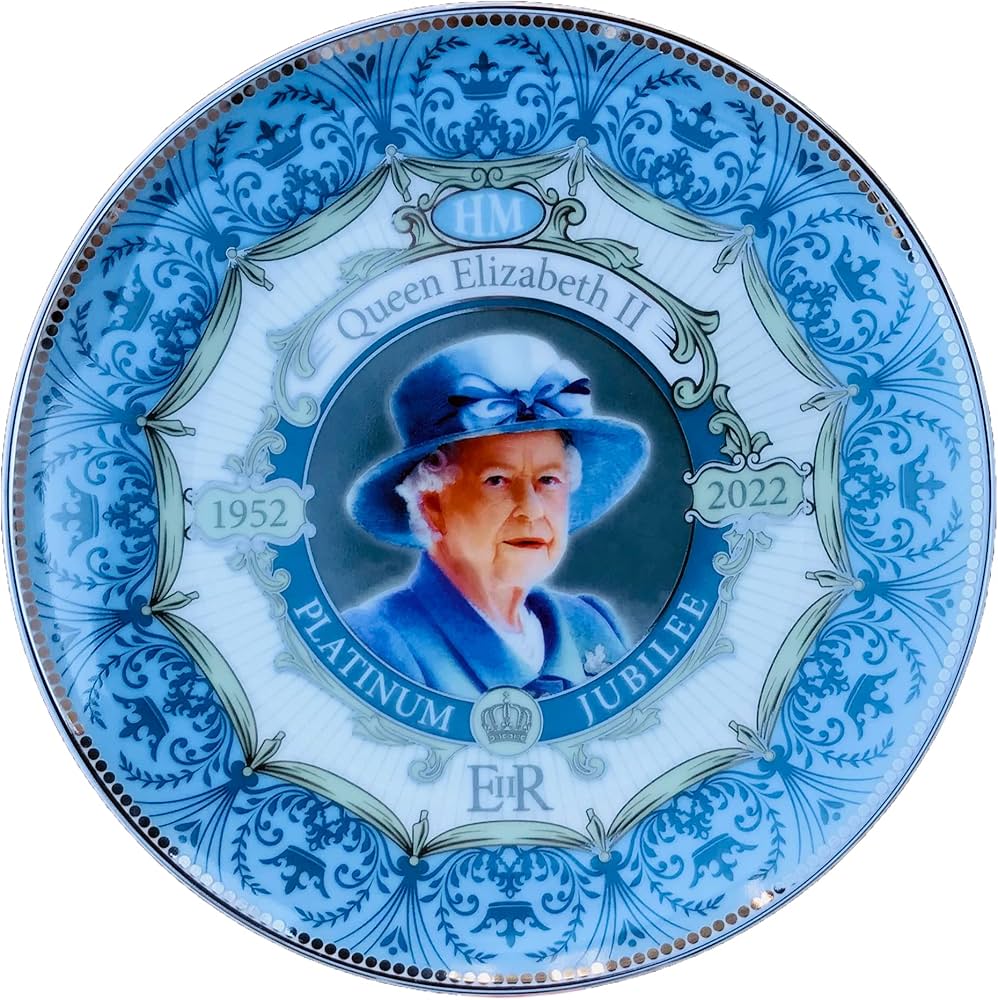
Advances in digital printing and small-batch production allowed for extraordinary variety: from precisely rendered photographic china to handmade enamel boxes. Public interest in craftsmanship and sustainability also shaped production, emphasizing local manufacture and quality over quantity.
The Platinum Jubilee of 2022, celebrating seventy years of service, produced an especially diverse collection. Official Royal Collection Trust pieces and independent makers alike offered commemoratives in soft lilac and platinum tones, often packaged in elegant presentation boxes. Even mass-market souvenirs reflected the modern collector’s eye for design and finish.
What Jubilee Collectibles Reveal
Why do collectors love jubilee memorabilia? Because each item is a time capsule. A plate or mug records the typography, imagery, and design tastes of its year—and shows how ordinary people participated in national celebration.
A simple grocer’s tin or a limited-edition china set each speaks to a desire to belong to something larger than oneself.
These pieces also trace the story of British manufacturing. Transfer printing and mass ceramics made affordable commemoratives possible in the 19th century. Twentieth-century lithography expanded color and detail, while modern digital techniques and artisan workshops have brought creativity full circle. Even packaging tells part of the story: elaborate velvet-lined boxes of the 1890s have given way to minimalist, eco-conscious designs today.
How Collectors Approach Jubilee Items
Collectors take many paths. Some specialize by monarch or material—china, glass, or metal—while others curate “life-timeline” displays pairing a Victorian medallion with a mid-century mug and a modern edition.
Condition and rarity matter, of course. Factory errors, limited runs, and overseas variants (especially for Commonwealth markets) are often especially prized. Yet emotional connection often outweighs monetary value. A chipped 1977 mug that once hung in a grandmother’s kitchen may be treasured far beyond its market worth.
This blend of social history, design heritage, and personal memory keeps the field vibrant and deeply human.
Hunting and Preserving Jubilee Keepsakes
Great finds await in estate sales, car-boot markets, charity shops, and online auctions. When shopping, look for pottery backstamps, clear date markings, and clues to official commissions—such as connections to the Royal Collection or named factories.
Condition affects value—chips, cracks, and crazing reduce prices—but provenance and sentiment often matter more to collectors seeking connection rather than perfection.
To preserve your treasures, avoid extreme temperatures and direct sunlight, which can cause fading or crazing. Store delicate pieces in padded boxes lined with acid-free tissue, and display them in closed cabinets to limit dust and handling.
A Small Object, a Long View
Jubilee and anniversary keepsakes are more than tableware or trinkets. They are shared touchstones—objects once passed around at street parties, tucked into drawers, and rediscovered decades later. They tell how a nation marks time: through public ritual, evolving design, and the small, beautiful objects made to commemorate it.
Whether you collect for artistry, history, or memory, jubilee items form a living timeline—one plate, mug, or medal at a time.
In an age of fleeting digital moments, these keepsakes remind us that some celebrations are best held in the hand.
Let’s make history — one commemorative at a time.