
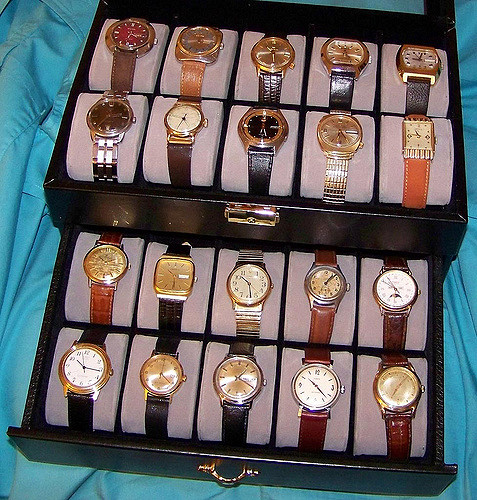
There’s something almost magical about how normal the wristwatch became. Today it’s easy to think of watches as style, collecting, or convenience—but for a long time, wearing time on your wrist wasn’t the default. It was a niche idea, a practical workaround, or even a novelty.
Then the world changed. Modern life demanded faster coordination, tighter schedules, and time you could read instantly—without digging into a pocket. Over the first half of the 20th century, the wristwatch moved from “unusual” to “everyday,” and along the way it became one of the most personal objects people owned. A wristwatch wasn’t just a tool; it was a companion through work, travel, war, celebration, and daily routine.
This post is a collector-friendly tour of how wristwatches rose to dominate everyday timekeeping—what made them catch on, how styles and technology evolved, and what collectors look for today when an old wristwatch shows up in the wild.
Continue reading “Wristwatches and Rise of Everyday Timepieces”