Dollhouses have fascinated children and collectors alike for centuries, serving not only as toys but also as intricate records of architecture, craftsmanship, and society. From aristocratic showpieces to mass-produced toys, these miniature mansions trace the evolution of domestic life itself.
The First Miniatures: 16th-Century “Baby Houses”
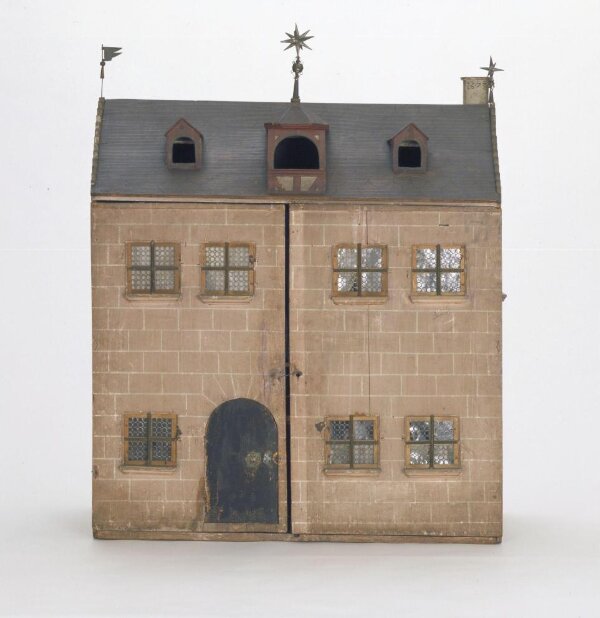
The earliest dollhouses, known as baby houses, appeared in Germany around 1557. Far from being toys, these were cabinet-style displays filled with exquisite miniatures: tiny silverware, textiles, paintings, and furniture. They weren’t designed for children at all but for wealthy adults eager to showcase refinement and good taste.
Anecdote: One of the earliest known commissions came from Duke Albrecht V of Bavaria (1558), who ordered a miniature cabinet house, not as a plaything, but as a teaching model. It demonstrated household order and reinforced ideals of governance and class in Renaissance society.
Collector Lore: Surviving 16th-century German “baby houses” are extraordinarily rare. The Staatliches Museum in Munich and the Victoria and Albert Museum in London hold some of the best-preserved examples, their survival offering a rare window into Renaissance ideals of domestic life.
Teaching Tools: The Rise of the Nuremberg Kitchen
By the 17th century, Nuremberg, Germany, had become a center of dollhouse production. Its famed Nuremberg kitchens were miniature stoves, cookware, and fully furnished kitchens presented in a single cabinet or room. These were explicitly designed as instructional models, teaching young girls household management.
They also reflected shifting values: in an era of rising urban wealth, keeping a clean, efficient kitchen symbolized order and respectability.
Dutch Pride: The Extravagant Cabinets of the Golden Age
In the 17th-century Dutch Republic, dollhouses reached extraordinary levels of artistry. Wealthy merchants’ wives commissioned cabinets that replicated entire households, filled with luxury miniatures. These weren’t toys—they were art collections and social statements.
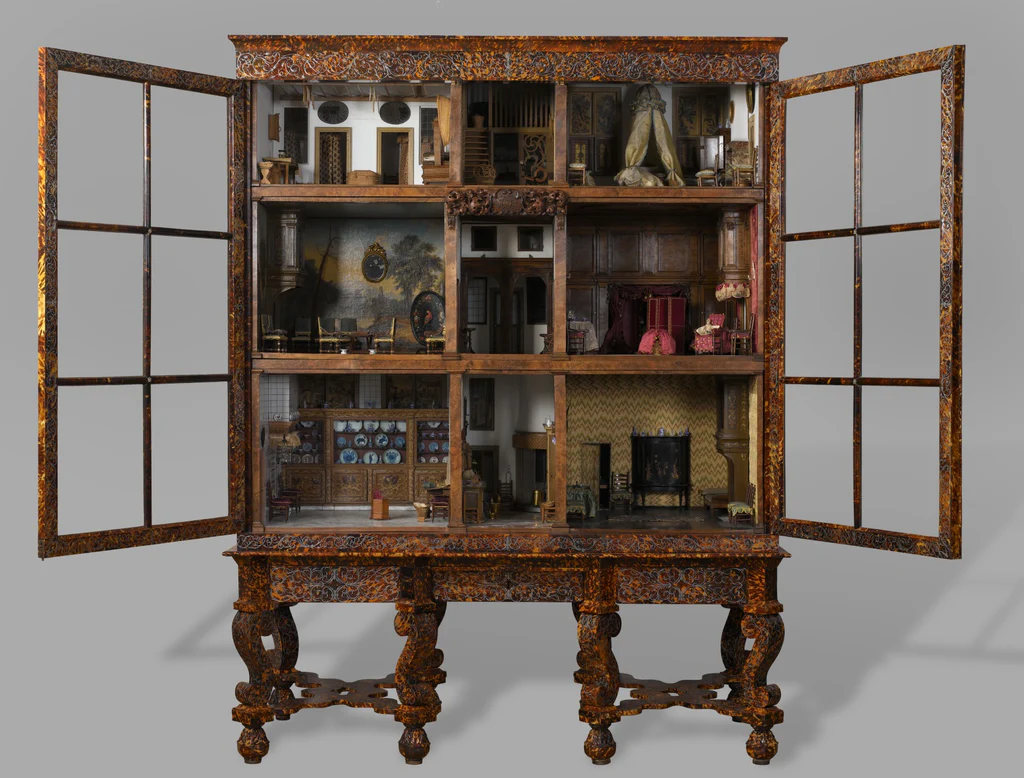
Anecdote: The most famous is Petronella Oortman’s dollhouse (c. 1686–1710), now preserved at the Rijksmuseum in Amsterdam. Her three-cabinet masterpiece includes:
- Hand-painted wallpaper
- Imported Chinese porcelain
- Miniature Persian carpets
- Custom Dutch artisan furniture
The attention to detail was so remarkable that her dollhouse was immortalized in a painting by Jacob Appel.
Collector Lore: Petronella Oortman’s house inspired modern literature and television, most notably Burton’s The Miniaturist (2014, BBC adaptation). While fictionalized, it renewed global interest in dollhouse culture as historical art.
From Luxury to Play: The Industrial Revolution
The Industrial Revolution shifted dollhouses from aristocratic luxury to middle-class playthings.
- Germany: Firms like Märklin (est. 1859) pioneered wooden and metal dollhouses with lithographed paper interiors.
- England: The 1924 Queen Mary’s Dollhouse, designed by Sir Edwin Lutyens, featured electric lights, working plumbing, and tiny books written by Arthur Conan Doyle and J. M. Barrie. It remains a pinnacle of miniature craftsmanship.
- United States: The Bliss Manufacturing Company (est. 1870s) created affordable lithographed dollhouses that became iconic toys for American families.
The 20th Century: Mass-Market Playhouses
By the mid-20th century, dollhouses reflected consumer culture and modern ideals.
- Metal Dollhouses: Companies like Marx (1940s–60s) produced tin lithographed homes that mirrored suburban life—cheerful pastel kitchens, cars in garages, and white-picket-fence designs.
- Plastic & Playline: Injection-molded plastic in the postwar years allowed durable, brightly colored dollhouses, with Fisher-Price leading the 1970s–80s market.
Collector Lore: Once considered disposable, Marx lithographed houses are now highly collectible. Intact examples with furniture and box packaging can sell for hundreds of dollars, reflecting nostalgia for the suburban era.
Dollhouses as Cultural Mirrors
What makes dollhouses so enduring isn’t just their charm but their ability to reflect the values of their times:
- 16th–17th c.: Order, wealth, and education
- 18th–19th c.: Bourgeois refinement and domestic pride
- 20th c.: Suburban ideals and consumerism
- 21st c.: Adult artistry, creative play, and serious collecting
In every case, these “miniature mansions” mirror the big houses and big ideas of their cultures.
Starting Your Own Dollhouse Collection
- Start small: Mid-century Marx or 1970s Fisher-Price sets are accessible and affordable.
- Focus on condition: Missing furniture or faded lithographs affect value, while intact examples command strong prices.
- Research before buying: Many early German and Dutch dollhouses are documented in museum catalogs.
- Preserve carefully: Use archival materials; protect from dust, light, and humidity.
Final Thought
From aristocratic cabinets to mass-market playsets, dollhouses have evolved from symbols of wealth to beloved toys to coveted collectibles. Each one tells a story—not just of the people who played with them, but of the societies that built them.
Do you own a family dollhouse or dream of starting a collection? Share your stories and photos with fellow enthusiasts—and Let’s Make History, one miniature mansion at a time.