Before playlists, before radio countdowns, before anyone carried thousands of songs in a pocket, there was a different kind of music-on-demand magic: you dropped in a coin, made a choice (or took what was available), and a machine brought the music to life. That simple experience—pay a little, hear a song right now—changed how people socialized, how records were promoted, and how everyday spaces like cafés and corner bars sounded.
Collectors love early jukebox history because it’s not just about one machine. It’s about a chain of inventions and habits: coin-operated phonographs, “phonograph parlors,” the entertainment boom that surrounded nickelodeons, and the moment the jukebox became a cultural engine in the Swing Era. If you’re drawn to the romance of vintage technology and the idea of music as a public event, this is the origin story you want on your shelf.
Before “Jukebox”: The Nickel-in-the-Slot Phonograph
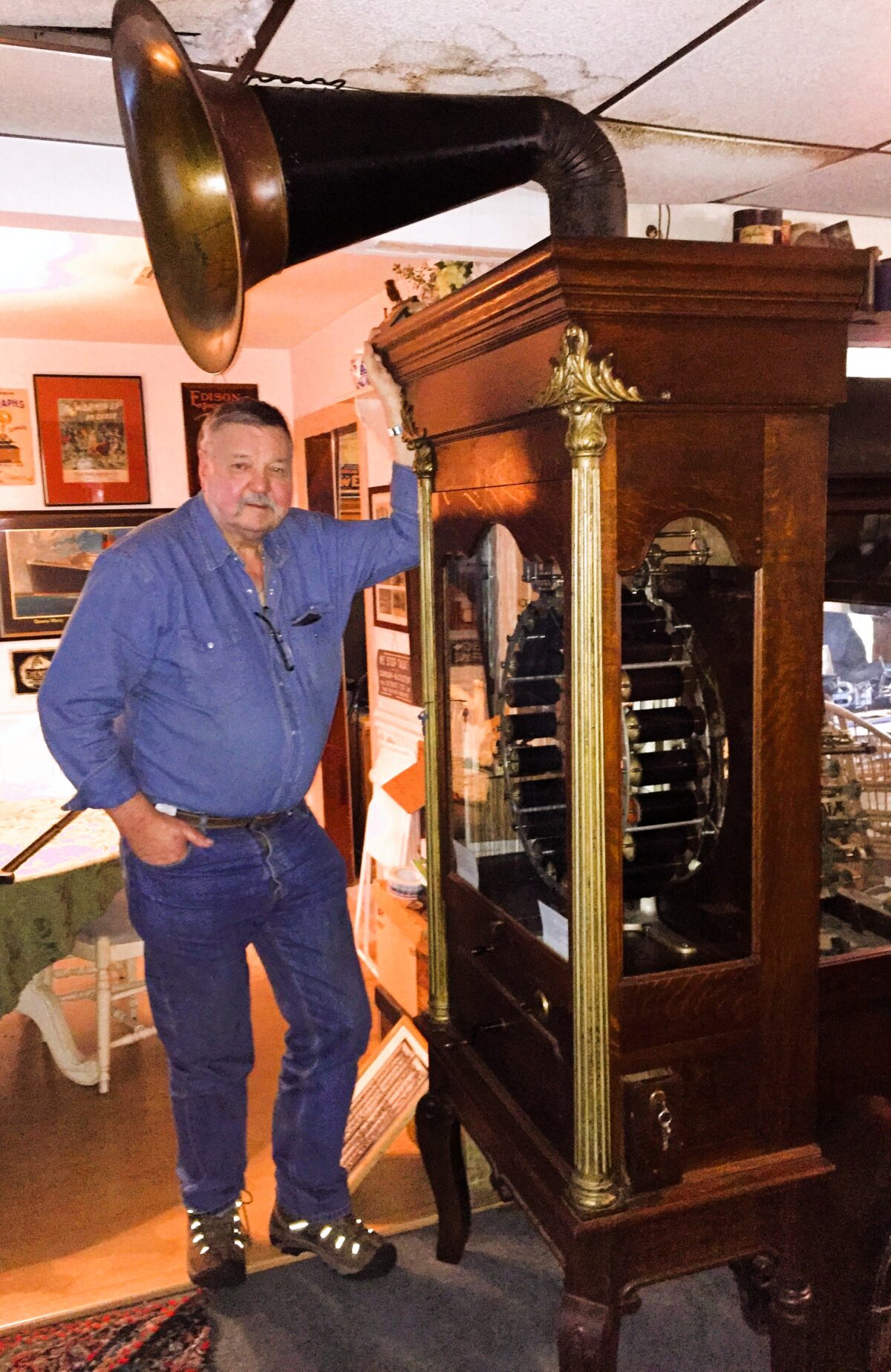
The modern jukebox didn’t appear fully formed. One of the most important early steps was the coin-operated phonograph—sometimes described in period language as a “nickel-in-the-slot” machine. In the late 1880s, coin mechanisms were added to phonographs so people could pay to listen on the spot. Early listeners didn’t gather around a speaker; they often listened through tubes or earphones, making it a surprisingly private experience in a public place.
What this era teaches collectors is that the jukebox began as a vending concept: music as a paid, repeatable service—just like a vending machine, but emotional.
Collector spotlight: Early coin-operated phonographs (especially cylinder-era machines) can be historically significant, but they’re also complex, fragile, and often expensive. Even if you’re not buying one, learning how they worked makes later jukebox collecting more meaningful.
Phonograph Parlors: The First “Music Bars” (Without the Bar)
Once coin-operated listening caught on, “phonograph parlors” and other pay-to-listen setups began appearing—places where multiple machines could be tried in one visit. Think of it as an early version of a listening lounge: music as an outing, not background noise.
These environments helped normalize a few ideas that shaped jukebox culture for decades:
- People would pay repeatedly for short bursts of entertainment
- Music could be “selected” rather than passively received
- A location could build identity around what it played
For collectors, this era is also where paper and ephemera can become just as exciting as the machines themselves: advertisements, trade cards, brochures, and photos documenting early entertainment spaces.
Nickelodeons: Not Jukeboxes, But Part of the Same Entertainment Boom
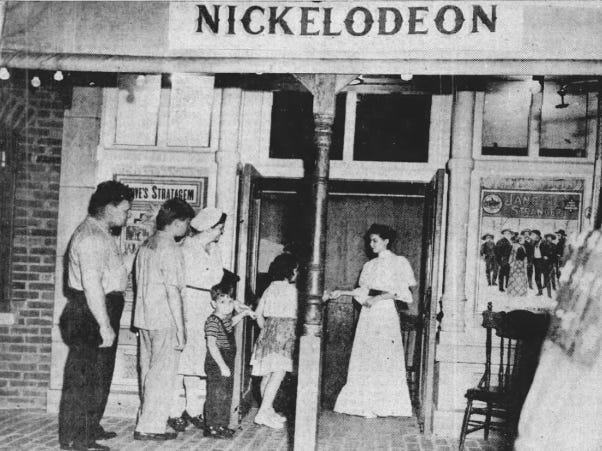
When most collectors hear “nickelodeon,” they think of early movie theaters—and that’s correct. Nickelodeons (flourishing roughly in the 1905–1915 period) were storefront venues where patrons paid a nickel for short films and other simple entertainment programming.
So why do nickelodeons matter in a jukebox history post?
Because they reflect a cultural shift that made jukeboxes inevitable: coin-operated leisure became normal. People were increasingly comfortable paying small amounts for brief entertainment experiences in public spaces. That same “nickel for a good time” mentality powered everything from penny arcades to music machines.
Also, the nickelodeon era reinforced a key collecting theme: the early 1900s were full of entertainment ephemera—tickets, programs, posters, and promotional print—that can complement a music-machine collection beautifully.
The Missing Ingredient: Loudspeakers and Public Sound
Early coin phonographs were often a one-person listening experience. The jukebox as we recognize it needed a different model: music that filled a room.
As audio technology advanced and amplification improved, coin-operated music moved toward public playback—turning machines into social centerpieces. Instead of listening through tubes, patrons could hear songs together. That one change transformed the music machine from novelty to atmosphere.
Once a machine could play loudly enough for a room, its role shifted:
- It wasn’t just selling music—it was shaping the vibe of a venue
- It influenced dancing, flirting, lingering, and spending
- It made “what’s playing” part of a place’s identity
From Automatic Phonographs to Early Jukebox Form
By the 1920s, coin-operated machines were evolving toward what we’d call a jukebox: not just “pay to hear this one record,” but “pay to choose from multiple selections.” Early multi-selection machines could be bulky and mechanically complex, but the idea was revolutionary—choice became part of the product.
Even if you don’t collect 1920s machines, this is a great era for supporting collectibles:
- early record catalogs and promotional lists
- service documents and trade advertising
- venue photos showing music machines in use
- period 78 rpm records tied to popular public listening
Where the Name Comes From: “Juke” and the Rise of the Jukebox Identity
The word “jukebox” came into common use later—often associated with the term “juke joint,” a phrase tied to lively, music-centered gathering places. In other words, the name isn’t purely technological; it’s cultural. It reflects where these machines lived and how people used them.
Collectors don’t need to memorize vocabulary timelines, but it helps to understand the point: by the time “jukebox” was the everyday word, the machine already had a strong reputation as a social catalyst.
The Swing Era: When Jukeboxes Became the Soundtrack of Public Life
The Swing Era didn’t just bring new music—it brought new ways of gathering. Big band sounds and dance culture thrived in places where jukeboxes belonged: cafés, bars, diners, dance halls, and neighborhood hangouts.
In this period, the jukebox became:
- a reliable source of current popular music
- a conversation starter and crowd-pleaser
- a “shared playlist” before anyone used that phrase
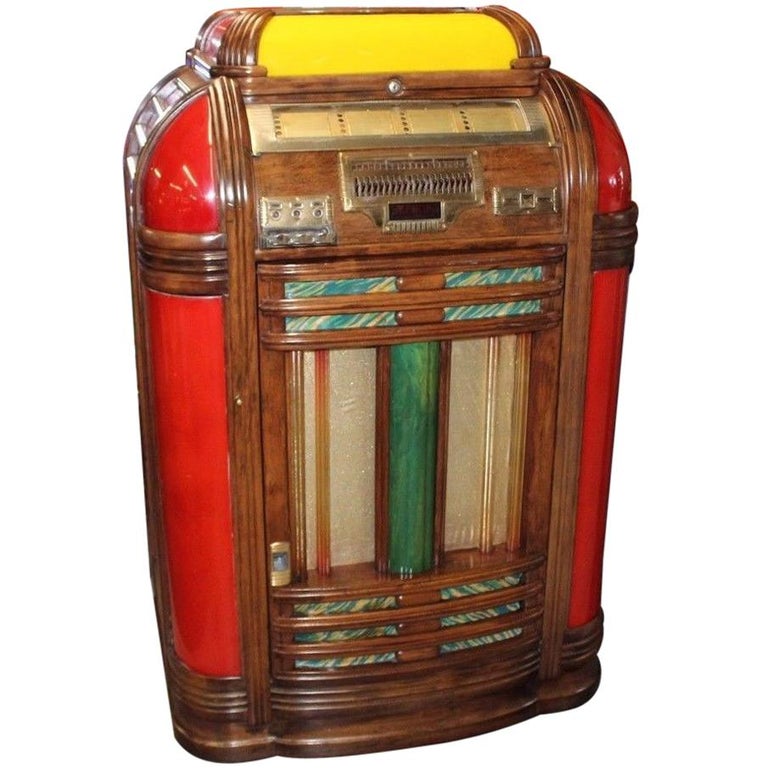
And aesthetically, many machines from the 1930s into the 1940s began embracing bolder cabinet styling—curves, veneers, chrome accents, and designs that looked at home in energetic public spaces. The jukebox wasn’t meant to hide in a corner. It was meant to be seen.
Collector note: This is also where jukeboxes and records become inseparable as collectibles. Machines relied on 78 rpm records, and the popularity of jukebox play helped drive demand for records. A Swing Era jukebox story often lives partly in the record stack.
What Early Jukebox Collectors Actually Collect
Not everyone starts with a full-sized machine—and that’s okay. In fact, some of the most satisfying early collections are built from “supporting artifacts” that tell the same story.
Machine-focused collecting (for those ready for the big step)
- early coin-operated phonographs (often advanced collecting)
- early multi-selection automatic phonographs
- early jukeboxes from the late 1930s and Swing Era years
Paper and parts collecting (high story value, easier to store)
- title strips and selection cards (when applicable)
- operator tags, key tags, service labels, route stickers
- original manuals, schematics, parts lists
- trade ads and dealer brochures
Record-forward collecting (a practical foundation)
- 78 rpm records associated with public listening culture
- label and sleeve examples tied to the era
- genre-focused stacks (swing, early country, crooners, novelty songs)
A display built from one modest artifact in each lane—paper + record + a small machine part—can look surprisingly museum-like without needing a full jukebox in the room.
Early Collecting Tips: What to Look For (and What to Avoid)
Early jukebox history is exciting, but it’s also a category where condition and completeness matter a lot.
If you’re shopping machines
Look for:
- completeness (missing mechanisms can be difficult to source)
- cabinet integrity (water damage and delamination can be serious)
- evidence of careful ownership (documentation, respectful repairs)
Be cautious with:
- heavy “cosmetic restoration” that hides structural issues
- machines missing key internal parts
- projects priced like finished collectibles
If you’re collecting paper and accessories
Look for:
- legible printing and stable paper condition
- natural wear (folds, edge wear) that makes sense
- clear context (model references, operator names, venues, dates)
Be cautious with:
- artificially “aged” reproductions
- items described with big claims but no clear details
If you’re collecting records for the era
Look for:
- stable condition (chips and cracks are common on brittle formats)
- labels that are readable and clean
- sleeves or ephemera that add context
Be cautious with:
- over-cleaning and harsh methods on fragile records
- assuming “old” automatically means “valuable”
A Gentle Collector’s Checklist
Before you buy an early jukebox-related piece, ask:
- Does it fit my focus: machine, paper/parts, or records?
- Does the condition feel stable enough to store and preserve?
- Can I explain what it is and why it matters to the story?
- If a seller is making a big historical claim, is the proof as strong as the claim?
- Will this item help my collection feel more coherent—or just bigger?
The birth of the jukebox wasn’t one invention. It was a chain of ideas that turned music into a shared public experience—coin by coin, song by song, room by room.
Let’s Make History—one song at a time.