
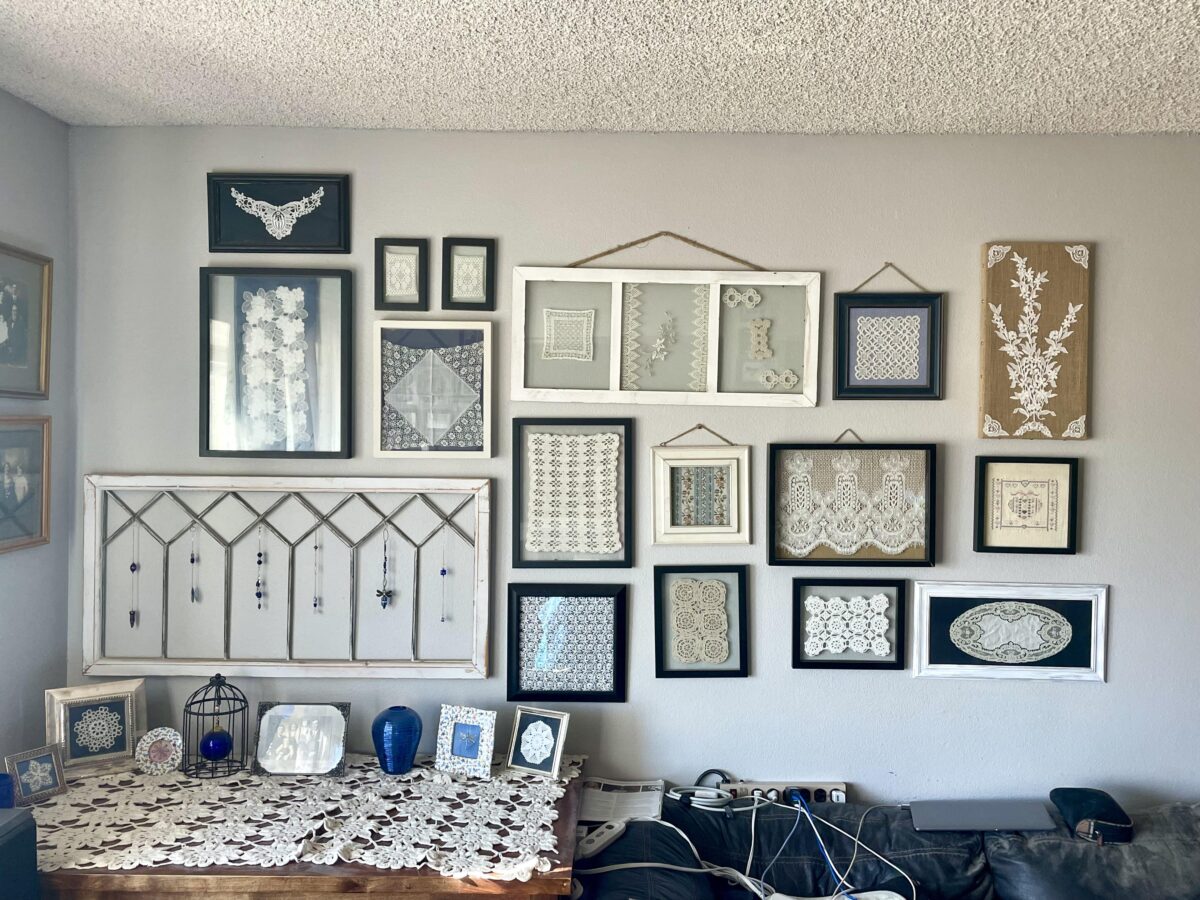
Lace collecting is one of those hobbies that starts quietly. You find a delicate collar in a linen box. A curtain panel that turns sunlight into pattern. A trim still attached to an old garment that makes you wonder who wore it and where they were going. And then you realize lace isn’t just “pretty.” Lace is information—about skill, technology, fashion, class, home life, and what people thought beauty should look like in everyday spaces.
Over this lace series we explored the big pillars: handmade traditions (bobbin and needle lace), machine-made lace and what it changed, lace’s role in fashion and home décor, and how to preserve antique lace so it survives another generation. This wrap-up is your collector’s roadmap: a clear way to start (or refine) a lace collection, shop smarter, display better, and keep your pieces safe while still enjoying them.
The collector’s big idea: lace is both art and evidence
Every lace piece is a record of choices:
- Technique: handmade or machine-made, net-based or motif-based, stitched or interlaced
- Purpose: clothing trim, accessory, formal wear, curtain panel, doily, table topper, bedding detail
- Taste: bold borders, airy grounds, sculptural motifs, geometric repeats, floral romance
- Care and survival: how it was washed, stored, folded, mended, reused, and saved
That’s why lace collecting is so rewarding. You’re not only collecting texture—you’re collecting human decisions.
Your first choice: what kind of lace collector are you?
If you want a collection that feels curated (and doesn’t turn into a tangle of “random lace”), pick a collecting identity. Here are a few that work well:
The technique collector
You collect samples that teach the eye:
- bobbin lace vs needle lace
- net-based machine lace vs embroidered/chemical lace
- bold motif lace vs delicate ground lace
This is a great approach if you like learning and comparing, and it makes your collection feel museum-like in the best way.
The fashion collector
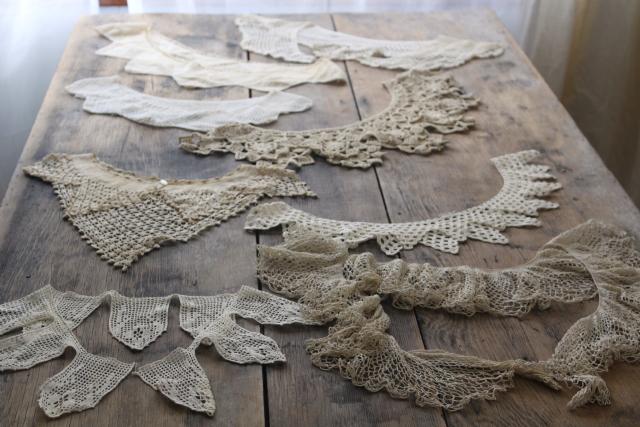
You collect lace as clothing history:
- collars, cuffs, yokes, and insertions
- lingerie trims and dress overlays
- bridal and formal accessories
Your collection becomes a story of silhouette and style—and lace is the detail that often dates and defines a garment.
The home-textile collector
You collect lace for how it shaped rooms:
- curtains and window panels
- doilies, toppers, runners, antimacassars
- pillowcases, shams, sheet trims
This lane is especially display-friendly because lace home textiles can be layered, framed, or rotated seasonally.
The aesthetic collector
You collect lace for pure visual impact:
- scalloped borders
- bold guipure-like motifs
- dramatic contrast displays
- one color family (ivory/cream only, or crisp white, or darker lace)
If you love styling and display, this is your lane.
A simple strategy that keeps lace collecting from getting overwhelming
Lace is abundant. The trick isn’t finding it—it’s choosing what deserves space.
Try this “two-tier” plan:
Tier 1: Your core focus (choose one)
Pick one core category to anchor your collection:
- collars
- trims/borders
- doilies/toppers
- curtain panels
- framed “lace art” pieces
Tier 2: Your supporting category (choose one)
Pick one supporting category that complements your core:
- one technique sample set
- one era vibe (light and airy, bold and graphic, etc.)
- one use-case (fashion only, home only, or display only)
With a two-tier plan, you can still buy interesting pieces—without buying everything.
Quick ID refresher: how to “read” lace while you shop
You don’t need perfect terminology to buy well. You just need a few reliable checks.
1) Look at the structure first
Ask:
- Is there a net ground (mesh background), or mostly connected motifs?
- Do motifs feel stitched, braided, or knit-like?
- Is the repeat extremely uniform, or does it have subtle “handwriting”?
2) Look at the edges
Edges are where quality and damage reveal themselves:
- scallops and picots intact?
- edge fraying or missing points?
- repaired areas hiding along the border?
3) Flip it and check joins
Where lace meets fabric (or where motifs connect) is where you’ll see:
- stress and thinning
- replacement stitching
- repairs
- construction clues
4) Do the “six-foot test”
Hold the piece up and step back.
- If the pattern still reads clearly, it will display well.
- If it disappears unless you’re inches away, it may be better as a reference piece than a showcase.
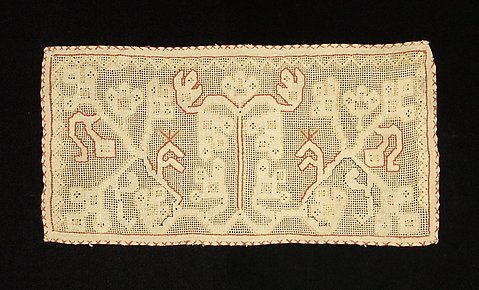
Condition: what matters most (and what doesn’t)
Collectors sometimes get stuck chasing “perfect white lace.” In reality, antique lace is allowed to look like it has lived.
Condition issues that usually matter a lot
- holes and breaks (especially through motifs or repeated areas)
- brittleness (fragile, crackly folds, weak thread)
- heavy staining that distracts visually
- severe thinning and shredding
- unstable repairs that will worsen with handling
Condition issues that can be acceptable (depending on your goals)
- gentle overall aging/soft ivory tone
- minor edge wear on a piece intended for display
- small repairs that are neat and stable
- light spotting that disappears in a framed, contrast-backed display
A practical rule: buy the best condition you can for the purpose you want. Display lace can tolerate more flaws than lace intended for sewing or restoration work.
Buying lace smart: how to avoid regret purchases
Know your “use intent”
Before you buy, decide:
- Is this for display?
- Is this for study/reference?
- Is this for a project (sewing, restoration, creative use)?
If it’s for display, prioritize:
- bold pattern readability
- intact edges
- pleasing shape and symmetry
If it’s for projects, prioritize:
- stability and strength
- consistent yardage
- known fiber (when possible) and manageable wear
Do the “unfold check”
If you can, gently open and inspect:
- fold lines (often hide breaks)
- corners and scallops
- center areas for thin spots
Watch for mismatches
In garments or attached trims, look for:
- lace that’s much whiter than the base fabric (possible replacement)
- lace that feels far newer than the garment
- stitching that looks inconsistent with the rest of the piece
None of these automatically mean “bad”—but they should influence price and expectations.
Display that feels intentional (and keeps lace safe)
Lace wants contrast. Without it, it disappears.
The easiest display win: dark backing + flat support
- Frame lace over a dark or mid-tone fabric backing so the pattern pops.
- Use a method that supports lace across its surface rather than hanging it by a few points.
Great display formats for collectors
- Shadow box: ideal for collars, delicate borders, and lace you want to “float”
- Mat-mounted trim: wrap a strip around a mat opening so it reads clean and graphic
- Textile sampler wall: small framed examples grouped by style or technique
- Drawer display: line a shallow drawer and rotate pieces seasonally
Rotate to limit light exposure
Even framed textiles can fade over time. A simple rotation system lets you enjoy lace without sacrificing it:
- display for a limited period
- rest in dark storage longer than it’s displayed
- swap seasonally
Storage: the basics that preserve lace for the long haul
You don’t need museum conditions; you need consistent conditions and gentle materials.
Storage goals
- stable temperature and humidity
- dark, clean environment
- supported folds (or flat storage when possible)
- buffered contact between pieces
Best practices
- store flat in acid-free boxes when possible
- use acid-free tissue to pad folds and separate layers
- avoid damp spaces (basements/attics are common risk zones)
- avoid sealed plastic that traps moisture
For long trims:
- roll if practical (supported and wrapped)
- if folding is necessary, fold loosely and pad each fold with tissue
Building a collection that tells a story
The most memorable lace collections feel like they have a narrative. Here are a few story-based directions collectors love:
“From hand to machine”
Start with a handmade example you love, then add:
- a machine lace piece that mimics a handmade look
- a bold embroidered/chemical style that shows industrial texture
- a home textile that shows how lace became everyday
“A room in lace”
Build a home-textile collection that could furnish a single room’s “lace mood”:
- curtain panel
- doily or topper
- pillowcase trim
- a framed border as wall art
“Edges and endings”
Collect only borders—scallops, picots, dramatic hems—and display them as framed strips. It’s an easy way to build a cohesive, visually striking collection quickly.
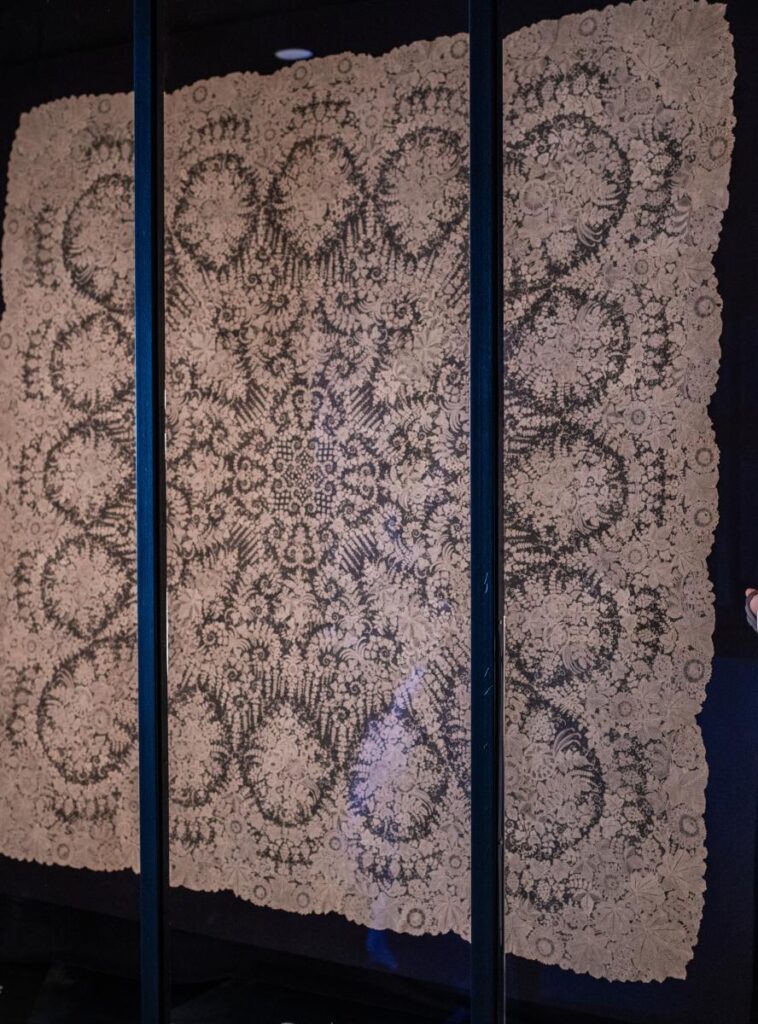
A quick glossary to keep in your back pocket
You don’t need to use these words to enjoy lace—but they help you shop and describe what you see:
- Ground: the mesh background behind motifs
- Motif: the decorative pattern element (floral, scroll, medallion)
- Border: the finished edge, often scalloped
- Insertion: narrow lace used between fabric pieces
- Trim: lace used along edges or hems
- Guipure-like look: motif-based lace with bars/bridges rather than a net ground (often seen in certain machine/embroidered styles)
Your “leap-in” plan: a practical 30-day lace starter challenge
If you want a structured way to begin:
- Choose your collecting identity (technique, fashion, home, or aesthetic).
- Pick one core category (collars, trims, doilies, curtains, framed lace).
- Buy three pieces:
- one that’s bold and display-ready
- one that teaches you structure (different technique or style)
- one “wild card” you just love
- Display one with contrast, store two safely.
- After 30 days, refine your rule: keep only what fits your story.
That’s how lace collecting stays joyful, intentional, and sustainable.
Lace is thread turned into architecture—proof that patience can become beauty, and beauty can become tradition. Whether your collection leans handmade, machine-made, fashion-focused, or home-centered, every piece carries the quiet drama of time: who made it, who used it, who saved it, and how it found its way to you.
Let’s Make History—one woven story at a time.