
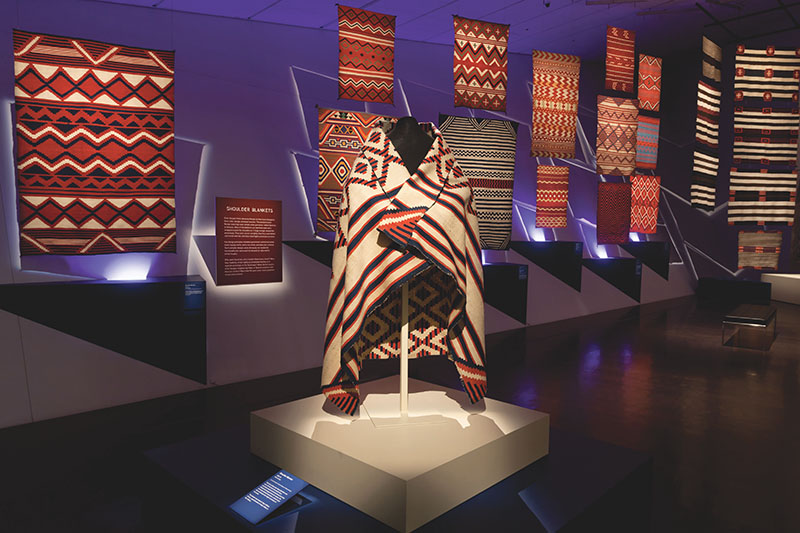
If you’re new to Navajo (Diné) textiles, one of the first confusing things you’ll hear is people using the words “blanket” and “rug” almost interchangeably. Sometimes that’s harmless shorthand. Other times it changes the whole story of a piece—because a textile made to be worn and a textile made to be used on the floor aren’t just different in function. They reflect different markets, different buyer expectations, and in many cases different design decisions.
This post is about that shift. Not to reduce Diné weaving to “what sold,” but to explain how economic change, trading posts, tourism, and outside demand helped reshape what was made—and how we talk about it today. Understanding the difference between rugs and blankets helps collectors describe pieces more accurately, spot clues in structure and proportions, and build collections that honor the textiles as both art and cultural work.
Continue reading “Rugs Vs Blankets- A Changing Market”