
Beads are among the earliest forms of human self-expression, stretching back tens of thousands of years. Long before written language, before coins, before organized trade networks, humans were stringing beads. They were more than decoration—they were signals of identity, spirituality, and social belonging. To understand beads is, in a way, to trace the origins of human culture itself.
The Earliest Beads: Shells That Spoke Without Words
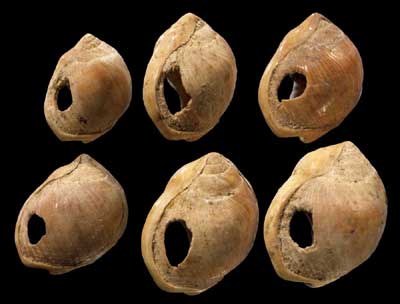
The oldest known beads come from Blombos Cave in South Africa, where archaeologists uncovered small, perforated Nassarius kraussianus shells dating back more than 75,000 years. These were deliberately pierced, likely strung together as necklaces or sewn onto garments. Researchers suggest that they may have been used as early markers of identity, distinguishing one group from another—or even carrying spiritual significance.
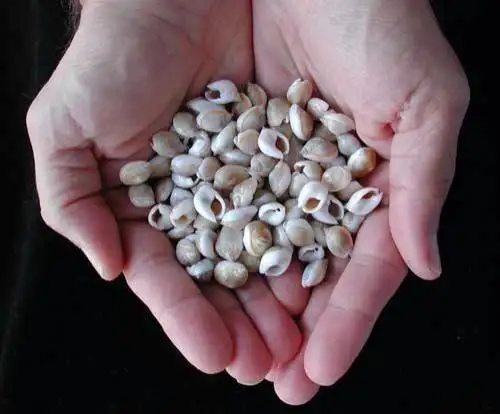
Similar perforated shell beads have been found in Skhul Cave in Israel (dated to ~100,000–135,000 years ago) and at sites in North Africa such as Taforalt (~82,000 years ago), showing that symbolic ornamentation by modern humans was more widespread than once believed. Together, they show that humans across continents independently developed the idea of wearable symbols. In many ways, these tiny shells are humanity’s first “wearable stories.”
Beads Across Ancient Civilizations
As societies grew more complex, so did beadmaking. Nearly every great civilization left behind evidence of beadwork:
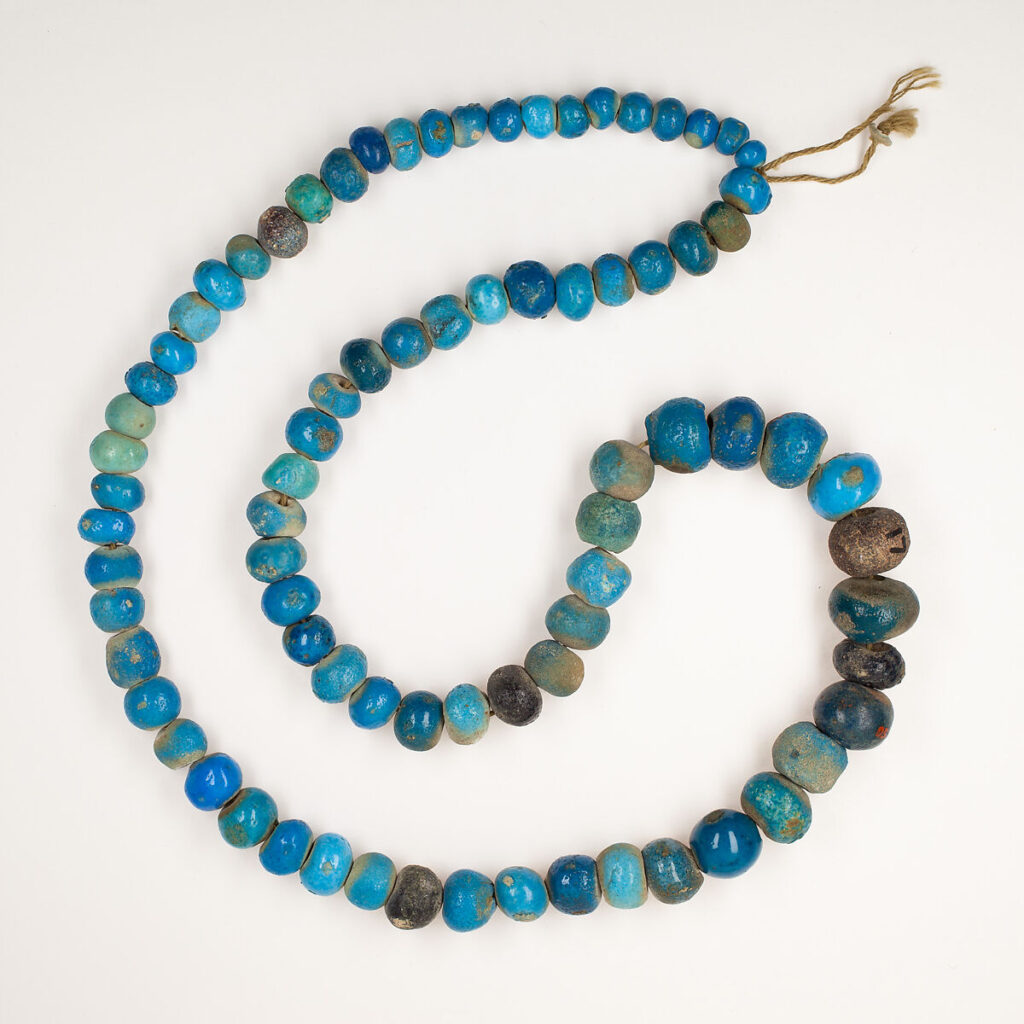
ca. 1550–1295 B.C
- Egypt: Beads made of faience—a bright, glazed material that shimmered in turquoise and blue—were not only beautiful but thought to hold protective, magical qualities. Amulets, necklaces, and even burial adornments filled tombs, ensuring the dead carried protective symbols into the afterlife.
- Mesopotamia: Beads of lapis lazuli, carnelian, and gold marked social rank. They were also embedded in religious rituals, often buried with the elite.
- China: Jade beads symbolized purity, power, and immortality. In some dynasties, jade ornaments were reserved for nobility and were believed to protect the wearer’s soul.
- Mesoamerica: The Maya and Aztec civilizations valued jadeite and turquoise beads, linking them to fertility, rain, and the gods.
In every culture, beads could be charms, status symbols, talismans, or even proto-currency. Their meanings shifted across time and geography, but their importance remained constant.
Democratic Yet Elite
One of the most fascinating aspects of beads is their dual nature: they were both universal and exclusive.
Wherever humans lived, they made beads out of whatever was at hand: seeds, bones, teeth, shells, clay, stone, or glass. Anyone with simple tools could drill a hole and thread a bead. Yet at the same time, the rarest beads—crafted from imported stones, precious metals, or rare minerals—were reserved for leaders, warriors, or spiritual elites.
In this sense, beads acted as a social spectrum: the same medium could express everyday life for a farmer and divine authority for a king.
Beads as Markers of Trade and Power
Beads were not just jewelry—they often functioned as valuable trade goods, bartered across wide networks, sometimes traveling thousands of miles from their point of origin.
- In 16th- and 17th-century Africa, beads were so valuable they were used in dowries and royal tribute.
- Venetian glass beads were highly sought after and traded in return for gold, ivory, and other valuable commodities in parts of Africa. Entire African beadwork traditions evolved in response, incorporating imported glass into intricate waist belts, collars, and ceremonial adornments.
One vivid anecdote: explorers and traders often carried Venetian “trade beads” in barrels because they were as effective for negotiation as silver or cloth. Some of these beads survive today in museums and private collections, linking us directly to the exchanges that shaped global history.
The Tiny Details: Craftsmanship in Beads
The artistry of beads is easy to overlook, but each represents tremendous skill. Ancient artisans drilled holes with stone tools, polished hard stones into smooth spheres, or discovered how to melt sand into glass.
Early glass bead experiments appeared in regions like Mesopotamia and Egypt; later, Venetian artisans on Murano refined many decorative glass techniques, including millefiori and enamel work, which greatly influenced bead-making traditions worldwide.
These beads were so refined that in some cases, they outlasted empires. A single Venetian bead could circulate across multiple continents, passing through countless hands while retaining its beauty.
A Modern Connection to the Ancient Past
What is striking about beads is not only their antiquity but their continuity. Unlike many other ancient artifacts, beads have never fallen out of human use. From prehistoric shells to Renaissance glass, from Native American wampum to modern artisan creations, beads have always had a place in human expression.
Today, artists still handcraft beads from glass, clay, wood, or metal. Collectors prize both the rare and the ordinary: a 19th-century seed bead necklace might sit in the same display case as a 2,000-year-old Roman glass bead.
And while beads can be valuable—sometimes fetching thousands at auction—they are also profoundly personal. Many of us still string them, wear them, or pass them down as heirlooms, echoing a 75,000-year-old human habit.
Why Beads Endure
So why have beads lasted when other forms of adornment faded? A few reasons:
- Portability: Beads are small, easy to carry, and durable.
- Versatility: They can be decorative, symbolic, spiritual, or monetary.
- Storytelling: Each bead tells a story—about where it came from, who wore it, and what it meant.
- Community: Beadmaking and bead-wearing connect people, from ancient clans to modern hobbyists.
Ultimately, beads endure because they embody something timeless: the human desire to mark identity, tell stories, and add beauty to life.
Final Thoughts
From the prehistoric caves of South Africa to the bustling markets of Venice, beads have carried human meaning across millennia. They were the world’s first adornments, but also its first storytellers—objects that compressed memory, culture, and belief into something you could wear around your neck or wrist.
When we look at beads, we are not just admiring decoration. We are looking at a throughline of human history: small, portable treasures that whisper who we were, who we are, and who we aspire to be.
Do you own an old bead or beaded item? Do you know its story—or are you writing one for it right now? Share your bead story in the comments and Let’s Make History, one strand at a time.