
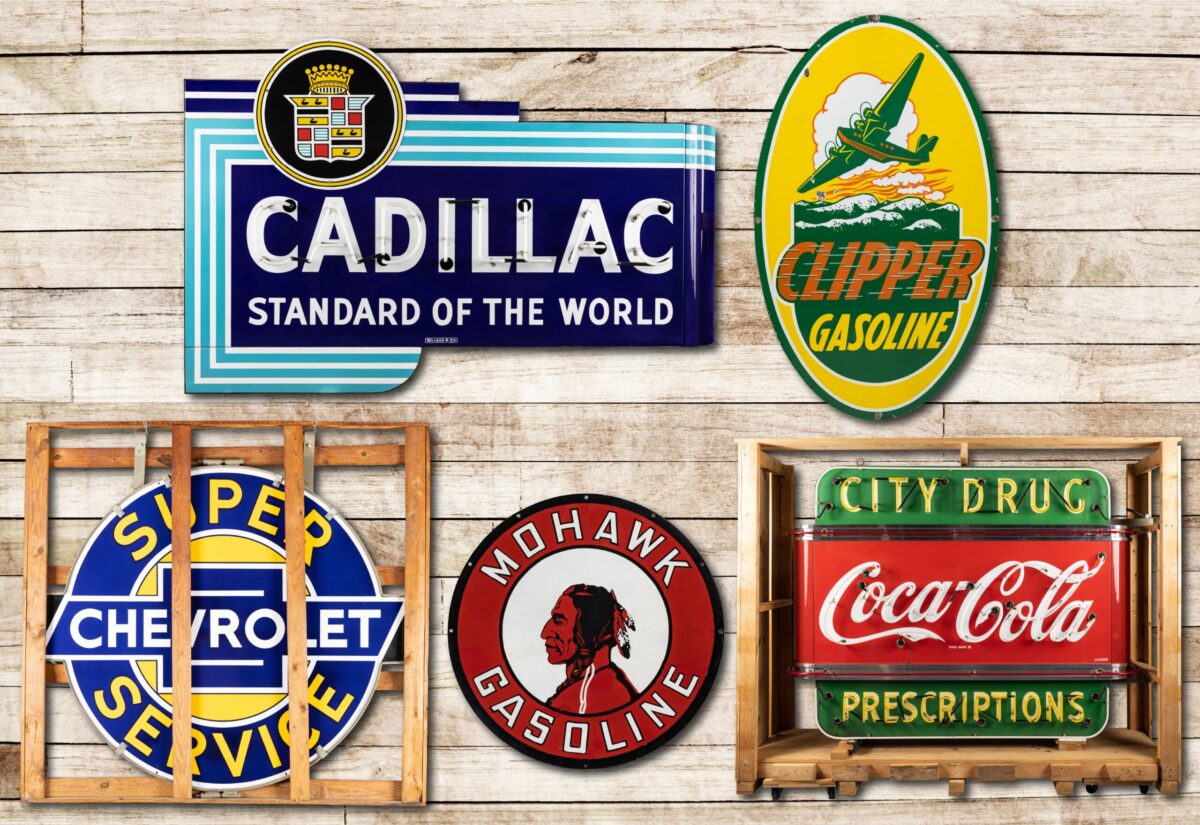
Few collectibles capture everyday American history as clearly as advertising signs—especially the kind that once lived outdoors, braving weather and time while pitching everything from motor oil to soda to farm equipment. Porcelain and tin signs sit at the heart of that story.
These pieces weren’t made to be precious. They were made to be seen—hung on storefronts, barns, service stations, and roadside posts. Their job was to stop you in your tracks and plant a brand in your memory. Decades later, that same visual power is exactly why collectors still chase them.
Why Porcelain and Tin Became Classics
Metal signs rose alongside mass consumer advertising in the late 19th and early 20th centuries. They were durable, relatively affordable, and could be distributed widely. As national and regional brands grew, signs became part of the visual landscape of daily life.
Tin signs (often steel with lithographed or painted graphics) helped companies advertise in a consistent, eye-catching way. They allowed for bold type, strong color, and easy installation. Designs changed as styles changed, so these signs now offer a visual timeline of shifting tastes and graphic trends.
Porcelain-enamel signs took durability a step further. Layers of enamel fused to a metal base created a hard, glossy surface that resisted rust and held color well. That toughness made porcelain a premium choice for brands that wanted their message to survive years of outdoor exposure at gas stations, shops, and along the roadside.
The Roadside Identity Factor
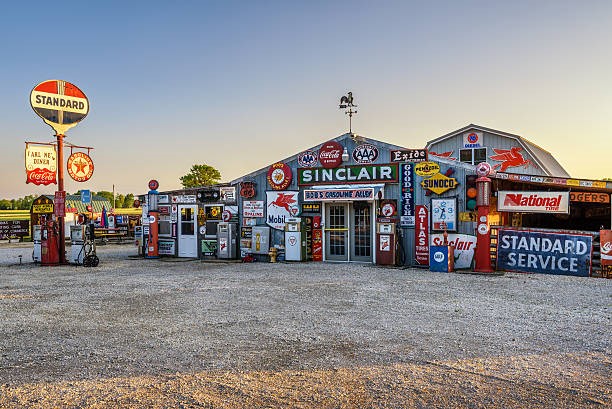
Collectors often describe porcelain and tin pieces as “icons of the roadside,” and it fits. These signs carry the feel of travel culture: highways, local gas stations, corner markets, and the era when a bright sign really mattered.
They’re also tied to the romance of American movement—road trips, small towns, and the rise of car culture. Even if you never experienced those years firsthand, the imagery still reads clearly. You’re looking at the visual language of a country on the move.
What Collectors Love Most
You don’t need a huge budget to understand why these signs have lasting appeal. The attraction often comes down to a handful of factors:
1. Brand recognition
Well-known names in fuel, soda, beer, and automotive products tend to attract strong demand. Regional brands can be just as exciting when they document a specific local story or business that no longer exists.
2. Graphic punch
Great sign design is unmistakable: clear typography, bold color blocks, memorable mascots, strong shapes, and layouts you can read from a distance. A sign that commands attention across a room is still doing its original job.
3. Rarity by survival
Many signs didn’t survive decades of weather, remodeling, and changing ownership. Scarcity often reflects what made it through time, not simply what was produced. Demolition, repainting, and scrap drives all took their toll.
4. Size and display value
Larger pieces can create dramatic focal points on a wall. Smaller examples feel more approachable and are easier to fit into home collections and mixed displays. Both ends of the size spectrum have their fans.
5. Condition with character
Signs are one of the few categories where honest wear can add charm. Fading, chips, and edge wear can reinforce a sense of age and authenticity. Condition still matters, but the conversation is often more nuanced than “mint versus not.”
A Quick Collector’s Guide to Authenticity
Because the market for vintage advertising signs is strong, reproductions and fantasy pieces are common. That doesn’t mean every newer sign is a problem—but it does mean you want to know which is which.
A few practical habits help:
- Look for natural aging patterns. Real age tends to show consistently along edges, mounting holes, and exposed high spots—not just in random patches.
- Check mounting holes. Perfectly clean, sharp holes on a sign that’s supposed to be decades old can be a red flag.
- Compare known examples. Popular designs are often documented in collector guides, online communities, and reference books. Comparing fonts, colors, and layout can reveal differences.
- Trust context. A sign that turns up in a long-closed business, barn, or estate with a believable story may have stronger backing than an item with no history at all.
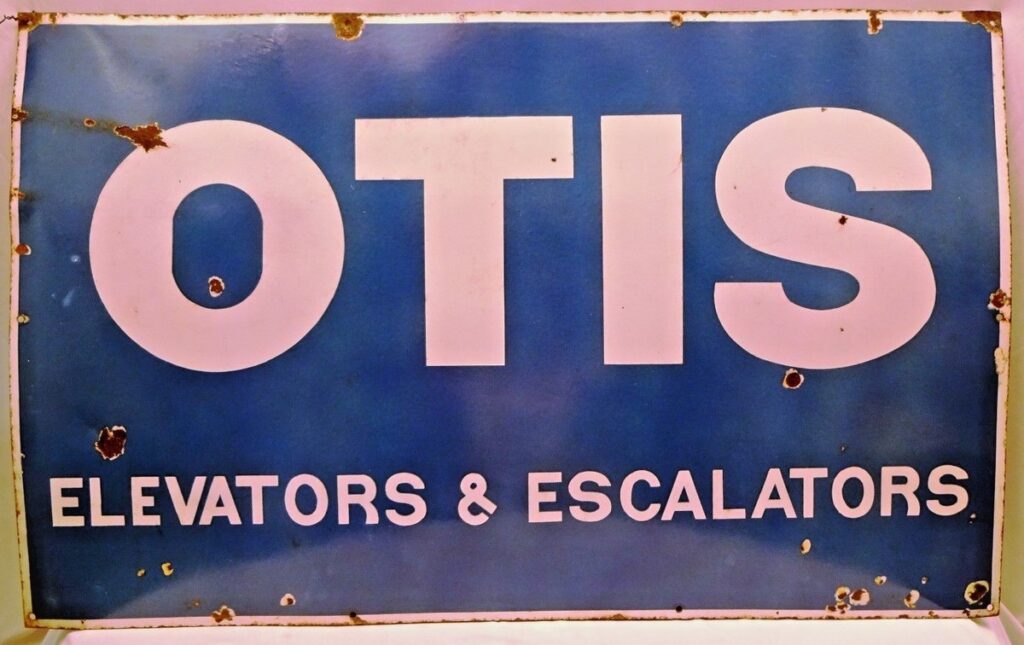
If authenticity affects price or meaning, it’s worth taking the time to verify details before you commit.
Porcelain vs. Tin: Two Lanes of the Same Story
If you’re new to the category, it helps to think of porcelain and tin as two complementary lanes rather than competing choices.
Tin signs:
- Often more accessible in price
- Cover an enormous range of themes and styles
- Great entry point for new collectors
- Excellent for themed walls and smaller spaces
Porcelain signs:
- Often more durable, with a glossy, color-rich surface
- Color can remain vivid for many years when reasonably cared for
- Frequently command higher prices, especially for popular brands
- Make strong centerpiece items for collections or rooms
Many collections happily mix both. Tin offers breadth and variety; porcelain brings visual “heft” and presence.
Care and Display Tips
These signs were built to survive public life, but basic care will help them last even longer in a collection.
- Avoid harsh, direct sunlight when possible, especially for pieces with already-faded paint or enamel.
- Keep them away from damp areas, which can encourage rust on tin or corrosion on metal backs.
- Use secure mounting hardware that spreads the weight and doesn’t bend or stress the metal.
- Skip harsh abrasives. For porcelain, strong abrasives can scratch enamel. For tin, they can strip paint and accelerate rust.
- Watch for active rust on tin or steel-based signs and address it early with appropriate conservation methods if needed.
A light, careful cleaning and sensible display choices go a long way.
Why These Signs Remain Cultural Artifacts
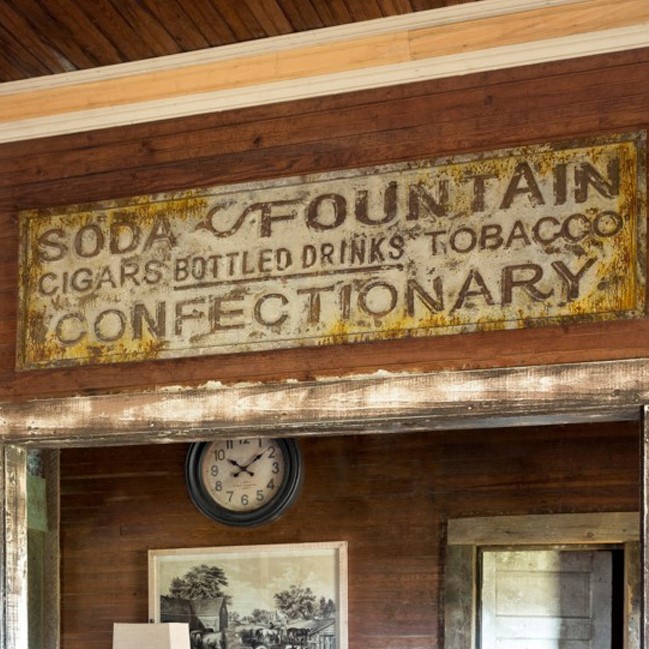
Porcelain and tin advertising signs are more than décor. They’re snapshots of everyday commerce and public life. They show how brands spoke to people in specific decades, which products mattered, and how design trends shifted over time.
They also reflect local and national stories:
- Corner stores and service stations that no longer exist
- Regional brands that disappeared or were absorbed by larger companies
- The growth of roadside business as car travel expanded
Most of all, they remind us that history isn’t only found in museums. Sometimes it’s found in a sign that once hung above a gas pump or next to a shop door, doing its job day after day.
If you’re drawn to objects that combine graphic art, industrial history, and pure nostalgia, porcelain and tin signs are a rich collecting lane to explore.
And if you’re building a collection one sign at a time, you’re not just decorating your space.
You’re preserving how people sold, traveled, and lived.
Let’s Make History-one sign at a time.