
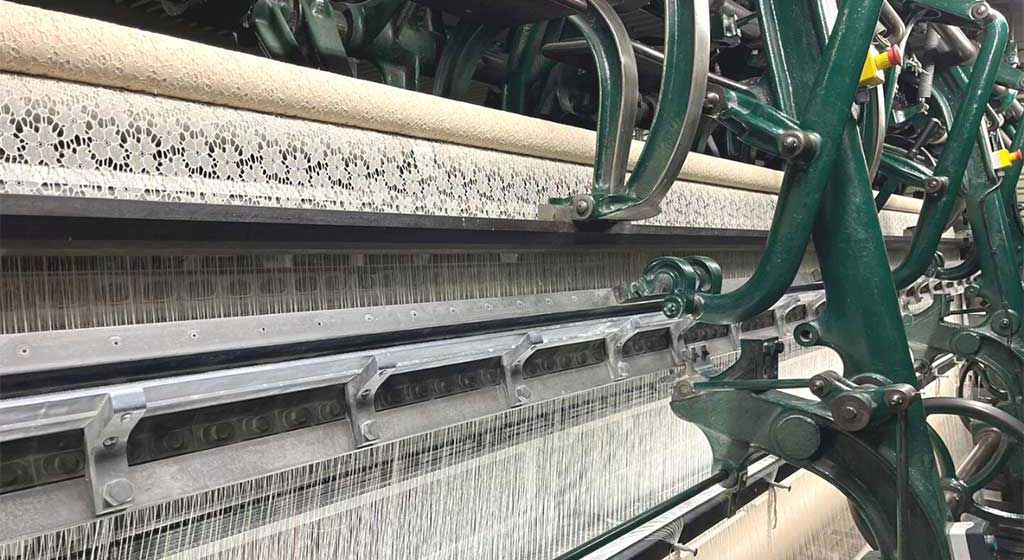
Handmade lace has a certain hush to it—the sense that someone sat with thread and time and turned patience into pattern. But lace history isn’t only a story of handwork. It’s also a story of innovation: machines designed to imitate (and later reinterpret) those same crossings, loops, and outlines so lace could be made faster, cheaper, and in quantities that changed what ordinary people could wear and decorate with.
That’s the big shift machine-made lace represents. It didn’t erase handmade lace; it widened the world of lace. Suddenly, lace wasn’t only for the wealthy, the ceremonial, or the rare heirloom garment. It could show up on everyday collars, curtains, underthings, pillowcases, handkerchief edges, and Sunday-best blouses. For collectors, machine-made lace is both approachable and surprisingly rich: it spans fashion history, industrial history, and changing ideas about beauty and “good taste” at home.
Let’s break down what machine-made lace is, the major types you’ll encounter, and how to collect it confidently.
What “machine-made lace” actually means
Machine-made lace is lace produced primarily by mechanical processes rather than being formed entirely by hand with bobbins or needle stitches. That can include lace made by:
- Net-making and lace machines that interlace threads to form a mesh and pattern
- Warp-knitting machines that create lace-like structures through knitting technology
- Embroidery-based processes where lace is stitched onto a temporary ground and then freed (a common method for certain “guipure-style” looks)
If you collect lace, it helps to think of machine-made lace as a big umbrella with multiple families underneath it. Two pieces can both be “machine-made” and still be created in completely different ways.
Why machine lace mattered: lace goes from luxury to everyday
Before mechanization, fine lace was labor-intensive, which made it costly and status-coded. Machine lace changed that equation by dramatically increasing output and lowering per-yard cost. The cultural result was huge:
- Lace moved into middle-class wardrobes and not just elite fashion.
- Lace became a standard “pretty finishing” touch in home textiles—curtains, antimacassars, table linens, bedding trims.
- Styles could be produced more consistently, meaning trends spread faster and designs became more standardized.
For collectors today, that democratization is part of the charm. Machine lace often reflects the real everyday romance of textiles: what people could afford, mend, reuse, and pass down.
The early breakthrough: making the net
A key early step in machine lace history was the ability to produce a smooth, consistent net ground—the kind of fine mesh that could be used as-is (think tulle-like netting) or as the base for patterned lace. One of the pivotal inventions in this story is John Heathcoat’s bobbin-net machine, patented in the early 19th century.
Why this matters for collectors: once net could be made reliably by machine, lace production didn’t have to start from scratch every time. Net became a foundation—an enabling technology that helped lace move from painstaking hand process to scalable production.
Leavers lace: the machine-made lace that aims for “handmade look”
When collectors picture classic machine lace, they’re often thinking of Leavers lace—a type of lace made on Leavers machines that can produce intricate patterns with a net ground and outline. The Leavers machine is closely tied to early Nottingham lace development and is credited to John Levers/Leavers in the early 19th century.
Leavers lace has long been prized because it can look refined, complex, and “traditional,” even though it’s machine-produced. In fact, some of the romance of lace fashion in later eras depends on this exact thing: a machine process capable of delivering an ornate, heirloom-like look at wider scale.
What Leavers lace tends to look like
- A patterned design integrated with a net ground
- Distinct outlines around motifs (often the part your eye reads first)
- Floral scrolls, medallions, borders, and repeating pattern units
- A softer, textile-like feel compared to stiffer “cutout” laces
Collector mindset: Leavers lace is often where “machine-made” and “dressy” overlap most strongly.
Raschel lace: lace that comes from warp knitting
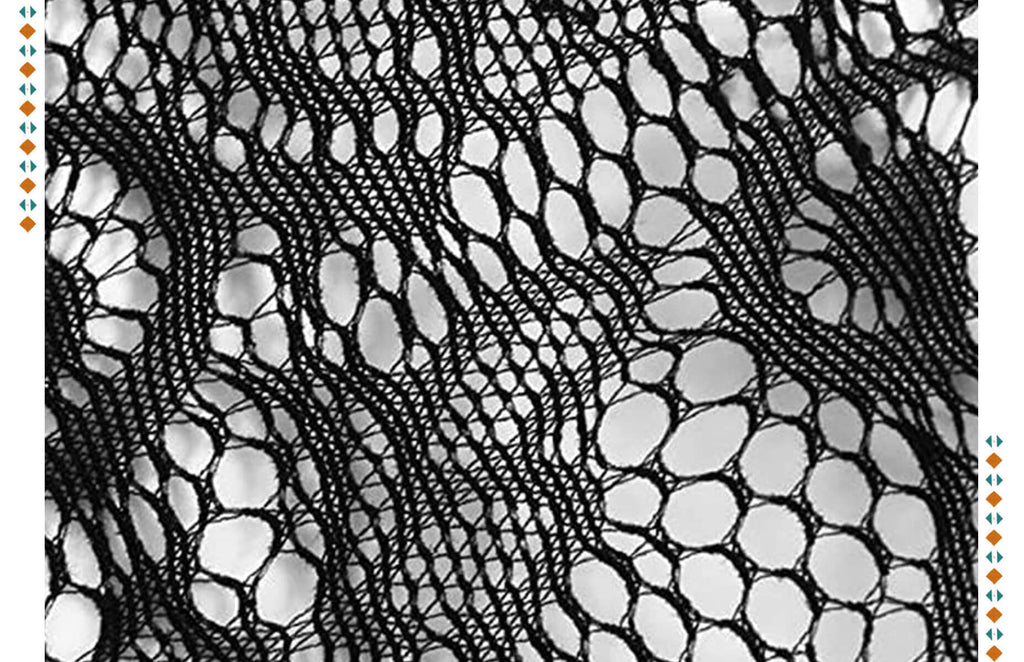
Another major family you’ll see—especially in later lace production—is Raschel lace, which comes from warp-knitting technology. Raschel machines are widely used for contemporary machine-made laces and can produce stable lace structures well-suited for garments and home textiles.
Raschel lace often shows up as:
- broader lace yardage used in fashion
- curtain and home décor lace
- lace with a slightly more “knit” character than Leavers (depending on style)
Collector note: you don’t have to treat Raschel lace as “lesser.” It’s simply a different branch of the machine-lace family, and it can be gorgeous—especially in mid-century and later decorative textiles.
Chemical lace and embroidered lace: when lace is stitched, then freed
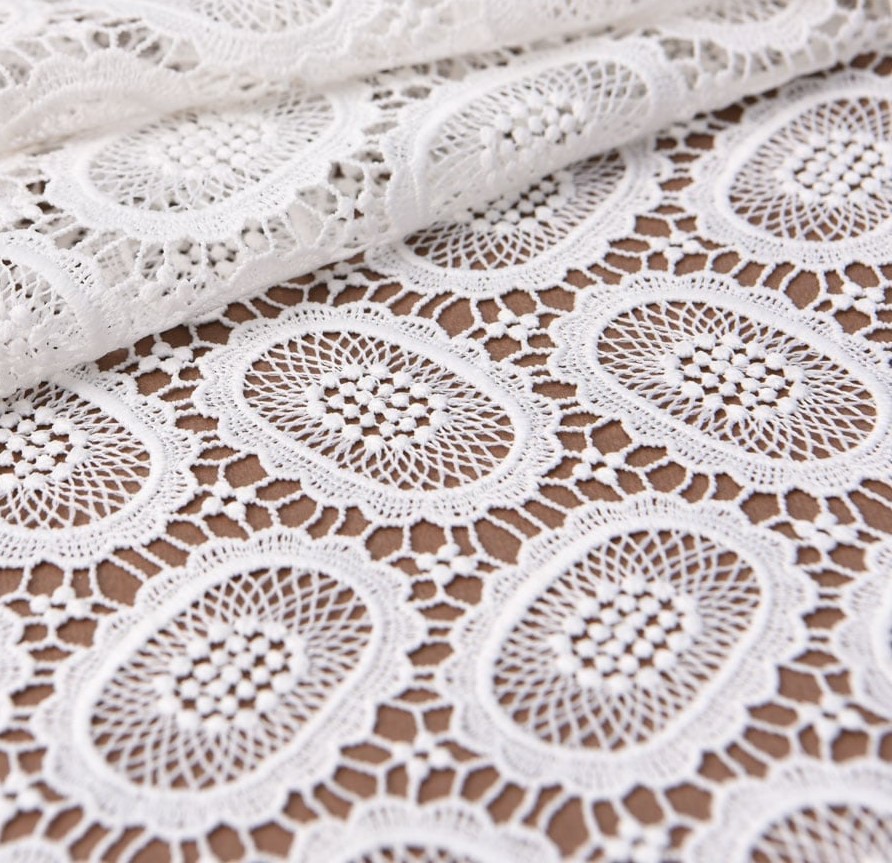
A third major lane is lace created by embroidery methods—often called chemical lace or embroidered lace in many collecting circles. The idea is straightforward: stitch dense lace motifs onto a base fabric (the “ground”), then dissolve or remove the ground so the stitched design remains as lace. This method is strongly associated with Schiffli embroidery technology and late 19th-century industrial lace development in places known for embroidery production.
What this lace tends to look like
- No obvious net ground (more like connected motifs)
- A guipure-like effect: designs joined by bars and bridges
- Often slightly heavier and more sculptural than fine net-based lace
- Beautiful raised texture and bold negative space
Collector note: this is a fantastic category for display because the patterns often read clearly from across the room.
How to spot machine-made lace when you’re shopping
You don’t need a lab. A few visual checks will get you most of the way there.
1) Look at regularity
Machine-made lace often has a very consistent repeat and uniform thread behavior. Handmade lace can be incredibly consistent too—but it usually carries small “handwriting” differences if you look closely.
2) Check the ground (if there is one)
- Net grounds in machine lace can look very uniform and evenly tensioned.
- Some handmade grounds also look uniform, so use this as a clue—not a single deciding factor.
3) Feel the lace (gently)
- Some machine lace feels slightly more even and engineered in hand.
- Embroidered/chemical laces may feel denser and more structured.
4) Look for signs of garment use
Machine lace appears constantly in trims and clothing. Evidence of use can be a feature, not a flaw—especially if it tells a story (original seam lines, old hems, hand stitching).
What collectors look for in machine-made lace
Machine-made lace collecting is often about condition, usability, and visual impact.
Condition checkpoints
- tears and breaks along folds
- fraying edges or pulled threads
- stains and discoloration (from storage or wear)
- brittleness (especially if stored poorly)
- repairs (sometimes charming, sometimes distracting)
Why it was made (and what that means for value)
- Trim lace (narrow): often plentiful, great for projects and display
- Yardage lace (wide): more valuable when intact and clean
- Garment lace (already attached to a textile): can be valuable as a whole piece, or as a source of lace for restoration (depending on your collecting ethics and goals)
The design factor
Collectors tend to pay more for:
- bold borders and scalloped edges
- patterns that read clearly (even when folded)
- unusually elegant motifs or dense workmanship
- pieces that are large enough to display or use
“Democratizing elegance” doesn’t mean “cheapening it”
One of the most interesting things about machine lace is that it lives in a constant tension: it was invented to scale beauty, but it didn’t eliminate the desire for the “best” lace. Even today, some lace production still relies on historic machine traditions—especially in the high-end fashion world where certain machine-made lace has prestige and heritage built into it.
In other words: machine-made lace isn’t automatically lesser. It’s part of the broader story of how beauty moved through society—how design, technology, and taste shaped what people could wear and how they could decorate their homes.
Displaying machine-made lace so it looks intentional
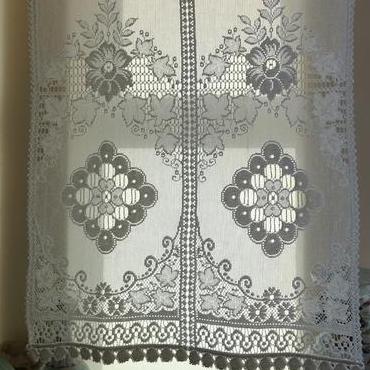
Machine lace deserves the same display respect as handmade lace. The key is contrast and clarity.
Easy display ideas
- Frame lace over a dark backing so the pattern pops
- Wrap a lace strip around a mat opening for a clean, museum-like look
- Shadow box a wider piece with gentle mounting so it lies flat
- Layer lace over linen or velvet for texture without visual chaos
- Create a “lace sample wall”: small framed pieces grouped by type (net-based, embroidered/chemical, knit-based)
If you’re storing instead of framing, keep it flat when possible and buffer folds with archival tissue.
A practical buying strategy for new lace collectors
If you’re just starting:
- Buy a few examples of different machine-lace families (net-based, Leavers-style, embroidered/chemical).
- Compare them side by side at home.
- Decide what you love—border shapes, motif styles, width, softness, boldness.
- Then narrow your focus so your collection feels curated.
Machine-made lace is one of the easiest textile categories to grow into: plenty of variety, lots of affordable entry points, and endless ways to display it beautifully.
Let’s Make History—one elegant edge at a time.