Walk into an antique store or flea market and you might spot them: colorful buttons with bold slogans, faded fabric ribbons pinned behind glass, or even flags declaring loyalty to long-forgotten candidates. These are political souvenirs—pieces of history that capture moments of civic life in physical form. For collectors, they’re more than decorations. They’re time capsules of democracy in action, each one carrying the voice, imagery, and optimism (or sometimes frustration) of its era.
But how did political souvenirs become such a staple of American campaigning? And why do collectors prize them today—not just for their historical value but also for their unique designs and stories?
The Earliest Campaign Keepsakes
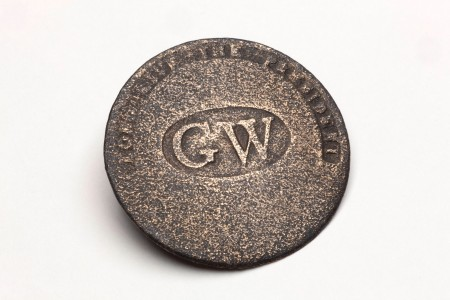
The roots of American political memorabilia go back to the very first elections. George Washington’s 1789 inauguration produced commemorative brass and copper buttons inscribed with phrases like Long Live the President. These weren’t campaign materials—Washington famously avoided campaigning—but they were celebratory tokens made by supporters, and today they’re among the most coveted artifacts of early American history.
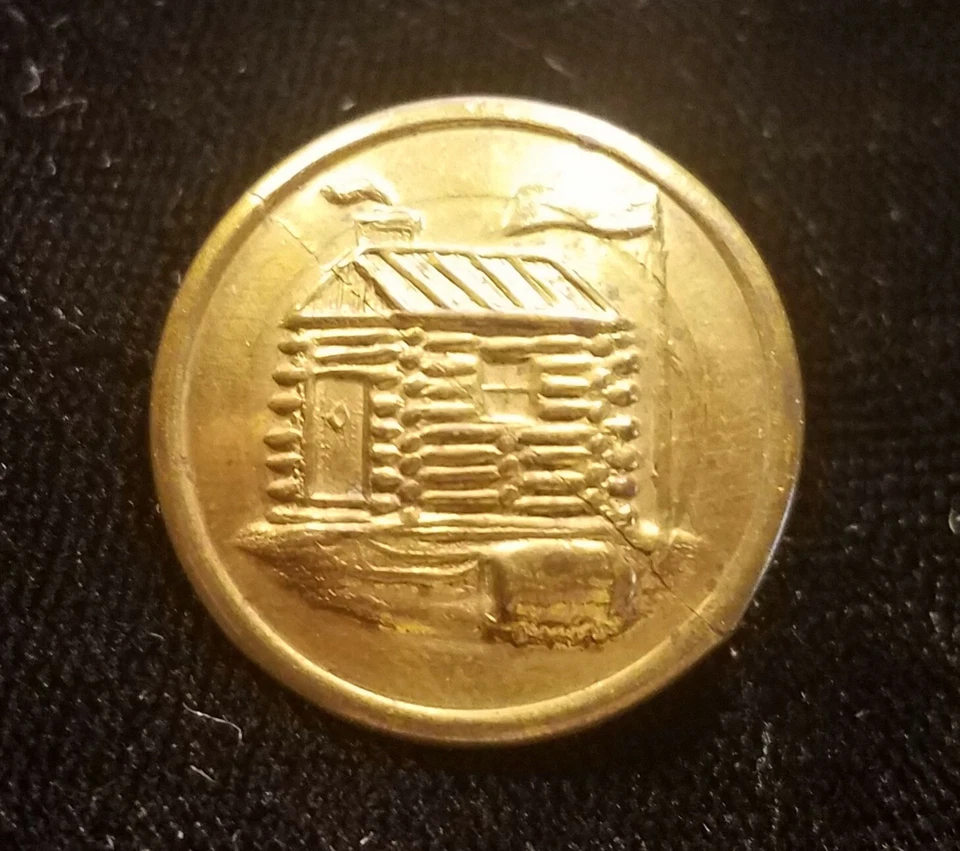
By the early 19th century, souvenirs had become tools of persuasion as well as celebration. Andrew Jackson’s 1828 campaign, for example, produced ribbons, tokens, and broadsides to rally ordinary voters. But the real breakthrough came in 1840 with William Henry Harrison’s “Log Cabin Campaign.” His supporters leaned into imagery portraying him as a humble frontiersman, distributing log-cabin–shaped badges and miniature bottles of hard cider. These objects not only promoted Harrison’s candidacy but also gave voters a way to wear their loyalty—an early example of grassroots political branding.
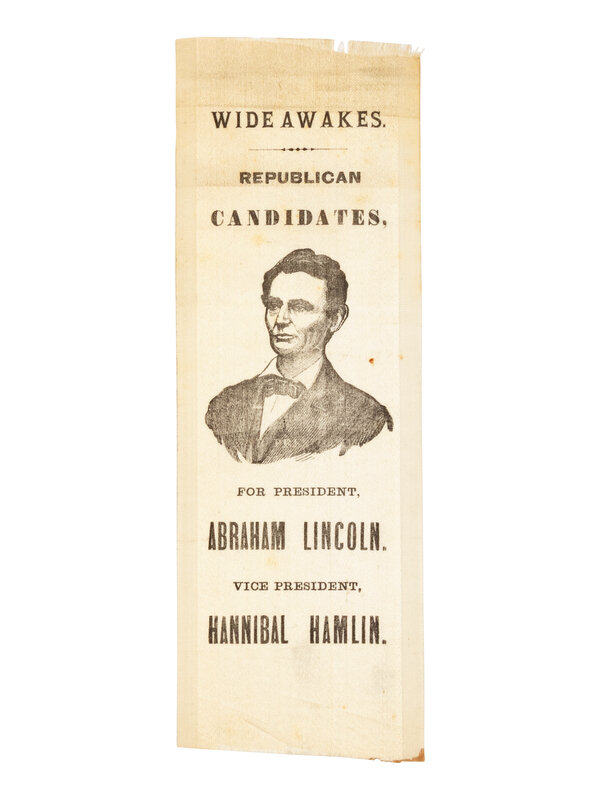
By mid-century, silk and paper ribbons became popular. These narrow strips, often engraved with portraits and slogans, were worn on hats, pinned to clothing, or saved as keepsakes. One example is the “Wide Awakes” ribbon from Abraham Lincoln’s 1860 campaign. At auction in 2025, one ribbon fetched more than $5,400—a reminder that fragile materials, if preserved, can become both historically and financially valuable.
The Rise of Photography and the Pinback Button
Technology reshaped campaign souvenirs in the mid-19th century. The advent of ferrotype (tintype) photography made it possible to mass-produce small photographic badges during the 1860s. Abraham Lincoln’s campaign embraced them, letting supporters pin his actual portrait to their clothing. For the first time, voters could literally “wear” their candidate in public, deepening the personal connection between politician and supporter.
The true revolution, however, came in 1896. That year, a patent introduced the modern pinback button—a circular design that sandwiched printed images under celluloid with a safety pin on the back. Cheap, durable, and endlessly customizable, these buttons debuted during the William McKinley vs. William Jennings Bryan campaign. Millions were produced, and they quickly became the dominant campaign collectible.
Buttons offered endless possibilities: patriotic eagles, portraits, slogans, humor, and even satire. They were small enough to hand out at rallies, affordable for average voters, and striking enough to create a sea of support at parades and conventions. Over a century later, they remain the single most recognizable form of political memorabilia.
Souvenirs as Historical Documents
Political souvenirs don’t just reflect campaigns—they reflect the society that produced them.
- A Franklin D. Roosevelt button from 1932 embodies the optimism of the New Deal era.
- A Barry Goldwater banner from 1964 reveals the intensity of mid-century conservatism.
- Even the materials matter: silk ribbons, celluloid buttons, and paper broadsides all tell us about the technology and economics of their times.
Campaign items also chart shifts in political communication. Early pieces avoided overt attacks, focusing on patriotic symbols or positive imagery. By the late 20th century, humor and criticism crept in—like parody buttons in the 1970s that poked fun at rivals with slogans mimicking “I’m With Stupid.”
One well-documented case illustrates this perfectly. A small silk ribbon from Lincoln’s 1860 campaign, kept in a family scrapbook for generations, bore the slogan Free Speech, Free Homes, Free Men, Lincoln & Liberty. Eventually, it reached auction and was purchased by a historical society. Today it’s on public display, bridging the gap between personal memory and collective history.
Why People Collect Political Souvenirs
Collectors are drawn to political memorabilia for many reasons:
- Historical Interest: These objects connect us directly to pivotal elections, campaigns, and movements.
- Art and Design: From ornate ribbons to minimalist buttons, campaign items capture the visual styles of their eras.
- Investment Potential: Rare items tied to iconic figures—Lincoln, Kennedy, Roosevelt, Obama—often appreciate significantly in value.
Collector Tips
If you’re tempted to start your own collection, here are a few practical tips:
- Handle With Care: Ribbons and paper ephemera are fragile. Keep them out of direct sunlight and store them in acid-free archival sleeves.
- Verify Authenticity: Campaigns like Lincoln’s and Kennedy’s have inspired countless reproductions. Check for period-appropriate materials, printing techniques, and provenance.
- Start Small: Modern buttons, bumper stickers, and yard signs are inexpensive entry points for new collectors. They may not have sky-high values yet, but they represent today’s history-in-the-making.
The Legacy of Campaign Memorabilia
From log cabin badges in 1840 to glossy pinback buttons in 1896 and the digital-era bumper stickers of today, political souvenirs have always been part of America’s democratic theater. They reflect not just candidates, but the people who supported them and the moments that defined elections.
For us, these objects aren’t only collectibles—they’re reminders that democracy is lived through everyday items, passed from one generation to the next.
That’s why we do what we do: to help preserve the past and inspire the future. When it comes to political souvenirs, our motto says it best—Let’s Make History.