Frog figurines have a way of feeling both playful and surprisingly meaningful. One minute they’re whimsical—wide-eyed ceramic frogs on a shelf—then you learn that frogs have symbolized fertility, renewal, prosperity, rain, and safe returns in different cultures for a very long time. That mix of charm and symbolism is exactly why frog figurines are such satisfying collectibles: they can be cute, they can be artful, and they can carry a story that goes far beyond “I like frogs.”
This post is a guided tour of frog figurines across cultures—what the symbolism tends to be, what forms it takes, and how collectors can spot pieces that feel authentic, intentional, and display-worthy.
Why frogs show up in art and objects worldwide
Frogs are natural symbols. They live close to water, appear in seasonal rhythms, and transform dramatically from tadpole to adult. Across many places, those qualities have made frogs a convenient visual shorthand for:
- Renewal and transformation (life stages, seasonal return, “coming back”)
- Fertility and abundance (especially in agricultural societies tied to water cycles)
- Rain and water (the life-giving factor for crops and communities)
- Good fortune and prosperity (in certain folk traditions and decorative arts)
When you see frog figurines repeated in a region’s decorative traditions, it’s often because frogs are easy for people to recognize and easy for artists to stylize—so they become perfect “everyday symbols” that can be religious, lucky, seasonal, or simply decorative depending on context.
Ancient Egypt: frogs and the idea of rebirth
In ancient Egypt, frog imagery is strongly associated with regeneration and fertility, in part because frogs were visibly connected to the Nile’s life-giving cycles. A key figure here is Heqet (also spelled Heket), a goddess depicted as a frog or a frog-headed woman and associated with fertility, childbirth, and rebirth.
For collectors, this matters because Egyptian-inspired motifs have been revived repeatedly in later eras—especially during waves of “Egyptomania” and Egyptian Revival design. You may encounter frog forms that are not ancient, but are inspired by ancient Egyptian aesthetics: stylized poses, symmetrical forms, and decorative patterning that reads “antique Egyptian” even when the material is modern.
Collector tip: When you see an Egyptian-style frog figurine, consider it in two layers:
- the ancient symbolism it references, and
- the era it was actually made (often much later as a revival style).
China: the three-legged “money toad” and prosperity symbolism
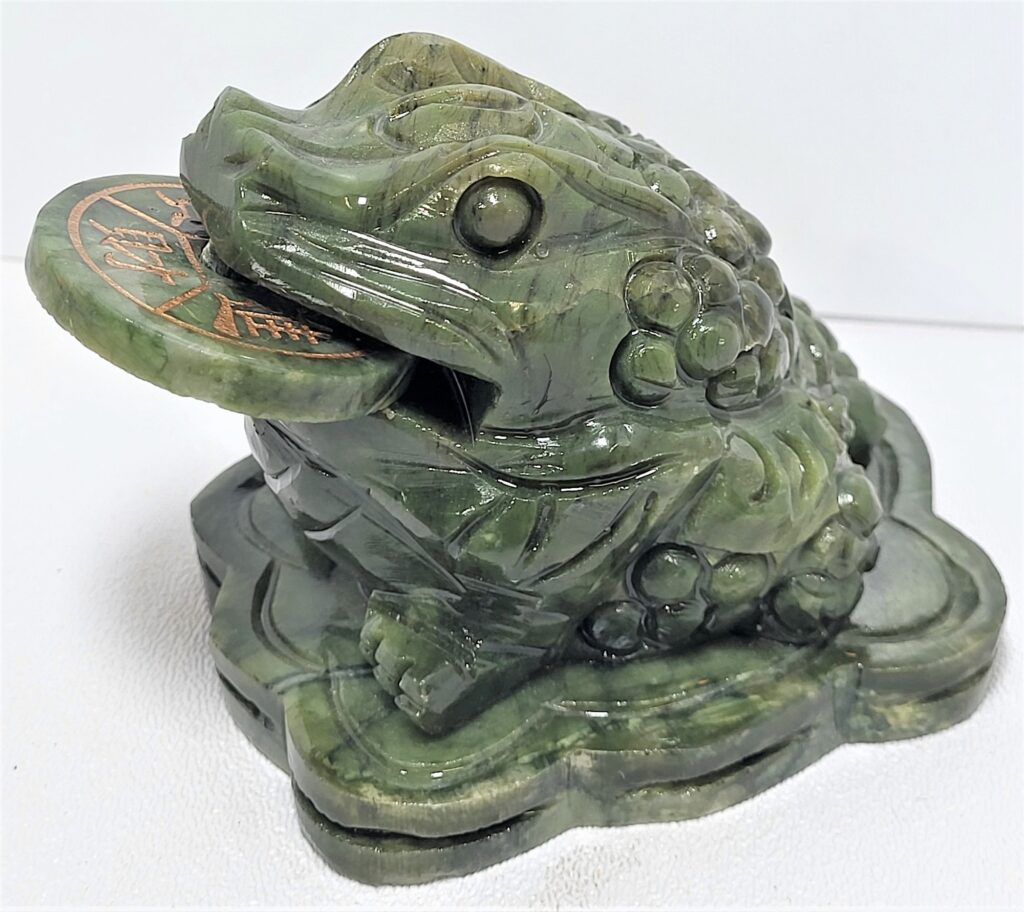
One of the most recognizable frog/toad figurines in the collectible world is the three-legged money toad (often referred to as Jin Chan or “money frog/money toad” in English-language collecting circles). In feng shui practice, it’s widely used as a symbol of wealth and prosperity and is commonly depicted sitting on coins—sometimes with a coin in its mouth.
Even if you don’t collect feng shui objects specifically, you’ll see these figures frequently at estate sales, antique malls, import shops, and mixed lots. They’re especially common in:
- resin or composite materials (giftware)
- carved stone or jade-style materials (decor pieces)
- metal or brass-tone (home décor)
- ceramic, sometimes with a glossy glaze
Collector tip: “Money frog” pieces vary widely in quality. Look for crisp detailing, intentional finish, and stability. If the figure has a coin in the mouth, check whether it looks original to the design or like a later replacement.
Japan: frogs, good fortune, and the idea of “returning”
In Japan, frogs are often considered auspicious, and there’s a popular language connection: kaeru means frog and also relates to the idea of “returning” (a link often used in folk explanations and travel talismans). This is why frog charms and figurines are commonly associated with safe travel, coming home, or things “returning” to you.
For collectors, Japanese frog figurines can range from:
- small charm-like figures
- folk-style ceramics and playful decorative pieces
- modern gift items designed for travelers
- artisan pieces with more refined glazing and form
Collector tip: When shopping, separate “tourist charm” items from artisan ceramics by looking at glaze quality, weight, base finishing, and whether the piece has a maker’s mark. Both can be collectible; they just belong to different collecting lanes.
The Andes and the wider Americas: frogs, water, and agricultural success
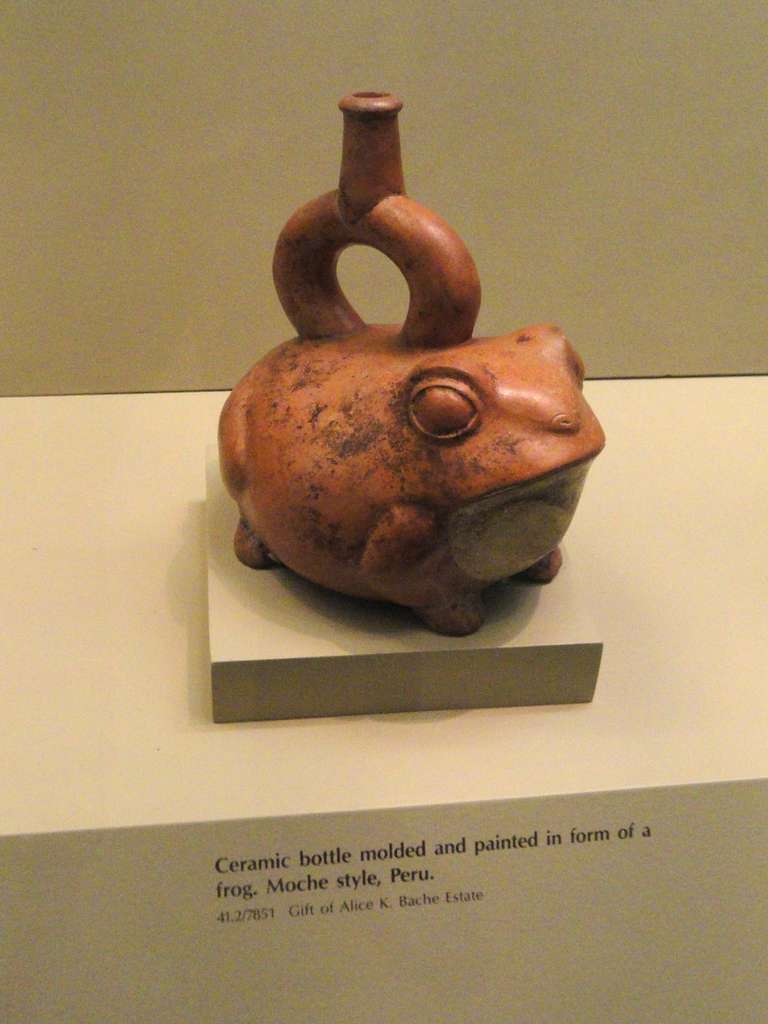
Frog imagery appears in multiple regions of the Americas, often connected to water, rain, and agricultural success. In ancient Andean contexts, frog effigies and frog imagery are frequently discussed in relation to water and fertility themes. You may encounter:
- museum-referenced motifs (frog forms in ancient art)
- modern reproductions and inspired pieces
- folk art and tourist art that continues the visual language
For the everyday collector, this often shows up not as “ancient,” but as:
- carved and painted folk-style frogs
- souvenir figurines tied to regions and travel
- decorative frogs that emphasize water motifs (lilies, ponds, rain imagery)
Collector tip: Be cautious with claims that a piece is “ancient” or “pre-Columbian” unless it has legitimate provenance. Plenty of frog figurines are inspired by ancient forms—and they can still be wonderful—but provenance is everything when sellers push age claims.
Europe and “everyday charm” frogs
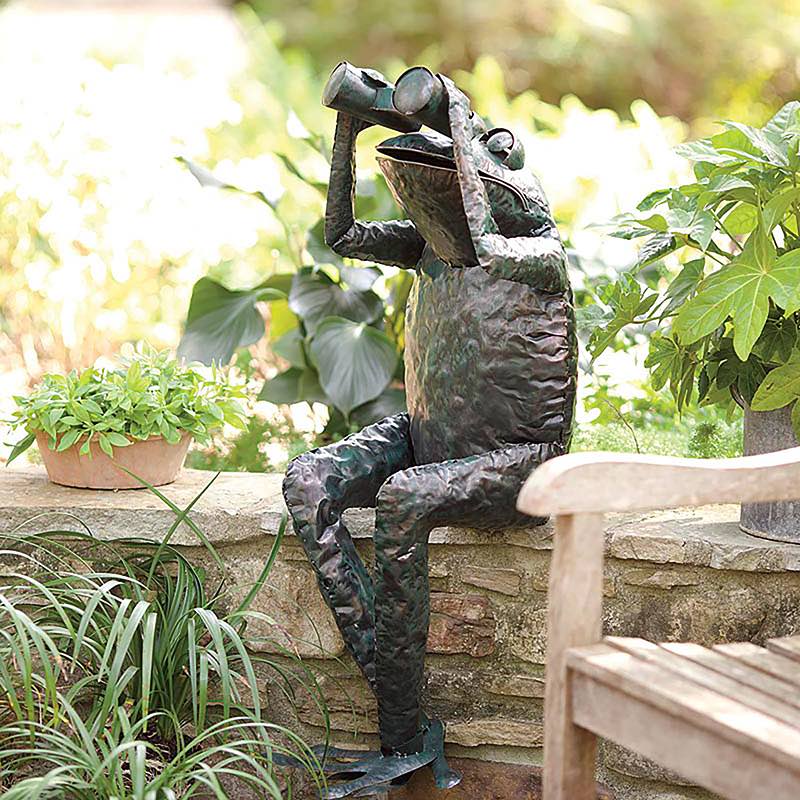
In many European decorative traditions, frogs show up less as a single, widely standardized religious symbol and more as a creature of gardens, ponds, fairytale imagination, and seasonal life. That’s why European frog figurines often feel like:
- garden companions (frogs among leaves, mushrooms, reeds)
- humorous characters (frogs posed like people)
- decorative naturalism (realistic frog sculpting)
This is the lane where you’ll also see a lot of 19th–20th century decorative arts influence: frogs rendered in styles that match a broader aesthetic (Art Nouveau-inspired curves, mid-century whimsy, rustic cottage décor, and so on).
Collector tip: If you love “storybook” frogs, focus your collection by a style vocabulary: realistic, whimsical, anthropomorphic, garden-natural, or holiday-themed. A style focus creates a display that looks curated even if the pieces come from many sources.
How frog figurines are made: materials that affect value and collecting strategy
Frog figurines are a category where material matters—not only for value, but for how you store, display, and care for them.
Ceramic and porcelain
Common, display-friendly, and available in endless styles. Look for:
- clean glaze with intentional color
- fine detail on toes, eyes, and texture
- well-finished bases (not rough or overly sharp)
Metal (bronze-tone, brass-tone, cast metal)
Often more durable and heavier, with a “decor object” feel. Look for:
- stable stance (no wobble)
- consistent patina or finish
- clear detail in the sculpt
Carved stone / “jade-style” decor
Popular for giftware and prosperity symbolism objects. Look for:
- crisp carving (not muddy detail)
- chips on edges (common, easy to miss)
- good polish without looking plastic-coated
Resin and composite materials
Extremely common for modern décor and souvenir frogs. Look for:
- paint quality (clean lines vs. sloppy)
- surface wear (resin shows scuffs easily)
- stress cracks (especially near thin legs)
What collectors look for: condition, authenticity, and “display impact”
Frog figurines aren’t usually about one single “right” maker or one single “holy grail” category. Most collectors build great collections by using consistent standards:
Condition checkpoints
- chips and hairlines (especially on ceramic)
- repairs (glue lines around legs, feet, and mouths)
- paint loss (common on resin and composite)
- wobble (feet not level)
- missing parts (coins, accessories, tiny details)
Authenticity checkpoints (without getting overly technical)
- Does the wear make sense for the material?
- Does the base finishing match the quality of the front?
- Are any “age” effects obviously artificial?
- Are big claims (“rare,” “ancient,” “one-of-a-kind”) supported by anything real?
Display impact
A frog figurine can be “perfectly fine” and still not earn a place in a curated collection. Many collectors use a simple rule:
- If it doesn’t look great from across the room, it doesn’t stay.
That’s not harsh—it’s just how you keep a collection from becoming clutter.
Building a frog collection by theme (an easy way to make it look intentional)
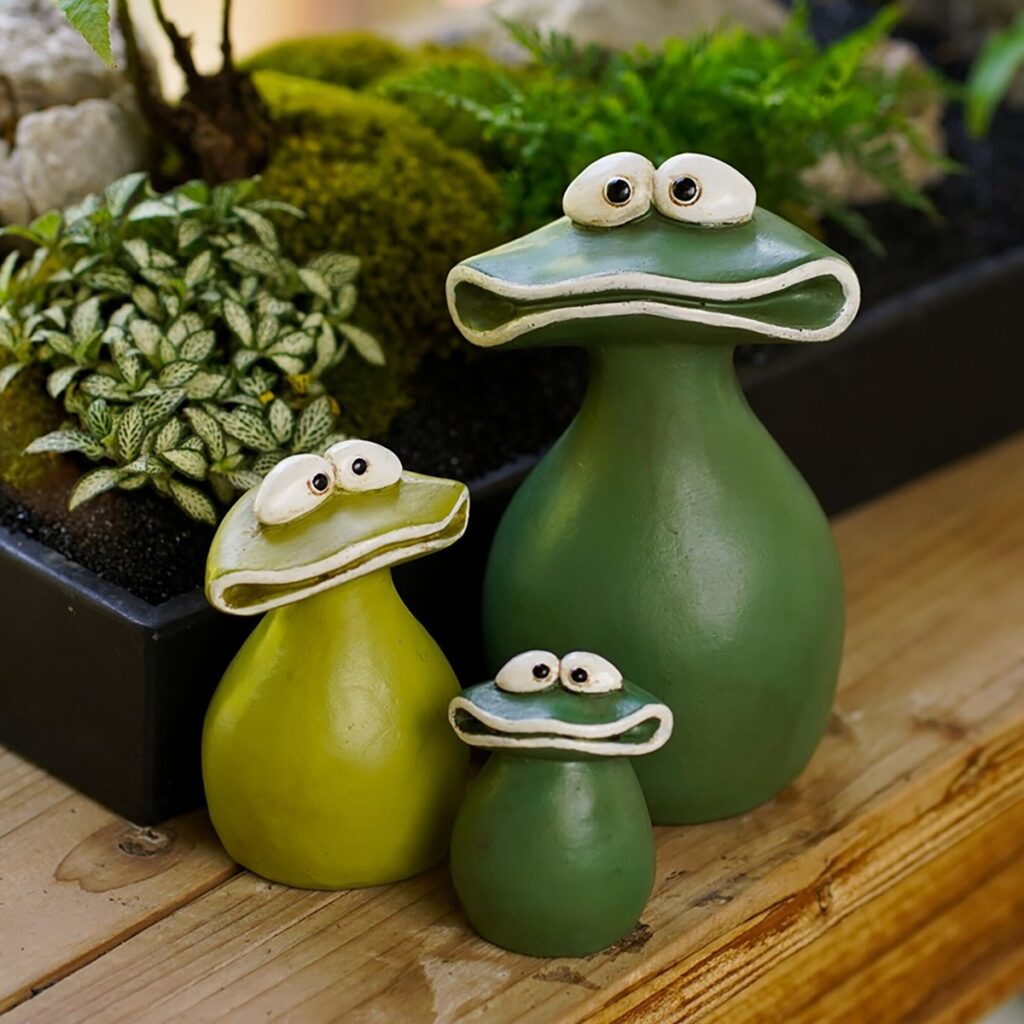
If you want your frog shelf to feel curated instead of random, build around one or two organizing ideas:
- By culture-inspired symbolism: prosperity frogs, travel/return frogs, water-and-rain frogs
- By pose: sitting frogs, leaping frogs, frogs with lily pads, frogs holding items
- By style: realistic nature study vs. whimsical cartoon vs. ornate decorative
- By material: all ceramic, all metal, or a controlled mix
- By color palette: greens only, earth tones, monochrome neutrals, or bright kitsch
When you choose a collecting “rule,” you’ll naturally pass on pieces that don’t fit—leaving room for the ones that do.
Care and display tips (so your frogs stay charming, not damaged)
- Ceramic/porcelain: dust with a soft cloth; avoid knocking legs and toes; keep away from high-traffic edges.
- Metal: dry dusting is usually enough; avoid harsh polish that removes character; keep out of humidity if the finish is reactive.
- Resin/composite: avoid heat and direct sunlight (warping and fading can happen); don’t scrub painted details.
- Shelving: use museum putty or discreet grips for top-heavy pieces, especially if you have pets or vibration-prone shelves.
A great frog display is usually at eye level, with a mix of heights—one taller statement frog, a few mid-sized figures, and smaller accents.
The fun of frog figurines: they’re cheerful, symbolic, and endlessly collectible
Frog figurines are proof that “serious collecting” doesn’t have to feel serious. You can collect them for symbolism, culture, design, nostalgia, or pure whimsy—and still build a collection that feels thoughtful and beautiful. Whether your frogs represent prosperity, safe travel, water and renewal, or just a love of the creature itself, they’re one of the easiest categories to display and enjoy every day.
Let’s Make History—one hop at a time.