
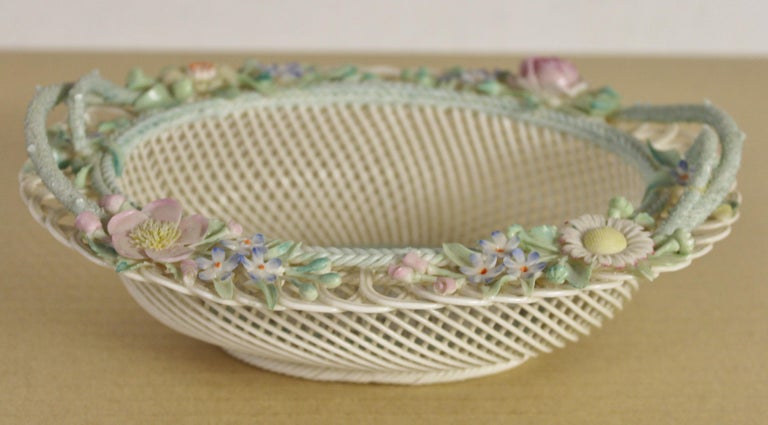
Belleek has a funny way of doing this to collectors: you start with “just one little shamrock dish,” and suddenly you’re turning pieces over in antique booths like a professional—checking marks, scanning rims for tiny chips, and squinting at basket strands to see if they’ve been repaired. It’s not because Belleek is intimidating. It’s because Belleek is rewarding. The more you learn, the more you can tell—and the more confident you become separating truly scarce pieces from the ones that are simply popular.
So what actually makes Belleek “rare”? Is it age? A backstamp? A specific pattern? A basket with flowers? The answer is: sometimes all of the above—and sometimes none of them. In this post, we’ll break down a collector-friendly way to think about rarity versus commonality, so you can buy smarter, avoid “rare!” hype, and build a collection that feels intentional at any budget.
First: What “Rare” Really Means in Belleek
In Belleek collecting, “rare” can mean several different things:
- Made during a harder-to-find period (often tied to backstamps)
- Uncommon form (a piece shape you don’t see often)
- Low-survival category (fragile pieces that broke easily, so fewer remain)
- Limited production or commemorative marking (made for a short window)
- Unusual decoration/finish (a less-seen colorway, luster, or gilding combination)
- Complete sets (rare because pieces get separated over time)
A piece can be old and still not rare. A piece can be newer and surprisingly scarce. The trick is learning which kind of “rare” you’re looking at—and whether it matters to you as a collector.
Start With the Backstamp: Your Best Dating Shortcut
Belleek is collector-friendly because it uses a well-documented sequence of backstamps/marks. You don’t have to guess wildly—most pieces tell you their era if the stamp is present and readable.
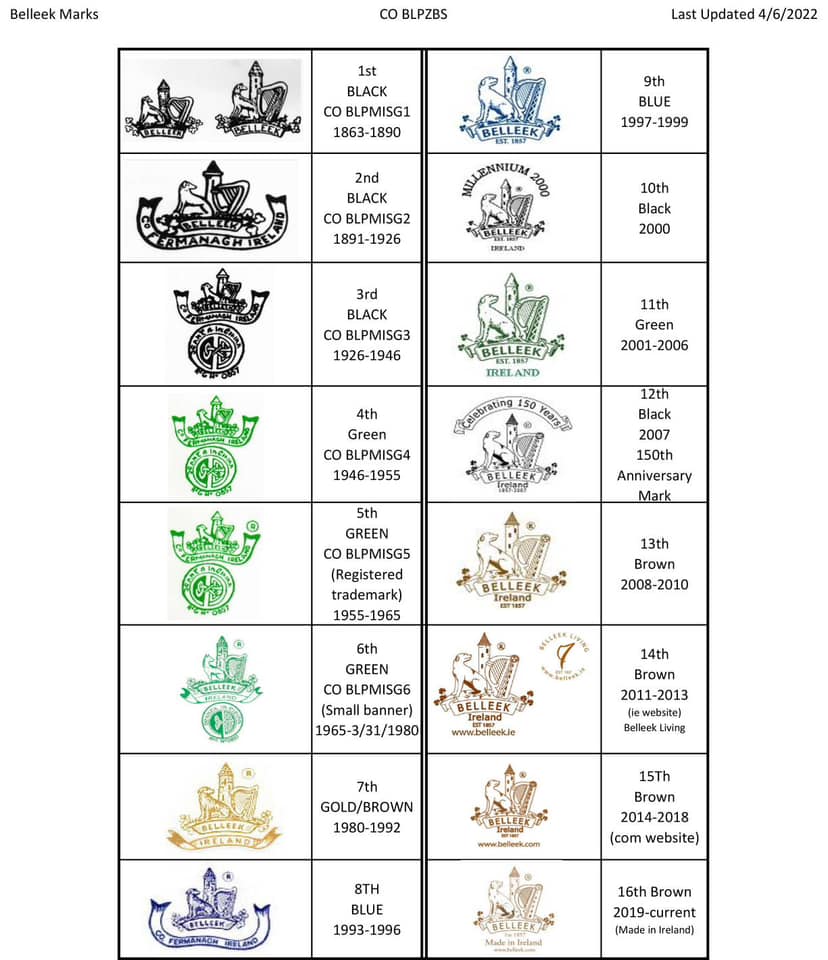
Here’s a simple at-a-glance timeline from Belleek’s official mark guide:
- 1st Mark: 1863–1891 (predominantly black; other colors are known)
- 2nd Mark: 1891–1926 (black; includes “Co Fermanagh Ireland”)
- 3rd Mark: 1926–1946 (black; includes “REG No 0857” and “deanta in eireann”)
- 4th Mark: 1946–1955 (green)
- 5th Mark: 1955–1965 (green; adds an “R” in a circle)
- 6th Mark: 1965–1980 (green; smaller stamp; “R” placement changes)
- 7th Mark: 1980–1993 (gold tones)
- 8th Mark: 1993–1997 (blue)
- 9th Mark: 1997–2000 (blue; revised for technical reasons)
- 10th Mark: 2000 (Millennium stamp, used for that year)
- 11th Mark: 2001–2007
- 12th Mark: 2007 (150th anniversary celebration stamp)
- 13th Mark: 2008–2010
- 14th Mark: 2011–2013
- 15th Mark: 2014–2018
- 16th Mark: 2019+ (“Made in Ireland” included)
Two collector notes that save a lot of confusion:
- Belleek explains that some first-period pieces also show impressed marks (and some may carry a British Patent Office registration mark, which gives the registration date—not necessarily the manufacture date).
- Marks can be faint, partially worn, or occasionally missing—so the stamp is a powerful clue, but it’s not the only thing you should rely on.
What’s Usually Common (and Why That’s Not a Bad Thing)
“Common” in Belleek doesn’t mean “cheap” or “not worth collecting.” It usually means one of these:
Common because it was widely loved
Some designs became household favorites and were made in large numbers over time. That’s why you’ll often see:
- Small tableware pieces (single cups, saucers, small plates)
- Familiar motifs like shamrocks and shell textures
- Pieces from later mark periods that were produced for broad markets
Common because it survives better
A sturdy plate often outlives a fragile basket rim. So even if a pattern was popular, the surviving population can skew toward the more durable forms.
Common because collectors break up sets
Full sets get separated constantly. It’s very common to find:
- A lone cup without its saucer
- A single plate from a once-matched set
- A stray creamer without sugar, or vice versa
This can be good news: common singles are a budget-friendly way to learn marks, finishes, and condition cues before you chase the harder pieces.
What Tends to Be Rarer (The Collector-Reality Version)
Rarity in Belleek is often tied to fragility, scale, and short production windows, not just “old = rare.”
Early periods (especially when condition is strong)
Earlier marks can be harder to find simply because more time has passed and more pieces have been broken, worn, or repaired. That said, “early” isn’t automatically “rare”—it depends heavily on form and survival.
What often does command attention:
- Early-mark pieces in excellent condition
- Uncommon forms from early periods
- Pieces with crisp detail and clean surfaces (harder than it sounds with Parian-like porcelain)
High-risk forms: baskets, pierced work, and applied flowers
If you want to understand why some Belleek pieces feel scarce, look at where they break:
- Pierced rims chip
- Flower petals snap
- Leaf tips nick
- Handles crack at joins
That’s why baskets and floral-heavy pieces often have a “rarer” feel in the market—especially if they’re clean, intact, and free of repairs.
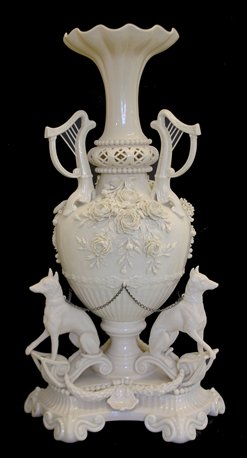
Large statement pieces
Big centerpieces and large decorative forms are harder to find for a simple reason: they’re harder to store, harder to ship, and easier to damage. The bigger the piece, the more likely it is to have lived a dramatic life.
Short-window marks and commemoratives
Even in more modern eras, Belleek has marks tied to short timeframes—like the Millennium stamp (2000) and the 150th anniversary stamp (2007). Those marks don’t automatically make a piece valuable, but they can make certain items less common by definition, because the marking window was brief.
Unusual decoration and less-seen finishes
Belleek collectors often pay attention to:
- Less-common painted treatments
- Special luster effects
- Gilding/tint combinations that aren’t seen as often on a given form
- Variations that look workshop-specific rather than mass-standardized
A simple rule helps: the more specific the combination (form + texture + finish), the less likely you are to see it repeatedly.
The Great Equalizer: Condition Can Make a “Rare” Piece Ordinary
Because Belleek is light-colored and finely detailed, condition issues show quickly—and they impact value fast.
Here’s how collectors tend to think about condition:
Deal-breakers for many buyers
- Hairline cracks (especially on thin rims or handles)
- Major chips on rims, basket edges, or flower petals
- Obvious repairs (glue shine, filled losses, mismatched touch-ups)
“Maybe” condition issues (price should reflect them)
- Small fleabites on foot rims or underside edges
- Light scuffing on matte/unglazed surfaces
- Minor gild wear (common, but still a value factor)
Why this matters for rare vs. common
A genuinely scarce form with a big rim chip can become a “display only” piece—meaning it might sell for less than a more common piece in excellent condition. If you’re buying as an investment, condition often outranks almost everything else. If you’re buying for joy, you can decide what flaws you’ll tolerate—but you should never pay “perfect condition” money for damaged porcelain.
Sets vs. Singles: Where “Rare” Often Hides
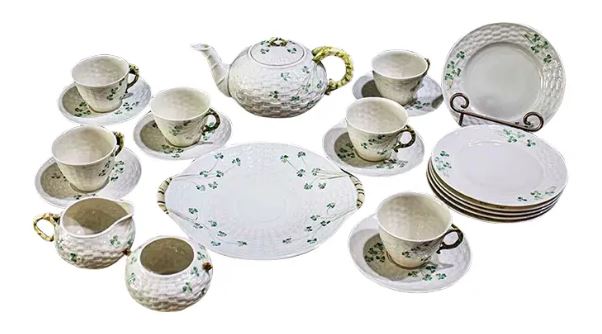
A single Belleek cup might be common. A matching six-place tea set is a different story.
Sets become scarce because:
- Pieces break over decades
- Families mix and match replacements
- Sets get split and sold one piece at a time
If you’re set-building, your rarity challenge isn’t “finding Belleek.” It’s finding:
- The right mark period across all pieces
- Consistent finish (luster, tint, gild)
- Matching forms (handles, textures, shapes)
- Clean condition across the whole group
Collector strategy: if you want a set, buy the hardest piece first (often teapot, covered sugar, or an unusual serving piece), then fill in the common parts later.
“Rare!” Listings and Other Rarity Traps
Online listings have one universal truth: the word “rare” appears a lot more often than truly rare objects do. A few quick filters help.
Trap 1: “Rare” without specifics
A good listing should explain why something is rare:
- unusual form
- short-window mark
- discontinued pattern
- unusual decoration
- exceptional condition for age
If you only see “rare” with no supporting details, treat it as marketing language.
Trap 2: “Old” used as proof
Age matters, but it isn’t proof by itself. You still want:
- clear backstamp photo
- clear rim and handle photos
- honest condition disclosure
Trap 3: Confusing registration marks with manufacture dates
Some Belleek pieces can show registration marks that relate to design registration, not necessarily the day the piece was made. If a seller is dating a piece to an exact year based only on a registration mark, treat the date as a claim that needs supporting context.
A Practical Buying Method That Works in Person or Online
If you want a simple, repeatable way to shop Belleek, use this routine.
Step 1: Flip and date the mark
- Identify the mark period if possible
- Note any extra commemorative stamp
Step 2: Identify the “rarity driver”
Ask yourself: what’s making this appealing?
- early period?
- unusual form?
- basket/flower complexity?
- complete set piece?
- unusual finish?
Step 3: Inspect the danger zones
- rim, basket edge, pierced openings
- petals, leaf tips, applied decoration
- handle joins
- base/foot ring
Step 4: Decide your goal
- Display piece?
- Working tableware?
- Set-building?
- Investment-grade condition?
Your goal decides what flaws you’ll accept—and what price makes sense.
Collecting Plans for Any Budget
If you’re building a Belleek collection from scratch, you don’t need to start with the rarest things. A smart collection grows in layers.
Budget-friendly, confidence-building approach
- Start with common, clearly marked pieces in great condition
- Learn how different finishes look in your own lighting
- Train your eye on texture and crispness
- Upgrade selectively when a piece checks all your boxes
“I want fewer pieces, but better” approach
- Focus on one theme (shamrock, sea/shell, baskets/florals)
- Hold out for top condition and crisp detail
- Buy one statement piece per season rather than impulse singles
Set-building approach
- Choose a mark period and stick to it
- Match finishes carefully
- Buy the hardest pieces first (teapot/covered forms)
Quick Checklist Before You Buy (Save This)
- Is the mark clear and consistent with the seller’s claim?
- Are there rim/edge photos in good light?
- Any hairlines when rotated under bright light?
- Any repairs (glue sheen, filled chips, touch-ups)?
- Do the finish details (luster, tint, gild) show wear consistent with use?
- For sets: do marks and finishes match across pieces?
If a seller can’t show you rims, bases, and marks clearly, it’s okay to pass. Belleek will always come around again.
The Collector’s Takeaway
In Belleek collecting, “rare” is less about a single magic label and more about a mix of factors: mark period, form, fragility, finish, completeness, and—above all—condition. The more clearly you can name why a piece is special, the more confidently you can buy it, price it, and build a collection that feels curated instead of accidental.
Let’s Make History—one carefully chosen piece at a time.