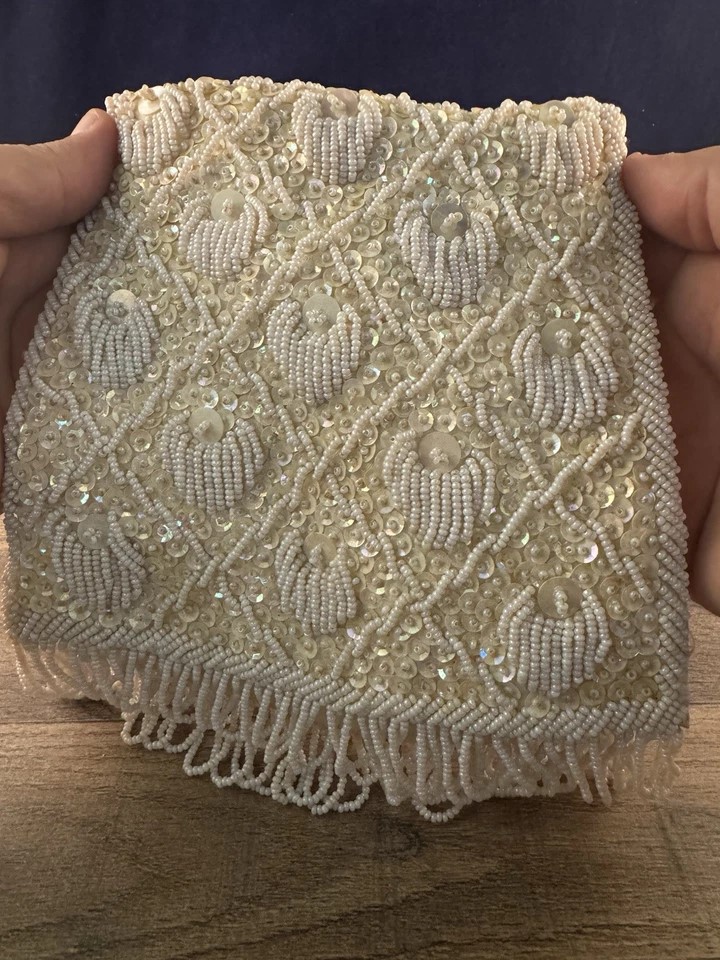
For thousands of years, beads have been markers of identity, memory, and belonging. They carry stories not in words, but in color, pattern, material, and touch—from friendship bracelets made at summer camp, to heirloom rosaries passed through generations, to the shimmering beadwork of a 1920s flapper dress. Wherever beads appear, they record cultural shifts, personal narratives, and the intangible history of feeling.
Victorian Mourning Jewelry: Grief Woven with Beads, Jet, and Hair
In the 19th century, mourning jewelry became not just a fashion, but a social institution in Victorian Britain. After Prince Albert’s death in 1861, Queen Victoria famously wore black for decades—and much of society followed. Mourning wear was governed by “rules,” including what kinds of jewelry could be worn, in what materials, and for how long. Materials such as jet and black glass, vulcanite, onyx, and also black enamel were popular. Beads were used, though seed bead use in mourning wear was less common than in other beadwork traditions; more frequently, mourning pieces used materials like jet, black glass, or incorporated hair.
Some mourning brooches, lockets, or pendants incorporated intricately woven hair—from the deceased—set behind glass or framed in gold or black enamel. These pieces often used pearls or small beads as accents. Floral motifs like forget-me-nots or lilies (symbols of remembrance) were carved or illustrated in the metalwork or enamel, and sometimes echoed in beaded trim.
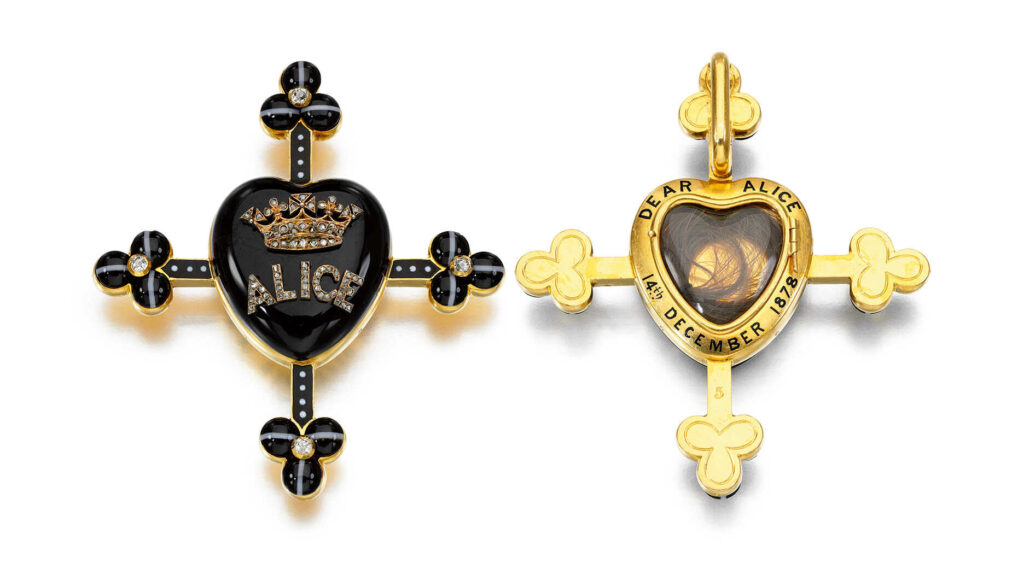
Anecdote: A stunning example is a Victorian mourning pendant featuring onyx, seed pearls, and woven hair, set in gold—a reminder that mourning was personal as well as public. Queen Victoria’s own mourning jewelry collection contains examples of jet necklaces, brooches, and pendants that integrate black materials, pearls, and sometimes tresses of hair as memorial tokens.
Through mourning jewelry, beads and related adornments became more than decoration; they were wearable memories, expressions of love, loss, and devotion, blending artistry with grief in daily life.
The Jazz Age Sparkle: Beads in the Roaring Twenties
By the 1920s, the mood had changed. After decades of strict Victorian (and Edwardian) formality, young people—especially women—looked to express freedom, modernity, and joy. The flapper movement, jazz, Prohibition, and changing social mores collided in a cultural explosion of dance, style, and extravagance. Beads and sequins were central to this visual energy.
Evening dresses were often heavily embellished with glass seed beads, bugle beads, sequins, and fringe. The movement of a dancing body caused bead-laden fringe to shimmer under lights; the patterns caught eye and camera alike. These dresses were often labor-intensive to make, and some were heavy—draped in beadwork that restricted movement somewhat, but rewarded it in dramatic effect.
Anecdote: A dress in the Victoria & Albert Museum’s collection exemplifies this style, showing dense beadwork, fringe, and sequin embellishments. Conservators note that such dresses, while stunning, could weigh quite a bit due to the beadwork.
So within a generation, beads had travelled from somber mourning to symbols of defiance, glamour, and the new modern identity of women who danced, drove cars, and challenged convention.
Beads as Spiritual Memory & Devotion
Beyond fashion, beads have served and continue to serve powerful roles in spiritual life—acting as tools of meditation, remembrance, and ritual. Catholic rosaries, Islamic misbahas (tasbih), Hindu and Buddhist malas, and many Indigenous ceremonial beadwork traditions use beads not just as ornamentation but as rhythm, memory, and prayer.
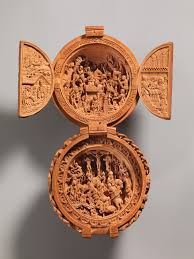
An example: At the Walters Art Museum (Baltimore), there is a carved bead and pendant (ca. 1500-1525) that opens to reveal tiny scenes, such as Christ carrying the Cross, carved in materials like boxwood or ivory. These devotional objects combine beauty, craftsmanship, and spiritual narrative. Also, miniature carved boxwood rosary beads from early 16th-century northern Europe show incredible detail, used as objects for private devotion.
Holding these beads, moving from bead to bead, is more than counting—it is a form of remembering, a way of connecting with what is sacred, with ancestors, with faith.
Contemporary Beads & Identity: Reclamation, Innovation, and Storytelling
Today, beads are more alive and dynamic than ever. They are not relics; they are conversations.
- Indigenous Artists are actively reviving beadwork traditions, blending ancestral techniques with contemporary meaning. These works often address histories of colonialism, environmental justice, cultural survival, Indigenous sovereignty, and personal identity. For instance, the Aamjiwnaang (Anishinaabe) artist Nico Williams creates sculptural works with beadwork, storytelling, and visual narrative. His works are part of a broader movement in which beadwork becomes activist as well as aesthetic.
- Fashion & Art Jewelry is innovating with materials—recycled glass, resin, even 3D-printed beads—while drawing inspiration from historical techniques: seed beads, fringe, jet, and hairwork. Beadwork has moved into fine art galleries, runway shows, and cross-disciplinary collaboration (fashion + tech + activism).
- Everyday Beads remain meaningful. Friendship bracelets, family heirlooms, flea market finds—these simple strands hold memory and connection. A bead made by hand, passed down, gifted in childhood—these all carry story.
Reflection: Beads as Threads Through Time
What unites mourning brooches, flapper dresses, rosary beads, Indigenous beadwork, modern art installations, and those strands you made last summer? It’s this: beads are always more than their material. They are storytelling objects. Each one is a mark of grief or joy or prayer or identity. Each strand connects us—not just across generations, but across cultures and histories.
When we touch a bead that once held prayer in a convent, or felt the weight of grief in a Victorian brooch, or saw fringe dancing under electric lights in a Jazz Age hall—we remember. We participate in human creativity, longing, remembrance, celebration.
So, what’s your bead story? Is it the rosary from your grandmother, the friendship bracelet you made, the flapper sequined gown you saw in a photograph, or the piece you wear to feel whole? Share your bead story and help us continue this tradition of storytelling through adornment.
Let’s Make History—one bead at a time.