When Europeans first encountered wampum—small, cylindrical beads made from quahog and whelk shells—it was assumed that they were a form of currency. To colonists accustomed to coins and cash, beads seemed like money. But for the Indigenous peoples of the Eastern Woodlands, particularly the Haudenosaunee (Iroquois Confederacy) and Algonquian-speaking nations, wampum was far more than that. It was memory, ceremony, and diplomacy carved into shell.
The True Meaning of Wampum
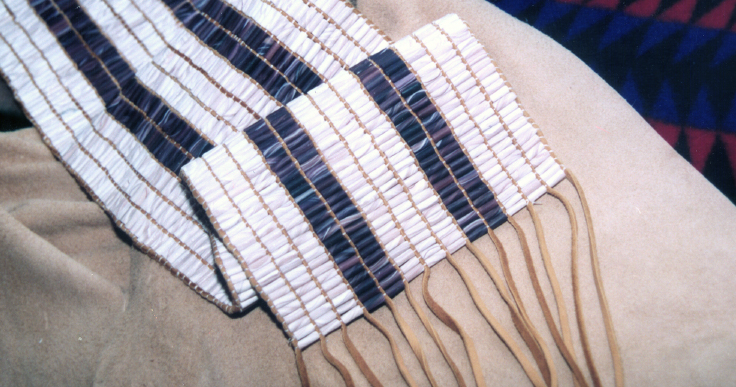
Wampum carried symbolic and spiritual weight. Crafted painstakingly by hand, each bead could require hours of labor: drilling through hard shell with stone or bone tools, smoothing the surfaces, and polishing until they gleamed. White beads came from whelk shells, while purple beads—rarer and harder to produce—came from the deep purple parts of quahog clam shells.
The beads were then woven into belts that acted as living records. These belts were not “written documents” in the European sense but instead carried stories, agreements, and principles. They recorded treaties, honored significant events, and were used in condolence ceremonies to console grieving families or mark the passing of a chief.
Wampum’s value was not in its scarcity alone, but in its meaning. Each design was a text, each belt a reminder of obligations and promises.
Historical Anecdote
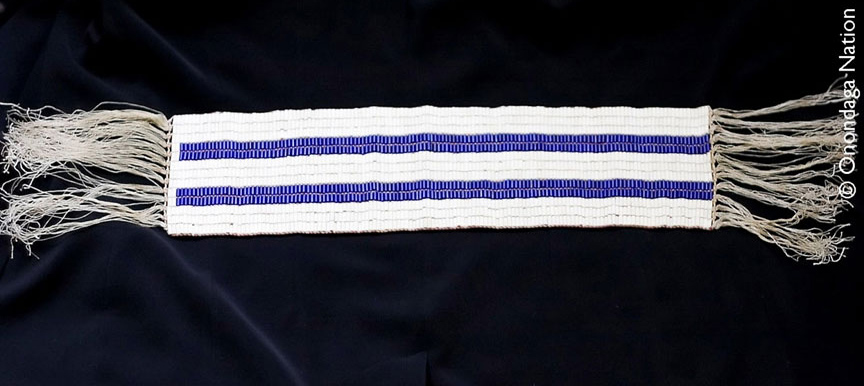
One of the most famous examples is the Two Row Wampum Treaty of 1613, forged between the Haudenosaunee and Dutch settlers. The belt displays two parallel rows of purple beads on a white background, representing two vessels traveling down the same river: one a European ship, the other a Haudenosaunee canoe. Neither vessel should steer into the other’s path; both travel side by side, equal and independent.
This simple but powerful symbol has endured for centuries. Even today, Haudenosaunee leaders refer to the Two Row Wampum when asserting sovereignty, reminding the world that Indigenous nations entered agreements as equals—not subjects.
Other belts, such as those connected to the Covenant Chain alliances of the 1670s, reinforced promises of peace and friendship between Indigenous nations and English colonists. To the Haudenosaunee, these were not just agreements but sacred commitments that carried ongoing responsibilities.
The European Misunderstanding
When Europeans first saw wampum, they misread it. The colonists reinterpreted wampum as currency, rather than recognizing its ceremonial meaning. Colonists in New England even tried to legislate wampum as legal tender in the 17th century, setting exchange rates for its use in everyday transactions.
This shift fundamentally misunderstood wampum’s purpose. For Indigenous peoples, a wampum belt was not something to be “spent,” but to be remembered and honored. The introduction of mass-produced European glass beads—sometimes called “fake wampum”—flooded the market and disrupted Indigenous traditions. These imitations lacked the cultural and ceremonial meaning of shell beads, and their mass circulation eroded the spiritual significance Europeans never grasped in the first place.
Legacy Today
Despite these disruptions, wampum’s legacy endures. Many original belts are preserved in museums or returned to Indigenous nations, still considered active treaties or ceremonial objects by Haudenosaunee leaders and occasionally introduced in modern legal and political contexts.
Today, Native artists continue to make wampum belts and jewelry, preserving ancient techniques while also adapting them to contemporary storytelling. Each bead still carries meaning: resilience, sovereignty, and identity. For many, wampum is not a relic of the past but a living tradition that bridges history and the present.
Reflection
Wampum teaches us that not all value is monetary. Objects can embody stories, duties, and relationships that transcend material worth. When we see wampum only as “currency,” we miss its true power—as a record of dignity, diplomacy, and memory.
Have you seen wampum in a museum or private collection? Did you know its story before? Share your impressions or experiences in the comments—we’d love to hear your perspective on this enduring art form.
Let’s Make History-one treaty at a time.