
When European explorers and merchants expanded global trade routes in the 16th century, one of their most portable and valuable commodities were beads.
These little objects carried enormous weight: they were symbols of beauty and status, units of exchange, and silent witnesses to some of the most complicated and painful chapters in global history.
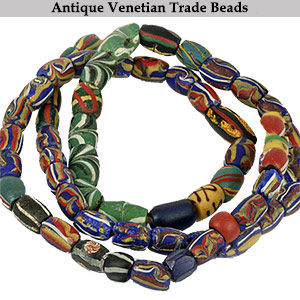
The Rise of Trade Beads
Beginning in the late 15th and early 16th centuries, beads became one of Europe’s most important export goods. Small, lightweight, and relatively cheap to produce, they were highly prized in regions of Africa, the Americas, and parts of Asia where European glassmaking was rare or considered exotic.
The most famous centers of production included:
- Venice, Italy – home of the Murano glassmakers, who perfected intricate beads such as chevrons, millefiori, and lampwork designs.
- Bohemia (modern-day Czech Republic) – known for producing enormous quantities of pressed glass beads by the 18th century.
- The Netherlands – especially Amsterdam, which served as a major hub for the production and distribution of drawn-glass beads, often used in colonial trade.
These beads traveled on ships alongside spices, textiles, guns, and precious metals, becoming a kind of global currency. Europeans exchanged them for furs in North America, ivory and gold in Africa, and spices in Asia.
The Complex History
Trade beads come with a complicated legacy.
From the 16th through the 19th centuries, they were closely tied to the transatlantic slave trade. Historical records show that European traders often exchanged strings of glass beads, along with other goods, for enslaved people on the West African coast. Some of these beads are retrospectively referred to as “slave beads.”
It is important not to gloss over this reality: beads that might look beautiful in a collector’s case today were once part of devastating human transactions.
Yet, history does not end with exploitation. In many African societies, these same beads were transformed into symbols of resilience, cultural identity, and artistry. Worn as adornments, sewn into garments, and incorporated into rituals, beads became part of local traditions that outlasted colonial economies. They were adapted, repurposed, and given meanings far beyond what European traders intended.
Historical Anecdotes
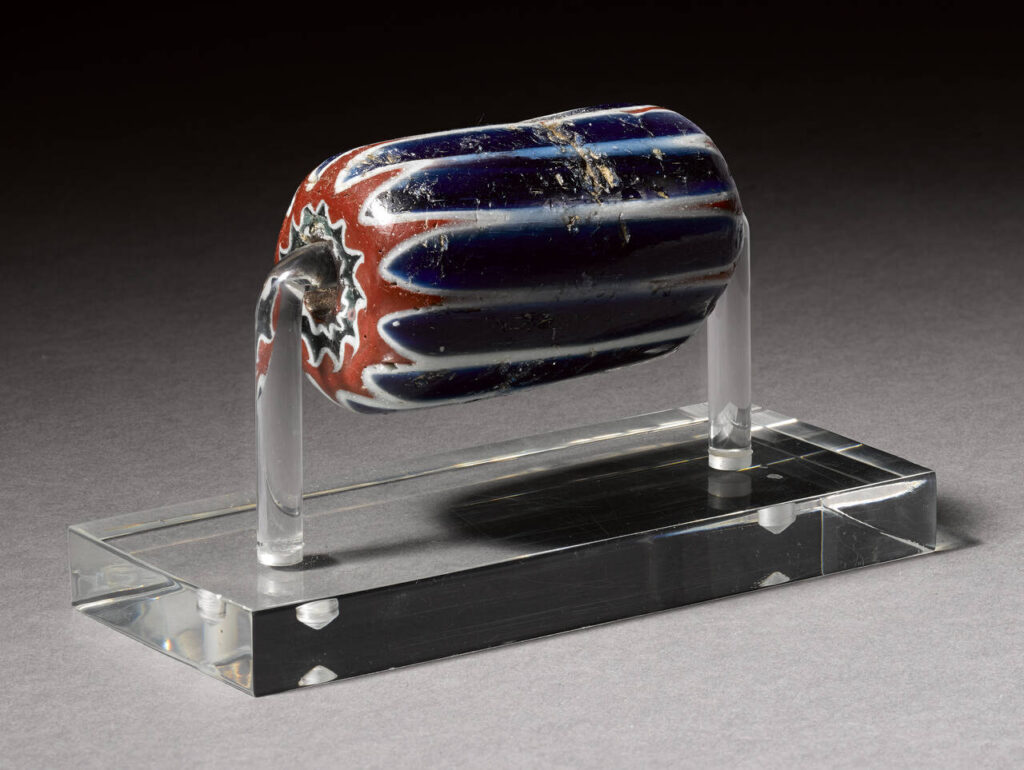
Chevron Beads
Perhaps the most famous trade beads are the Chevron beads, first created in Venice around 1490. Recognizable by their starburst cross-section, these beads were made by layering differently colored glasses in a cane and then cutting them to reveal the pattern.
In West Africa, Chevron beads were highly prized as status symbols, used in ceremonies, passed down as family heirlooms, and sometimes buried with their owners. Today, antique chevrons are highly collectible, embodying both the painful legacy of trade and the beauty of cultural adaptation.
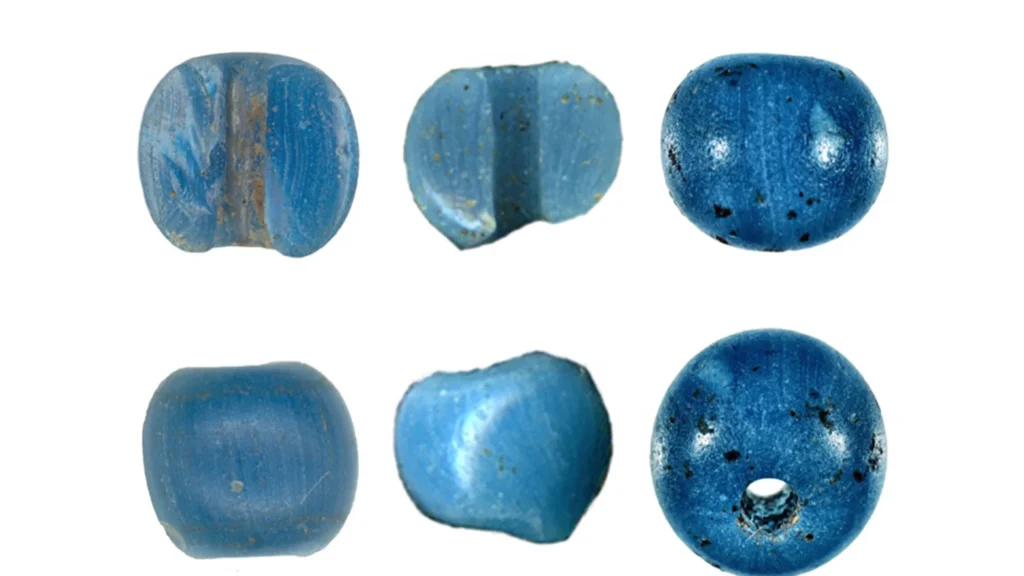
Russian Blue Beads in Alaska
Cobalt-colored drawn beads, known as Russian blues, were traded by Russian merchants in Alaska and the Pacific Northwest. Archaeological finds show that these beads traveled astonishing distances, sometimes appearing in Indigenous sites far inland, carried through extensive exchange networks. To many Native Alaskan groups, they became valuable symbols of trade relationships and were incorporated into regalia.
Hudson’s Bay White Hearts
In North America, fur traders working with the Hudson’s Bay Company distributed large quantities of white-core “white heart” beads, often in red. Indigenous peoples incorporated them into intricate beadwork traditions, blending European glass with older quillwork techniques. The result was a flourishing of new art forms that remain vital to Native communities today.
The Dual Legacy of Trade Beads
Trade beads tell two stories at once.
On one hand, they represent exploitation, colonization, and the commodification of human lives. They were tools of empire, used in the trafficking of enslaved people and in unequal trade relationships that devastated communities.
On the other hand, they show human creativity and resilience. African, Native American, and other cultures did not merely adopt European beads; they transformed them into cultural treasures, status symbols, and art. These traditions continue today in beadwork, jewelry, and ceremonial dress.
This duality is what makes trade beads so fascinating—and so important to study with honesty.
The Collectors’ Market
Today, antique trade beads are highly sought after by collectors. Chevron beads, millefiori “African trade beads,” and Russian blues can fetch significant prices, especially when provenance is clear. Museums hold extensive collections, using them to interpret global trade networks and the cultural exchanges—both positive and tragic—that accompanied them.
Modern bead artists often draw inspiration from trade bead patterns, reinterpreting them with contemporary materials and methods. In this way, beads continue their long tradition as both historical artifacts and living art.
Final Thoughts
Beads may seem like small, decorative objects, but in truth, they were the currency of empires, adornments of cultures, and markers of human resilience. They connected continents, fueled trade, and left behind a legacy that is both painful and beautiful.
When we look at trade beads today, we see not just glass and color—we see the stories of countless hands that held them, exchanged them, wore them, and passed them down.
Do you own any antique trade beads or beaded jewelry? What story do they tell—or what story have you given them? Share in the comments, and let’s make history by keeping the conversation alive.