As a lifelong crime drama fan, I’ve always been fascinated by the little details that solve the big mystery: the overturned teacup, the smudge on the lampshade, the footprints in the carpet. When I first learned about Frances Glessner Lee and her Nutshell Studies of Unexplained Death, it felt like discovering the true origin story of the genre I love. Long before CSI or Law & Order, Lee was staging crime scenes with the precision of a director, the artistry of a miniaturist, and the vision of a detective.
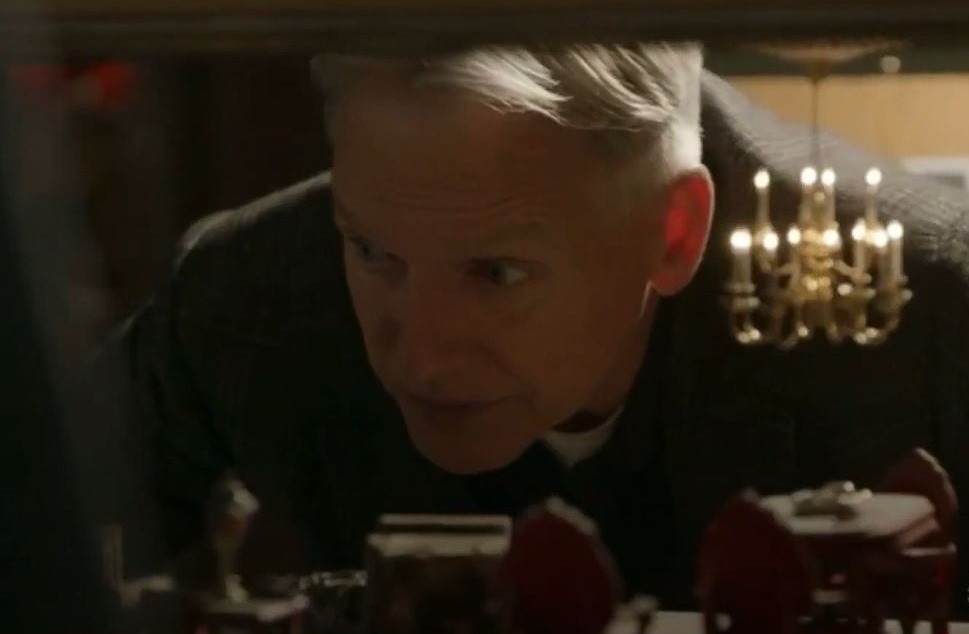
I even spotted a nod to her in an episode of NCIS (“In a Nutshell,” Season 17, Episode 17), where her dioramas are directly referenced as part of training exercises for federal agents. That moment connected two worlds for me: the entertainment I enjoy and the pioneering work that inspired it.
The Woman Behind the Scenes
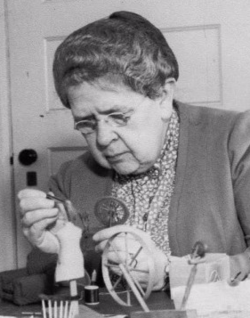
Frances Glessner Lee (1878–1962) was no ordinary hobbyist. She was the daughter of a wealthy Chicago family and heiress to the International Harvester fortune. But instead of settling for society life, she used her resources to establish the first program of forensic medicine in the U.S. at Harvard in the 1930s and 1940s.
At first, she was dismissed by the scientific establishment—her work seen as little more than a woman’s “craft project.” Yet Lee turned that dismissal into her strength, transforming dollhouse-scale handiwork into one of the most revolutionary teaching tools in forensic science.
The Dioramas: A Crime Drama in Miniature
Between 1943 and 1948, Lee created 20 miniature crime scenes, each at 1:12 scale. Seventeen survive today, housed at the Maryland Office of the Chief Medical Examiner.
Each diorama is staged like the opening shot of a police procedural:
- A body slumped in a chair.
- A bedroom in disarray.
- A kitchen frozen mid-disaster.
But unlike TV, there’s no narration. Investigators must draw their own conclusions from the thousand tiny details.
Lee’s craftsmanship was extraordinary:
- Working elements: lights, doors, and windows function.
- Clues: bullet holes drilled to realistic calibers, blood spatters painted with precision, even flyspecks added.
- Atmosphere: she knitted socks with straight pins, glued individual hairs to brushes, and left coffee rings on tabletops.
Every detail mattered, because every detail might conceal the truth.
Anecdote: Solving a Case by Lamplight

One of the best-documented stories comes from the “Red Bedroom” diorama. During training, a detective noticed a lamp knocked to the floor at an odd angle. That single observation suggested a struggle—contradicting the initial assumption of suicide. It became a powerful reminder: no object in a crime scene is too small to matter.
Why Miniatures?
As a fan of crime dramas, I see in Lee’s work what television would later popularize: the belief that truth hides in overlooked details.
Lee even taught students a method we’d now call a “slow pan”: study the scene clockwise, starting from the ceiling, then the walls, and finally the floor. It was forensic investigation as visual storytelling—decades before the concept of a “procedural drama” existed.
Legacy: From Training Room to Pop Culture Icon
The Nutshell Studies are still in use today—more than 75 years later—at Baltimore’s homicide seminars. Only trained professionals get to study them directly, but the public has glimpsed them through museum exhibitions and documentaries.
Their influence on popular culture is undeniable. From Columbo to CSI, whenever a detective solves a case by catching a detail others missed, I see Frances Glessner Lee’s philosophy at work: truth lies in the tiniest clues.
Collector Lore
Unlike Victorian dollhouses, Lee’s Nutshell Studies aren’t collectible. They’re state property, protected as priceless teaching tools. But collector lore has grown around Lee herself.
- Replicas & Homages: A handful of contemporary miniaturists now build recreations of famous mysteries, directly citing Lee as their inspiration.
- Guarded Originals: The originals remain under lock and key at the Maryland OCME, making them among the rarest and most inaccessible miniatures in the world.
In the collecting world, that rarity fuels a mythology—people treat Lee’s dioramas the way art collectors speak about a lost Rembrandt: whispered about, studied in catalogues, but rarely (if ever) seen in person.
Final Thoughts
What fascinates me most about Frances Glessner Lee is how she blurred boundaries: art and science, play and investigation, domestic craft and criminal inquiry. She didn’t just build dollhouses—she built stories. Each Nutshell is a frozen moment in a crime drama, waiting for the viewer to solve it.
Lee once said the purpose of investigation was to “convict the guilty, clear the innocent, and find the truth in a nutshell.” For me, that’s also the essence of every great crime story—whether told in a courtroom, a miniature, or a TV script.
Have you ever spotted a tiny detail in a show like NCIS or Columbo that flipped the entire case? That’s Lee’s spirit at work—training us all, even from a miniature world, to be better detectives. Lee made history in her time, and now it’s our time, so Let’s Make History-one tiny detail at a time.