When we think of campaign souvenirs, buttons, banners, and ribbons usually come to mind. But history tells a broader—and often stranger—story. For well over a century, political campaigns have found creative (and sometimes downright quirky) ways to keep their names in front of voters. From soap bars to cigars, loaves of bread to yo-yos, these unusual giveaways reveal just how inventive campaigns could be long before the digital age.
Today, collectors treasure these oddities not only for their novelty, but also for the cultural snapshots they provide—mini time capsules of what mattered to voters in their day.
Why Give Away Strange Things?
Before radio, television, and online advertising, campaigns had to rely on physical goods to spread their messages. A clever giveaway could work its way into a household and stay there, quietly promoting a candidate every time it was used. Imagine brushing your teeth, sewing a button, or striking a match—all while being reminded who to vote for.
These items weren’t just fun novelties; they were practical advertising tools. Buttons and leaflets were common, but candidates who offered something useful—or edible—gained an edge. Quirky items kept their name literally in people’s daily routines.
Soap: Clean Politics, Literally
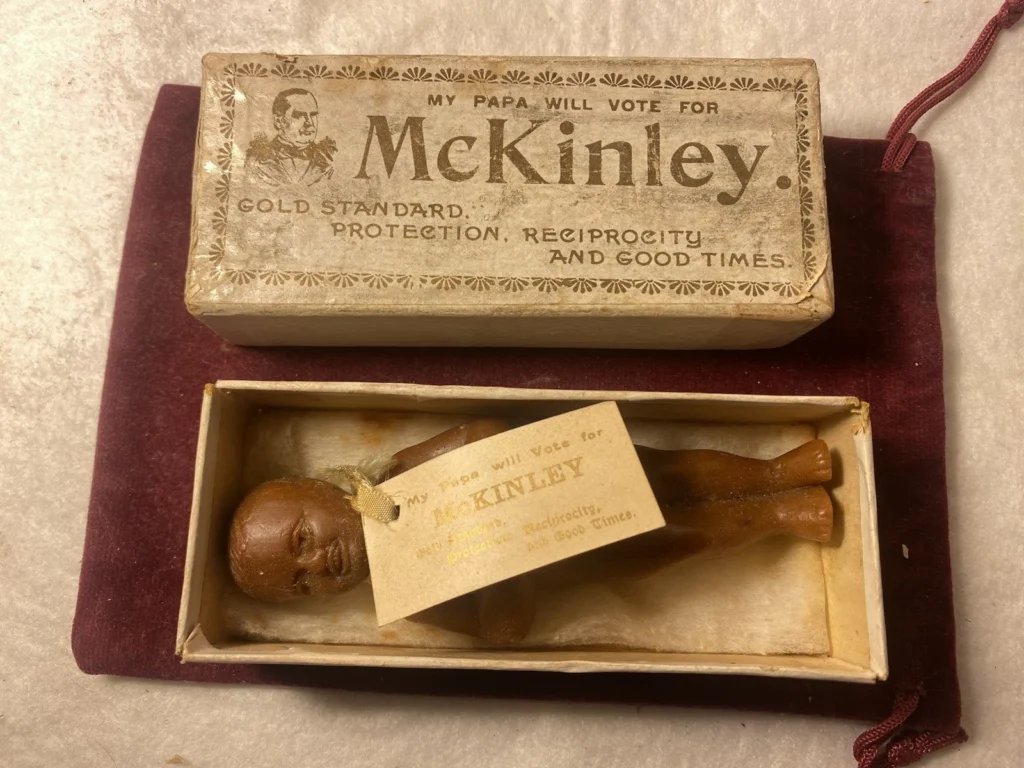
One of the more memorable examples comes from William McKinley’s 1896 campaign. His supporters distributed small novelty bars called “McKinley Soap Babies” — tiny molded soaps packaged with political slogans. They were part campaign trinket, part household utility, playing on the idea of “clean politics” while also appealing to everyday domestic life.
Collector Lore: Surviving examples of McKinley Soap Babies are exceedingly rare, since most were used up at the washbasin over a century ago. The few that remain — often still faintly scented and tucked in their original wrappers — are prized by collectors as some of the most unusual crossover items between political campaigning and household marketing.
Matchbooks and Cigars: Smoking for Victory
By the early 20th century, matchbooks were one of the most common advertising tools in America, and campaigns quickly adopted them. They were cheap, pocket-sized, and practical—perfect for keeping a candidate’s name literally in voters’ hands.
Some campaigns took things further with cigars. In 1920, Warren G. Harding’s team handed out cigar boxes labeled with slogans like “Smoke Harding to Victory.” Cigars projected prosperity and masculinity—qualities Harding wanted associated with his candidacy.
Sweet Persuasion: Food as a Political Giveaway
While buttons and banners lasted, food giveaways went straight to the table—and often straight into voters’ stomachs. Sharing food has always been a powerful way to connect with communities, and campaigns knew that a memorable snack could leave a lasting impression.
In the 19th century, taverns tied to parties often poured free cider or whiskey on election days, making polling places lively social hubs. Campaigns themselves soon embraced food symbolism more directly. Massive barbecues, oyster roasts, and bread giveaways weren’t just meals—they were statements of abundance and generosity.
By the early 20th century, edible souvenirs became branded novelties. Warren Harding’s campaign offered “Harding Ice Cream” and candy bars; Franklin Roosevelt supporters drank “FDR Coffee.” Even sacks of flour, loaves of bread, or chewing gum bore campaign slogans. These giveaways weren’t meant to be preserved, but they created intimate, tangible connections between candidate and voter.
During the Great Depression, food handouts took on even deeper meaning. A sack of flour stamped with a candidate’s name wasn’t just a gimmick—it was a direct nod to economic hardship and a promise of relief. Later, in the more optimistic postwar years, playful items like bubblegum wrappers or popcorn bags joined the mix, aimed at catching voters’ eyes (and appetites) with humor rather than necessity.
For today’s collectors, surviving packaging from food giveaways is especially rare. Most wrappers, bags, and boxes were torn open and tossed aside. That makes intact examples—like an unused campaign candy wrapper or flour sack—highly desirable artifacts.
Household Products and Everyday Items
Campaigns also tapped into household needs, creating giveaways that voters would use daily. Among the most popular were:
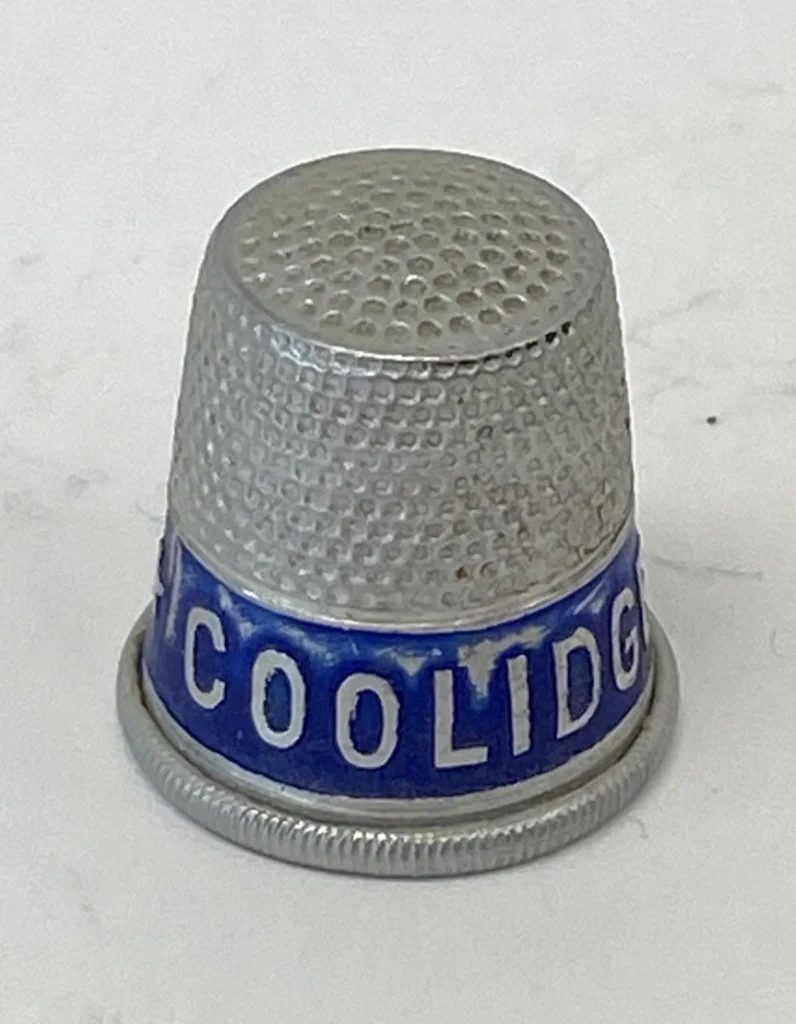
- Thimbles and Sewing Kits – Especially common after women gained the right to vote in 1920.
- Letter Openers, Rulers, and Yardsticks – Practical tools for offices and schools, reminding voters of a candidate every workday.
- Ashtrays and Pencils – Inexpensive, long-lasting, and often found today in antique shops.
One of the more unusual examples: Alf Landon’s 1936 campaign distributed a toothpick holder shaped like an elephant (the Republican Party symbol), with “Landon” printed on the base.
Collector Lore:
A tiny Taft needle case is said to have been discovered among sewing supplies in Ohio. Stamped with the slogan “Vote Taft, Keep Prosperity”, it later passed into the hands of memorabilia dealers for far more than the garage-sale price of the box it was found in.
Novelty for the Sake of Novelty
Not all items were practical. Some were designed purely to grab attention and spark conversation. Examples include:
- Bubble Gum Cards – Distributed in the 1930s–40s, often featuring caricatures of candidates.
- Political Yo-Yos – Popular in the mid-20th century, especially for youth outreach.
- Plastic Trinkets & Keychains – Cheap, colorful, and shaped like donkeys, elephants, or candidate caricatures.
Because these items were often cheaply made and discarded, surviving examples today are scarce—and highly collectible.
Why Quirky Items Appeal to Collectors
Unusual campaign giveaways are prized because they:
- Stand Out – Buttons are familiar; a campaign-branded bar of soap, loaf of bread, or cigar box is not.
- Are Rare Survivals – Most were used up, thrown away, or lost.
- Tell Stories – They reveal campaign strategies, cultural norms, and even humor of the times.
Some collectors focus almost exclusively on novelty items, viewing them as cultural artifacts that reveal how campaigns connected with voters beyond speeches and posters.
Collector Tips for Quirky Giveaways
- Check for Original Packaging – Soap, matchbooks, cigars, and food items are most valuable if unused.
- Look for Authentic Materials – Period fonts, printing, and construction help confirm authenticity.
- Condition Counts – Even small tears or stains can impact value.
- Regional Variants Add Value – Many items were locally produced, making regional slogans especially collectible.
A Window into Campaign Creativity
Quirky giveaways show that campaigns have always been about more than policies—they’ve been about capturing attention, sparking loyalty, and weaving politics into everyday life.
Whether it was a bar of soap reminding voters to “stay clean,” a cigar promising prosperity, or a popcorn bag at a rally, these unusual souvenirs reveal the creativity, marketing savvy, and sometimes humor that campaigns used to win hearts and votes.
For collectors, these items are more than oddities—they’re conversation starters, cultural artifacts, and playful reminders that politics has always had a promotional side.
Have you ever come across a quirky campaign collectible? Share your story—or your dream find—in the comments.
Let’s Make History—one quirky collectible at a time.