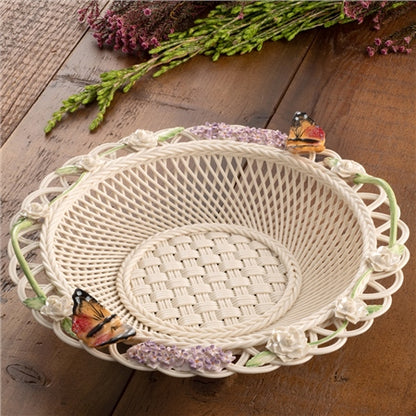
There are some porcelain makers you can recognize from across a room. Belleek is one of them. Even when it’s sitting quietly in a cabinet, it has a telltale look: a soft, luminous white; petals and leaves so thin they feel almost weightless; basket weave so fine you want to hold your breath while you handle it. Collectors often describe the best pieces as “delicate,” but that word doesn’t quite cover it—Belleek is delicate and confident, the kind of craft that makes you wonder how it was ever made to survive daily life.
Belleek’s story also has a very Irish beginning: a small village, a landscape rich in raw materials, and a post-famine need for local employment. Out of that mix came a pottery that would become internationally known for Parian porcelain—thin, refined, and often finished with a subtle, pearly sheen.
This post is the foundation for the entire Belleek series: how it started, what made it different from the beginning, and why the “birth story” still matters when you’re collecting today.
A Pottery Born from Place (and a Real Need)
Belleek began in the mid-1800s in Belleek, County Fermanagh, in a region shaped by waterways, rural industry, and the economic pressures that followed the Great Famine. The pottery wasn’t created as a luxury vanity project. It was, at its core, a practical response: bring skilled work to the area and use local resources to build something lasting.
That “born from necessity” origin is part of what makes Belleek so compelling to collectors. The finished porcelain looks airy and refined—but behind it is a serious industrial undertaking: sourcing materials, building kilns, training workers, and pushing for a level of quality that would compete beyond Ireland.
The Three Men Behind the Early Vision
Most Belleek origin stories center on three key figures:
- John Caldwell Bloomfield, the local landowner who wanted employment and industry on his estate
- Robert Williams Armstrong, an architect with deep interest in ceramics and design
- David McBirney, a Dublin merchant who helped finance the enterprise
A major early turning point was the decision to assess the area’s mineral potential. Reports of the time and later histories emphasize that the land contained materials useful for ceramic production—things like feldspar, kaolin, flint, and various clays/shales. In other words, Belleek wasn’t chosen at random; it was chosen because the raw ingredients for fine ceramic bodies were available within reach.
Collectors don’t need to become geologists, but it’s worth knowing this: Belleek’s “delicacy” is not just a stylistic choice. It is rooted in a specific approach to material and body formulation that the region could support.
Building the Works and the Early Output
Construction of the pottery works began in the late 1850s, and the early output focused on practical domestic and industrial wares rather than the ethereal porcelain we associate with Belleek today. This is a common pattern in ceramic history: stable, saleable goods first—then the prestige materials once the workforce, firing cycles, and quality controls are established.
Early Belleek production has been described as including a wide range of useful wares (items like household vessels, utilitarian pieces, tiles, and related products). This matters because it helps explain how the pottery learned to fire consistently and scale production—skills that later made the Parian breakthrough possible.
The Breakthrough: Parian Porcelain in 1863
Belleek’s defining moment is often dated to 1863, when the pottery succeeded in producing a small amount of the Parian porcelain that would become its signature.
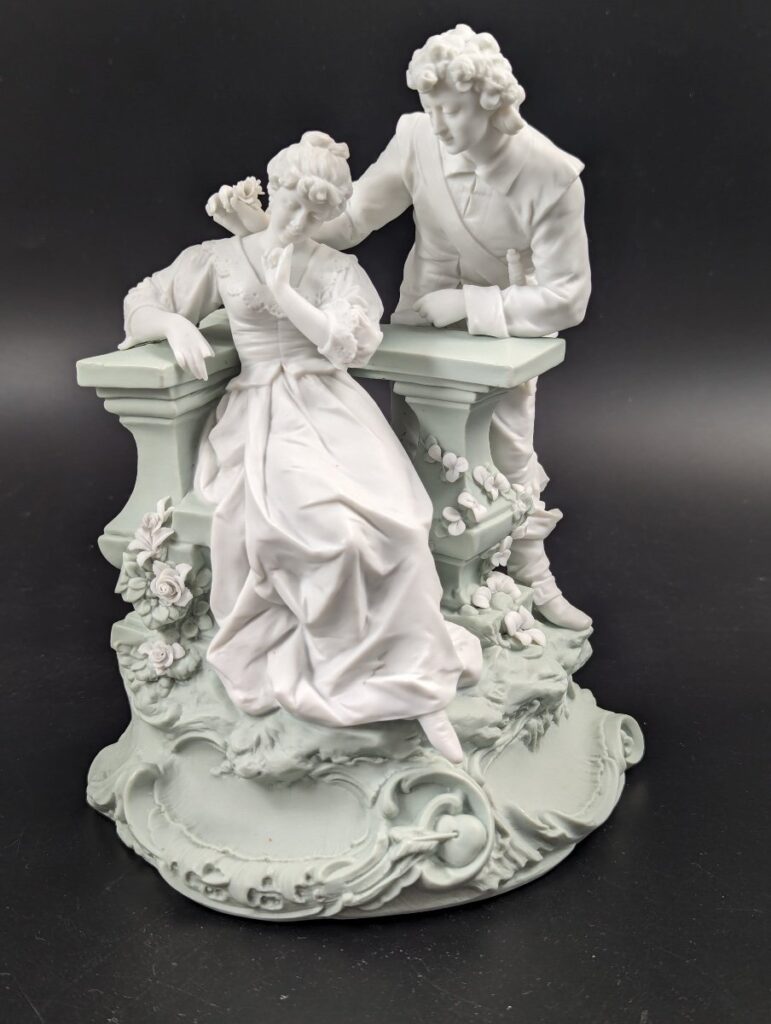
What “Parian” means (in plain collector language)
Parian is a type of biscuit (unglazed) porcelain developed in the 19th century and prized for its smooth, marble-like appearance. In many places, Parian was strongly associated with sculpture and figures. Belleek took that refined white body and made it feel even lighter—often producing pieces noted for thinness and a slightly luminous surface.
That “biscuit” (unglazed) finish is part of why Belleek looks so soft and elegant. Glaze can shine; Parian tends to glow.
Why this was a big deal
Porcelain is famously unforgiving. Shrinkage, warping, cracking, and firing flaws can ruin a piece long before it leaves the kiln. The fact that Belleek not only produced Parian, but produced it in a way that became commercially successful, tells you the early works developed a high level of technical discipline.
This is also why early Belleek is so admired by collectors: the workmanship had to be excellent for the material to survive.
The Belleek Look: Thin, Luminous, and Surprisingly Strong
When collectors talk about “the Belleek look,” they’re usually noticing a mix of traits that work together:
Thinness that feels almost impossible
Many Belleek pieces are remarkably light for their size. That thinness isn’t just for show—it’s a statement of control. The thinner the porcelain, the more skill it takes to cast, handle, and fire without losses.
A soft, slightly iridescent feel
Belleek is often described as having a subtle pearly or slightly iridescent finish. Some accounts attribute that glow to the nature of the body and finish, and in some periods to the way the surface is treated. (Collectors will see this especially clearly when pieces are lit from the side.)
Crisp detail in relief work
Whether you’re looking at leaf edges, flower petals, or molded texture, good Belleek detail reads cleanly and feels intentional rather than soft or muddy.
Hand-finishing that makes it feel “alive”
Even when a form is molded or cast, Belleek’s most beloved pieces tend to show hand attention—especially in applied details and the overall refinement of the finished surface.
Recognition Came Quickly
Within a few years of the Parian breakthrough, Belleek gained notable attention. One often-cited milestone is the pottery winning a gold medal at the Dublin Exhibition in 1865, a strong early signal that the work was being taken seriously beyond the local market.
As the prestige grew, Belleek’s market expanded. Later histories frequently describe exports reaching beyond Ireland and Britain into places like North America and Australia, along with high-profile clientele. Whether you collect for the artistry or for the story, the takeaway is the same: Belleek wasn’t a slow-burn niche maker. Once the Parian body was successfully established, the pottery’s reputation spread.
The Craftspeople Who Shaped “Classic Belleek”
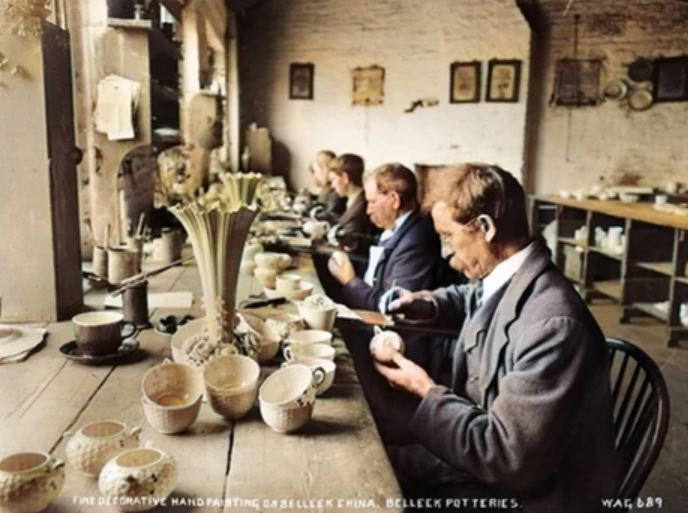
Belleek didn’t become Belleek by body formula alone. The style most collectors associate with the brand—especially baskets and florals—came through skilled hands and workshop development.
Two names come up repeatedly in the early story:
William Bromley and the shift toward porcelain
Accounts of the period often link the successful move into porcelain production in 1863 with the arrival of skilled workers, including William Bromley (often discussed in connection with leadership and expertise that helped push the pottery into Parian).
William Henshall and basket/flower making
By 1867, Belleek histories commonly credit William Henshall with bringing and developing the craft of basket and flower making, which would become one of the most iconic Belleek specialties over time.
You don’t need these names to enjoy collecting—but they’re helpful anchors. They explain why Belleek doesn’t feel like “just another porcelain.” It developed distinctive signature techniques early, and those techniques helped define its identity for generations.
A Quick Starter: Why Early Marks Matter (Without Going Deep Yet)
We’ll go deeper into “rare vs. common” and collecting strategy later in this series, but it helps to know one essential thing right away:
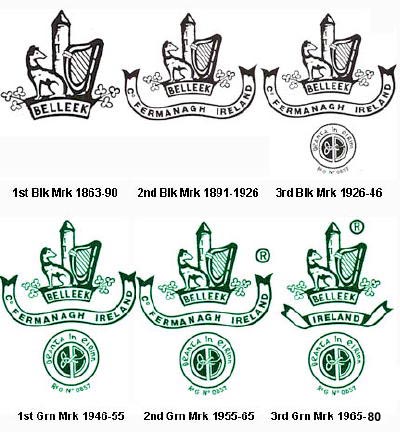
Belleek is known for having distinct backstamps/marks associated with different periods, and collectors pay close attention to them.
A key early milestone:
- The first widely recognized period mark is commonly described as dating from 1863 into the late 19th century, often appearing in black (though variations exist).
- The classic imagery associated with early Belleek marks includes Irish symbols such as the harp, wolfhound, round tower, and shamrocks, along with “Belleek” and “Co. Fermanagh.”
For this “birth” post, the important point isn’t memorizing mark charts. It’s understanding why marks matter: Belleek has a long production history, and marks are one of the clearest ways collectors start sorting “early,” “later,” and “modern.”
What Collectors Love About “Birth-Era” Belleek
Even if you never own a first-period piece, understanding the early era makes you a smarter buyer across the board. Collectors tend to love early Belleek for:
- The technical achievement of early Parian production
- The refined, confident detail work
- The sense of place and story: a rural Irish pottery becoming internationally admired
- The beginnings of signature forms and crafts that later became iconic
In other words, the origin isn’t just trivia. It’s a blueprint for what quality looks like in this category.
Buying Early Belleek: What to Inspect First
Because Belleek is so delicate-looking, condition is everything. A quick, consistent inspection routine helps.
Check the edges (rims, petals, leaf tips)
Tiny chips love to hide on:
- Vase rims
- Basket edges and pierced openings
- Flower petals and leaf points
Look for hairlines and old repairs
Hold pieces under bright light and rotate slowly. Watch for:
- Fine cracks in thin areas
- Discoloration at fracture lines
- Glossy “glue shine” around joins
Pay attention to surface wear
With unglazed Parian, surface condition really affects appearance. Look for:
- Scuffing or gray handling marks
- Over-cleaning (which can dull the soft glow)
- Uneven toning that suggests heavy use or display in smoke/sunlight
Confirm the mark—and make sure it makes sense
Marks should look integrated with the piece’s age and wear. If the base looks pristine but the form shows heavy handling, slow down and compare.
Caring for Belleek at Home
A few simple habits keep Belleek looking luminous.
- Use gentle dusting (soft brush or microfiber) rather than aggressive rubbing
- Avoid soaking baskets or heavily detailed pieces
- Skip harsh cleaners—especially anything abrasive
- Store so pieces don’t touch each other (thin edges chip easily)
- Display away from high-traffic ledges where sleeves and bags catch
Belleek is delicate, but it isn’t fragile if you treat it like fine porcelain and not like everyday stoneware.
The Collector’s Takeaway
Belleek’s “birth story” is the perfect example of how a collectible can be both beautiful and meaningful. From a post-famine push for local industry, to a late-1850s pottery works, to the 1863 Parian breakthrough and early exhibition recognition—Belleek’s early decades built an identity that still shows up in the pieces collectors treasure today: thinness, refinement, and a soft, unmistakable glow.
In the next post, we’ll shift from origins to what you see in your hands and on your shelf: patterns and themes—the motifs, forms, and signature looks that make Belleek instantly recognizable.
Let’s Make History—one luminous leaf at a time.