
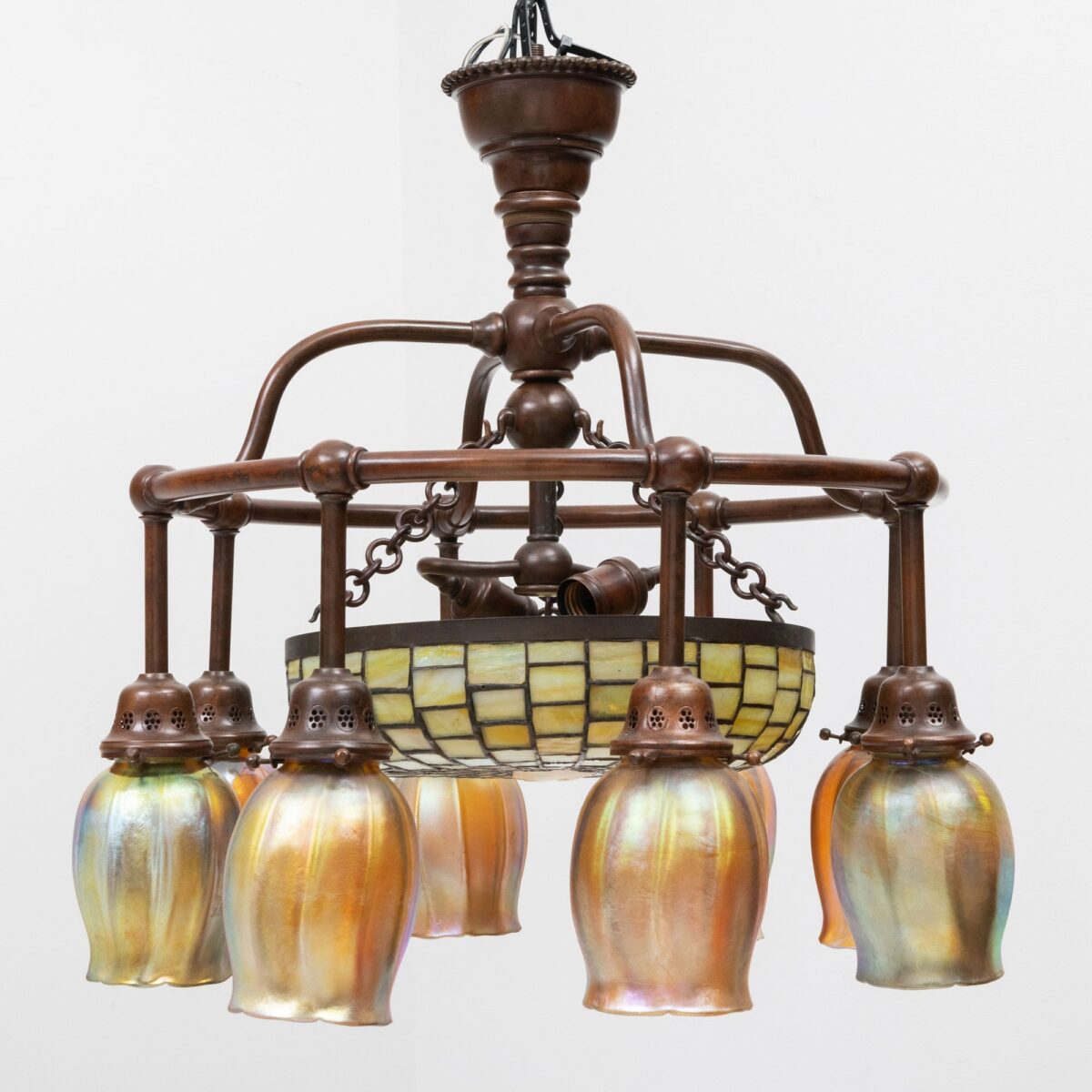
There are certain design languages that never really go out of style—they just change the way they’re appreciated. Tiffany is one of them. Whether you’re looking at a leaded-glass lamp glowing at dusk, a richly colored art glass vase catching morning light, or a bronze base with a finish that feels soft and deep, the effect is the same: the object doesn’t shout. It radiates.
That’s what collectors mean when they talk about “timeless elegance.” Tiffany’s best work doesn’t rely on trends. It relies on fundamentals that stay beautiful across generations: balance, craftsmanship, thoughtful materials, and the way light transforms color and texture. Even if you don’t own an iconic lamp (yet), you can still collect the Tiffany look and spirit in a way that feels coherent, authentic, and genuinely livable.
This post is a collector-friendly wrap-up of the Tiffany aesthetic—why it endures, how to build a collection that looks intentional instead of scattered, what to look for when shopping (including Tiffany-style pieces), and how to care for what you bring home so the elegance lasts.
What “Timeless Elegance” Looks Like in Tiffany Collecting
In practical terms, Tiffany elegance usually shows up in three places:
- Light (how an object glows or shifts when illuminated)
- Materials (glass, bronze, enamel, ceramics—chosen for effect, not just function)
- Design restraint (even ornate pieces tend to feel composed, not chaotic)
That doesn’t mean everything is minimal. Tiffany can be lavish. But even the most detailed designs often have a calm logic: repeating shapes, harmonious colors, and a sense that every element belongs.
Collector tip: if a piece looks busy but still feels “settled” to the eye, you’re often seeing that underlying Tiffany-style compositional discipline.
Why Tiffany Still Feels Modern
It’s easy to assume Tiffany’s appeal is purely nostalgic, but Tiffany’s endurance has a lot to do with how the work solves design problems that are still relevant today.
1) The work is built around atmosphere
Tiffany objects don’t just decorate space—they change it. A lamp shifts the mood of a room. A glass vase changes the way light behaves on a shelf. That “environmental” quality feels modern because today’s interiors still value mood and warmth as much as function.
2) Nature-inspired design stays relatable
Florals, vines, dragonflies, and water themes have lasting appeal because they aren’t tied to a single decade’s trend cycle. They’re grounded in forms we recognize instinctively.
3) Craftsmanship reads as luxury—even without labels
Quality is visible. When glass has depth, when solder lines are tidy, when metalwork feels weighty and intentional, the object communicates value without needing a brand name to do the work.
The Tiffany Aesthetic in One Sentence
If you want a simple way to recognize Tiffany elegance, try this:
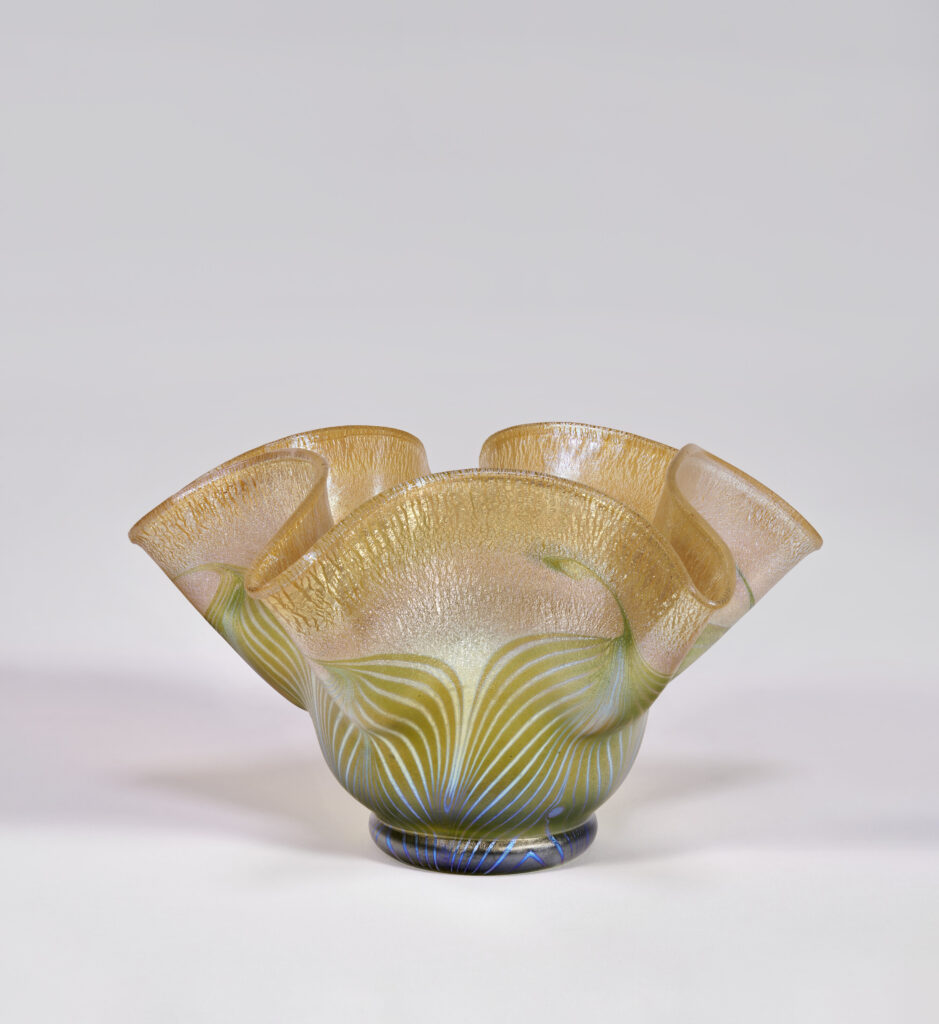
Tiffany design uses light and materials to make color feel alive.
That shows up in many forms—leaded glass, art glass, pottery glazes, patinated bronze, and jewelry with enamel or colored elements. The categories may change, but the “living color” effect is a consistent thread.
Building a Coherent Tiffany Collection
A Tiffany collection doesn’t have to be big to feel serious. It just has to be curated with a little intention. Here are four easy approaches that keep your collection coherent.
Lane 1: Collect by motif
Motif collecting is one of the most satisfying ways to build a Tiffany story because it creates instant visual unity.
Popular motif lanes include:
- Dragonflies and insects
- Wisteria and cascading florals
- Water/pond themes and lilies
- Bold blooms (peonies, poppies, stylized florals)
- Geometric or architectural patterns (for a cleaner look)
When you collect by motif, you can mix categories—lamp shade imagery, art glass, tiles, even paper ephemera—while staying “on theme.”
Lane 2: Collect by color story
Color is the easiest way to create elegance quickly.
Try:
- Blues and greens (cool, luminous, tranquil)
- Ambers and golds (warm, cozy, candlelit)
- Creams and soft neutrals with iridescent accents (airy, refined)
- Deep jewel tones (dramatic, formal, saturated)
Collector tip: choose one “anchor color” and two supporting tones. This keeps displays unified without requiring matching sets.
Lane 3: Collect by material
Material lanes help you build depth and expertise.
Options:
- Leaded glass and lamps (light-first collecting)
- Art glass vessels (shelf-friendly and display-forward)
- Pottery and tiles (glaze-driven elegance)
- Metalwork (bronze bases, desk accessories, decorative pieces)
- Jewelry as wearable Art Nouveau (color and motif in miniature)
Lane 4: Collect by function in the home
Elegance often looks best when it feels natural in a space.
Examples:
- A “library corner” (lamp + bronze accessory + one art glass piece)
- A “parlor shelf” (vase + small bowl + a single supporting object)
- A “dining glow” vignette (centerpiece glass + complementary metal + a quiet ceramic)
This approach keeps your collection from feeling like a museum—while still letting it feel curated.
Tiffany Studios vs. Tiffany-Style: How to Keep Your Collection Honest

Tiffany is one of the most widely imitated looks in decorative arts. That’s not a bad thing. Many Tiffany-style pieces are beautiful and enjoyable. The key is collecting with clear language so you know what you own and why you bought it.
A practical mindset:
- Tiffany Studios pieces belong to a studio-authenticated, high-value category where documentation and expert evaluation matter.
- Tiffany-style pieces belong to a design-influenced category where craftsmanship, materials, and beauty are the main value drivers.
If you’re buying Tiffany-style, buy it because:
- the glass selection is lovely,
- the construction is solid,
- the motif fits your collecting lane,
- and it brings the atmosphere you want.
If you’re buying something represented as Tiffany Studios, the burden shifts: you want stronger proof, clearer provenance, and more careful evaluation.
What to Look For When Shopping: The “Elegance Test”
Whether you’re buying a lamp, a vase, a bronze accessory, or a decorative tile, here are the cues that often separate “pretty” from “timeless.”
1) Quality of materials
- Glass with depth and tonal variation tends to look richer than flat color.
- Metalwork with weight and crisp detail tends to feel more intentional.
- Glazes that pool, shift, or break on edges often look more complex than uniform finishes.
2) Construction integrity
Lamps and leaded glass:
- stable solder lines,
- no looseness in the structure,
- repairs disclosed and visually coherent.
Pottery and glass:
- stable rims and bases,
- no obvious structural cracks,
- chips and repairs accounted for in price and expectations.
Metalwork:
- stable forms,
- surface finish intact,
- no harsh over-polishing that strips character.
3) Design coherence
Timeless elegance usually has restraint somewhere:
- repeating patterns that feel organized,
- motifs that aren’t fighting each other,
- proportions that feel balanced.
If a piece feels “off,” trust your eye. Elegance is often as much about proportion as it is about decoration.
Care Tips That Preserve Elegance
Tiffany and Tiffany-style collecting is long-term collecting. The goal is to keep pieces stable and beautiful without over-restoring them.
Leaded glass and lamps
- Dust gently (soft brush tools are often safest).
- Avoid harsh cleaners on solder lines.
- Use stable placement to prevent tipping.
- Choose bulbs that don’t add unnecessary heat stress.
- Keep out of prolonged direct sunlight when possible.
Art glass and pottery
- Don’t stack fragile pieces without separators.
- Avoid aggressive scrubbing on delicate surfaces.
- Keep away from temperature extremes and high humidity swings.
- Use stable shelves and consider discreet stabilization in high-traffic homes.
Metalwork and jewelry
- Preserve patina; avoid unnecessary polishing.
- Store jewelry separately to prevent scratches.
- Keep enamel and glass elements away from harsh chemicals and perfumes.
Collector tip: “Making it shiny” is not always maintenance. Often, the finish you’re removing is part of the beauty.
Display Ideas That Make Tiffany Feel Effortless
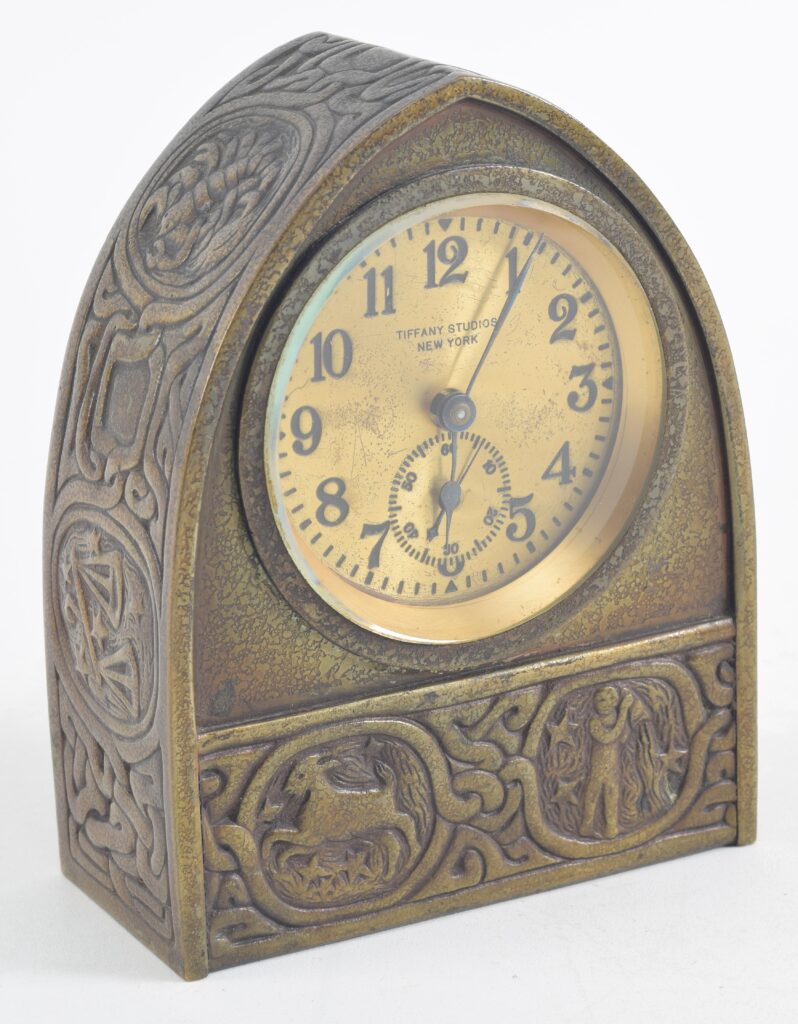
Elegance often comes from spacing and contrast, not from quantity.
Try:
- One statement lamp with breathing room, plus one supporting object nearby.
- A trio on a shelf: tall (vase), medium (bowl), small (metal or ceramic accent).
- Dark or neutral backdrops that make glass color glow.
- Rotating displays: swap a few pieces seasonally so nothing is always exposed to light and handling.
If you’re building a Tiffany-themed home display, it can help to keep supporting décor quiet—books, frames, textiles in calm tones—so the glass remains the star.
A Gentle Collector’s Checklist
Before you buy, ask:
- Does this fit my lane (motif, color story, material, or function)?
- Does it pass the elegance test (materials, integrity, coherent design)?
- Is the condition stable enough for my storage and display setup?
- If it’s Tiffany-style, do I love it for what it is?
- If it’s claimed as Tiffany Studios, is there credible documentation to match the claim?
- Will this piece elevate my collection—or pull it into clutter?
Timeless elegance isn’t about owning the most expensive piece. It’s about building a collection where every object feels intentional—where light, color, and craftsmanship work together to create a space that feels warm, historic, and beautifully lived-in.
Let’s Make History—one elegant glow at a time.