
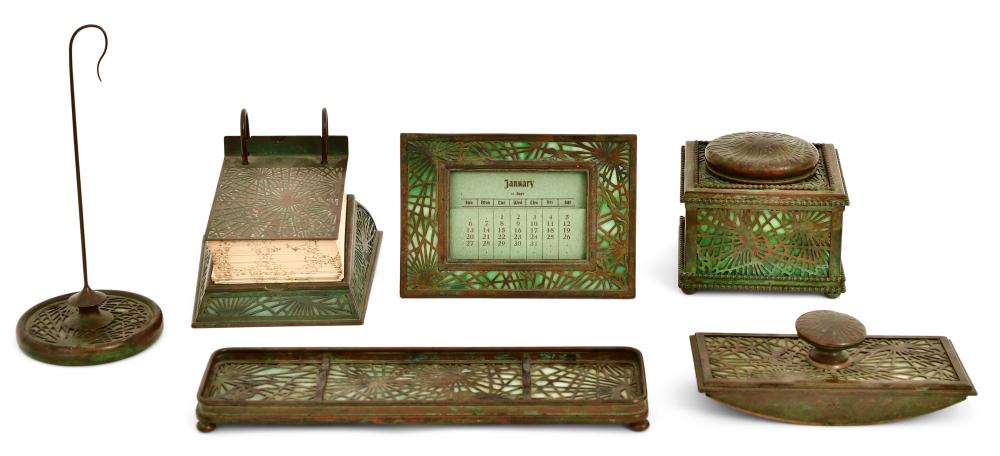
When people think “Tiffany,” they may picture glass—lamps, windows, glowing shades. But Tiffany’s world wasn’t built on glass alone. Metalwork and jewelry are the supporting structure that make the Tiffany aesthetic feel complete: bronze bases that turn a lamp into sculpture, desk pieces that make everyday objects feel elevated, and jewelry that borrows the same nature-inspired language you see in Tiffany glass.
This is also where Tiffany collecting gets especially interesting. Metal and jewelry pieces tend to show how Tiffany design moved through real life—on a writing desk, across a dining table, pinned at a collar, worn at a neckline. These objects were made to be used and enjoyed, and they often carry the traces of that use in the best possible way.
In this post, we’ll look at what “Tiffany metalwork” usually means in collecting, how to think about Louis Comfort Tiffany’s jewelry (and how it differs from Tiffany & Co. fine jewelry), what collectors look for when they’re shopping, and how to care for these pieces so the finish and detail last.
Tiffany Beyond Glass: Why Metalwork Matters
Tiffany’s reputation is built on light and color—but metalwork is what gives that beauty a frame and a foundation. In Tiffany lighting, the base isn’t an afterthought. It’s part of the composition. In desk and decorative pieces, metalwork provides weight, durability, and a sense of permanence that balances glass’s delicacy.
Collectors love Tiffany metalwork because it often combines:
- Strong sculptural form (objects feel designed, not merely manufactured)
- Rich surface finishes (patinas and textures that create depth)
- Practical function (desk sets, frames, boxes, candlesticks, and more)
- Design continuity with the Tiffany “glass world” (organic curves, repeating motifs, and harmonious materials)
If you enjoy collecting in a way that feels cohesive, metalwork is one of the easiest ways to make a Tiffany-focused display feel complete.
What Counts as Tiffany Metalwork?
In the collector marketplace, “Tiffany metalwork” can refer to a few related lanes. The most important thing is to be clear about what you’re buying: Tiffany Studios production, Tiffany & Co. silver and jewelry production, or Tiffany-style objects made later in a similar spirit.
For a Tiffany Studios–leaning collection, metalwork categories often include:
Lamp bases and lighting hardware
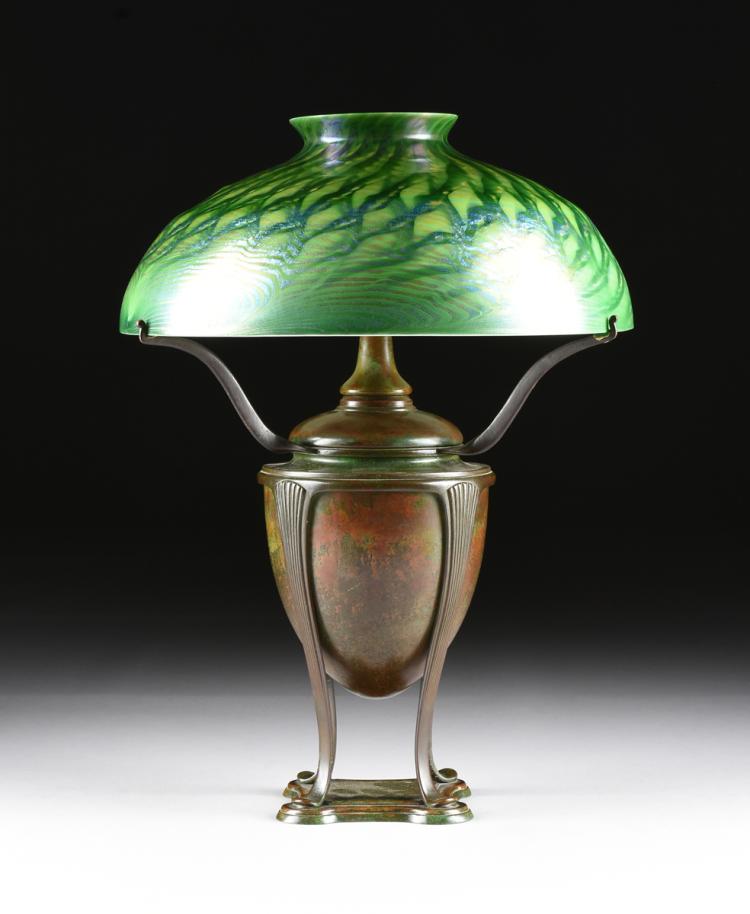
Even when the shade is the star, Tiffany bases can be showstoppers on their own. You’ll see:
- Bronze lamp bases in a range of shapes and profiles
- Surface finishes designed to complement the glass
- Details that make the base feel architectural or botanical
Desk sets and writing accessories
This is one of the most collectible and displayable categories because it’s full of varied forms that look wonderful together:
- Inkwells (sometimes paired with glass components)
- Blotters, pen trays, letter holders
- Calendar frames and paper racks
- Small lidded boxes and desktop containers
Decorative objects for the home
Depending on your lane, you may collect:
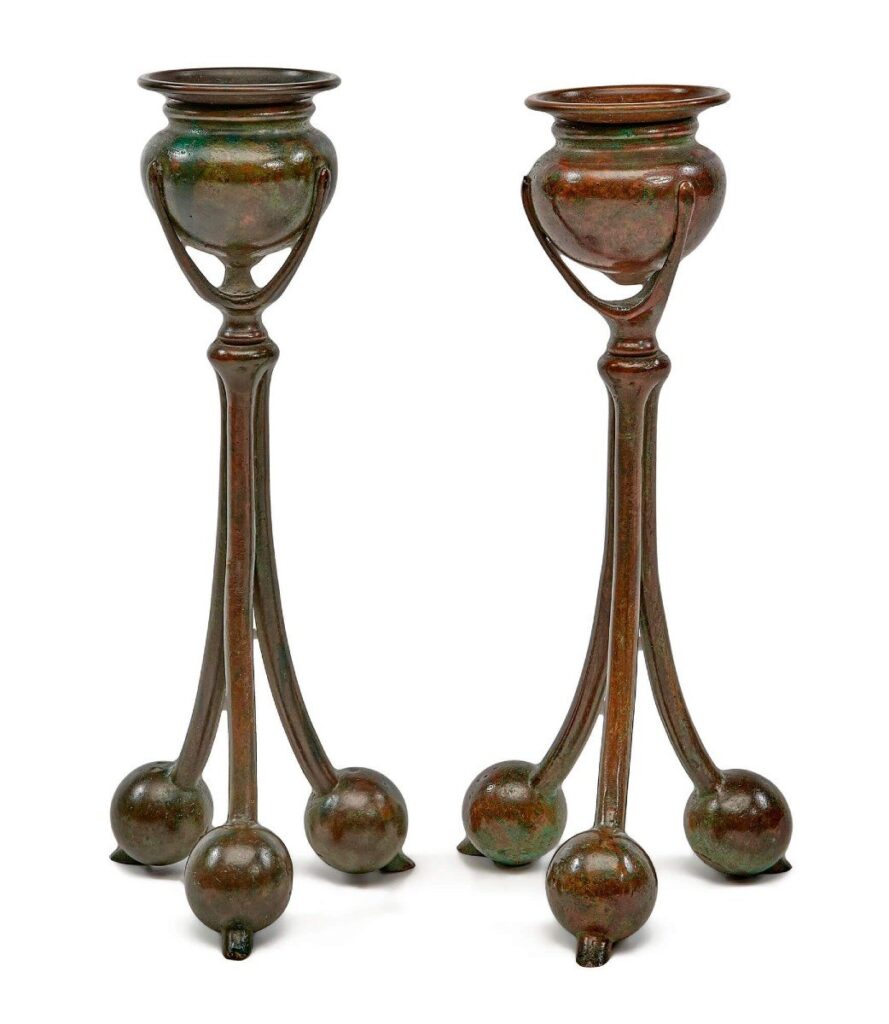
- Candlesticks and candelabra
- Small frames and stands
- Bowls, trays, or decorative mounts (often in bronze or mixed materials)
Collector tip: metalwork is a great “entry point” to Tiffany collecting because even one or two pieces can anchor a shelf and make surrounding glass or ceramics feel more intentional.
Patina, Finish, and the Collector’s Eye
If there’s one thing to learn quickly in Tiffany metalwork, it’s this: finish matters. Patina isn’t just color; it’s surface character. It’s part of the design.
Metalwork finishes can range from:
- Deep browns and warm bronzes
- Greenish tones that read as aged and atmospheric
- Dark, dramatic finishes that make glass pop
- Brighter gilt or gold-toned surfaces (less common in everyday collecting, but strongly associated with certain decorative looks)
What collectors watch for:
- Consistency: natural wear tends to appear on high points, edges, and touch areas
- Depth: a good surface finish often looks layered rather than flat
- Over-cleaning: aggressive polishing can remove surface character and leave metal looking too bright or “raw”
A useful mindset: patina is not “dirt.” It’s the finish and the history. If you love the look of age, protect it—don’t scrub it away.
Louis Comfort Tiffany Jewelry: A Different Kind of Tiffany
Here’s the important distinction: Louis Comfort Tiffany’s jewelry is not the same thing as Tiffany & Co. fine jewelry.
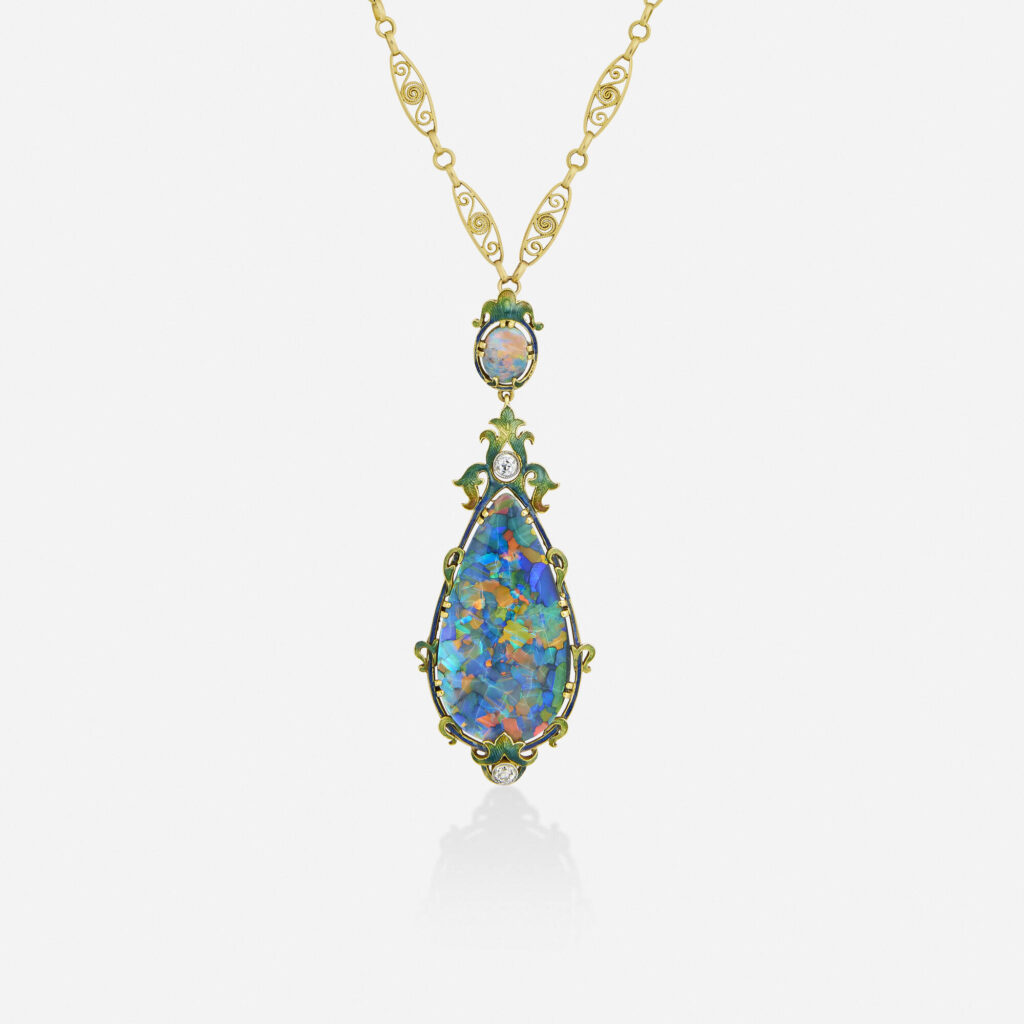
Tiffany & Co. is famous for precious jewelry traditions—diamonds, high-end gemstones, and luxury craftsmanship. Louis Comfort Tiffany’s jewelry, by contrast, is often described as being distinguished by design and color, frequently using enamel, colored glass, and semi-precious stones in nature-inspired forms.
For collectors, that means Tiffany jewelry can be approached in two different ways:
- As part of a Tiffany & Co. fine jewelry lane
- As part of a Louis Comfort Tiffany decorative arts lane, where jewelry feels like wearable Art Nouveau design
If you’re collecting Tiffany as an art-and-design story (rather than a luxury-jewelry brand story), Louis Comfort Tiffany jewelry fits beautifully alongside art glass, metalwork, and turn-of-the-century décor.
Motifs and Design Language: What Makes It Feel “Tiffany”
Whether you’re looking at a bronze desk accessory or a piece of jewelry, Tiffany design tends to speak in a familiar visual vocabulary:
Nature and organic forms
Look for:
- Vines, leaves, blossoms
- Insects and garden imagery
- Curves that feel botanical rather than geometric
Surface richness
Tiffany objects often rely on texture, layering, and contrast:
- Metalwork that feels sculpted rather than flat
- Jewelry surfaces that use enamel or glass for color depth
- Pieces designed to look lively under light
A “decorative arts” sensibility
Even small objects feel like they belong to a larger interior world—exactly the kind of cohesive atmosphere Tiffany was known for creating.
Collector tip: if an item is being sold as “Tiffany” but the design language feels generic—no strong motif, no material richness, no sense of intentional surface—slow down and verify what’s being claimed.
How to Build a Coherent Collection
Metalwork and jewelry can easily become “miscellaneous pretty objects” unless you choose a collecting lane. Here are a few collector-friendly options that stay manageable.
Lane 1: The desk and study lane
Build a set of writing and desktop pieces that look cohesive together:
- One inkwell as an anchor
- One or two supporting pieces (tray, letter rack, small box)
- A frame or calendar-style object to add vertical interest
Lane 2: The lighting support lane
If lamps are your focus, collect metalwork that supports the lamp story:
- A base-first approach (learning finishes, forms, and stability)
- Complementary metal décor nearby (candlesticks or a small bronze object)
Lane 3: Wearable design lane
Collect jewelry as “mini Tiffany art”:
- Focus on color (enamel/glass tones)
- Focus on motifs (botanical, insect, Art Nouveau curves)
- Keep it cohesive by building small sets rather than buying one-offs
Lane 4: The mixed-material vignette lane
This is one of the most visually rewarding:
- One metalwork piece + one glass piece + one small paper or book element
- Keep the palette consistent (warm bronze + amber glass, or darker patina + cool green-blue glass)
Coherence isn’t about everything matching. It’s about everything belonging to the same world.
What to Look For When Buying
Because Tiffany is a high-interest category, it’s also a category with reproductions, “Tiffany-style” look-alikes, and occasional overconfident claims. These checkpoints help you shop wisely.
Construction quality
For metalwork:
- Crisp casting details where they should be crisp
- Solid weight and stable structure
- Components that fit well and feel intentional
For jewelry:
- Secure settings and stable enamel/glass elements
- No obvious looseness, cracks, or unstable joins
- Wear that makes sense (not theatrical distressing)
Marks and signatures (helpful, not absolute)
Some pieces are marked, but marks can vary by object type and may be faint or worn. Treat marks as one clue among many:
- Does the design language fit?
- Do materials and construction feel consistent with the claim?
- Is the story supported by documentation when the price reflects it?
If a piece is being sold with major claims, credible documentation matters.
Common red flags
- A surface that looks newly bright when you’d expect depth and character
- Artificial-looking aging applied evenly rather than naturally
- Vague provenance paired with a high price (“came from an estate” without any supporting detail)
- Generic items described with Tiffany keywords but lacking Tiffany design DNA
Collector tip: buy for what you can see and verify. If the story is the main value, the proof should match the story.
Care and Storage: Preserve Finish, Protect Detail
Metalwork and jewelry are durable compared to paper, but they still benefit from respectful care—especially if you want to preserve patina and surface richness.
Caring for metalwork
- Dust gently with a soft cloth or brush
- Avoid harsh metal polishes unless you’re intentionally changing the look
- Keep away from high humidity to reduce corrosion risk
- Handle with clean hands to reduce oily fingerprints that can “print” into patina over time
Caring for jewelry
- Store pieces separately to prevent scratching
- Avoid chemicals, perfumes, and harsh cleaning on enamel and glass elements
- Wipe gently after wear and store in a stable, dry environment
- If a piece has delicate components, treat it like art glass: low impact, low stress
A good guiding principle: preserve the finish you fell in love with. Don’t chase “shiny” if the original beauty is in the surface depth.
A Gentle Collector’s Checklist
Before you buy Tiffany metalwork or jewelry, ask:
- Does this fit my collecting lane (desk pieces, lighting support, wearable design, mixed-material vignettes)?
- Is the condition stable (no active corrosion, cracks, looseness, or failing components)?
- Does the surface finish look naturally aged and visually rich?
- Do marks and documentation support the claim when the price reflects it?
- Will I be able to care for and store it in a way that preserves patina and detail?
Metalwork and jewelry are where Tiffany becomes tactile in a different way—less about glow, more about surface, form, and the elegance of objects made to be used beautifully.
Let’s Make History—one polished detail at a time.