
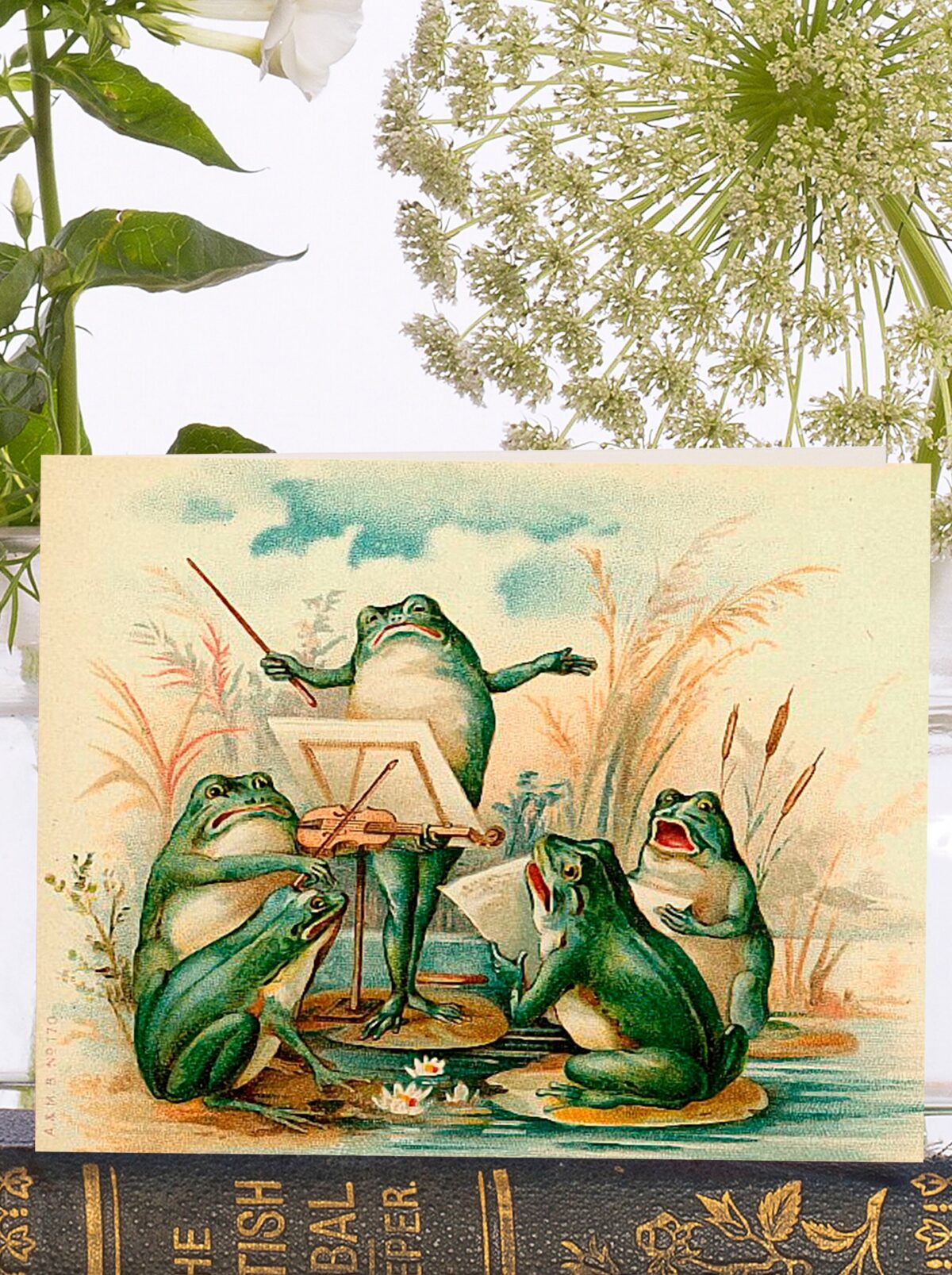
Frogs are everywhere in collectibles—and not just in figurines. If you’ve ever thumbed through a postcard box and found a smug little frog in a top hat, or opened an old scrapbook and spotted a frog-themed trade card, you’ve already seen what collectors know: frogs are a repeat-star motif in ephemera and art. They’re instantly recognizable, easy to stylize, and loaded with meanings people love—springtime, rain, transformation, humor, and a touch of fairytale weirdness.
Frog-themed ephemera and art are especially fun because they’re often inexpensive “small treasures” that still carry strong visual impact. You can build a collection with personality fast—then refine it into something curated and display-worthy.
What counts as “ephemera” (and why collectors love it)
Ephemera is the broad collector term for paper items that were meant to be temporary—used, shared, displayed briefly, and then discarded. The fact that it survived is part of the appeal.
In frog collecting, ephemera commonly includes:
- postcards and greeting cards
- trade cards and advertising pieces
- calendars, bookmarks, and paper novelties
- labels, packaging, and product inserts
- programs, tickets, and event paper
- children’s illustrations, prints, and book-related paper items
Frog ephemera is especially collectible because it often leans into personality: frogs dressed as people, frogs playing instruments, frogs in gardens, frogs on lily pads, frogs “announcing” spring, frogs as good-luck characters. It’s hard to look at a box of frog paper and not find something that makes you smile.
Why frogs became such a popular paper-and-art motif
Frogs are visual shorthand for themes that show up again and again in popular design:
- Spring and renewal: frogs return with warmer weather; they belong to pond-and-garden imagery.
- Rain and water: frogs are tied to wetlands and rainfall in the imagination, so they appear on “weather” and garden motifs.
- Transformation: tadpole-to-frog is one of nature’s most obvious transformations, which makes frogs perfect for symbolic art.
- Humor: frogs have expressive faces and funny proportions—ideal for cartoons and anthropomorphic designs.
- Fairytale vibe: frogs naturally fit into storybook visuals and “enchanted” themes.
That combination—symbolic and silly—makes frogs a safe bet for artists, printers, and advertisers.
Postcards and greeting cards: the easiest place to start
If you’re building a frog-themed paper collection, postcards and greeting cards are often the best entry point. They’re plentiful, display well, and the imagery is incredibly varied.
What you’ll commonly see
- Anthropomorphic frogs (frogs acting like humans: dancing, dining, driving, courting)
- Garden frogs (lily pads, cattails, mushrooms, pond scenes)
- Seasonal frogs (spring greetings, Easter-adjacent imagery, “first warm day” vibes)
- Humor frogs (puns, mischievous expressions, silly situations)
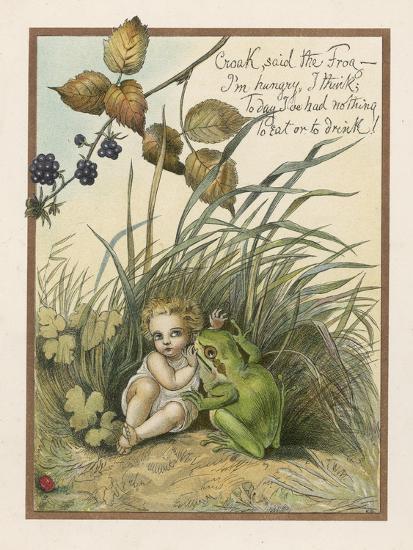
- Fairytale frogs (storybook scenes and “enchanted” aesthetics)
What collectors look for
- clear, unfaded color
- sharp printing and clean edges
- message/postmark interest (if used)
- minimal bends, creases, or surface abrasions
A card can be used and still collectible. Condition matters, but charm can matter more—especially with unusual artwork.
Advertising and trade cards: frogs as salespeople, mascots, and eye-catchers
Frogs show up in advertising because they grab attention. They’re bold shapes, easily recognizable at a glance, and perfect for playful messaging.
Trade cards and small advertising
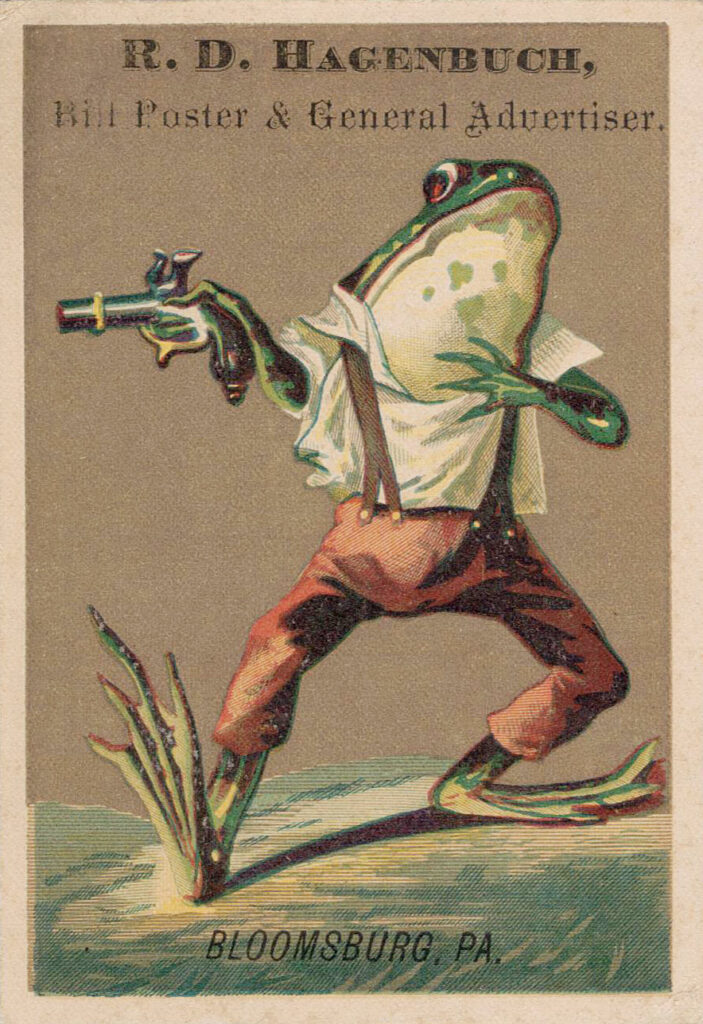
Trade cards (especially the small colorful ones people tucked into scrapbooks) are a prime hunting ground for frog imagery. Even when frogs aren’t the main subject, they can appear as side characters, borders, or “comic” add-ons.
You’ll also see frog motifs in:
- general advertising cards and handbills
- product inserts
- promotional mailers
- store and event paper
Packaging and labels
Frog imagery can appear on labels and packaging because it suggests freshness, nature, water, gardens, and fun. For collectors, packaging pieces can be harder to store safely—but they look fantastic framed.
Collector approach: With advertising pieces, focus on the artwork and design first. If you also want brand history, that’s a bonus—but frog ephemera collecting doesn’t require being brand-centric to feel cohesive.
Paper novelties: bookmarks, calendars, valentines, and “small delights”
Some of the best frog finds are the items that were never meant to last:
- small bookmarks with frog illustrations
- calendar pages or advertising calendars featuring frogs
- valentines and seasonal paper pieces
- decorative scraps used for collage and scrapbooks
- gift enclosures and tiny printed cards
These pieces often have the most personality—big eyes, dramatic poses, whimsical scenes. They’re also a great way to build themed groupings: “frogs in costumes,” “frogs in gardens,” “frogs doing human jobs,” and so on.
Frog art beyond paper: prints, illustration, folk art, and decorative art
“Art” in frog collecting can mean a lot of things, and you can make it as fine-art-focused or as playful as you want.
Illustration and print art
Frog imagery thrives in illustration because it balances realism and stylization. You’ll see frogs rendered as:
- naturalist studies (more realistic anatomy and habitat)
- cartoon characters (bold shapes and expressions)
- storybook scenes (fairytale and fantasy settings)
Prints can be original works, later reproductions, or modern decorative prints. What matters for collectors is clarity about what it is: original print, reproduction, or contemporary decorative art.
Folk art and handmade pieces
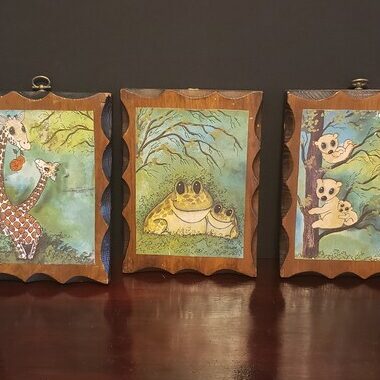
Frogs show up frequently in folk-art styles—painted panels, cutouts, whimsical mixed-media, and hand-painted decorative pieces. These can be highly collectible because they’re often one-of-a-kind and carry regional “maker” character.
Decorative wall art
You’ll also find frogs in:
- framed kitchen and garden décor
- plaque-style wall hangings
- decorative tiles used as art (even when not used as trivets)
This is a great lane if you want your collection to be display-forward rather than archive-forward.
Condition: what matters most for frog ephemera and art
Paper collectibles reward careful shopping. A few quick checkpoints keep you from overpaying for damaged items:
Paper items (postcards, cards, ads, inserts)
- Corners and edges: soft corners are common; missing corners are a bigger issue.
- Creases: a single center crease can dramatically reduce display appeal.
- Surface rubs: glossy surfaces can show scuffs.
- Stains and foxing: some spotting is common; heavy staining is harder to live with.
- Tape residue or scrapbook glue: very common—decide if you can display it anyway.
Framed or mounted art
- check for sun fading
- look for rippling (moisture exposure)
- examine backing (older acidic backing can darken paper over time)
Prints and modern décor pieces
- confirm whether it’s an original print, an open-edition reproduction, or a recent decorative print
- watch for “distressed” finishes meant to look old (fine if you like it, but it’s not age)
Authenticity and reproductions: how to avoid disappointment
Frog imagery is so popular that reproductions are everywhere—especially in prints and “vintage-style” décor. That isn’t automatically bad, but it helps to know what you’re buying.
A few practical guidelines:
- If something is described as “antique” but the paper looks uniformly new, bright, and unaged, treat it cautiously.
- If a print looks artificially distressed (even wear everywhere, perfectly placed “aging”), assume it’s decorative unless proven otherwise.
- For postcards and greeting cards, look at the overall feel: paper thickness, printing texture, and whether wear looks natural at edges and corners.
- For high-value claims, ask for clear photos of backs, corners, and any publisher/maker information.
Storage and care: keep paper charming, not crumbling
Good storage is what turns “a pile of paper” into a lasting collection.
- Store postcards and paper pieces in acid-free sleeves or archival albums.
- Keep them out of direct sunlight to reduce fading.
- Avoid laminating; lamination can trap moisture and permanently change the item.
- Maintain a stable environment—paper dislikes humidity swings.
- For display, consider UV-protective glazing if items will hang in bright rooms.
If you’re collecting a mix of paper and art, it can help to maintain two lanes:
- an archival lane (stored safely, rotated for display)
- a display lane (pieces you’re comfortable showing long-term)
Display ideas: how to make frog ephemera look curated
Frog paper is made for display—you just need a plan.
- Frame a themed set: four postcards with similar art style, one frame per season.
- Shadow box a “frog story”: a postcard, a trade card, a small label, and a tiny bookmark together.
- Create a “frog gallery wall”: mix prints with small ephemera frames for texture.
- Use a rotating display: keep one frame that you swap monthly so the collection stays fresh.
- Album as a “coffee table browse”: a curated binder is a collection you can actually share.
A good rule: group by style or color palette. It makes even a mixed collection feel intentional.
Collecting themes that make hunting more fun
If you want a focused frog ephemera collection, try one of these themes:
- Anthropomorphic frogs (frogs behaving like people)
- Garden and pond frogs (natural habitat, lily pads, mushrooms)
- Seasonal frogs (spring greetings, “first warm day” imagery)
- Humor frogs (puns, comic scenes, playful illustrations)
- Travel and souvenir frogs (postcards and destination-themed pieces)
- Art-style frogs (naturalist vs. cartoon vs. storybook)
The fastest way to build a collection you love is to pick a lane—and let everything else be a “maybe later.”
Frog-themed ephemera and art are small, easy-to-find pieces that carry big personality. Whether you’re drawn to sweet pond scenes, silly dressed-up frogs, or bold graphic prints, this category is one of the most display-friendly ways to collect frogs—and one of the most fun to hunt.
Let’s Make History—one paper frog at a time.