
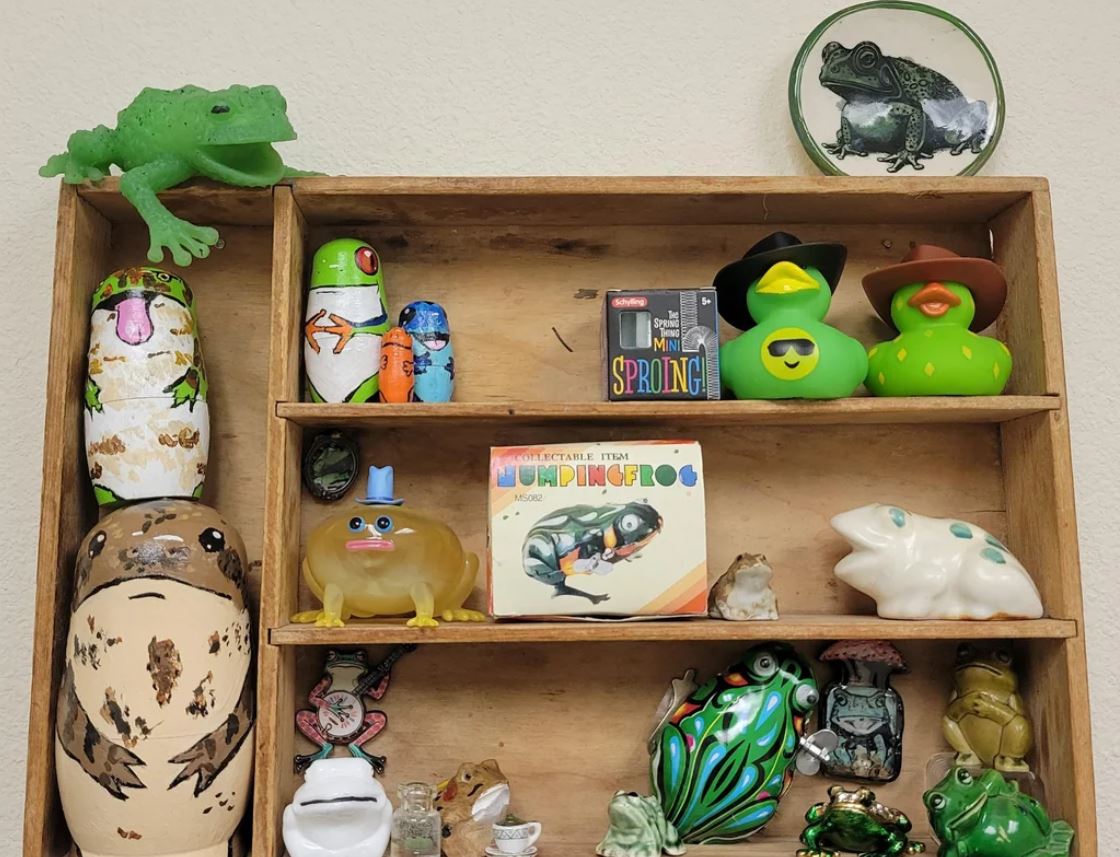
If the first two posts were about what frog collecting can look like—figurines across cultural styles, and frog-themed ephemera and art—this one is about making it real: how to start, how to focus, and how to build a collection you’ll actually love living with.
Because frog collecting has a unique superpower: it can be as serious or as playful as you want. You can curate a shelf of elegant ceramics and metalwork, build a wall of illustrated frog postcards, or go full “happy maximalist” with frogs in every room. The key is to collect with a plan—so your frogs feel like a collection, not clutter.
Below is a practical, collector-friendly roadmap to help you leap in with confidence.
Step 1: Decide what “frog collecting” means to you
Start by choosing your lane. Frog collectibles are broad, and the fastest way to build something cohesive is to define your personal scope.
Here are a few popular approaches:
Object type
- Figurines (ceramic, porcelain, metal, resin)
- Ephemera (postcards, trade cards, labels, calendars)
- Art (prints, illustration, folk art, decorative wall pieces)
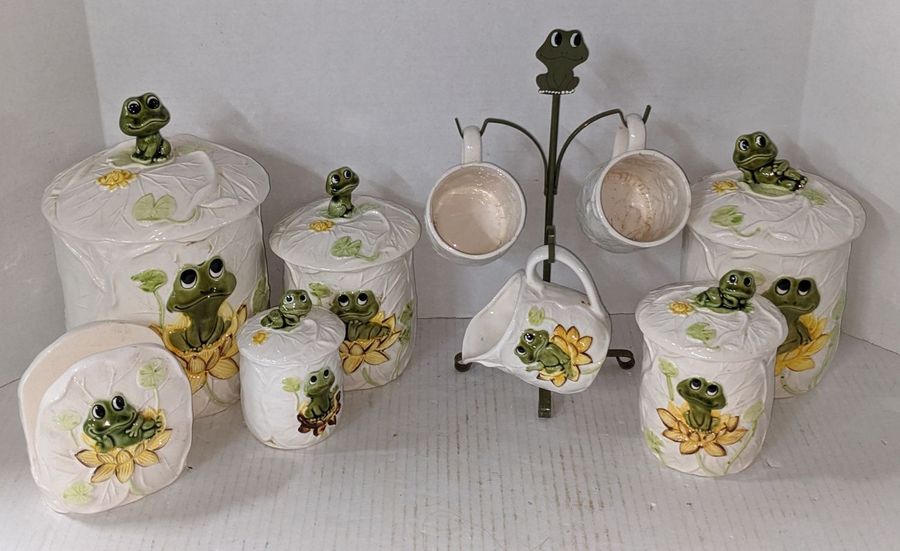
- Kitchen and tabletop (trivets, salt and pepper sets, mugs, tea items)
- Home décor (planters, wall plaques, shelf sitters)
- Jewelry and smalls (brooches, pins, charms)
Style
- Realistic/nature-study frogs
- Whimsical “cute” frogs
- Anthropomorphic frogs (frogs doing human things)
- Garden/pond scenes (lily pads, mushrooms, cattails)
- Graphic/illustrated frogs (poster-style art)
Display goal
- A single shelf vignette (tight and curated)
- A full “frog wall” (paper + prints + small hangings)
- A seasonal rotation (spring/summer focus)
- A color palette (greens only, neutrals, bright kitsch)
If you’re unsure, pick one primary lane and one “bonus lane.” For example: “ceramic figurines” as the core, with “frog postcards” as the bonus.
Step 2: Learn the frog categories that show up most often
Even if your focus is narrow, it helps to recognize what you’ll see in the wild. Frog items tend to cluster into repeat categories, which makes hunting easier once you know the patterns.
Figurines and small sculpture
The backbone of most frog collections. These range from refined to silly, tiny to statement-sized. They’re also the easiest to display in groups.
Paper and printed frog imagery
Frog postcards, greeting cards, advertising pieces, and small prints can be inexpensive and visually bold—perfect for framing, albums, or a rotating display.
Kitchen and tabletop frogs
These are the “everyday charm” pieces: items that live out on counters or shelves. They can be both collectible and functional, but condition matters more if you plan to use them.
Garden-style frogs
Often designed for indoor décor (and sometimes outdoor décor). This lane can get big quickly, so it benefits from a style rule: realistic, whimsical, or folk-art.
Step 3: Build a simple collector’s checklist
A consistent checklist saves money and prevents regret buys. Use these quick checkpoints when you’re holding a frog piece in your hands.
Condition (the basics)
- Chips, cracks, and hairlines (especially ceramics)
- Repairs (glue lines around legs, toes, mouths)
- Paint loss and scuffs (common on resin and composite)
- Wobble (feet not level, bent bases)
- Missing parts (tiny accessories, attachments, hangers)
Design quality (the “across-the-room test”)
Ask one question: Does it still look great from six feet away?
If it only looks good up close, it may not earn shelf space long-term.
Authenticity (without overcomplicating it)
You don’t need to be a forensic expert. Just look for:
- wear that makes sense for the material
- a base finish that matches the overall quality
- details that are crisp (not muddy or overly soft)
- big claims that feel unsupported (“rare,” “ancient,” “museum quality”)
If a piece is being sold on hype, slow down. If it’s being sold on charm and quality, you can usually shop with confidence.
Step 4: Choose a “collection rule” that keeps it curated
Most great collections have at least one rule. It doesn’t have to be strict—just consistent enough to guide your yes/no decisions.
Try one of these:
- Only frogs with visible texture (spotted, warty, carved detail)
- Only frogs with a specific pose (leaping, sitting, hugging knees)
- Only frogs that include water imagery (lily pads, reeds, pond scenes)
- Only one material (all ceramic, or all metal)
- Only one color family (greens and earth tones, or monochrome neutrals)
- Only paper frogs with illustration (no modern photo postcards)
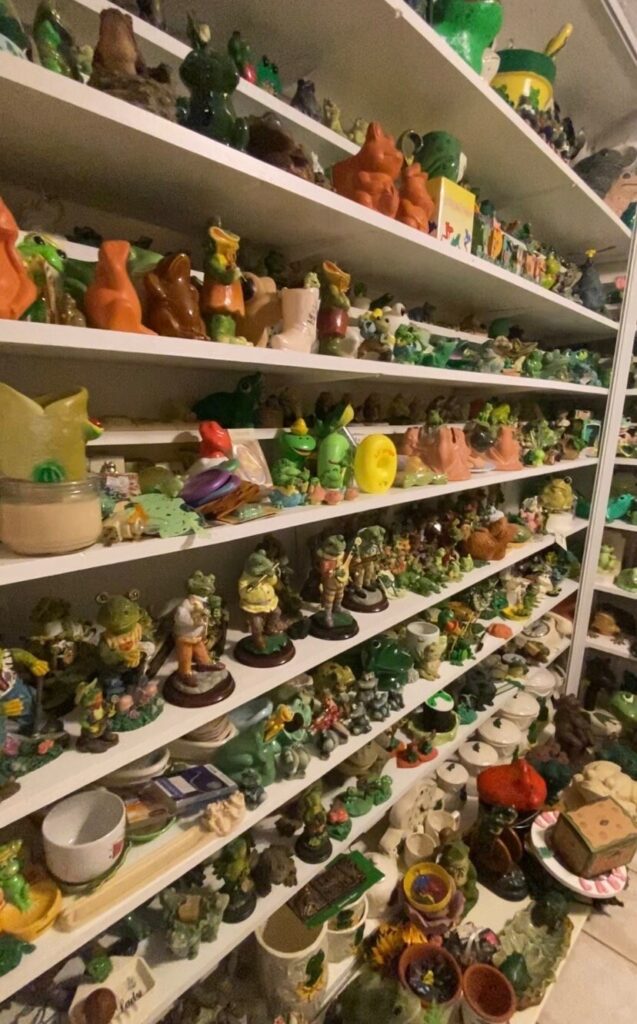
A rule makes your display look intentional—and it prevents the “every frog I see” spiral.
Step 5: Display like a collector, not a storage unit
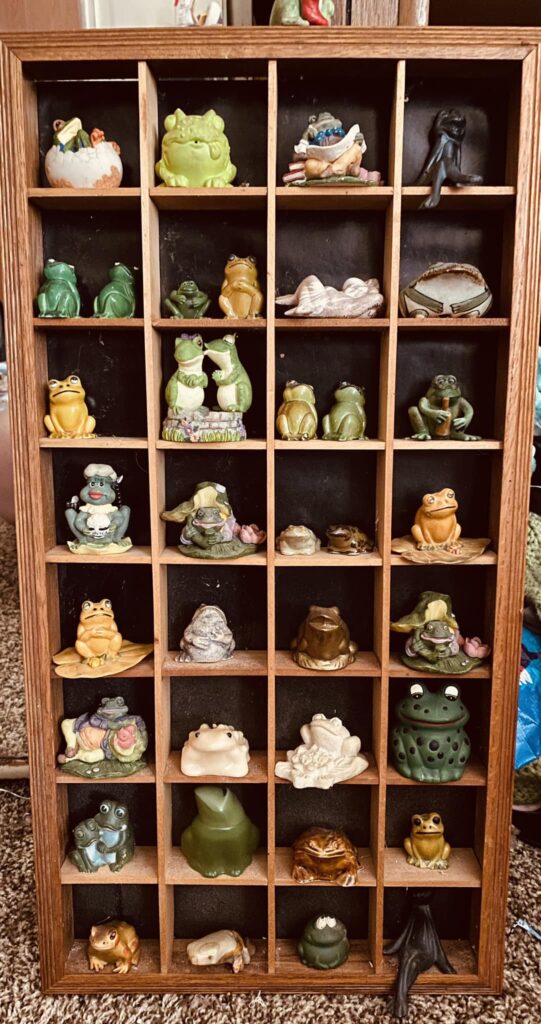
Frog collections shine when they’re styled. You want visual rhythm: height variation, spacing, and a few focal points.
Easy shelf styling formula
- 1 statement frog (tall or bold)
- 2–3 mid-size frogs (different poses)
- 3–6 small frogs (the “chorus” that makes it feel like a collection)
- 1–2 supporting props (small book stack, botanical element, neutral dish)
Paper display that doesn’t overwhelm
- Frame a set of four postcards in one frame
- Use a single “rotation frame” and swap monthly
- Make a small gallery wall: one print + two postcards + one small ad
Keep your frogs safe
Small figurines are fragile because legs and toes are often the first casualties. Consider:
- museum putty for top-heavy pieces
- display away from shelf edges
- fewer, stronger groupings rather than crowded lines
Step 6: Care and storage that protects value (and prevents heartbreak)
Care is mostly about avoiding three enemies: impact, moisture, and sun.
Ceramics and porcelain
- Dust gently; avoid snagging delicate legs and toes
- Don’t store pieces touching each other—use soft wrap between items
- If a piece has hairlines, treat it as display-only
Metal frogs
- Dry dusting is usually enough
- Avoid aggressive polishing that strips character
- Store in stable humidity to prevent reactive tarnish or corrosion
Resin and painted composite frogs
- Avoid direct sunlight (fading happens)
- Don’t scrub painted details
- Keep away from heat sources that can soften or warp surfaces
Ephemera and paper
- Use archival sleeves or albums
- Keep out of direct sunlight
- Avoid taping paper to walls; frame or sleeve it instead
A practical approach is to maintain a “display group” and a “stored group,” then rotate your frogs seasonally.
Step 7: Where to find the best frog pieces
Frog collectibles show up everywhere, but the best finds often come from places where frogs are mixed into broader lots.
Try:
- estate sales (especially kitchen and décor lots)
- antique malls (look beyond “collectible” booths—check general décor)
- thrift stores (seasonal décor and giftware sections can be gold)
- postcard and ephemera shows (for paper frogs)
- mixed online lots (good for starting, then refine with targeted buys)
A helpful tactic: search and shop by category, not just “frog.” Many frog pieces aren’t listed with perfect keywords.
Step 8: Budgeting and buying smarter as your collection grows
Early collecting is about discovery. Later collecting is about refinement.
A few strategies collectors use:
- Set a “catch and release” rule: if it doesn’t fit your collection rule, admire it and move on
- Pay more for your statement pieces, less for fillers
- Upgrade intentionally: replace three “okay” frogs with one great frog
- Keep a want list with 5–10 priority items (it keeps you focused)
A curated frog collection isn’t about volume—it’s about pieces that earn their spot.
Step 9: Make your collection meaningful (and fun to share)
Frog collecting can be a conversation starter because it’s approachable. People will ask about your frogs. Give them a story to remember.
Ideas:
- Build a “travel frogs” section: frogs you bought on trips or that remind you of places
- Create a “frog timeline” shelf: older-looking classics on one end, modern whimsical pieces on the other
- Choose a micro-theme like “frogs in hats” or “frogs with instruments”
- Keep a simple catalog: a photo of each piece + where you found it
You don’t need a museum label—just enough to keep the story alive.
Your leap-in plan (a quick 30-day challenge)
If you want an easy, structured start:
- Pick your primary lane (figurines, ephemera, art, kitchen frogs).
- Choose one collection rule.
- Find 5 frogs that fit the rule.
- Display them intentionally.
- Then only buy pieces that either:
- improve the display, or
- deepen the theme.
That’s how collections stay joyful—and how they stay curated.
Frog collecting is one of the best kinds of collecting because it rewards personality. It can be elegant, funny, nostalgic, artistic, or all of the above. If you collect with a simple focus and style with intention, your frogs won’t just fill space—they’ll make your home feel like you.
Let’s Make History—one joyful leap at a time.