
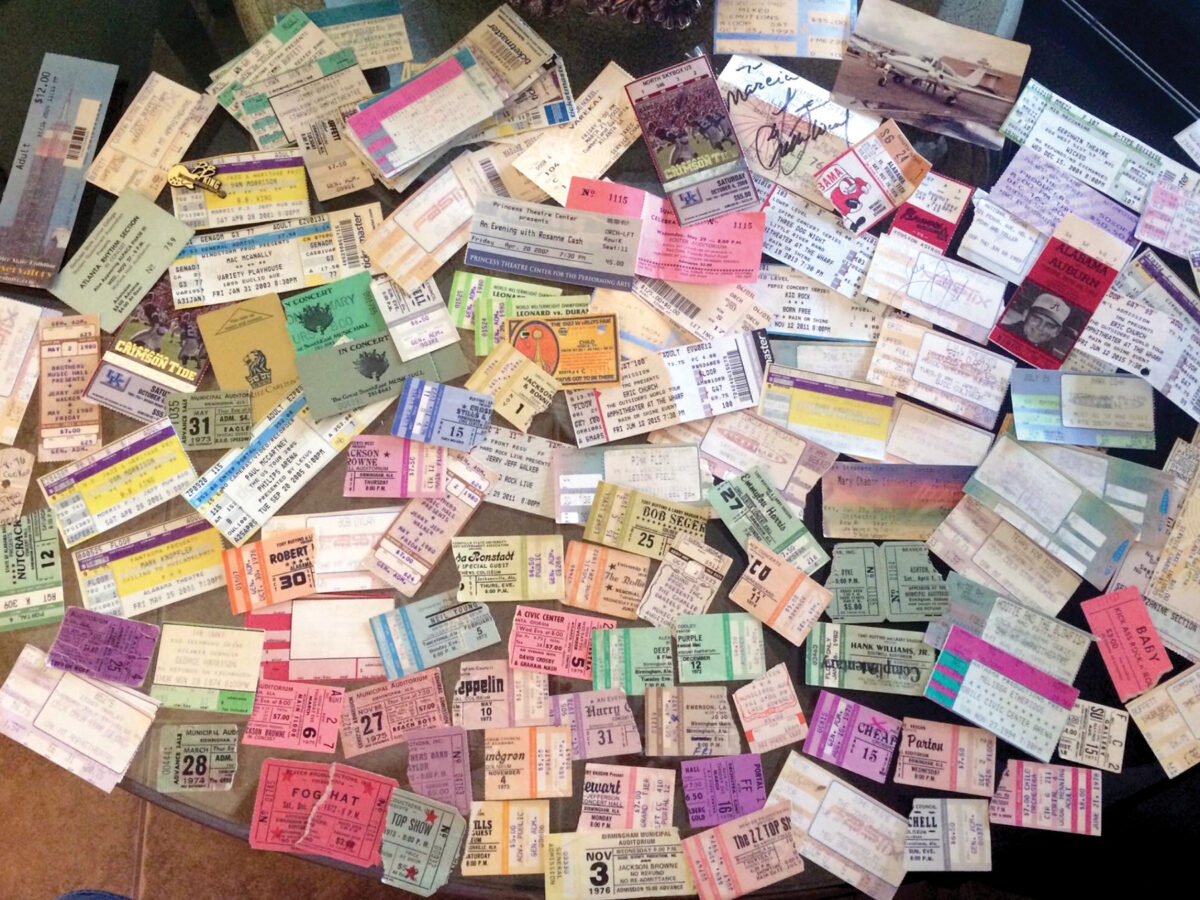
If records are the soundtrack of country music collecting, then tickets, posters, and tour merch are the “proof of life.” They’re the pieces that say: this happened, in this place, on this night. They carry dates, venues, route maps, and the visual identity of an era—sometimes more clearly than any biography ever could.
For fans of Johnny Cash, the Cash family, and The Highwaymen, as I am but is also applicable to other fans, this category is especially satisfying. It’s where the story becomes physical: the shows, the touring years, the band identity, the way a legend was presented to the public. And unlike studio albums, these pieces often feel wonderfully unpolished—made quickly, handled often, and saved because they meant something.
This post breaks down what to collect, what to look for, how to spot the difference between authentic and “vintage-style,” and how to build a coherent collection that doesn’t turn into a random pile of paper and shirts.
Why Tickets, Posters, and Merch Hit Different
There’s a reason people keep ticket stubs in drawers for decades. A ticket isn’t just admission—it’s a tiny time capsule: the venue name, the city, the date, and often the seat location. Posters and handbills are the same, just louder: they announce the event, set the tone, and show how the show was marketed.
Tour merch adds the “human” layer. Shirts get worn. Programs get flipped through. Buttons get pinned. Bandanas get tied on. These aren’t just collectibles—they’re objects that lived with fans, and that makes them emotionally sticky.
Collectors tend to love this lane for three reasons:
- Specificity: Dates and venues make the history feel real.
- Design: Typography, colors, and printing styles reflect the era.
- Story-building: You can assemble a timeline that’s personal and visual.
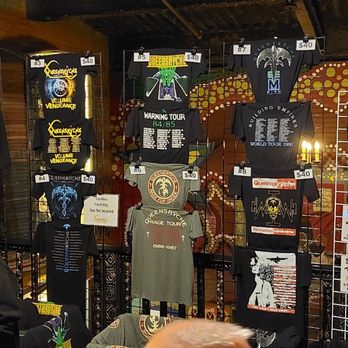
Tickets: Tiny Documents With Big Story Value
Ticket stubs vs. full tickets
Older tickets were often torn at the door, leaving the attendee with a stub. Sometimes you’ll find full, untorn tickets (unused or saved). Both are collectible, but they speak differently:
- Stubs feel intimate: “I was there.”
- Full tickets feel archival: “This is what admission looked like.”
Neither is automatically “better.” Collect what supports your story.
What collectors look for in tickets
When you’re evaluating country concert tickets—whether it’s a small venue show, a theater date, or a big arena stop—check for:
- Clear event details: artist name, venue, city, date (or at least enough info to confirm it)
- Legibility: fading is common, but the core info should still read
- Paper health: brittle edges, heavy creasing, water staining, and tape residue can matter
- Context clues: barcodes, older printing styles, promoter marks, venue branding
Collector tip: If you’re building a Cash-forward or Highwaymen-focused collection, tickets can become your “timeline spine.” You can arrange stubs by year, by tour era, or by venue type (theater vs. arena vs. festival).
Posters, Handbills, and “The Art of the Show”
Concert posters come in a few common flavors, and understanding the differences will help you collect smarter.
Posters vs. handbills vs. flyers
- Posters were meant to be seen from a distance—hung in store windows, venue walls, or on community boards.
- Handbills/flyers were made to be handed out—smaller, simpler, often less durable.
- Venue signage (sometimes thicker stock or mounted) can sit in its own category.
Country music print promo can be especially fun because it often blends practicality with personality: bold type, familiar imagery, and just enough design to catch the eye without overwhelming the information.
The printing “feel” matters
You don’t need to be a print expert, but you can train your hands and eyes to notice:
- Paper stock: thin and flexible (flyer) vs. heavier (poster)
- Ink and texture: some prints feel flat and smooth; others have a tactile ink layer
- Aging patterns: natural wear at corners, pinholes, edge wear, gentle fading
Collector tip: A poster doesn’t have to be pristine to be collectible. In fact, honest wear can add charm—as long as it’s stable and not actively tearing or flaking.
Tour Merch: Wearable History (and One of the Trickiest Lanes)
Tour merch is where country memorabilia gets personal fast. A shirt from a tour stop, a program from a special run, a patch from a fan table—these pieces can carry strong emotional value because they’re tied to experience and identity.
Common types of country tour merch
Depending on the era, you’ll see:
- T-shirts and sweatshirts
- Hats and bandanas
- Buttons/pins and patches
- Programs and souvenir booklets
- Tour books and glossy souvenir magazines
- Backstage passes and laminates (a higher-proof category where authenticity matters more)
For Cash and Highwaymen fans, this lane can be especially rich because the look and branding often changes by era—what was promoted, how it was styled, and what fans were invited to take home.
What collectors look for in tour shirts and textiles
With clothing, “authentic” doesn’t always mean “old.” It means the piece behaves like something that came from a real merch context. Check:
- Construction and wear: does the aging feel natural (underarms, collar, hem), or does it look artificially distressed?
- Print characteristics: cracking and fading can be normal; overly fresh printing on a “vintage” claim should prompt questions
- Consistency: does the design match the artist/era vibe, or does it feel like modern tribute art?
- Identifiers: tags, manufacturing details, and any printed licensing/copyright text can be helpful clues (not always present, but worth checking)
Collector tip: Tour merch is a lane where “cool story” claims are common. Buy the piece for what it is (a great shirt, a great design, a solid era match), not for what someone says it was—unless documentation backs it up.
Authenticity: How to Avoid Repros, Bootlegs, and “Vintage-Style”
This category attracts reproductions because it’s popular in décor and fashion. Some reproductions are clearly labeled. Some aren’t. Here’s a practical way to protect yourself without turning collecting into a forensic hobby.
Tickets and paper red flags
- Paper that looks too new for the claim (too bright, too uniform)
- Artificial “aging” that’s evenly applied (rather than natural corner wear)
- Ink that looks like modern digital printing when the item claims to be older
- Details that don’t line up (venue name wrong, date formatting inconsistent, mismatched city/venue pairing)
Red flags for posters
- “Reprint” not disclosed
- Very sharp modern color with no sign of handling in a piece that supposedly lived on a wall
- Cropping or resizing that suggests it was pulled from a digital image
- Paper that feels like modern poster stock when the piece claims to be older ephemera
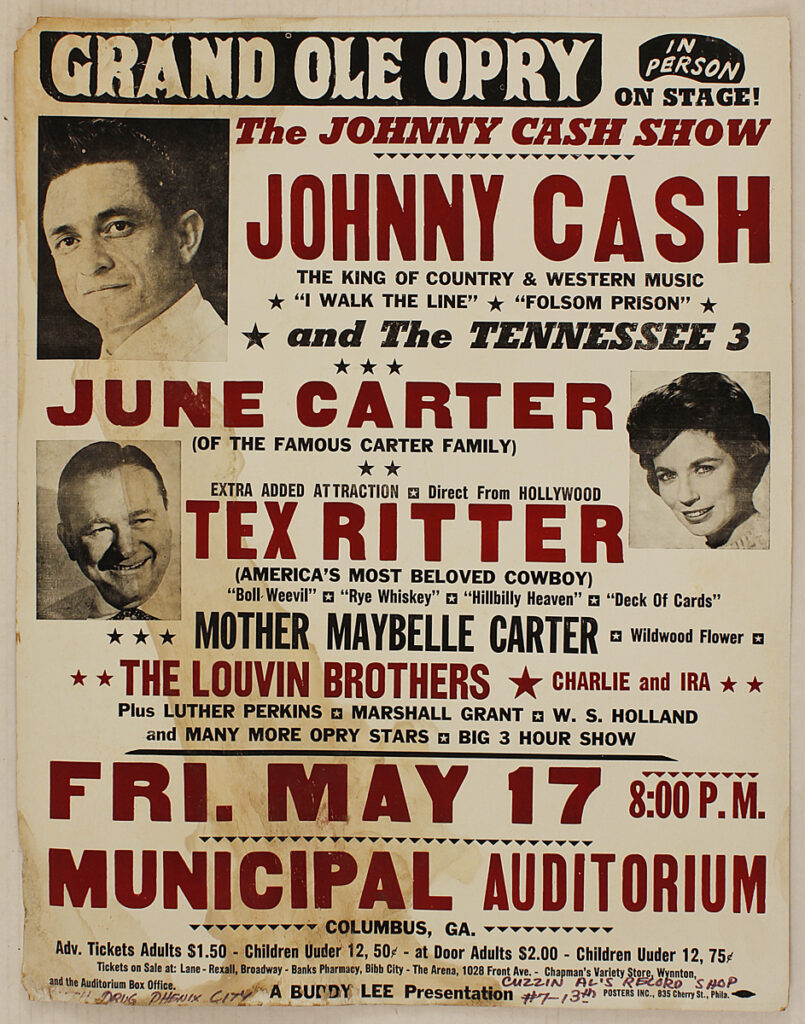
Red flags for merch
- Claims of “tour original” without any era-appropriate signs of wear or manufacturing
- Graphics that feel like modern fan art but are marketed as vintage
- Overly aggressive distressing meant to simulate age
If you’re unsure, shift your buying mindset: Would I still want this if it’s simply a cool tribute piece? If the answer is yes, you can still enjoy it—just price it accordingly.
Building a Coherent Collection: The “One Night Set” Method
If you want your collection to look intentional (and keep it from spiraling), try building around complete mini-sets instead of single random items.
A “One Night Set” can be:
- Ticket + poster/flyer + merch item
- Ticket + program + photo/press clipping
- Poster + merch + one paper item with date/venue context
This approach is perfect for Cash-family and Highwaymen collecting because it turns broad fandom into structured storytelling. You’re not just collecting “things.” You’re collecting chapters.
Four collector lanes that work especially well here
- Era lane: build sets by decade or career phase
- Venue lane: theaters, fairgrounds, arenas, Opry-adjacent nights, festival appearances
- Design lane: typography-heavy posters, photo-forward posters, minimalist vs. bold merch graphics
- Supergroup lane: keep a dedicated Highwaymen section that reads as one complete story
Display Ideas That Don’t Ruin Your Collection
These items beg to be displayed, but light and friction are the enemies.
Tickets and paper
- Use archival sleeves and store flat when possible
- Consider a binder system with protective pages for stubs and small flyers
- For display, use frames that keep paper from touching glass and avoid direct sunlight
Posters
- Store flat when you can; if rolled, use an archival tube
- Avoid repeated rolling/unrolling (creases and edge wear add up)
- Display with UV-conscious framing choices and rotate displays seasonally if you can
Tour shirts and textiles
- Fold with acid-free tissue to reduce crease stress
- Avoid hanging heavy shirts on weak hangers for long periods
- For display, consider shadowbox-style framing or a rotation system so fabric isn’t always under tension
Collector tip: It’s fine to display, but think in rotations. Let your collection breathe.
Care and Storage: Simple Habits That Preserve Value
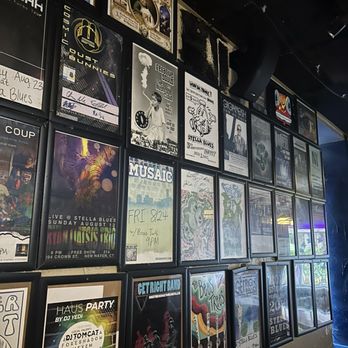
A few habits do most of the work:
- Keep paper dry, flat, and out of sun
- Keep posters protected from repeated handling
- Keep textiles cleanly stored and away from moisture
- Avoid tape, glue, and “quick fixes” on paper (they usually age badly)
- Photograph and catalog high-sentiment pieces (date, venue, where you got it) so the story stays attached
The goal isn’t museum-level perfection. It’s keeping your items stable enough to enjoy for years.
A Gentle Collector’s Checklist
Before you buy tickets, posters, or merch, ask:
- Does it clearly fit my lane (Cash era, Cash family, Highwaymen, venue type, design style)?
- Is it stable enough to store safely?
- Does the wear make sense, or does it look artificially aged?
- If the seller claims a big story, is there proof—or just a pitch?
- Can I pair it with something I already own to make a complete “set”?
Tickets anchor the timeline. Posters set the atmosphere. Merch adds the human layer. Put them together and you get a collection that feels like lived history—because it is.
Let’s Make History—one ticket stub at a time.