
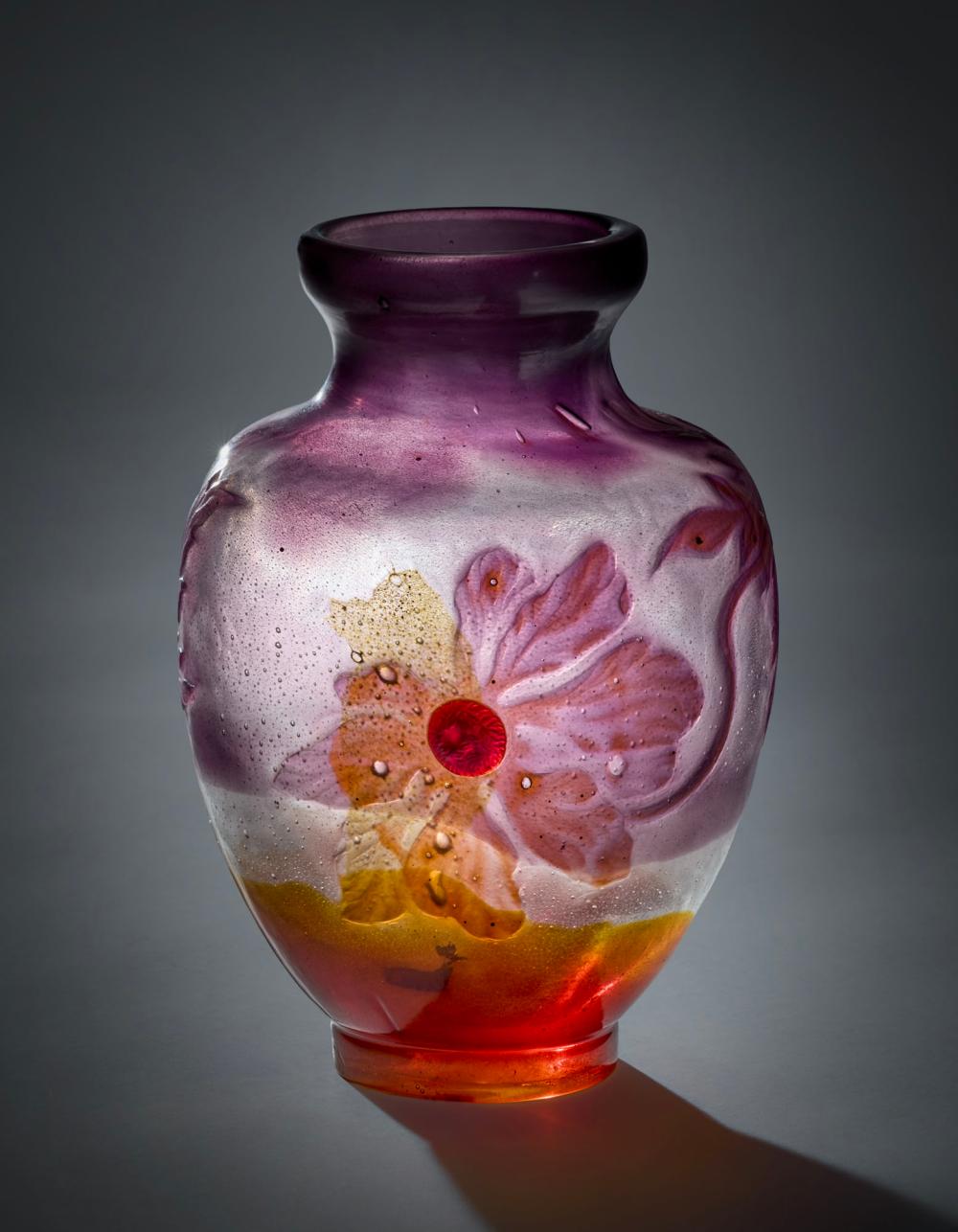
If you’ve ever picked up an Art Nouveau vase and it felt like the design was inside the glass—not painted on top—you’ve brushed up against the magic of cameo. Cameo glass is one of those techniques that makes collectors lean in closer. From across a room it can read as bold silhouette and color. Up close, it turns into relief carving, soft shading, and tiny textural choices that prove a maker knew exactly what they were doing.
In the Gallé world (and the wider Art Nouveau world), cameo glass is where nature motifs truly come alive: petals that rise from the surface, stems that disappear into a darker underlayer, dragonfly wings that look etched from mist. This post is your practical guide to cameo glass—what it is, how it’s made, why it’s collectible, and what to look for when you’re buying.
What Is Cameo Glass?
Cameo glass is layered glass where a design is created by removing part of an upper layer to reveal a contrasting layer beneath. Think of it like a sculptural version of a two-tone (or multi-tone) sandwich: the imagery is formed by cutting, carving, or etching down through the top color so the lower color becomes the background—or vice versa.
What makes cameo so appealing is that it can produce:
- Real relief (raised design you can feel)
- Crisp silhouettes and dramatic contrast
- Shading and depth, especially when the maker varies how far they cut into layers
- A look that changes with light—matte vs glossy surfaces, translucent vs opaque layers
Cameo pieces can be two-layer, three-layer, or even more complex, depending on the maker and period.
A Brief History Collectors Should Know
Cameo-style decoration in glass has ancient roots, but most collectors encounter cameo as part of the 19th-century revival and the Art Nouveau boom.
Key points (without getting lost in the weeds):
- Cameo glass existed in the ancient world, and later makers looked back to that idea as a technical challenge worth reviving.
- In the mid-to-late 1800s, cameo glass gained renewed popularity, especially as luxury glassmakers explored new decorative effects.
- By the Art Nouveau era, cameo became a perfect match for nature-driven design—plants, insects, and landscapes rendered in layered color and relief.
That’s why cameo shows up so often in conversations about Gallé and the Nancy School: the technique is tailor-made for botanical storytelling.
How Cameo Glass Is Made (The Collector-Friendly Version)
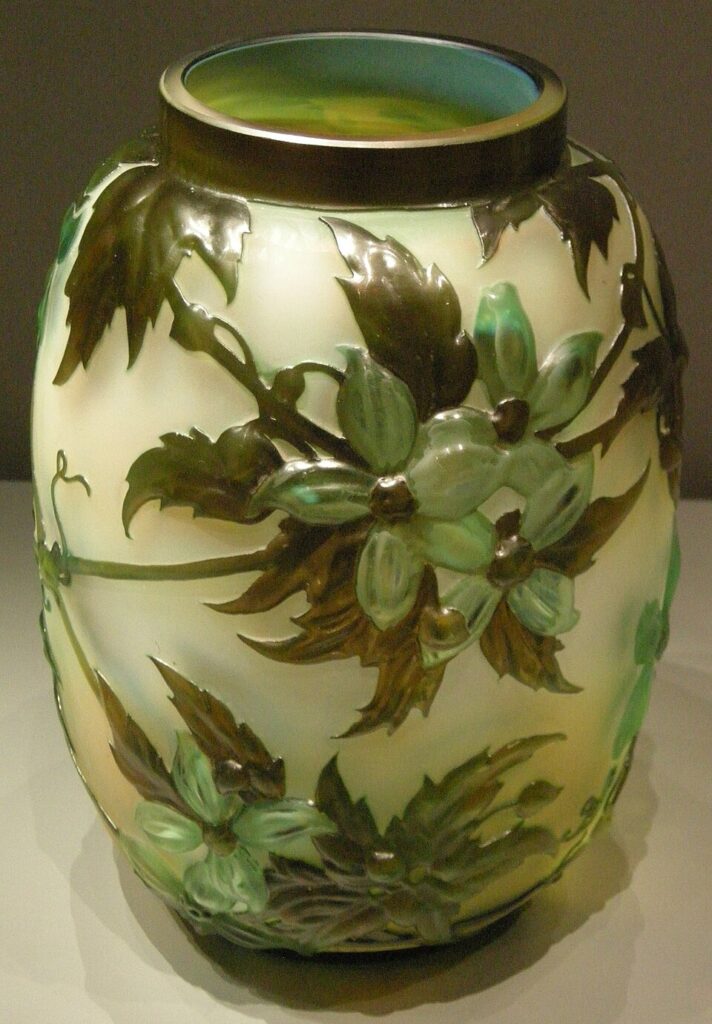
There are different ways cameo decoration can be achieved, but the basic workflow looks like this:
1) Build the layers
A cameo blank starts as cased or overlaid glass—one color layered over another. The thickness and clarity of these layers matter, because they determine how much “sculpture” the artist can pull out of the surface.
2) Protect the design areas
To remove the background while preserving the motif, makers traditionally used a resist (a protective coating) to shield the parts meant to remain raised.
3) Remove the unwanted glass
Historically, this often involved controlled chemical etching to lower the background, followed by handwork. The detailed shaping—crisp edges, veins in leaves, petal contours—typically comes from carving and engraving with wheels, drills, or similar tools.
4) Refine the surface
A high-quality cameo surface usually shows intentional finishing:
- Smooth transitions where needed
- Matte areas that enhance contrast
- Polished highlights that catch light
- Fine texture that supports the scene rather than distracting from it
Collector takeaway: cameo is rarely “one-step.” The pieces that feel alive usually show layers of decision-making—both literally and artistically.
Why Cameo Glass Feels So Special
Cameo isn’t just decoration. It’s an illusion of depth and atmosphere built into the object.
It rewards close looking
Collectors love cameo because the longer you look, the more you see: undercutting around leaves, shading in petals, a horizon line in a landscape, the way negative space shapes the scene.
It’s design plus craftsmanship
A strong cameo piece needs both:
- A form that suits the subject (the vase shape supports the scene)
- Technical confidence in carving and contrast (the design reads cleanly)
It’s a signature Art Nouveau effect
Art Nouveau is famous for organic lines, but cameo makes those lines physically dimensional. Nature doesn’t just appear on the glass—it rises from it.
Cameo Motifs Collectors See Again and Again
Cameo lends itself especially well to imagery with recognizable silhouettes and flowing structure. Popular motifs include:
- Botanicals: orchids, thistles, water lilies, grasses, vines
- Insects and small creatures: dragonflies, butterflies, beetles
- Landscapes: trees, twilight scenes, misty horizons
- Seasonal moods: autumnal browns, winter branches, spring greens
If you’re building a cameo-focused collection, motifs are an easy way to “theme” your hunt—dragonfly pieces, water plants, forest scenes, or a single flower type.
What to Look For When Buying Cameo Glass
This is where collecting gets fun—and where a few practical habits make a big difference.
Relief and edge quality
High-quality cameo often shows:
- Clean, confident edges around motifs
- Controlled depth (not randomly deep or shallow)
- Petals/leaves that feel intentionally shaped, not just outlined
Contrast that makes sense
Good cameo contrast tends to be purposeful:
- Background and motif separation is clear
- Shading supports form (veins, curvature, distance)
- Colors feel harmonious rather than harsh
Surface finish and texture
Look for thoughtful finishing:
- Matte background with polished raised areas (or the reverse)
- Texture that enhances the subject (like mist, bark, or leaf surface)
Weight and balance
Many cameo pieces have a satisfying “hand feel.” Very light pieces with crude decoration can be a caution sign, depending on the style and era.
Signatures and Marks: Helpful, Not Everything
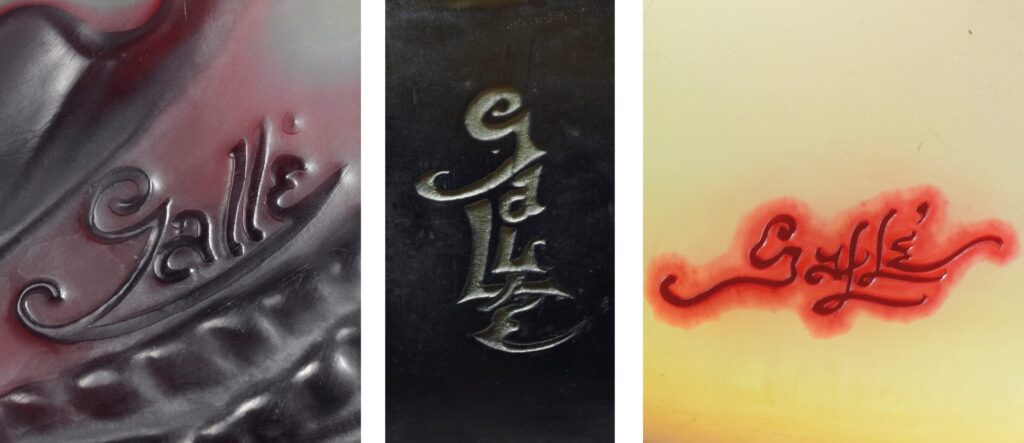
Cameo collectors often hunt for signed pieces, especially when buying within the Gallé orbit. But the safest approach is to treat the signature as supporting evidence, not the whole case.
Best practice:
- Evaluate form + decoration + technique + wear first
- Then see if the signature and placement make sense with everything else
A signature that looks freshly added, oddly placed, or inconsistent with the rest of the surface should slow you down. The strongest pieces feel cohesive—design, technique, and marking all speaking the same visual language.
Reproductions, “In the Style of,” and Common Red Flags
Cameo is widely admired, which means the market includes many later pieces inspired by the look—some honest, some not.
A few collector-friendly red flags:
- Flat, sandblasted-looking decoration with little nuance or shaping
- Muddy outlines where leaves and petals lose their definition
- Uniformly “new” surfaces with no believable handling wear, but heavy “aging” in one area
- Signatures that look superficial rather than integrated into the overall finish
- Decoration that fights the form (a busy scene crammed onto an awkward shape)
If you’re buying a higher-dollar piece, compare with multiple verified examples and don’t be shy about seeking a specialist opinion.
Condition Checklist: What Matters Most
Cameo glass is both sturdy and vulnerable—sturdy because it’s glass, vulnerable because rims and high points take hits.
Check these areas first
- Rim: tiny chips are common; they matter for value and display
- High points in relief: look for nicks on raised petals/leaves
- Base wear: should look consistent with age (not oddly pristine)
- Cracks/repairs: use a bright light and check for lines, glue sheen, or filled chips
Lamps and mounted pieces
If you’re shopping cameo lamps or pieces with mounts:
- Check for stress around openings or fitted areas
- Evaluate wiring and assembly quality (safety matters)
- Make sure components look compatible—not forced together
Care and Display Tips for Cameo Collectors
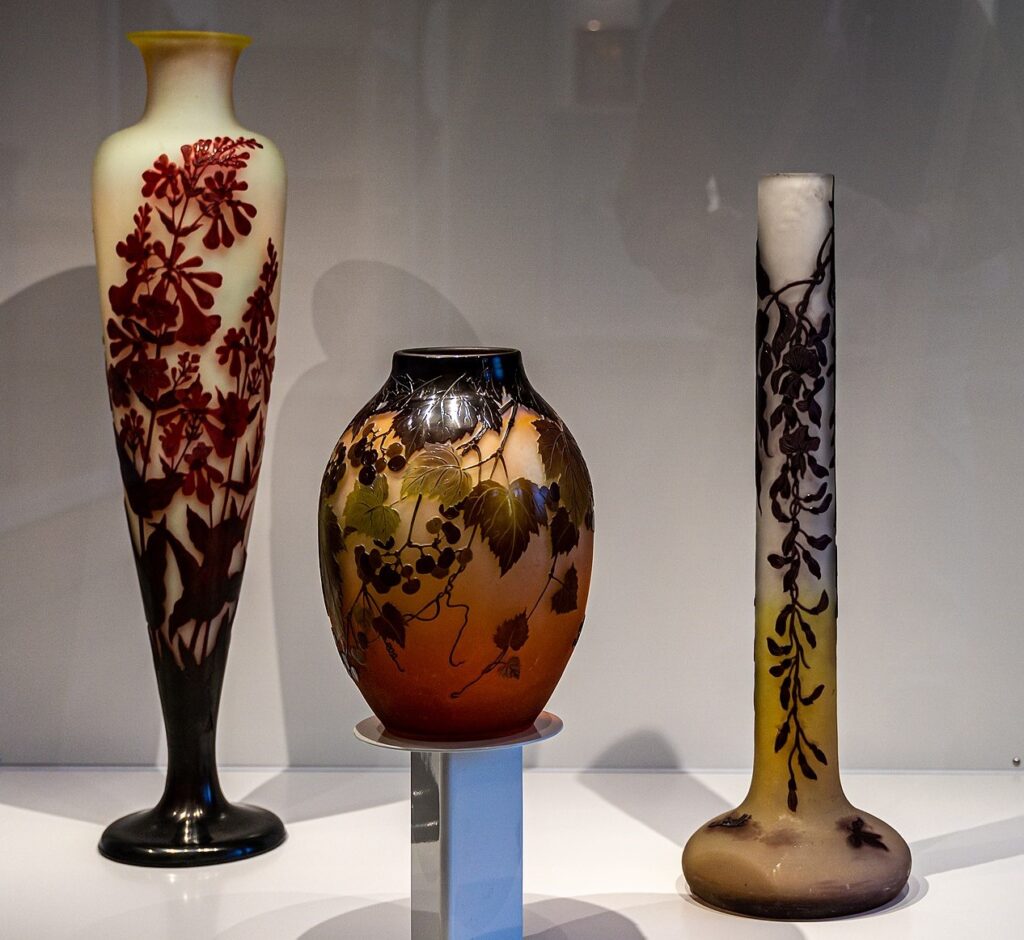
Cameo looks best in good light, but it also benefits from thoughtful placement.
Display
- Use stable surfaces away from edges and high-traffic zones
- Consider a small stand so light hits the relief at an angle
- Avoid prolonged direct sunlight on richly colored pieces
Cleaning
- Hand wash gently when needed; avoid abrasives
- Skip harsh chemicals
- Dry thoroughly, especially around textured areas where moisture can linger
Storage
- Store upright, not stacked
- Protect rims and relief with soft padding
- Keep pieces from touching each other—relief can chip if it knocks against glass
The Collector’s Takeaway
Cameo glass is one of the most satisfying things to collect because it combines visual drama with real handwork. It’s not just “pretty glass.” It’s layered construction, careful removal, and sculpted design—often built around nature motifs that feel timeless.
If you’re following this Gallé series, cameo is the perfect second step: once you understand how layered decoration works, you start seeing quality—and shortcuts—immediately. And that makes every future hunt more rewarding.
Let’s Make History—one carved layer at a time.