
Feeding an infant might seem one of life’s simplest tasks—but the historical journey from shallow bowls to sanitized glass bottles is surprisingly inventive—and sometimes dangerous. The story of nursing bottles is not just about glass and porcelain. It’s about the evolution of science, motherhood, societal change, and care.
Early Efforts: Pap Boats and Spoons
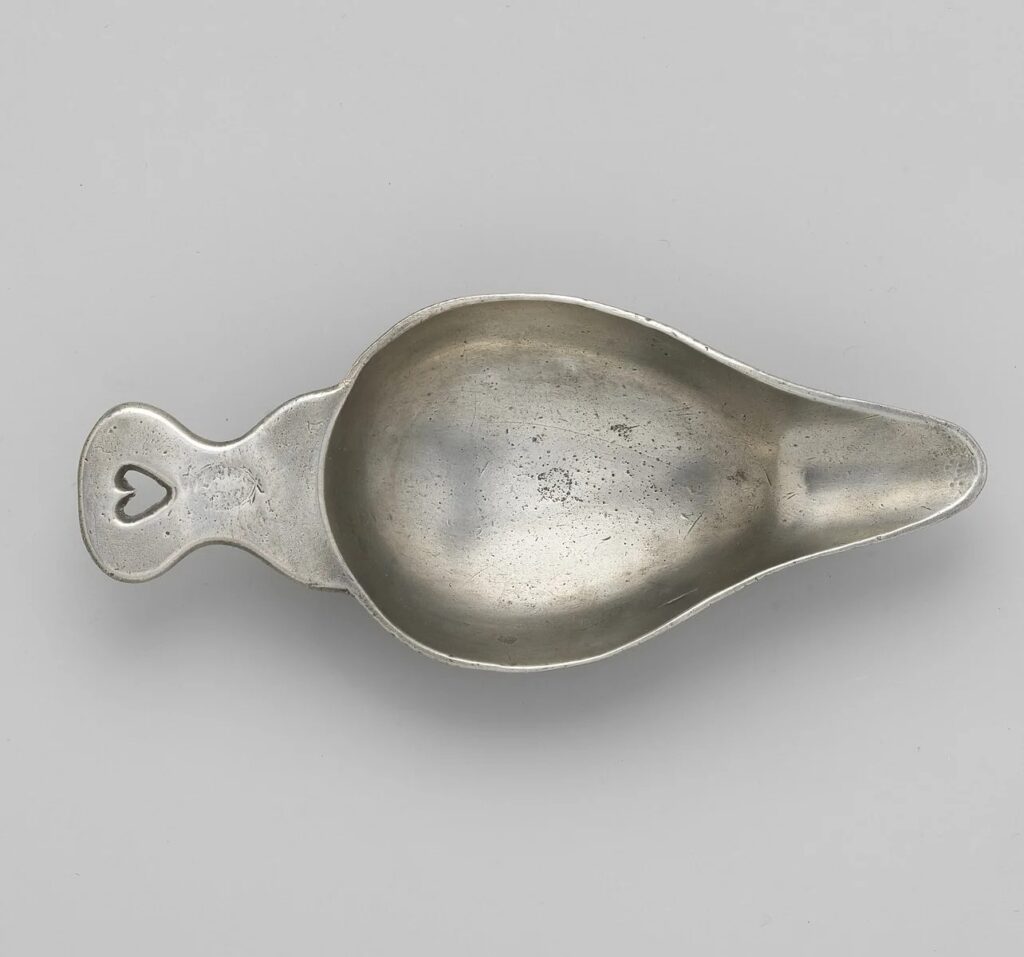
Long before commercial baby bottles, caregivers used shallow vessels called pap boats and feeding spoons to nourish infants with foods like bread, milk, water, and sometimes ale or broth. In the 17th and 18th centuries, caregivers served pap (a porridge-like mixture) in vessels resembling gravy boats, made of pewter, silver, porcelain or clay.
Pap boats often featured a pouring lip and no handle; some were shaped like animals, such as ducks, to entice use. Though the vessels were clever, the feeding technique was risky: mixtures lacked sufficient nutrients, water was often unboiled, utensils unsterilized, and lead-based pewter posed its own hazards.
Feeding cups and spoons emerged too—one type known as the “pap spoon” featured a hollow handle or hole so solids might be blown into the infant’s mouth. The simple act of feeding revealed complex challenges of hygiene, nutrition, and societal change.
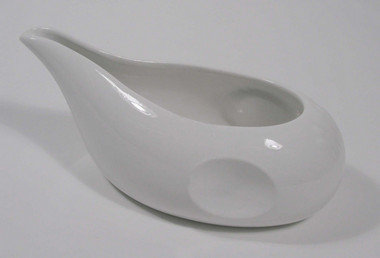
Anecdote: One Victorian-era pap boat in a museum collection is described as looking like a white porcelain gravy boat, with indentations for thumbs and a duck-bill spout. The container came from a late-19th century production, showing how even “luxury” items for infant feeding retained the legacy of these early vessels.
These early vessels tell us much: when a mother was unable (or unwilling) to breast-feed, or when a wet nurse was unavailable, the family turned to these devices. And when infants didn’t thrive, pap boats often became the alternative—though sadly often inadequate.
The Birth of the Bottle
By the late 18th and early 19th centuries, more recognizable “feeding bottles” began to appear. Glass, pottery, and animal horn feeders were used—horns fitted with cloth or leather teats, glass bottles blown in various shapes, and metal “sucking-pots.”
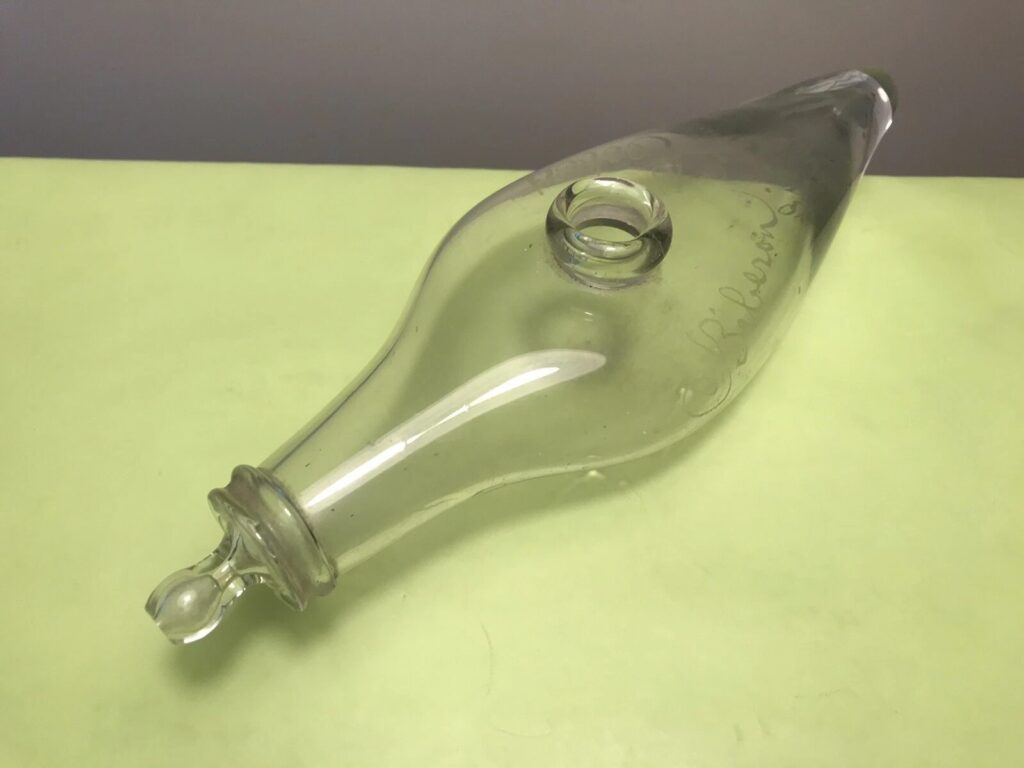
One landmark was the first U.S. glass nursing bottle patent awarded in 1841 to C. M. Windship—the bottle intentionally shaped like a human breast. Meanwhile, in Europe, the Alexandra Feeder appeared in England in 1845, and a French “Biberon” was listed in 1851.
Yet many early designs were difficult to clean, had narrow necks, or included rubber tubes that trapped milk and bacteria. Some of these designs were later nicknamed “murder bottles” by collectors because of high infant mortality associated with their use.
Anecdote: The so-called “banana” shape glass feeding bottle—introduced in 1894 in England—featured a curved design intended to allow infants to feed semi-upright. It still required frequent cleaning and sterilizing, but marked progress in design.
These innovations reflect shifting attitudes toward infant care. As the 19th century progressed, infant feeding turned from primarily wet nursing (someone else breastfeeding the baby) toward “artificial” feeding methods—a transition tied to social, economic, and technological change.
Scientific Motherhood and Standardization
The late 19th and early 20th centuries brought dramatic change. Key developments included pasteurization of milk, germ theory, improved glass manufacturing, and the standardization of rubber teats and feeding bottles. In 1894, doctors and manufacturers emphasized hygiene in infant feeding with designs like the Hygeia feeder.
Glass became preferred as it was easier to clean and sterilize than porous materials. The shift away from pap and panada (thin porridge feeds) toward milk-based nutrition coincided with efforts to reduce infant mortality in urban foundling homes.
Also evolving were social attitudes. Breastfeeding was increasingly promoted by physicians as offering unique protective benefits, not just nutrients. “Artificial feeding” carried both medical and moral weight.
By the early 20th century, feeding bottles bearing manufacturer marks, standard shapes, and rubber nipples were becoming widespread. Differences in design—wide mouths, detachable teats, standardized shapes—reflected the new era of mass-production and hygiene awareness.
A Reflection of Care
Each feeding vessel tells us about its time: the material, shape, technology, and design illuminate changing ideas of parent-child relationship, domestic routines, and scientific knowledge. The nursing bottle isn’t just a tool—it’s a window into how societies cared for infants.
From pap boats poured by hand to precision-blown glass bottles sterilized with heat, the evolution reveals the interplay of nurture, industry, and culture. Even tragedies—such as the earlier “murder bottles”—serve as reminders of how far infant care has progressed.
Anecdote: A 19th-century glass nursing bottle in a museum collection—marked “Hygeia” and patented in 1894—illustrates how design responded to hygiene concerns. Its shape and detachable parts reflect the push for cleanliness, marking the moment when parenting and science intersected. (see “Historical Review and Recent Advances,” Greenberg)
As caregiver roles changed (with more women working outside the home), and as infant nutrition moved into a medicalized domain, the bottle became part of the broader story of 20th-century domestic life.
Why This History Matters
You might think bottles are mundane—but when we trace their evolution, we see major shifts:
- Health and hygiene: understanding bacteria and sterilization reshaped feeding practices.
- Technology and design: from horn and pewter to glass and rubber, the materials mirror industrial progress.
- Social change: the move from wet-nursing to bottle-feeding reflects broader shifts in women’s roles, urbanization, and family life.
- Cultural meaning: each feeding vessel is an artifact of motherhood, care, technology, and childhood.
For collectors of domestic history, nursing bottles are quietly powerful. They are not high-drama items like Victorian cabinets or royal wardrobes—but they speak of everyday life. They whisper of nurseries, sleepless nights, feeding schedules, and the tender concern of parents past.
Getting Started (for Collectors)
If you’re intrigued by this field: look for early feeding vessels such as pap boats (mid-18th to early-20th century), “sucking pots,” the “banana” type bottles of the 1890s, or glass feeders labeled with manufacturers or patents (Hygeia, Alexandra). Condition and originality matter—but even imperfect pieces carry heavy stories. Clean them gently, display them gently, and remember: you’re preserving a fragment of domestic life.
Final Thought
From shallow ceramic boats poured by hand to sterile glass bottles standardized for modern life, the story of infant feeding is both intimate and transformative. These vessels carry the story of how we’ve cared for our youngest, how technology and science changed the nursery, and how domestic life quietly evolved.
Next time you glance at a vintage feeding bottle, remember: it represents more than domestic furniture. It represents care, invention, love, and the passage of time. Let’s Make History, one baby at a time.