There’s a particular thrill in walking through the streets of New York and spotting a bold Broadway poster pasted onto a brick wall or glowing in a glass case outside a theater. For collectors, that thrill continues at home — framed on the wall, tucked into portfolios, or carefully catalogued like precious art prints. Broadway posters aren’t just advertisements. They’re artifacts of design, culture, and memory.
A Brief History of the Broadway Poster
In the earliest days of Broadway at the turn of the 20th century, theater posters were simple, text-heavy broadsides that listed the cast and the title of the show. These weren’t designed for beauty but for information. As the industry grew and competition between productions heated up, showmen realized they needed more than words — they needed images that would stop a passerby in their tracks.
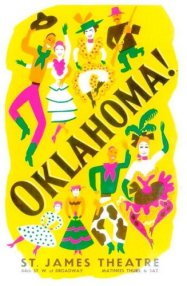
The 1920s and 1930s saw posters evolve into full-color lithographs, often featuring hand-painted artwork. The bold typefaces and stylized characters became works of art in their own right. It was the beginning of what many consider the “Golden Age” of Broadway poster design — the era when shows like Show Boat (1927) and Oklahoma! (1943) weren’t just musicals, but cultural landmarks with unforgettable visuals.
In the postwar decades, design sensibilities shifted with modern art movements. The 1950s and 1960s embraced clean lines, bold color blocking, and inventive typography. Artists such as David Edward Byrd and the iconic caricaturist Al Hirschfeld helped push poster art into new creative realms. Byrd’s psychedelic 1971 design for Follies remains one of the most collectible theater posters ever made, while Hirschfeld’s instantly recognizable line drawings gave Broadway a witty, signature style that still defines its visual identity today.
Posters as Collectibles
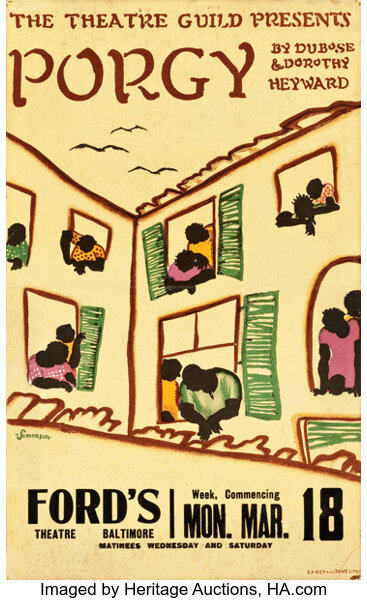
Certain posters have fetched notable prices at auction. For example, a Porgy and Bess (The Theatre Guild, 1932 tour) window card — a 13.5″ x 22″ lithograph printed by Carey and Sons—sold at Heritage Auctions in 2016. Though it didn’t break records, its rarity and condition pushed the price to just over $1,000.
Even more contemporary productions can spark collector mania — Hamilton, for instance, had limited edition lobby art and poster pieces that became highly sought after as soon as the show took off. Some theaters have even had to post signs requesting patrons not to remove promotional posters from walls.
But for most collectors, Broadway posters hold sentimental rather than purely monetary value. They serve as personal time capsules — reminders of shows seen (or that someone dreamed of seeing), of nights out, and of being moved by performance.
Personal Memories and Posters in the Wings
I still remember my own high school stage crew days working on productions of Brigadoon and Hello Dolly. While the sets and costumes consumed most of our energy, it was always the posters — designed by student artists or borrowed from community print shops — that made the production feel “real.” Seeing that poster go up in the hallway meant the show was no longer just rehearsals and paint splatters; it was an event.
That same energy is what makes Broadway posters resonate so deeply. My husband and his family are lifelong theatergoers and performers, people who never miss a show if they can help it. For them, these aren’t just souvenirs — they’re mementos of shared experiences. Each one sparks conversation: “Remember the night when…” or “That was the show we…” These visuals become a doorway back to the laughter, emotion, and connection of live theater.
Iconic Designs that Defined Eras
Certain posters have transcended theater advertising to become cultural icons. Think of the stark, mask-and-rose imagery of The Phantom of the Opera. The visual became instantly recognizable worldwide, enduring long after the shows closed on Broadway.
Other designs captured the spirit of their times. The sleek art deco aesthetic of the 1930s lent glamour to the Ziegfeld Follies. The gritty, collage-style Rent poster of the 1990s reflected a raw, urban energy that defined a new generation of theatergoers. Today, collectors often gravitate toward these era-defining designs — not only for their beauty, but for how they mirror the cultural pulse of Broadway across decades.
Stories from the Collector’s Market
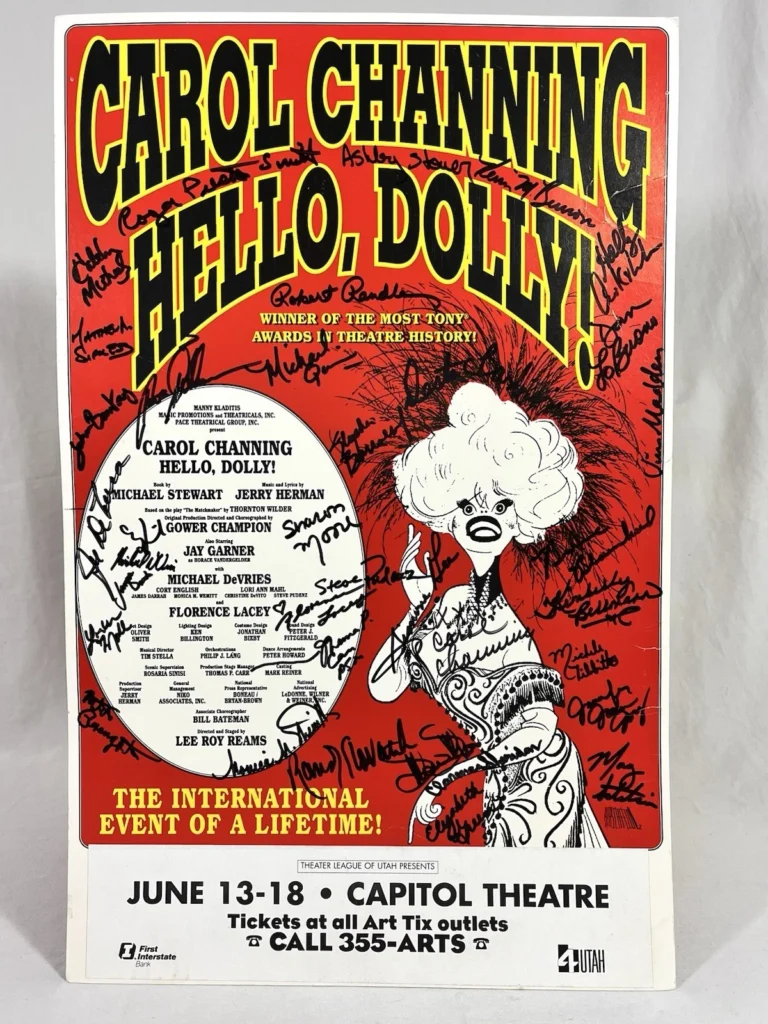
One collector’s tale that often makes the rounds is about the Hello Dolly poster featuring Carol Channing. In the late 1960s, collectors would wait by theater dumpsters to rescue discarded posters before they were torn up or painted over. A pristine Hello Dolly poster salvaged in that way can now be worth hundreds.
Similarly, fans of Brigadoon have long sought its colorful 1947 posters. The combination of romantic Highland imagery and bold lettering has made it a classic design. While it’s not as expensive as some other titles, it remains a favorite among collectors who appreciate the artistry and nostalgia.
And then there are the true rarities: early productions that printed only a handful of posters, never imagining future interest. When those pieces resurface at estate sales or auctions, they can command astonishing attention, offering collectors a glimpse into Broadway’s forgotten past.
Why Posters Matter
At first glance, a Broadway poster might seem like nothing more than an advertisement. But to theater lovers, collectors, and historians, it’s so much more. It’s a visual record of creative energy — a slice of cultural memory that captures the artistry, excitement, and emotion of live performance.
In the same way that programs and Playbills capture the details of a show, posters capture the feeling of it. They are vibrant, visual invitations to step back into a world of music, lights, and drama.
For me, every time I see a Broadway poster — whether hanging in a theater lobby or framed on someone’s wall — I think back to those high school shows, to late nights moving sets and painting flats, and to the moment when the poster finally went up. That was when the magic began. I’m reminded of those backstage moments, of families bonding in the audience, of the shared electricity that makes theater unlike any other art form.
The Golden Age of Broadway posters may technically belong to the mid-20th century, but in truth, every generation has its iconic designs. As long as the curtain rises and audiences fill the seats, theater posters will continue to be created, collected, and cherished. Let’s Make History-one production at a time.