
Lace has a reputation for being delicate, fancy, and a little mysterious—like it floated into the world fully formed on the collar of a royal portrait. But lace is, at its heart, a triumph of patient hands. Threads crossed, looped, pinned, and stitched into patterns so airy they almost disappear… until the light hits them just right.
For collectors, handmade lace is especially rewarding because it’s both art and evidence. It shows what people wore, how they decorated their homes, what skills were valued, and how fashion traveled across borders. Two major handmade traditions sit at the center of that story: bobbin lace and needle lace. They can look similar at a glance, but they’re built in very different ways—and once you know what to look for, antique lace becomes much easier (and more fun) to collect.
A quick timeline: where handmade lace takes off
Decorated netting and openwork techniques existed long before “lace” became its own category, but the rapid development of needle lace and bobbin lace took off in the early 16th century, with strong early centers in northern Italy (including Venice and Milan) and Flanders. Lace quickly became a high-status luxury—used for collars, cuffs, caps, veils, and later for flounces and trimmings—because it showcased craftsmanship in a way few textiles could.
A practical detail collectors sometimes miss: early fine laces were commonly worked in linen thread (and later in silk for certain types), and cotton lace becomes more common much later. That shift in fiber can help you think about what era a piece might belong to, especially when combined with the style and construction.
Bobbin lace: the art of crossing threads on a pillow
What it is
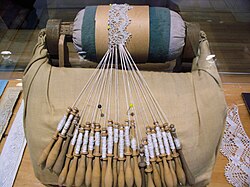
Bobbin lace is made by braiding and twisting multiple threads wound onto bobbins. Those threads are crossed and pinned in place on a firm cushion or “pillow” over a pricked pattern. If you’ve ever seen a lace pillow with dozens of bobbins clicking together, that’s the tradition.
Why it matters historically
Bobbin lace grew out of earlier braid-making and trimming traditions and became one of the most famous European lacemaking methods. Different regions developed distinct “dialects” of bobbin lace—some dense and graphic, some incredibly fine and airy—often tied to local markets, fashion demand, and available thread quality.
What it looks like up close
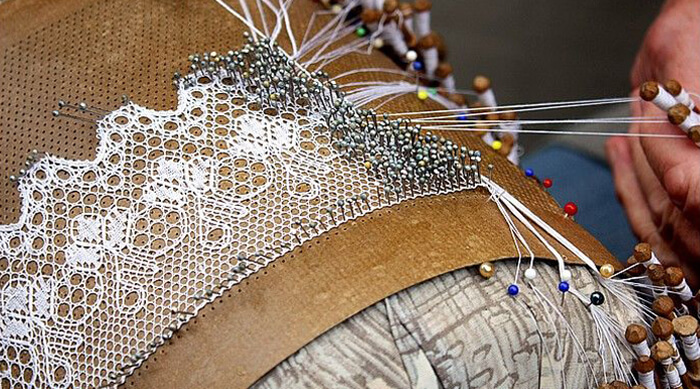
Bobbin lace often shows:
- a netted ground (a mesh-like background) in many styles
- motifs (florals, scrolls, geometric forms) that sit on top of or within the ground
- outlined elements created by a thicker outlining thread in some types
- repeating structure that feels engineered—because it is
Not all bobbin lace has a ground. Some types connect motifs with bars or plaits instead of mesh, which gives a bolder, more “architectural” look.
Collector favorite: “the lace that reads like drawing”
Many collectors fall hard for bobbin lace because it can look like a pen sketch made of thread—especially when motifs are outlined and the ground is extremely fine.
Needle lace: stitched lace built one loop at a time
What it is
Needle lace is made using a needle and thread, building lace from stitches (often buttonhole/blanket-stitch variations) rather than crossing bobbins. Many needle lace methods begin with a design traced on a pattern and an outline thread laid down as a scaffold; stitches fill the spaces until the lace becomes a complete structure.
How it differs from embroidery
This is where collectors get tripped up: needle lace can look like embroidery, but true needle lace is built so that the lace structure exists as its own textile—often worked on a temporary foundation that is later removed. Historically, needle lace techniques evolved from openwork and cutwork traditions, then expanded into “free” needle lace made in the air (you’ll often see collectors refer to this idea even if the exact technique varies by place and period).
What it looks like up close
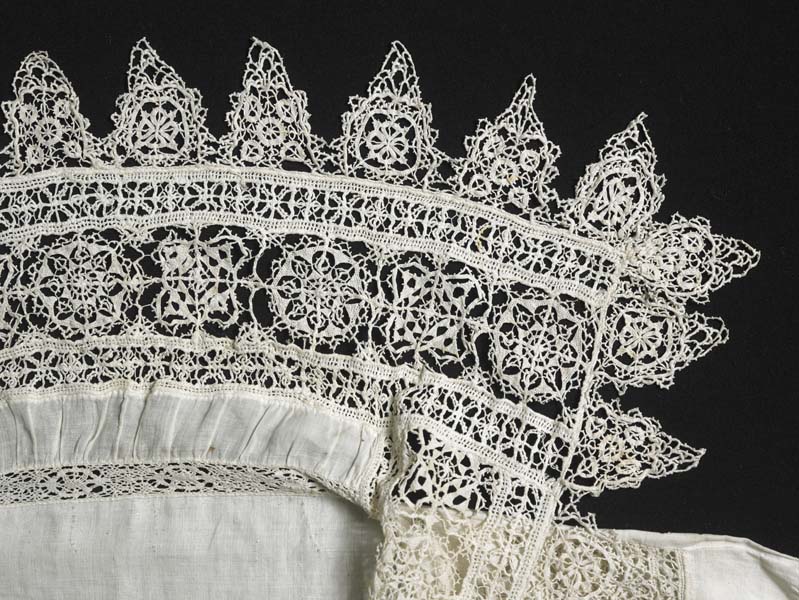
Needle lace often shows:
- looped stitch structure that looks slightly different from braided crossings
- corded outlines and filled areas that can look sculptural
- bars/bridges connecting sections in some styles
- a handmade “handwriting” quality—tiny irregularities that feel human
Some needle lace styles became famously dimensional, with raised patterns that catch light and shadow.
How to tell bobbin lace vs needle lace (without a microscope)
If you want one practical skill from this post, let it be this. When you’re holding a piece of lace at an antique mall, these quick checks can help you identify the method.
Quick ID checklist
- Look at the ground (background):
- Many bobbin laces have a mesh ground that looks like a consistent net.
- Needle lace may have a more “stitched” look, often with bars, fillings, or areas that feel built from loops.
- Look at the connections between motifs:
- Bobbin lace often looks braided where threads cross and twist.
- Needle lace connections can look like stitched bridges or buttonhole-stitch fillings.
- Look for that “braid vs stitch” feeling:
- Bobbin lace tends to feel engineered—threads interlaced like a woven plan.
- Needle lace can feel drawn—stitches building shapes like sketching in thread.
- Flip it over:
Lace is often finished on both sides, but the underside can reveal construction—especially around motifs, outlines, and joining areas.
You don’t have to be perfect. Even experienced collectors encounter hybrid looks and regional variations. The goal is to recognize what you’re likely holding so you can shop with confidence.
Regional flavor: why lace types feel so different
One reason lace collecting stays interesting is that styles shifted with fashion and geography. Broadly speaking, you’ll often see:
- Italy strongly associated with high-end lace production during much of the 17th century, including dramatic needle lace styles that suited Baroque fashion.
- Flanders and surrounding regions producing exceptionally fine work as lace demand spread and evolved, with regional styles prized for their delicacy and technical skill.
You don’t need to memorize a map to enjoy lace—just know that “lace style” often points to “lace place,” and place can influence what materials and motifs you see.
What collectors look for in handmade lace
Handmade lace is a texture collectible. Condition matters, but so does the overall visual impact and usability for display or sewing projects.
Condition essentials
- Holes and breaks: small breaks are common, especially along edges and folds
- Repairs: look for tiny whip-stitches or thread that doesn’t match
- Stains and discoloration: age, storage, and past washing can leave uneven color
- Brittleness: if it feels crackly or fragile, treat it as display-only and handle minimally
- Edge wear: scallops and picots are often the first to show damage
Design and workmanship
Collectors often pay more for:
- fine, consistent workmanship
- crisp motifs and pleasing proportions
- balanced negative space (that “air made intentional” look)
- striking borders or scalloped edges
- unusually charming patterns, even if the lace isn’t the finest
Fiber clues (a helpful reality check)
You’ll see lace described as “linen,” “cotton,” or “silk” constantly in listings. Sometimes that’s accurate; sometimes it’s hopeful.
A practical collector approach:
- treat fiber claims as “possible” unless you can confirm by feel, context, and seller credibility
- focus on what you can see: construction, age-appropriate style, and condition
- if you’re buying for a specific use (restoration sewing, heirloom projects), prioritize known fiber and provenance
Buying antique lace: how to shop without heartbreak
Ask yourself what you’re buying it for
Antique lace can be collected three ways:
- as textile art (display or study)
- as trim (for sewing or restoration)
- as material history (a piece of fashion/home life)
Your purpose should guide your tolerance for flaws. A small repair might be fine for display but not for a garment restoration. A lightly stained piece might still frame beautifully.
The “unfold test”
If you can, gently unfold the lace and check:
- folds for hidden breaks
- edges for missing scallops
- center areas for thin spots
This is where many surprises live.
Beware of overconfident labels
“Handmade” is sometimes used loosely. Machine-made lace (which we’ll cover in the next post) can be beautiful, but it’s not the same thing. If a seller can’t describe the construction at all, shop based on what you can verify with your eyes: structure, pattern regularity, and finishing.
Displaying handmade lace so it looks intentional
Lace can disappear on a busy background. The trick is contrast.
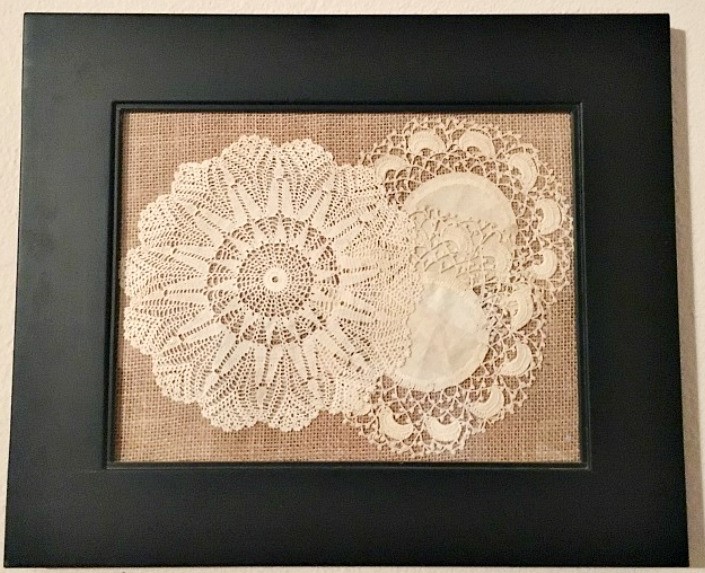
Simple display ideas
- Shadow box on a dark backing: makes the pattern pop
- Mount a strip around a mat opening: turns trim into framed art
- Layer lace over solid fabric in a frame: choose linen, velvet, or matte cotton
- Drape in a glass cloche (display-only): for small pieces you want visible from all angles
- Textile drawer display: line a shallow drawer and rotate pieces seasonally
If you’re framing, avoid permanently gluing or taping lace directly to a backing. A reversible mount is always safer for textiles.
A gentle care guide for collectors
Handmade lace is resilient in some ways (it survived this long!) and fragile in others.
- Handle with clean, dry hands and support it fully when lifting.
- Store flat when possible, especially for larger pieces, with acid-free tissue to cushion folds.
- Avoid direct sunlight—fading is one of lace’s biggest long-term risks.
- Keep it dry and avoid plastic storage that traps moisture.
- If cleaning is necessary, keep it conservative: minimal agitation, mild methods, and no harsh chemicals. For valuable pieces, many collectors choose professional textile cleaning rather than experimenting.
The best care is often simply: clean storage, low handling, and smart display.
Handmade lace—whether bobbin or needle—has a quiet kind of drama. It’s technical, it’s artistic, and it carries the fingerprints of history in every tiny crossing and stitch. Once you learn how it’s made, shopping becomes less guesswork and more appreciation… and that’s when lace collecting really gets addictive.
Let’s Make History—one thread, one stitch, one pattern at a time.