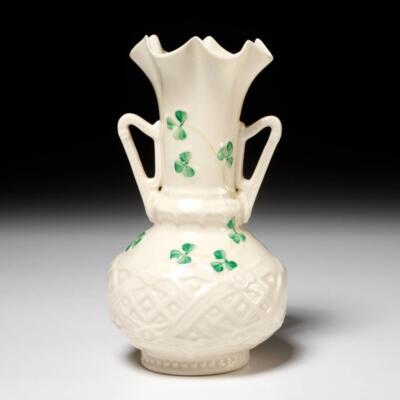
Belleek feels deeply Irish—shamrocks, harp handles, shell textures, and that unmistakable luminous white. And yet, one of the most fascinating things about collecting Belleek is how often you find it far from Ireland. A Belleek basket on a New Jersey sideboard. A shell-pattern cup tucked into a Canadian china cabinet. A shamrock vase sitting in an Australian estate lot like it’s always belonged there.
That global footprint isn’t an accident. From the start, Belleek was more than a local pottery. It was a brand of fine ware with international ambitions—made in a small village, but designed to travel. This post is about that journey: how Belleek spread beyond Ireland, how “Belleek” became a look that other makers imitated, and how collectors can shop smart when the name shows up in unexpected places.
How Belleek Traveled Beyond County Fermanagh
Belleek’s rise happened during a period when decorative arts moved quickly across borders—through exhibitions, department stores, shipping routes, and a growing middle class that wanted elegant tableware. Once Belleek established its reputation for refined porcelain and distinctive design, the demand wasn’t limited to Ireland.
A few practical reasons Belleek traveled well:
- It photographed and displayed beautifully. Even before modern photography, it presented well in showrooms and exhibitions because the white porcelain and crisp relief detail were visually striking.
- It fit gift culture. Belleek became the kind of item people bought as a special present: wedding gifts, anniversary pieces, “best china” additions, and souvenirs.
- It shipped as status. Owning fine imported porcelain signaled taste—especially in households building collections and formal table settings.
Collectors today still feel those pathways in the marketplace: Belleek shows up anywhere people once prized refined tableware and had access to import channels.
The Role of Exhibitions and Awards in Global Recognition
In the 19th century, exhibitions functioned like today’s viral marketing—except with medals, display cases, and international press coverage. When Belleek gained notice in exhibition settings, it didn’t just earn prestige; it gained visibility. That kind of recognition helped makers attract buyers and distributors outside their immediate region.
You don’t need to memorize exhibition names to collect well, but it helps to understand the pattern: public recognition created demand, demand created distribution, and distribution created the global presence collectors see today.
Why Belleek Was an Ideal Export: Light, Refined, and Distinctive
Lots of porcelain traveled internationally. Belleek stood out because it didn’t look like “generic white china.” It had an identity that read at a glance:
- A luminous white body that feels soft rather than harsh
- Relief texture and sculptural elements (shells, weave, flowers, coral-like details)
- A distinctly Irish visual vocabulary (especially shamrocks and harp forms)
- Pieces designed to impress without needing heavy painted decoration
This matters because it explains why Belleek held its own in crowded markets. Even among high-quality wares, Belleek had a “signature look,” which made it easier to sell and easier to collect.
Belleek as a Gift, a Souvenir, and a “Good China” Upgrade
If you track where Belleek appears in family collections, a theme shows up again and again: important moments.
Belleek is commonly found as:
- Wedding and anniversary gifts
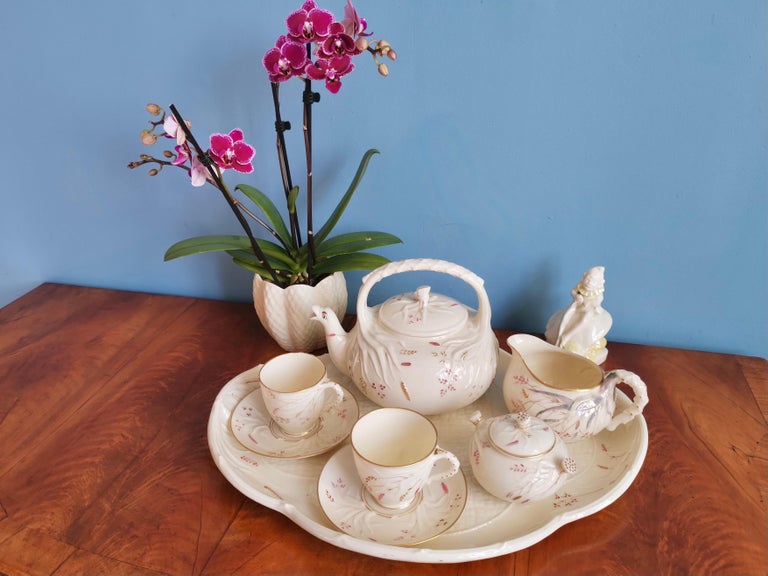
- Special-occasion tea sets and serving pieces
- Decorative items meant for display (baskets, vases, centerpieces)
- Irish heritage items—especially shamrock-decorated pieces
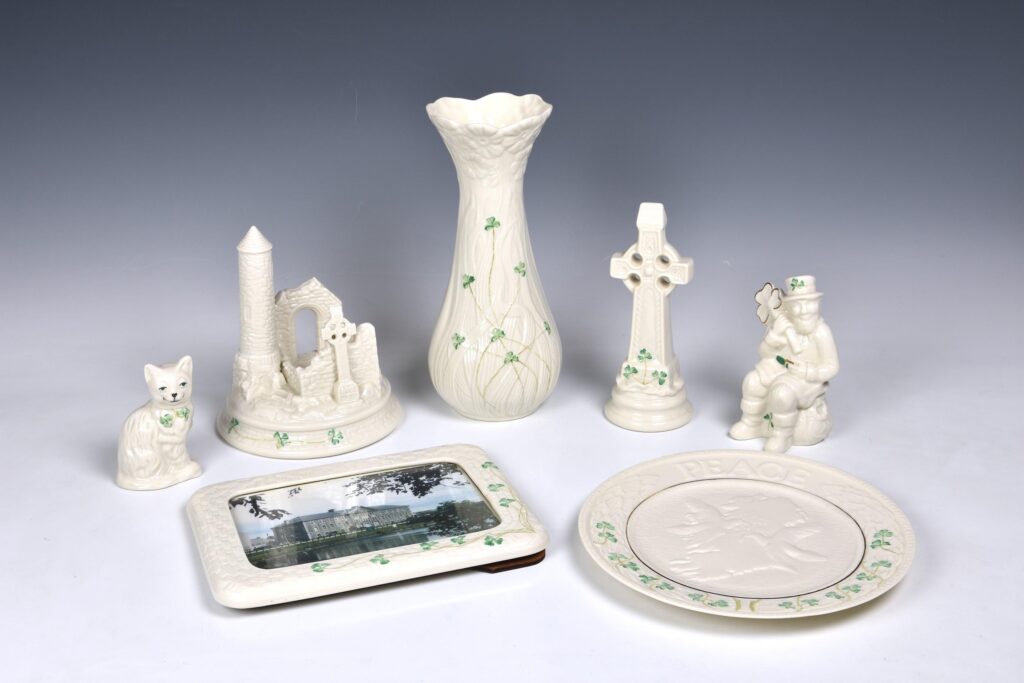
That heritage angle helped it travel as well. In places with strong Irish communities and cultural pride, Belleek could function as both fine porcelain and meaningful symbol. Even for non-Irish buyers, shamrock Belleek felt like a tasteful, recognizable “Ireland” collectible.
When “Belleek” Becomes a Style (Not Just a Maker)
Here’s where collectors sometimes get tripped up: outside Ireland, the word “Belleek” can be used in two different ways.
- Belleek as the Irish maker (the company and its marked wares)
- “Belleek” as a style descriptor for delicate, translucent porcelain with raised decoration
That second use is why you’ll sometimes see listings that say “Belleek” even when the piece wasn’t made in Ireland. Sellers may mean “Belleek-style porcelain,” or they may simply be repeating what they were told. Either way, the collector’s job is to verify what the piece actually is.
The good news: authentic Irish Belleek is usually straightforward to confirm if the base mark is present and readable.
How to Tell Irish Belleek from “Belleek-Style” Porcelain
You don’t need to be an expert to sort this out. You need a repeatable routine.
1) Start with the backstamp (always)
Authentic Irish Belleek typically has a backstamp that includes:
- The name Belleek
- Irish imagery (commonly associated symbols like harp, round tower, shamrocks, and similar iconography)
- Often the location reference tied to County Fermanagh and/or Ireland depending on era
If a piece is truly Belleek, the mark is usually the strongest starting clue.
2) Compare the decoration quality
Belleek-style porcelain exists in many quality levels. When you handle true Belleek, you often notice:
- Crisp relief detail
- Fine, controlled edges on shells and weave
- A refined “finish” that feels intentional rather than chalky or overly glossy
Belleek-style pieces can be lovely, but they may show softer detail, heavier bodies, or decoration that reads flatter.
3) Watch for category clues
Certain categories are more likely to be mis-labeled:
- Generic “shamrock porcelain” souvenirs
- Thin white porcelain with raised texture but no Irish mark
- Pieces described as “Belleek” with no base photo provided
4) Treat the word “rare” as a prompt to inspect, not a conclusion
If you see “rare Belleek” and no clear mark photo, slow down immediately. Many honest sellers simply don’t know what they have—but the market is full of confident labels that don’t match the object.
Collecting Belleek Abroad: Why Location Can Work in Your Favor
Finding Belleek outside Ireland can actually be an advantage—especially if the local market isn’t saturated with specialized collectors.
Here’s why:
- Estate lots can be undervalued. Belleek sometimes gets grouped with “pretty white china,” especially if it isn’t shamrock-decorated.
- Regional patterns of collecting vary. Some places lean toward certain forms (tea ware vs. baskets, for example), which can create pockets of availability.
- Shipping creates scarcity in local markets. In some regions, fragile porcelain isn’t shipped in as often, so local finds matter more.
Collector strategy: if you’re shopping in-person, prioritize bases and rims. If you’re shopping online, prioritize mark photos and edge photos. That’s how you turn “random find” into confident purchase.
What to Buy If You Want a “Global Belleek” Collection
If you like the idea of collecting Belleek as an international story, you can build a collection that reflects how it traveled.
Build by theme: “Ireland abroad”
- Shamrock vases and small gift forms
- Tea wares that feel like classic export pieces
- Decorative baskets and centerpieces (the “showpieces” that often came out for guests)
By function: “the traveling table”
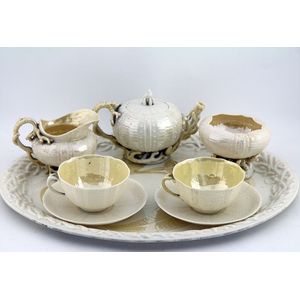
- Cups and saucers (often found as singles abroad)
- Creamers and sugars (commonly separated from sets)
- Small plates and trays (great for display and easier to store)
Build by marks: “eras across borders”
If you enjoy dating and documenting, build a small representative group from different mark periods. It turns your shelf into a timeline—and it’s a very satisfying way to learn.
Common Pitfalls When Buying Belleek Outside Ireland
Missing base photos
If a listing doesn’t show the mark, assume nothing. Ask for the base. If the seller won’t provide it, pass.
“Belleek-style” sold as Belleek
This is the most common confusion. Some sellers use “Belleek” the way people use “milk glass”—as a general term. That doesn’t make them dishonest, but it does mean you must verify.
Repairs on fragile forms
Baskets, flowers, pierced rims, and thin handles are repair magnets. In photos, look for:
- Glossier patches that suggest glue
- Unnatural “lines” at joins
- Petals or leaves that look too thick or too perfect compared to the rest
Mixed sets
Outside Ireland, you’ll often see “Belleek sets” that are not truly matched—different marks, slightly different whites, different finishes. If you’re set-building, insist on consistent marks and finish.
Shipping and Care: Protecting Thin Porcelain Across Distance
Because this post is about Belleek traveling, it’s worth adding the collector’s practical reality: shipping can make or break a buy.
If you’re buying shipped Belleek:
- Favor sellers who double-box and pad rims, handles, and basket edges.
- Ask whether the piece will be immobilized inside the inner box (movement causes breakage).
- Don’t be shy about requesting insurance on higher-value pieces.
At home:
- Store pieces so they don’t touch—especially rims and applied flowers.
- Avoid high-traffic display edges where sleeves and bags snag.
- Hand wash delicate and gilded pieces when possible; harsh cycles can dull finishes over time.
The Collector’s Takeaway
Belleek may have been born in a small Irish village, but it was built to be seen—and it became a porcelain people carried into their homes across the world. That global story adds a whole new layer to collecting: not just “what is it?” but “how did it get here?” Along the way, the name became a style descriptor too, which makes marks and inspection habits more important than ever.
Collect it as Irish heritage, as fine porcelain, as a design language, or as a global trail of beautiful objects—just collect it with clear eyes and good light on the base mark.
Let’s Make History—one Irish treasure at every table.