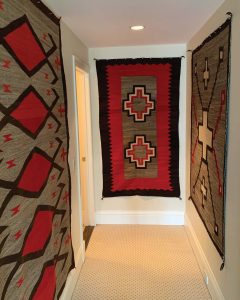
A Navajo (Diné) textile can feel like two things at once: deeply rooted and completely alive. Rooted, because the weaving carries generations of knowledge—how to build a dense cloth, how to shape a design with geometry, how to balance color so it reads across a room. Alive, because Diné weavers are still creating today, still innovating, still making textiles that speak to their time as well as their tradition.
That’s why collecting Navajo textiles is different from collecting many other antique categories. You’re not just buying an old object. You’re engaging with a living artistic practice—one that has moved through changing materials, changing markets, and changing audiences without losing its identity.
This wrap-up post is about the “threads” that tie the whole story together: craft, trade, adaptation, and respectful stewardship. Whether you’re a dedicated textile collector or someone who has just inherited a weaving and wants to do right by it, consider this your collector’s compass.
Tradition Is Craft: The Skill You Can See
Before we get into markets or labels, it’s worth returning to the core truth: these textiles are technically impressive.
Even without knowing a style name, a collector can often recognize the hallmarks of a skilled weaving tradition:
- Dense, even weaving that feels firm and intentional
- Crisp pattern edges where colors meet cleanly
- A design that holds visual balance—borders, central motifs, and negative space working together
- Yarn choices that support the design (subtle natural fleece tones or bold, high-contrast palettes)
If you want to appreciate a Diné textile more deeply, slow down and look for the weaver’s decisions. The work is not “just pattern.” It’s structure, tension, rhythm, and control—built row by row.
Tradition Is Story: Blankets, Rugs, and How Use Shapes Design
Collectors often enter the category through one of two doors: wearing blankets or rugs. Both matter, and both can be extraordinary. But they carry different “life histories,” and that history shows up in form and design.
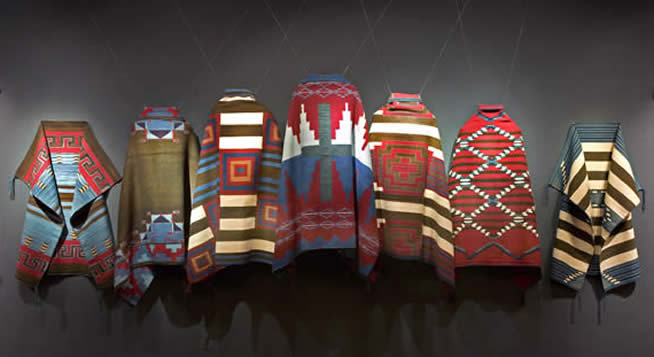
Wearing blankets: textile as clothing and prestige
Historically, many Navajo textiles were meant to be worn—draped and wrapped. Those pieces often read differently because the textile moved with the body and was valued as a wearable work of art. Collectors are drawn to the clarity of design and the prestige reputation these textiles earned in broader networks of trade.
Rugs: textile as home furnishing and wall art
Over time, demand from outside markets increasingly favored rugs—pieces intended for floors and home décor. That shift helped shape size expectations, border emphasis, and compositions designed to “read” in a room.
Today, many collectors treat rugs as wall art to protect them. That modern choice adds another layer to the textile’s story: a rug made for the floor becomes a piece framed by light and space, like a painting.
Collector takeaway: a Diné textile often tells you how it was meant to live—if you let the proportions, structure, and design intent speak.
Tradition Is Adaptation: Materials Change, Artistry Continues
One of the most consistent threads in Diné weaving history is adaptation. Weaving doesn’t happen in isolation; it responds to what’s available and what’s needed.
Collectors commonly notice shifts such as:
- Wool becoming central as sheep pastoralism took root in Diné life
- Cotton often appearing as warp in many weavings
- Natural fleece colors being used intentionally as part of design
- Dyed yarn sources changing over time based on trade and availability
- Commercial yarns and dyes becoming part of the palette in later periods
A useful collector mindset is this: changes in material are not “a fall from authenticity.” They are evidence that Diné weaving has always been dynamic—responding to new resources, new markets, and new design possibilities while retaining a strong identity.
Tradition Meets Commerce: The Trading Post Era and Market Influence
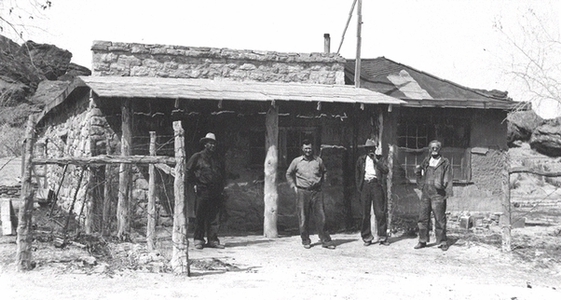
Trading posts sit at the crossroads of this story. They were not the origin of Diné weaving, but they became a powerful part of the economic environment in which many textiles were sold, supplied, and marketed—especially as outside demand grew.
This is where collectors benefit from nuance:
- Trading posts could influence what materials were easier to obtain.
- Traders could encourage certain palettes or proportions based on what sold.
- Buyers outside the community often shaped demand for rug formats and “room-friendly” styles.
- Weavers still made artistic choices—sometimes within market expectations, sometimes outside them.
If you collect long enough, you start to see this interplay as part of the textile’s biography. A weaving can be both art and commerce at the same time—made with skill, meaning, and also an awareness of what the world would pay for.
Collector takeaway: market influence is real, but it doesn’t erase artistry. It adds context.
Tradition Requires Respect: Collecting Without Turning Culture Into Décor
If there’s one thread that should run through every Diné textile collection, it’s respect. Not as a vague sentiment, but as practical behavior.
Use careful language
“Navajo (Diné) textile” is a solid, respectful baseline. Be cautious about labeling all Southwestern weavings as Navajo, and avoid making claims you can’t support about specific regions, makers, or purposes.
Avoid invented symbolism
It’s common to see sweeping interpretations online that assign fixed meanings to motifs. Some may be grounded; many are not. A responsible collector approach is to describe what you see—geometry, borders, bands, color fields—without claiming spiritual meaning unless you have reliable documentation for that specific piece.
Be cautious with “ceremonial” claims
If something is described as sacred, ceremonial, or restricted, slow down. If you can’t verify what it is, it’s often better to pass than to guess or resell it with a story you can’t support.
Support living artists when you can
One of the most meaningful ways to collect respectfully is to buy modern work through reputable sources that support Native artists—or directly from artists when possible. That keeps the tradition visible and valued in the present, not only admired in the past.
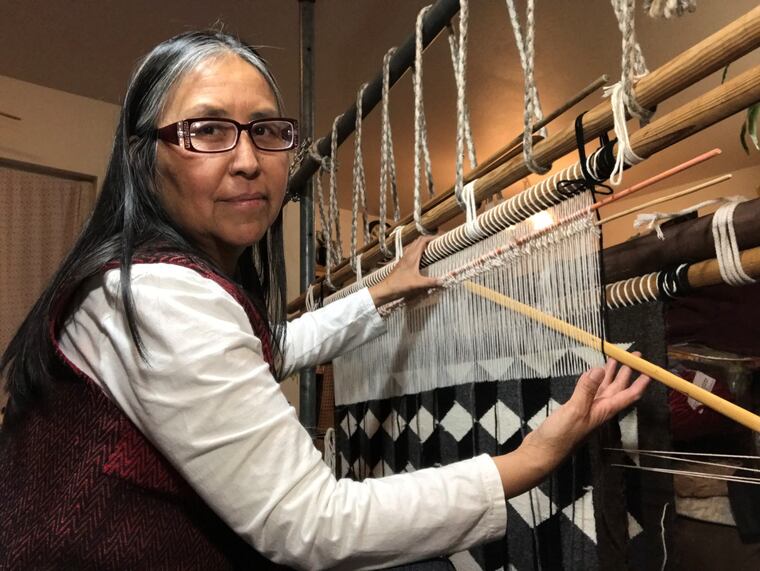
Stewardship Is Preservation: How to Help These Textiles Last
A Navajo textile can last a long time with good care. Most damage comes from predictable sources: light, pests, humidity swings, hard folds, and over-cleaning.
Here are the preservation habits that matter most:
Light management
Keep textiles out of direct sunlight and away from harsh window exposure. If you display them, consider rotation: a season on the wall, then rest in storage.
Pest prevention
Wool is vulnerable to moths and carpet beetles. Clean storage, regular inspection, and avoiding dusty, undisturbed corners make a bigger difference than many people realize.
Storage that respects fibers
Flat storage is ideal when possible. If you must fold, pad folds with acid-free tissue so you avoid sharp creases that become weak points over time.
Gentle cleaning only
Dust lightly, avoid aggressive scrubbing, and treat washing as a last resort—especially for older or valuable pieces. Many textiles survive best when they are handled minimally and stored correctly.
Collector takeaway: preservation is not about making an old textile look “new.” It’s about keeping it stable and preventing avoidable damage.
Building a Collection With Intention
Because these textiles can be meaningful (and sometimes high-value), it’s worth choosing a collecting approach that keeps you grounded and focused. Here are a few satisfying strategies:
Collect by design language
Choose what visually moves you:
- strong borders
- central diamonds
- banded compositions
- high-contrast palettes
- subtle natural fleece tones
This approach honors the weaving as art first.
Collect by form and use
Some collectors focus on:
- rugs for wall display
- smaller textiles that fit cabinets
- pieces that anchor a room
This approach makes your collection livable.
Collect by provenance and documentation
If you value history and context, prioritize pieces with:
- clear ownership history
- reputable sourcing
- documented origin information
- labels, receipts, or collection notes
This approach turns your collection into a curated archive.
Collect with balance
Many collectors find joy in having both:
- one or two historic pieces that connect to earlier eras
- and one contemporary piece that supports living artists
It makes the “threads of tradition” visible on your wall: past and present, together.
A Practical Buying Checklist for Collectors
Whether you’re buying at an antique mall, estate sale, or online, these are the details that protect you from most mistakes:
- Exact measurements
- Clear photos of front, back (if possible), and corners/edges
- Notes on wear: stains, fading, holes, repairs, fringe loss
- Yarn character: uniform vs lively variation (without over-claiming)
- Provenance details when available
- Avoiding big promises about age, region, trading post association, or maker without documentation
If you’re reselling, this checklist also protects your reputation. Careful description is a form of respect.
The Thread That Ties It All Together
Diné weaving is craft, story, adaptation, commerce, and living tradition all at once. When you collect with curiosity and respect, your pieces become more than décor. They become evidence of skill and continuity—threads of tradition that still run strong.
Let’s Make History—one woven thread at a time.