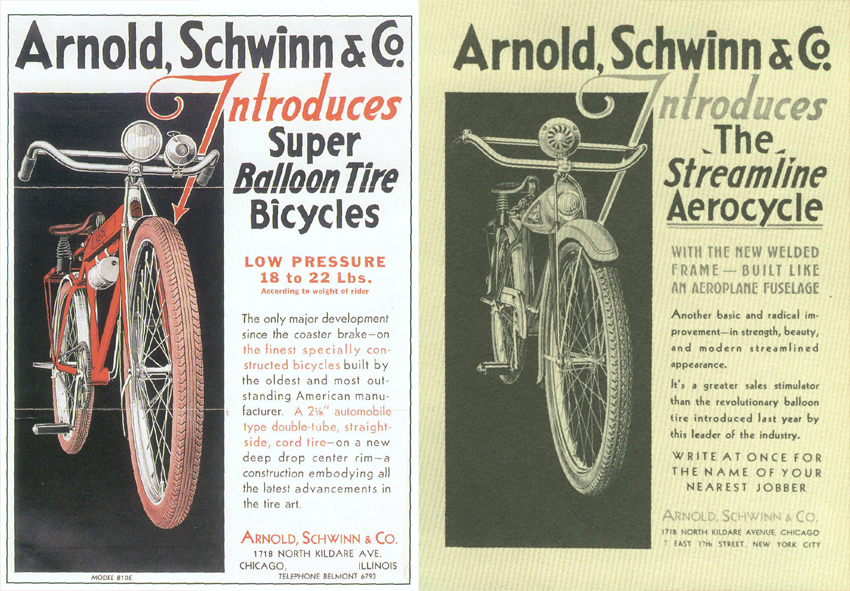
Some bicycles feel like transportation. Cruiser-era balloon-tire bikes feel like childhood—even if you didn’t grow up with one.
Picture it: a wide, comfortable saddle. Big fenders that make the bike look “finished.” A curved frame that seems to swoop instead of sit still. A horn tucked into a tank-like housing on the top tube, just begging to be squeezed on the ride to the corner store. These bicycles weren’t designed to be delicate. They were built for real streets, real errands, real paper routes, and real summers that lasted forever.
From the 1930s through the 1950s, balloon-tire cruisers became an American icon. They bridged the gap between the practical bicycles of earlier decades and the styled, accessory-rich bikes that defined mid-century youth culture. Today, they’re also some of the most display-worthy—and deeply nostalgic—bicycles a collector can bring home.
What “Balloon Tire” Means (and Why It Mattered)
Balloon tires are exactly what they sound like: wider, higher-volume tires that run at lower pressure than the skinnier tires many earlier bikes used. That extra air and extra rubber changed the ride in a big way.
Instead of feeling every crack, pebble, and curb edge, balloon tires smoothed out rough surfaces. And that mattered, because many roads and sidewalks in the 1930s–50s weren’t the glassy, consistent surfaces we’re used to today. A bike that could handle uneven pavement, packed dirt, gravel, and rutted side streets wasn’t a luxury—it was freedom.
Balloon tires also changed the look of a bicycle. They gave cruisers their signature stance: lower, broader, and tougher. Even sitting still, a balloon-tire bike looks like it can take a beating and keep rolling.
The Cruiser “Silhouette”: How to Spot One Instantly
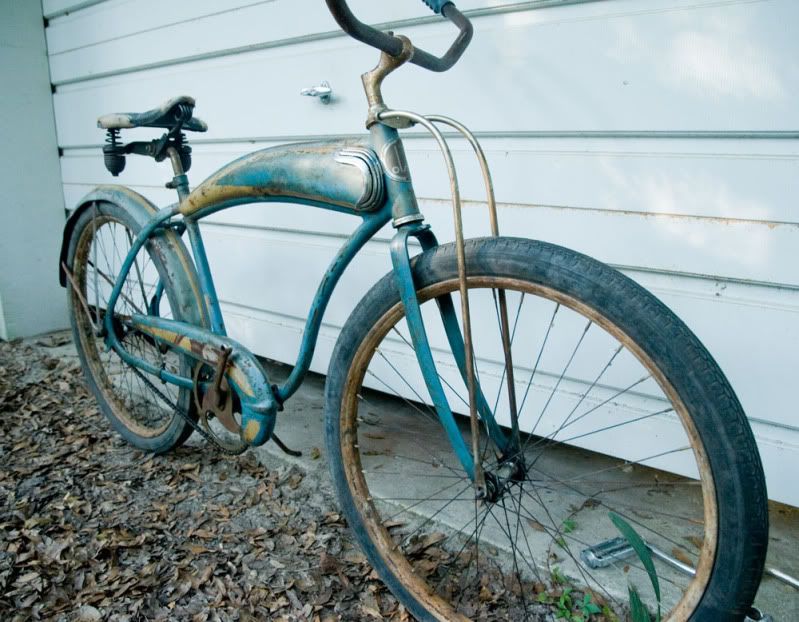
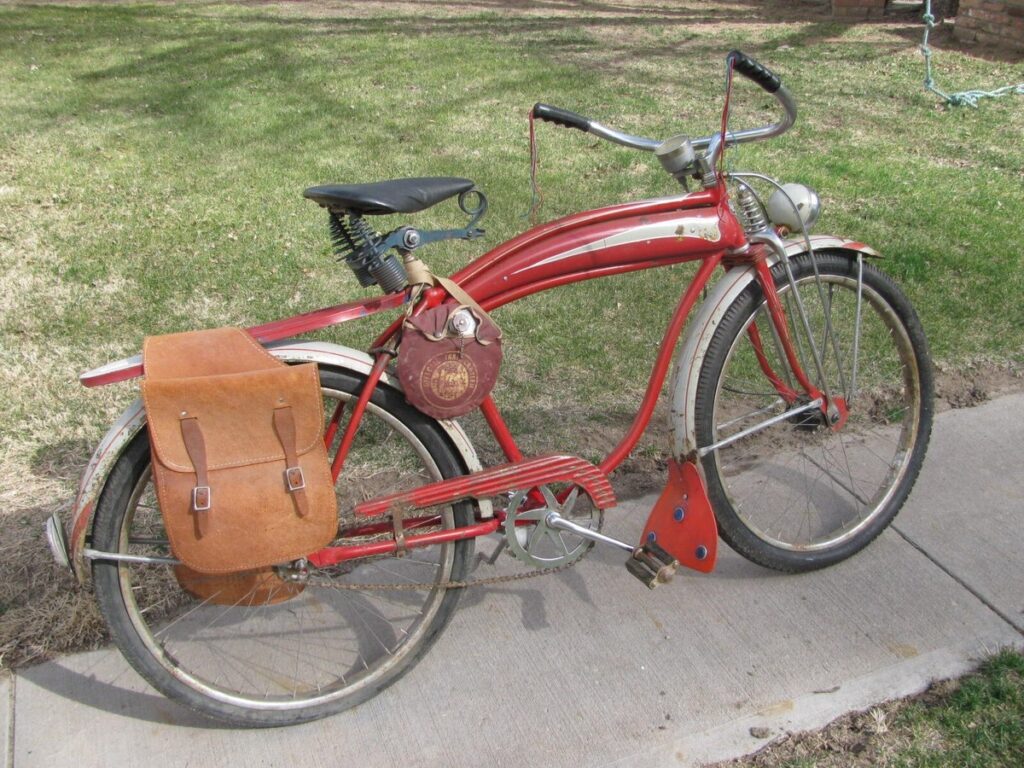
Cruiser-era bikes are some of the easiest vintage bicycles to identify from across the room because their design language is so bold. While details vary by maker and year, collectors often associate the era with a few classic elements.
Curved, heavyweight frames
Cruisers tend to look substantial. Many feature dramatic curves in the top tube and frame lines that feel almost sculptural. Some models even lean into a “motorbike” look—intentionally borrowing visual cues from motorcycles to create something that felt modern and exciting.
Big fenders
Fenders were practical—keeping riders cleaner on wet streets and muddy edges—but they also became a major style feature. Full fenders give these bikes a finished, almost automotive presence, especially when paired with contrasting pinstriping.
Chain guards
Chain guards protected pants and dresses, reduced grease mess, and made everyday riding easier. For collectors, they’re also a huge visual cue—especially when the guard has original paint, decals, or a distinctive shape.
Coaster brakes
Many cruisers use coaster brakes (braking by pedaling backward). It’s a simple, rugged system that suits the “ride anywhere” spirit of these bikes and became part of the classic cruiser feel.
Springer forks and “deluxe” front ends
Not every cruiser has one, but when you see a springer-style fork, your collector radar should go off. These front ends add both comfort and curb appeal, and they’re often associated with more styled or higher-end builds.
Tanks, horns, racks, and trim
The cruiser era loved accessories. A tank-style top tube housing, a built-in horn, a rear rack, bright trim, reflectors, and lights could turn a bicycle into something that felt like a personalized machine rather than a simple tool.
Why Cruisers Took Off: Built for Real Life, Styled for Pride
The cruiser era didn’t happen in a vacuum. These bikes rose at a time when people wanted durable value and visual flair in the things they bought—especially in products aimed at young riders.
Durability for everyday riding
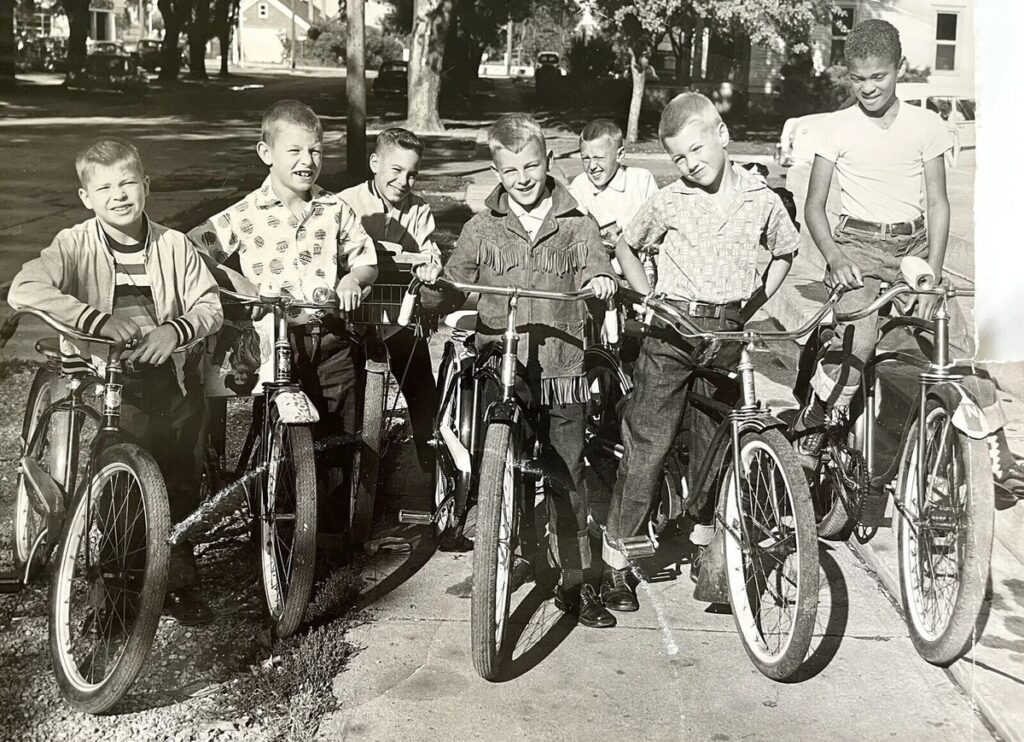
Cruisers were designed to be sturdy. They weren’t only for weekend rides; they were for the daily grind of kid life and teen life: school commutes, errands, visiting friends, and paper routes. That durability is one reason so many survived at all—and also why so many show honest battle scars.
A youth market that loved style
By the 1940s and especially the 1950s, bicycles weren’t just about getting somewhere. They were about identity. A cool bike was a status symbol, and kids noticed the details: the shine, the paint color, the horn, the swept-back handlebars, the “tank,” the badge.
Postwar optimism and design
Mid-century design had a love affair with chrome, curves, streamlined shapes, and bright color. Cruisers fit right in. Even when they were practical machines, they looked like they belonged in an era that believed the future should be stylish.
The Collector’s Favorite Part: Details That Date the Bike
One reason 1930s–50s cruisers are so addictive is that they reward close looking. They’re full of little clues that can help you identify era, maker, and model family—without needing a microscope or a serial-number obsession.
Collectors often focus on:
- Head badges and down-tube decals (the bicycle’s “face”)
- Fender profiles and mounting styles
- Chain guard shape and artwork
- Handlebar style (straight vs. swept-back vs. more dramatic bends)
- Fork style (straight vs. springer)
- Saddles (shape, material, and hardware)
- Wheel and rim style (especially if original)
- Accessories (horns, lights, reflectors, racks, tanks)
A cruiser with its original “dress” intact—badge, paint, fenders, chain guard, and correct accessories—can feel like a time capsule. Even if the bike shows its age, the design is strong enough to carry patina beautifully.
What Collectors Look For (and What Raises Value)
Like any collectible category, cruiser bikes have a range—from “fun survivor” to “serious showpiece.” Here’s what tends to matter most when people evaluate these bicycles today.
1) Structural integrity
Start with the bones. You can clean, stabilize, or restore cosmetics, but major structural problems can be expensive and difficult to address correctly.
Check for:
- Cracks at joints and stress points
- Bent forks or misaligned front ends
- Severe rust-through on tubing
- Evidence of rough repairs (especially poorly done welds)
2) Originality and completeness
Many cruisers have lived hard lives. Tires, tubes, grips, and sometimes saddles are commonly replaced—and that’s often expected. But value increases when the “signature parts” are present and period-correct.
High-impact originality points include:
- Head badge and correct decals
- Original fenders and chain guard
- Correct fork type
- Matching rack, tank, horn, or light assemblies (if originally equipped)
3) Paint and graphics
Original paint is a big deal in bicycle collecting. Even when it’s faded, chipped, or scratched, it’s still evidence of authenticity—and often far more appealing than a modern repaint that looks too new.
If you’re buying a cruiser, ask yourself:
- Does the paint tell a believable story?
- Are the graphics consistent in style and wear?
- Is there enough remaining visual presence to enjoy it on display?
4) Desirability and “display factor”
Some bikes are simply more visually dramatic—bold colors, deluxe trim, springer forks, tanks and horns, or especially striking chain guards. These can command higher attention (and often higher prices) because they display like industrial art.
Restored vs. Survivor: Two Different Collector Joys
Cruiser collecting often splits into two happy camps:
The survivor lovers
These collectors want honest bikes with patina—original paint, aged decals, and wear that shows a real life. The goal is preservation: clean carefully, stabilize rust if needed, and keep the bike’s history intact.
The restoration crowd
Other collectors love a full restoration that returns the bike to a showroom look. Done well, this can be stunning—especially for bikes that were too far gone to preserve as-is. The key is keeping the restoration faithful to the era in materials, colors, and parts.
Neither approach is “right” for everyone. The best question is simple: What kind of story do you want the bike to tell when you walk into the room?
Common Pitfalls: Mix-and-Match Bikes and Reproduction Details
With cruiser-era bikes, the most common authenticity issue isn’t necessarily modern “fakes.” It’s mix-and-match builds—bikes assembled from parts across different decades, sometimes intentionally, sometimes just through years of repairs.
Things to watch for:
- A frame from one era with fenders from another
- A vintage bike with reproduction decals that look too fresh
- A bike restored with modern accessories that change the silhouette
- A “deluxe” look created by adding parts that weren’t originally together
That doesn’t always make a bike undesirable—it just changes how collectors value it. If you’re collecting for display and you love it, that may be enough. If you’re collecting for historical accuracy, it’s worth slowing down and learning the telltale shapes and hardware styles.
Care and Display Tips for Cruiser-Era Bicycles
Cruisers are wonderful display pieces because they’re visually bold. A few practical habits keep them looking great and aging gracefully.
Store dry, display stable
Moisture is the enemy of metal and old finishes. A dry space with stable temperature is ideal.
Clean gently
Start with the mildest methods: soft cloths, gentle cleaning, and careful attention around decals and pinstriping. Avoid aggressive abrasives that can remove fragile original finishes.
Stabilize rather than strip
If there’s active rust, the goal is often to halt progression, not to erase every mark. Over-polishing can flatten the character that makes these bikes appealing.
Display like a curated object
Cruisers pair beautifully with mid-century décor, vintage signs, and garage or workshop displays. A few classic pairings:
- A cruiser beneath a vintage sign wall
- A cruiser beside a metal toolbox and oil-can display
- A cruiser with a small stack of vintage sports or youth ephemera
These bikes don’t need much help to look great—they already know how to own a room.
Why We Still Love the Cruiser Era
The 1930s–50s cruiser isn’t just a bicycle style—it’s a symbol. It represents neighborhood independence, everyday durability, and design that doesn’t apologize for being bold. You can feel that spirit when you see one: a machine built to be used, admired, and remembered.
And that’s why collectors keep chasing them. A good cruiser doesn’t just take up space—it brings a whole era with it.
Let’s Make History—one wide-tire ride at a time.