
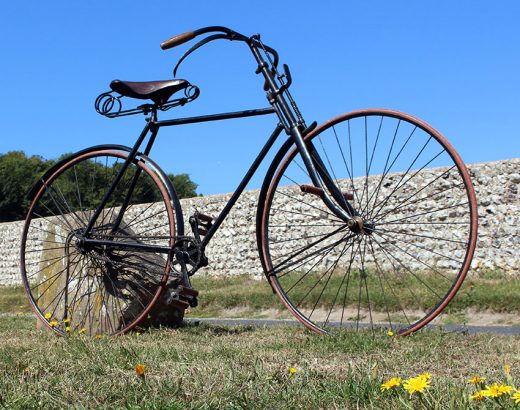
If the penny-farthing was the bicycle’s bold, high-wire act, the safety bicycle was the moment cycling became something almost anyone could imagine doing. Two wheels of similar size. A lower, steadier riding position. Power delivered by a chain instead of pedals fixed to a giant front wheel. It sounds normal now—because it’s the basic blueprint for most bicycles we ride today.
But in the late 1880s and into the 1890s, this “new” bicycle design didn’t just improve the ride. It changed who could ride, where people could go, and how cycling fit into daily life. The result was a true cultural wave: clubs, races, touring, new fashions, new manufacturing, and an explosion of bicycle-related accessories and advertising. The 1890s didn’t just have bicycles—they had a bicycle boom.
This post is the story of that shift: what a safety bicycle is, why it took off so fast, what cycling culture looked like in the 1890s, and what collectors look for today when a real 1890s bicycle rolls into view.
What Is a “Safety Bicycle,” and Why Was It Such a Big Deal?
The term “safety bicycle” sounds almost funny until you remember what came before it. High-wheel “ordinary” bicycles (penny-farthings) were fast, but they were also difficult to mount, difficult to stop quickly, and notorious for pitching riders forward in a crash.
Safety bicycles flipped the whole experience:
- Two wheels of near-equal size instead of one towering wheel
- A lower center of gravity and a more stable frame
- Chain drive to the rear wheel, separating pedaling from steering
- Easier mounting and dismounting, especially in everyday clothes
The most important part wasn’t any single feature—it was the combination. The rider sat lower. The bicycle handled more predictably. And you didn’t have to be a fearless athlete to simply get on and go.
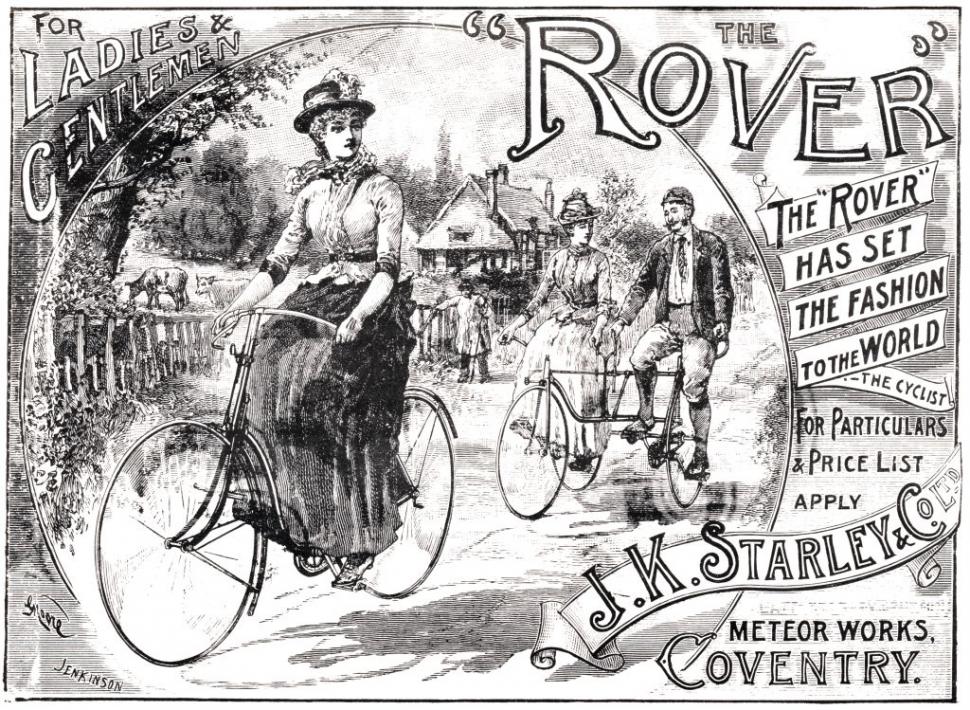
A key early milestone was the Rover “safety” bicycle, created in 1885 by John Kemp Starley in Coventry, England, widely described as the first successful safety bicycle design.
The Design That Changed Everything: Frames, Chains, and Control
When you look at an 1890s safety bicycle, you can see the modern bike starting to “lock in.”
The chain-drive advantage
With a chain driving the rear wheel, designers could use smaller wheels while still achieving good speed. That meant more stability and better control—especially on uneven roads. It also meant steering could become more precise because the front wheel no longer had to do double duty as both steering and propulsion.
The rise of the diamond frame (and the step-through alternative)
Many safety bicycles used a diamond-shaped frame made from two triangles. It was strong for its weight and became a lasting standard. At the same time, step-through frames (often marketed toward women, though not exclusively) made mounting easier and worked better with the clothing norms of the day.
A bicycle you could actually use daily
Put simply: the safety bicycle turned cycling from a daring pastime into a practical way to get around. And once something becomes practical, it becomes widespread.
The Comfort Revolution: Pneumatic Tires and the Smoother Ride
If the safety bicycle made cycling stable, pneumatic tires made it comfortable.
Inflatable tires (air-filled) dramatically improved ride quality on rough roads and helped make longer rides more appealing to the average rider. John Boyd Dunlop is widely credited with developing the first practical pneumatic tire for cycles in 1888, and the timing matters: just as safety bicycles were catching on, tires made them feel even more rideable.
Combine safer geometry with a smoother ride, and you have the ingredients for a craze.
The 1890s Cycling Boom: When “Everyone Wanted a Bicycle”
By the 1890s, the bicycle wasn’t a niche machine—it was a cultural obsession. Manufacturing expanded, prices shifted, and cycling became a major topic in newspapers, magazines, and everyday conversation.
One Smithsonian overview notes that bicycles in use boomed alongside production, rising from an estimated 200,000 bicycles in 1889 to 1,000,000 in 1899.
That kind of jump doesn’t happen quietly. It creates an ecosystem:
- Repair shops and cycling schools
- Clubs and touring groups
- Competitive racing and track events
- Accessory industries (lamps, bells, bags, tools, tires, pumps)
- Advertising and catalog sales aimed at cyclists
If you want to understand why 1890s bicycles are so collectible, it helps to remember: they weren’t rare in their own time. They were everywhere. What’s rare now is survival, originality, and completeness.
Cycling Culture: Clubs, Touring, and the Joy of the Open Road
The safety bicycle didn’t just change the machine—it changed the social world around it.
Bicycle clubs and “wheelmen”
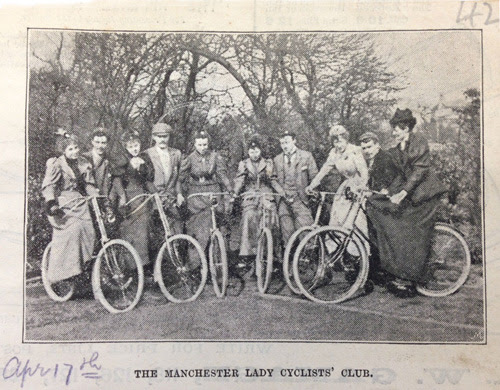
Cycling clubs flourished. They organized rides, published route guides, hosted social events, and created a shared identity for cyclists. In the U.S., the League of American Wheelmen was founded in 1880 (today’s League of American Bicyclists traces its history to that organization).
Road advocacy and the Good Roads movement
Cyclists weren’t shy about what they needed: better roads. Many roads were rutted dirt or gravel, and bicycles made every bump personal. Cycling groups pushed for improvements—efforts that helped lay groundwork for broader road reform later.
Touring and “micro-adventure”
The bicycle became a new kind of freedom machine. You could travel farther than walking distance without relying on a horse, schedule, or fare. That idea—of choosing your own route—was intoxicating in the 1890s, and it still resonates now.
The Bicycle and Women’s Freedom: Mobility, Dress, and Public Space
One of the most discussed cultural impacts of the 1890s bicycle boom is how it affected women’s mobility.
The safety bicycle’s lower, more manageable design made cycling more accessible. Women riding bicycles became a visible symbol of independence—moving through public space under their own power, often without a chaperone, on their own schedule.
The era also sparked debates about clothing and practicality. The “bloomer” cycling outfit (and related rational dress discussions) became part of the conversation as women sought clothing that made cycling safer and easier.
A famous quote attributed to Susan B. Anthony in 1896—often cited in cycling history—captures the spirit of the moment: she praised bicycling as a force for women’s emancipation and independence.
For collectors, this cultural context matters because it shapes what we value: not just the bicycle itself, but the accessories, advertisements, club materials, and photographs that show who was riding and how cycling was seen.
What Collectors Look For in 1890s Safety Bicycles
Collecting late 19th-century bicycles can be incredibly rewarding—because you’re collecting both design history and daily-life history. But it also comes with a learning curve.
Here are the big categories collectors tend to evaluate:
1) Originality and completeness
The bicycle world is full of “restored” examples, and restoration isn’t automatically bad. But value usually rises when key elements are original, such as:
- Frame and fork (with original paint or finish, if present)
- Head badge, decals, or maker’s marks
- Handlebars and stem style appropriate to the era
- Saddle (often leather)
- Wheels, hubs, and period-correct hardware
Even if tires are replacements (which is common), collectors often care that the bicycle still “reads” correctly as an 1890s machine rather than a modernized hybrid.
2) Condition that matches the story
A bicycle can be charmingly worn, but structural integrity matters. Look closely at:
- Rust-through on tubing or rims
- Cracks, bends, or poorly executed repairs
- Loose or damaged spokes
- Corrosion on high-stress joints
A stable, honest survivor is often more desirable than a heavily rebuilt bicycle with a perfect paint job but questionable authenticity.
3) Provenance and documentation
Anything that ties a bicycle to a known maker, a place, or a person can elevate interest. Original paperwork is rare but wonderful:
- Sales receipts
- Catalog pages or advertisements
- Club badges or membership items
- Period photographs that show the bicycle (or a similar model) in use
4) The “display factor”
Let’s be honest: part of collecting is how a piece looks in a room.
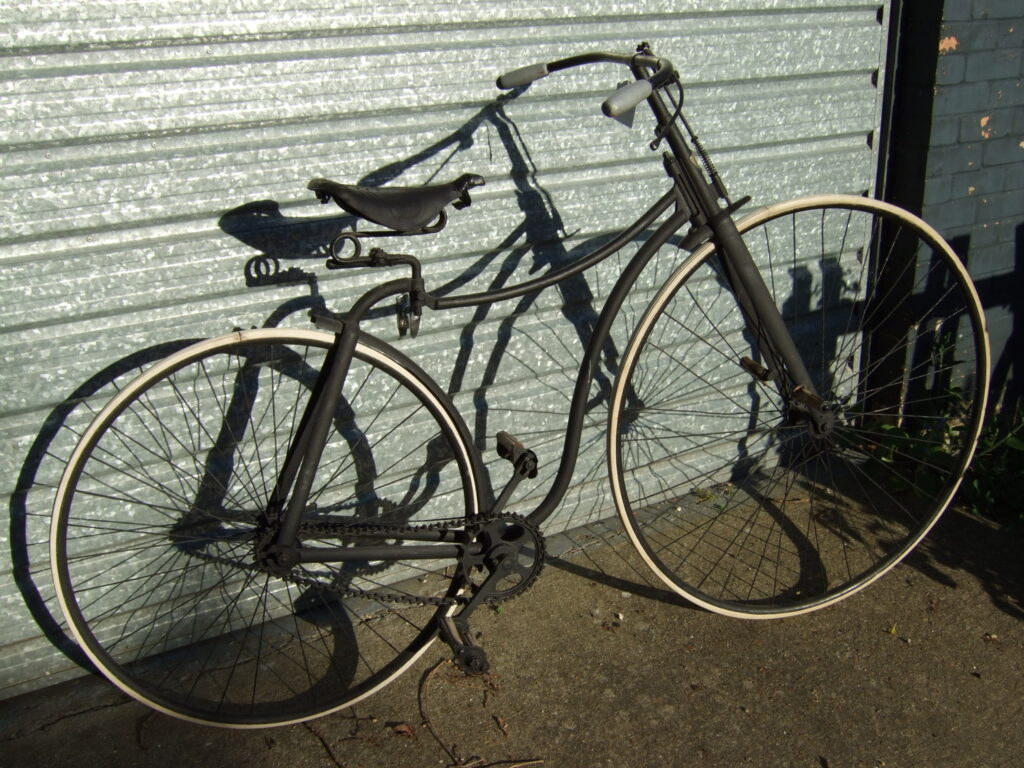
An 1890s safety bicycle has sculptural presence—thin tubing, elegant curves, and distinctive proportions. Add a period lantern, a tool bag, or a pump, and suddenly you’ve got a display that feels like a doorway into a different century.
Accessories That Make 1890s Bicycles Even More Collectible
Sometimes the bicycle is only the beginning. Collectors also chase the world that surrounded it:
- Oil lamps or carbide-style lighting (depending on the period)
- Bells, horns, and early reflectors
- Leather tool bags and frame bags
- Tire pumps and repair kits
- Cycling pins, medals, and club ephemera
- Posters and advertisements that capture the era’s design language
These add-ons tell you how people actually used their bikes—and they often display beautifully alongside the bicycle itself.
Care and Display Tips for Antique Bicycles
A few collector-friendly principles go a long way:
Keep it dry and stable
Moisture is the enemy of metal, leather, and old rubber. Store or display in a dry area with stable temperatures when possible.
Clean gently, preserve character
Dust and grime can be removed carefully, but aggressive polishing can erase original finishes and age. If you’re unsure, start with the mildest approach and test in a small area.
Support the bicycle properly
If displaying upright, consider a discreet stand or a stable support point so the bike isn’t resting awkwardly on fragile parts. If wall-hanging, ensure the support method doesn’t stress old wheels or rims.
Consider conservation over “make it new”
Many collectors prefer stabilization and careful preservation rather than modernized rebuilding. A 130-year-old bicycle can wear its age beautifully—when it’s protected, not stripped.
Why the 1890s Still Matter to Bicycle Collectors
The safety bicycle didn’t just replace the high-wheel era. It created the foundation for bicycle culture as we know it: practical transportation, recreational riding, racing, touring, and the idea that a bicycle can be both a tool and a personal statement.
The 1890s boom also left behind a rich trail of objects beyond the bike itself—catalogs, club items, photographs, and advertising—making this era especially satisfying for collectors who love building a story around what they own.
Because in the end, that’s what antique collecting does at its best: it turns an object into a window. And the safety bicycle is a big, beautiful window into an era when the world suddenly felt smaller, faster, and more open—one ride at a time.
Let’s Make History—one safe ride at a time.