
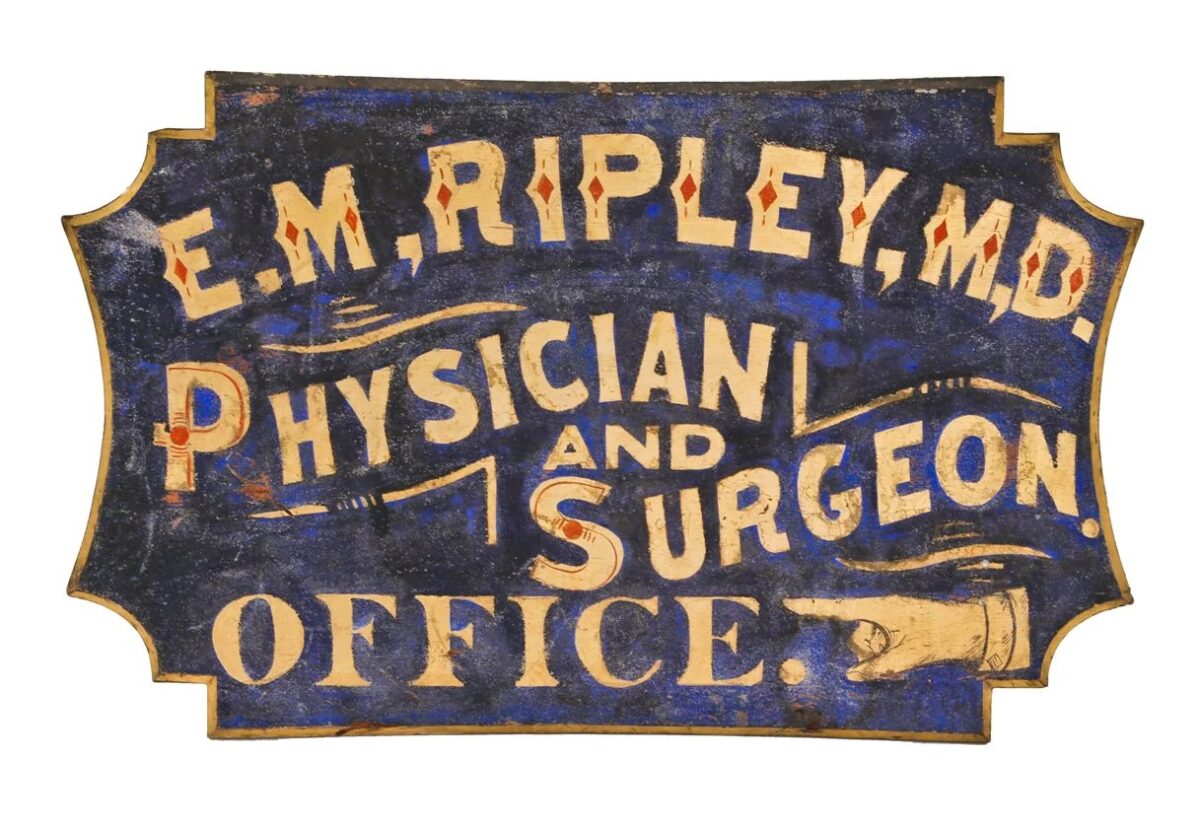
There’s a certain kind of sign that doesn’t just advertise—it introduces you. It tells you where you are, what matters here, and who made a life behind that door, counter, or barn. Rustic and folk signs do this better than almost anything else in the antiques world, because they were often made quickly, locally, and by hand.
Maybe it’s a weathered board that once hung over a farm stand. Maybe it’s a simple “BAIT” sign with uneven letters and a confident swipe of paint. Maybe it’s a lodge-style directional sign that looks like it belongs in a national park, with lettering that feels more carved than printed. These pieces weren’t created to be “decor.” They were created to be seen—and that’s exactly why collectors still chase them.
Let’s talk about what makes hand-painted Americana signs so special, what types you’ll run into, and what to look for when you’re deciding whether a sign has real age… or just a good story.
What “Rustic & Folk” Really Means in Sign Collecting
In the sign world, “rustic” and “folk” usually point to a shared vibe: handcrafted, often imperfect in a charming way, and closely tied to everyday American life.
You’ll see things like:
- Hand-lettered boards (storefronts, workshops, markets, fairs, clubs)
- Trade imagery (boots for a cobbler, a tankard for a tavern, a tooth for a dentist—symbols that work even if you don’t read the words)
- Simple materials (wood planks, plywood, repurposed boards, sometimes painted metal)
- Local flavor (town names, family names, regional sayings, homegrown humor)
Many early signs leaned on symbols because not everyone could read, and because a good picture can be recognized from a moving cart—or a passing car. That tradition of “read it fast” design is part of what makes these signs so visually satisfying today.
A Quick (and Useful) History of Hand-Painted Americana Signs
Hand-painted signage has been part of American commerce since the colonial era, but it evolved as towns, roads, and technology changed.
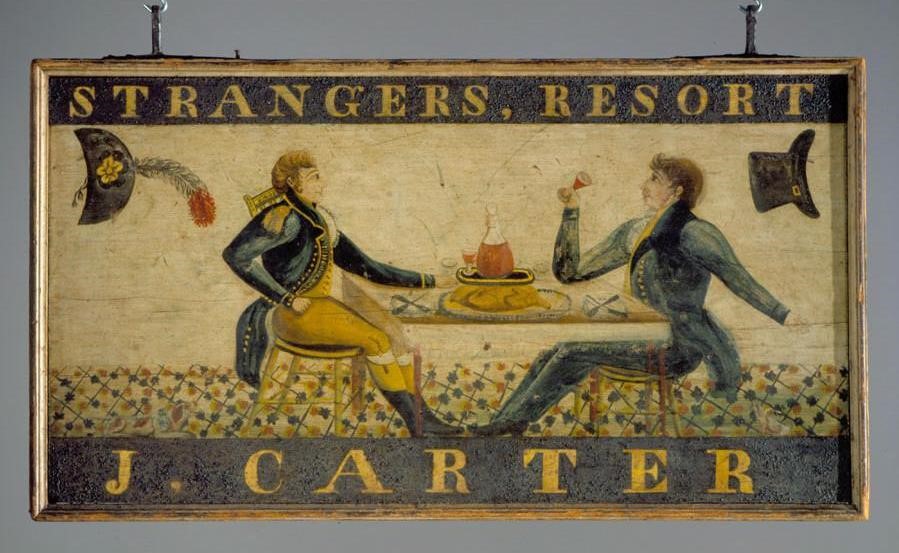
The early “signboard” era
In the 1700s and early 1800s, signs often announced inns, taverns, and trades. These could be flat painted boards or more dimensional pieces meant to catch attention along well-traveled routes.
The 1800s: more businesses, more signage
As towns grew, signs multiplied. You’ll see a wide variety in old photographs: painted wall lettering, boards mounted across storefront fascias, hanging signs, window lettering, and more. The faster the street became—more people, more vehicles—the more signs needed to stand out at a glance.
The 1900s: rustic “place-making”
Even as mass-produced signage expanded, the hand-painted look never fully disappeared. Rustic signage became part of the visual language of tourism, lodges, camps, and parks—especially in “natural” settings where a rough-hewn board felt more appropriate than glossy commercial graphics.
And today? Hand-lettering is enjoying a real revival. Modern sign painters and woodworkers still use traditional methods because nothing looks quite as human as a brush line.
Types of Rustic & Folk Signs Collectors Love
There’s a lot of overlap, but these are some of the most common (and most collectible) subtypes.
Trade signs and shop signs
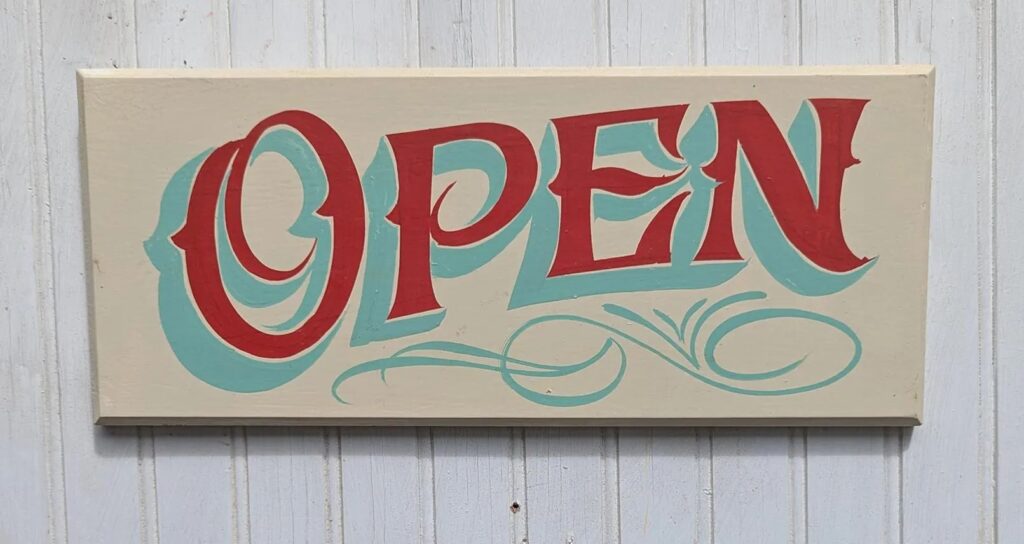
These are the classics: signs that told you what was inside.
Look for:
- Barber, shoe repair, blacksmith, bakery, butcher, feed store, hardware, general store
- Pictorial elements like boots, fish, tools, hats, mugs, animals, or produce
The best ones have personality: a bold icon, lively spacing, and that unmistakable hand-painted confidence.
Farm, market, and roadside signs
This is the “Americana as lived” category.
Common examples:
- Farm stand boards (“EGGS,” “HONEY,” “SWEET CORN”)
- Barn and property signs (family names, ranch names)
- Roadside directionals (“CIDER →,” “ANTIQUES,” “U-PICK”)
They’re often crude by design—and that’s exactly the charm.
Tavern, inn, and lodge-style signs
These can range from early signboards to later rustic tourist-era pieces. You’ll often see:
- Names meant to evoke story (“The White Hart,” “Bear Lodge,” “Pine Grove Cabins”)
- Earth-tone palettes, shaded lettering, or painted landscape touches
- Mounting hardware that suggests outdoor use
Community and event signs
Fairs, church suppers, veterans’ halls, fire companies, fraternal groups, local elections—these signs can be wonderfully specific to a time and place.
This is where you’ll find:
- Great dates (when present)
- Handmade typography that screams “town talent”
- Regional slang, humor, and design quirks you won’t see twice
What Collectors Look For: The “Good Stuff” Checklist
You can enjoy a sign purely as décor, but if you’re collecting with an antique eye, these details matter.
1) Honest construction
Flip the sign (when you can). The back can tell the real story.
Things that often signal age:
- Old nail patterns, oxidation, or wood shrinkage
- Uneven board edges, old repairs, or re-used lumber
- Evidence of earlier mounting (ghost holes, worn corners)
Also pay attention to fasteners. Hardware styles changed over time, and “too new” screws or perfectly clean fittings can be a clue that something has been altered—or recently made.
2) Hand-painted character
A real hand-painted sign usually shows:
- Brushstroke variation (thicker/thinner edges)
- Slightly inconsistent letterforms (even when the painter was skilled)
- Layering (older paint under newer, touch-ups, or changes)
Perfectly uniform letters can happen—some sign painters were incredibly precise—but the surface should still feel worked by a hand, not printed.
3) Surface that makes sense
Age shows up differently depending on where the sign lived.
Outdoor-worn signs may show:
- Flaking and paint loss on edges
- Fading on the “sun side”
- Checks and cracks following the wood grain
Indoor signs may show:
- Less weathering, more soot/dust
- Handling wear at corners
- Grease or shop grime (especially in food or mechanical settings)
The key is coherence: the wear should match the story.
4) Subject matter and “readability”
Collectors gravitate toward signs that:
- Feature strong graphic icons
- Use bold, readable words
- Represent beloved American themes (small town commerce, travel, farming, hunting/fishing, soda/beer culture)
A sign that reads well across a room will almost always be more desirable than one that’s visually muddy.
Reproductions and “Vintage-Style” Signs: How to Shop Smart
Rustic Americana is one of the most reproduced looks out there. That doesn’t make repro signs “bad”—it just means you want to know what you’re buying.
A few practical tips:
- Watch for artificially aged surfaces that look staged: sanding in only the “right” places, overly dramatic crackle that doesn’t follow the wood, or identical wear patterns repeated across multiple signs.
- Check the back. A convincing front with a pristine back is a classic mismatch.
- Look for modern materials that don’t fit the story (new plywood, modern hanging hardware, fresh staples, glossy polyurethane coatings).
- Ask “where did it come from?” Provenance doesn’t need to be fancy. Even “it came out of my grandfather’s shop” is useful context (and often leads to better buying decisions).
If you love the look and the price is right, a reproduction can still be a fun décor piece. Just don’t pay antique money for modern charm.
Caring for Hand-Painted Signs Without “Over-Fixing” Them
Paint on wood is a composite surface—wood moves with humidity, paint ages and becomes brittle, and old layers can lift if conditions swing too hard. The goal is usually stability, not perfection.
Here are collector-friendly care habits that make a big difference:
- Keep it out of direct sunlight. UV light fades pigments and weakens paint films over time.
- Avoid big humidity swings. Basements, garages, attics, and exterior walls are tough environments for painted wood.
- Dust gently. A soft, clean brush is often safer than wiping, especially if paint is already flaking.
- Don’t “seal” flaking paint with hardware-store products. Clear coats can darken, yellow, or cause long-term conservation issues—and they’re hard to reverse.
- If it’s actively shedding paint, talk to a professional conservator. Stabilizing fragile paint is possible, but it’s worth doing correctly.
And one more collector truth: patina is not damage—it’s history. A sign doesn’t need to look new to be beautiful (or valuable).
Display Ideas That Feel Like Americana, Not “Theme Decor”
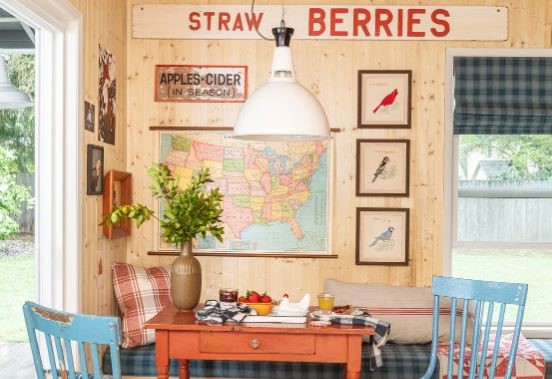
If you want your sign collection to feel authentic and curated rather than staged, try these approaches:
Layered wall grouping
Mix sizes and textures:
- One large sign as the anchor
- Smaller boards, framed paper ephemera, or tools around it
- Keep spacing tidy so the “rustic” doesn’t become clutter
Shelf or mantle lean
Let the sign rest instead of hanging it:
- Reduces stress on old mounting holes
- Lets you rotate pieces seasonally
The “place-based” display
Group by theme:
- Fishing/hunting corner
- Farm/market vignette
- Main Street shop-style cluster
Signs are storytellers. Let them tell a story that feels like yours.
Why These Signs Still Hit Home
A rustic folk sign is one of the most direct connections you can have to ordinary American life. Someone painted it because they needed customers. Someone hung it because it mattered whether you turned left or right. Someone kept using it long after it was faded because it was still doing its job.
And now, decades later, it still works—just in a different way. It doesn’t only point to a shop. It points to a time when work was local, lettering was personal, and a brush could build a business.
That’s a pretty wonderful thing to bring home.
Let’s Make History—one hand-painted sign at a time.