
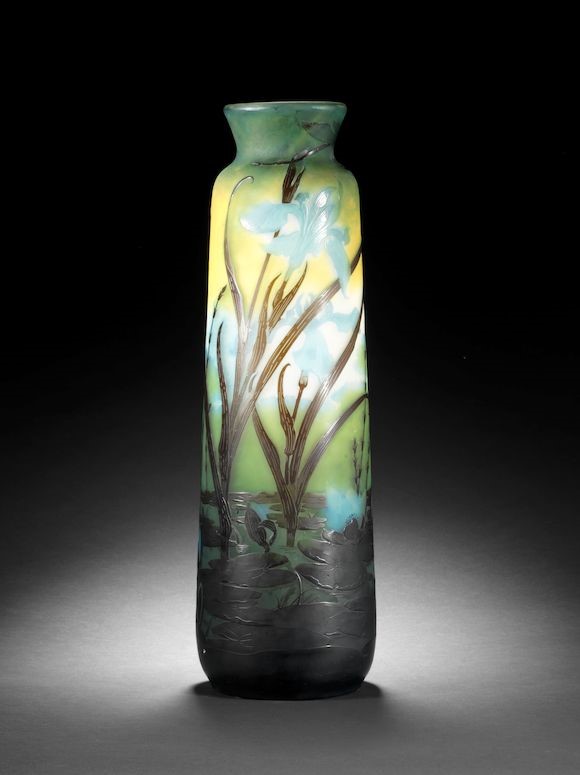
Some Art Nouveau glass is beautiful because it’s decorative. Work in the orbit of Émile Gallé is beautiful because it’s observant. Leaves aren’t generic flourishes; they look studied. Insects feel specific, not symbolic wallpaper. Even the mood—dusk, mist, late-summer warmth—can feel like a remembered walk, translated into glass or wood.
That’s the heart of Gallé collecting: nature isn’t a theme layered on at the end. It’s the blueprint. And once you see that, the “why” of his appeal becomes clearer. Collectors aren’t only chasing a name; they’re chasing a way of seeing—where botany, poetry, and technical experimentation all live in the same object.
This final post in the series ties the threads together: how nature shaped the design language, how innovation shaped the materials, and how collectors can use those ideas to buy smarter (and build a collection that feels intentional).
Nature Was the Blueprint
Art Nouveau loved the natural world, but the Nancy circle took it seriously—studying local flora, building motif libraries, and translating plant structures into design. Gallé’s work shows that mindset in a very collector-visible way: stems behave like structure, petals become silhouette, and landscapes become atmosphere.
A Workshop Habit: Observe First, Decorate Second
One reason Gallé pieces feel “alive” is that the details tend to follow real-world logic:
- Leaf shapes taper the way leaves taper.
- Seed heads and stalks have believable weight and direction.
- Insects land where they would naturally rest.
- Scenes wrap around a vessel like a continuous environment rather than a sticker-like panel.
As a collector, this is a useful filter. Even before you get into signatures or dates, you can ask: does the natural motif feel studied and cohesive with the form?
Art Nouveau’s Big Idea: Make Utility Poetic
In Nancy, Art Nouveau wasn’t confined to galleries. The movement aimed to renew everyday life—glassware, furniture, lighting, interiors—so that art wasn’t separate from living.
Gallé’s contribution was showing how utility could carry meaning without losing function. A vase can still hold flowers. A lamp can still light a room. A table can still be used. But each can also carry a viewpoint: nature as teacher, craft as intellect, and design as something worth noticing in daily routines.
For collectors, that’s why Gallé “works” in modern homes: the objects were conceived as usable, not merely ornamental.
Innovation in Glass: Where Technique Becomes Atmosphere
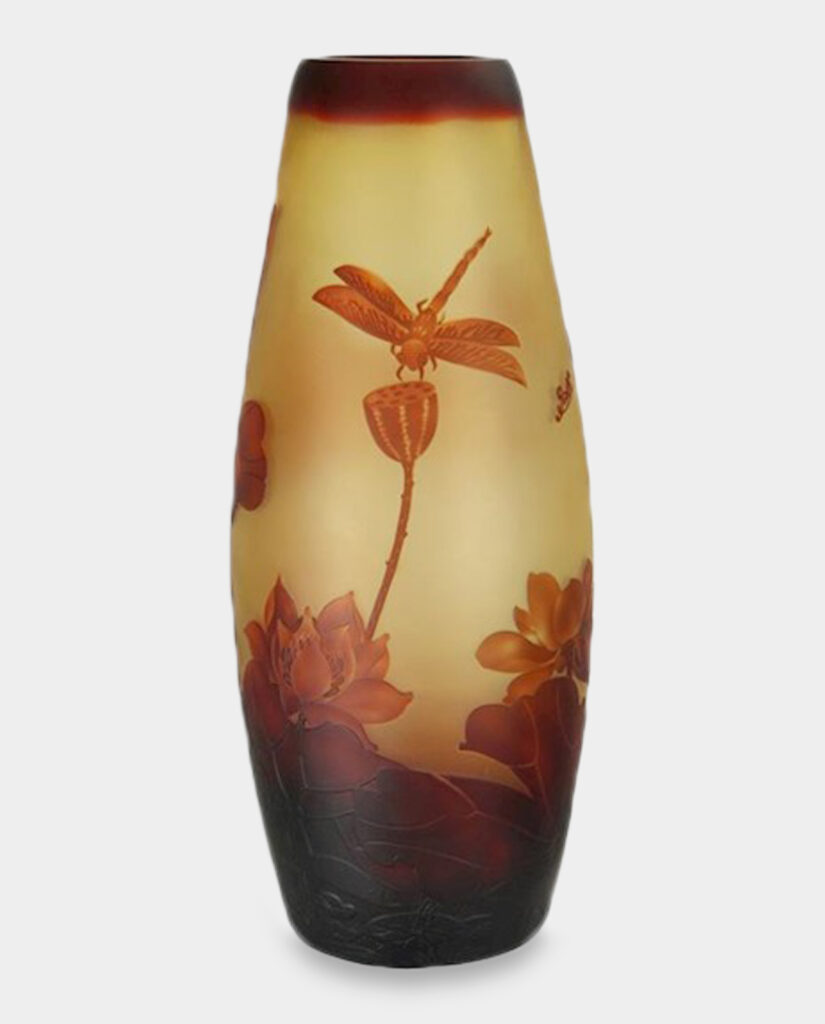
Gallé’s glass is often described in terms of motifs—dragonflies, orchids, forest scenes—but the real signature is the willingness to experiment. Technique isn’t just a method; it’s part of the mood.
Layering and Carving: Depth You Can Feel
Layered glass (often discussed as cased or cameo approaches) creates the basic magic trick: one color revealed through another, with relief and shading built into the surface. When it’s done well, it reads two ways at once:
- From a distance: strong silhouette and palette.
- Up close: sculpted transitions, crisp edges, and details that reward a slow look.
Collector cue: look for intentional depth—places where the maker varied the cut or etch so the design has contour, not just outline.
“Glass Marquetry”: Building with Pieces, Not Paint
Gallé is also associated with a technique commonly described as glass marquetry—adding thin pieces or sheets of colored glass to a hot form to build layered color effects and pattern. The collector value here isn’t just rarity; it’s the sense of construction. The object feels assembled with decisions: where color gathers, where it thins, how edges meet.
Collector cue: complexity should still look controlled. The best pieces feel orchestrated, not busy.
Patina and “Happy Defects”: Texture as a Feature
One of the most modern-sounding parts of Gallé’s approach is the idea that imperfections can be used creatively. Instead of treating bubbles, inclusions, or surface irregularities as purely negative, the aesthetic can lean into them—turning texture into atmosphere (mist, bark, haze, dusk).
Collector cue: on strong pieces, texture supports the subject. It doesn’t look accidental; it looks integrated.
Innovation in Wood: Nature as Structure, Not Ornament
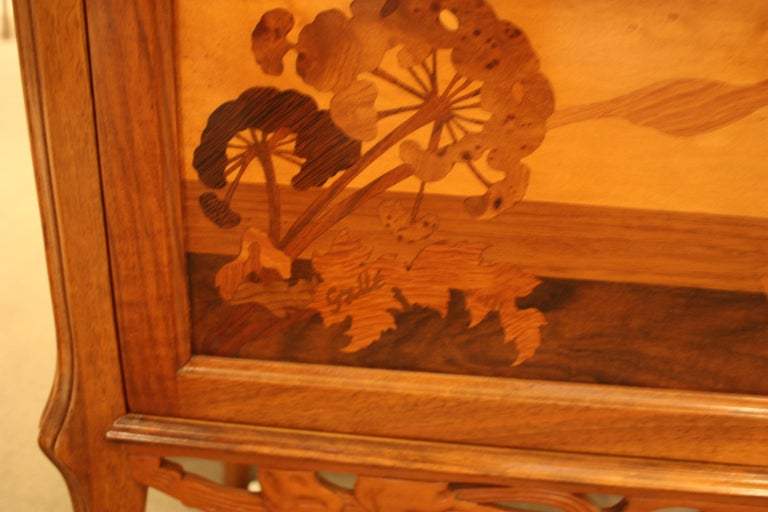
If glass shows Gallé’s experiments with light and surface, furniture shows his experiments with structure and symbolism. Inlay and marquetry let nature become narrative: a plant’s life cycle, a landscape mood, a seasonal shift—all expressed through wood tones and grain.
Marquetry as “Botanical Illustration” in Wood
High-quality Art Nouveau marquetry isn’t just pretty; it’s legible. Leaves read as leaves. Stems read as stems. The scene fits the panel, the tabletop, or the door shape in a way that feels planned.
Collector cue: check clarity at a few feet away. If you need to be inches from the piece to understand what it depicts, the design may be weaker—or the surface may have been altered by heavy refinishing or sun fade.
Carving That Echoes Growth
Gallé furniture often uses carving to push motifs into three dimensions—turning legs into stems, supports into ribs, edges into curling leaf forms. When this is done well, the piece feels grown rather than assembled.
Collector cue: the carving should feel structural, not appliquéd. “Stuck-on” decoration is a caution sign.
Reading the Motifs: What Nature Can Tell You as a Collector
Motifs aren’t just subject matter—they’re often clues about how a piece was designed and finished.
Here are collector-friendly questions to ask when you’re studying a piece:
- Is the plant/insect rendered with specificity? (More convincing imagery often correlates with better overall craftsmanship.)
- Does the motif match the form? (A tall-stem plant on a tall vase, a wraparound landscape on a rounded body, etc.)
- Is there an intentional sense of season or time of day? (Dusk palettes, autumn browns, spring greens—these choices are rarely random in strong Art Nouveau design.)
- Does the surface treatment serve the scene? (Matte background for mist, polished highlights for petals, textured areas for bark or haze.)
A useful collecting strategy is to treat motif quality as your first “authentication instinct.” Names and marks matter, but nature is harder to fake convincingly over an entire object.
A “Nature-First” Collecting Strategy
If Gallé is starting to feel like a big universe—glass, lamps, furniture, cameos, etching—this is a simple way to build a collection that feels cohesive without needing to master every technical nuance immediately.
Pick a Motif Family and Let It Guide You
Choose one lane and go deep:
- Dragonflies and winged insects
- Water plants and pond scenes
- Forest silhouettes and twilight landscapes
- A single flower type (orchids, thistles, lilies)
This approach makes shopping easier and your display stronger—because the pieces “talk” to each other visually.
Build a Palette, Not Just a Pile
Gallé-adjacent collecting looks best when colors harmonize:
- Smoky ambers + greens for woodland themes
- Violets + dusky blues for twilight scenes
- Warm browns + golds for autumn botanicals
Even if your pieces span different makers or exact periods, a palette can make the collection feel intentionally curated.
Pair Glass and Wood for a Full Art Nouveau Effect
If you’re collecting glass but love the furniture story, you don’t need a full Gallé cabinet to get the vibe. A single wood element—an inlaid tray, a small table, a framed marquetry panel—can anchor the “nature as design” concept and make your glass feel part of an environment rather than isolated objects.
Care and Display: Let Light Do the Work
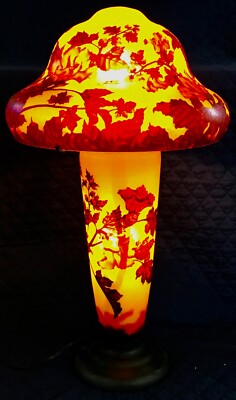
Gallé-style pieces are made for light—natural or lamp glow—because relief, etching, and layered color reveal themselves in shifting illumination.
Display Tips
- Place glass so light hits from the side (this brings out relief and etched shading).
- Avoid high-traffic edges where rims and corners are most vulnerable.
- For lamps, prioritize stability and safe wiring—beauty should not come with a safety risk.
Cleaning and Preservation
- Gentle hand cleaning is safest for decorated glass.
- Avoid abrasive pads that can dull matte finishes or soften crisp edges.
- For marquetry and veneered furniture, keep climate steady and avoid prolonged direct sun that can fade contrast.
Buying Mindset: Quality First, Labels Second
Because Gallé is famous, it’s also widely copied and widely “in the style of.” The most reliable collector habit is simple: judge the object first.
Before you get excited by a signature, a story, or a listing title, ask:
- Is the design cohesive with the form?
- Is the motif convincing and well-finished?
- Does the surface look intentionally worked?
- Does the condition make sense for age and use?
When nature, craft, and technique all line up, you’re usually looking at the kind of piece that remains collectible—no matter which exact niche label a seller wants to apply.
The Collector’s Takeaway
Nature is the through-line that connects Gallé’s glass and furniture—and innovation is the engine that made that nature feel real. Layering, etching, carving, inlay, texture, and poetic atmosphere aren’t separate topics; they’re parts of the same creative system.
If you collect with that system in mind—nature-first, quality-first—you’ll build a group of objects that feels coherent, deeply Art Nouveau, and endlessly rewarding to live with.
Let’s Make History—one leaf, one wing, one glow at a time.